Another BP Podcast is up. You can listen on Libsyn, iTunes, Spotify, and Stitcher. Probably the easiest way to keep up the podcast since we don’t have a regular schedule is to subscribe at one of the links above.
You can also support the podcast as a patron. The primary benefit now is that you get the podcasts considerably earlier than everyone else.
Would appreciate more positive reviews! It’s been a really really long time that we’ve been on 30 iTunes positive reviews. I notice that Alton Brown’s Browncast has 30 reviews on Stitcher alone! Help make us the biggest browncast there is!
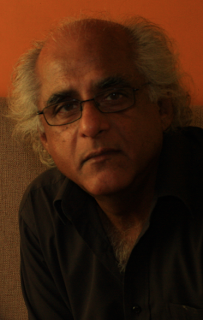
In this episode we talk to Salman Rashid. Salman is an ex-army man who left the army to become a travel writer. He has written 10 books and countless articles, most of which can be found at his blog odysseuslahori. We talk about partition, Pakistan, history, Alexander the Great and whatever else comes up..
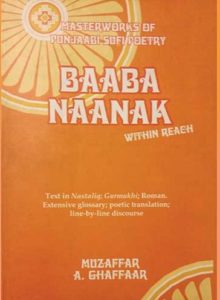
A short introduction to the work of Muzaffar Ghaffar, who has published 30 volumes of classical punjabi poetry with detailed explanations and translation. Written by Punjabi writer Nadir Ali (who happens to be my father)
Muzaffar Ghaffar on Guru Nanak
BAABA NAANAK Within Reach – in MUZAFFAR GHAFFAR’S series “Masterworks of Punjabi Sufi Poetry”
In the cultural wasteland that is our homeland these days, to be a man of culture doesn’t take much effort; you do some literary chit chat or somehow get your name printed with some work people assume as cultural or creative and you become a cultural or literary figure! Having known Muzaffar Ghaffar for over thirty years, he is an honourable and notable exception to this superficial trend. He came to Pakistan with his savings and a couple of books in print, a book of English verse which has had a couple of editions published and a book On How a Government is Run . In my involvement with Punjabi we came together in the weekly “Sangat” in readings of Punjabi classic poetry held at the residence of Najm Hosain Syed and Samina Hassan Syed and I have had the pleasure of knowing him for over 30 years now.
A digression first: Najm Sahib is already famous in Punjabi literary circles in both East and West Punjab. To give you some idea I often quote a well-known Sikh scholar of Punjabi who was Head of Punjabi Department at Guru Nanak University, Amritsar. He said, “There are two categories of Punjabis – those who have studied Mr. Najm Hosain Syed and those who have not; those who have not read him do not know much about Punjabi language or literature!” To those not familiar with Mr. Najm Hosain Syed’s work, this may sound like an exaggeration. But having attended weekly meetings at his house for nearly forty years and having read his poetry and books on literary criticism, plays and poetry, I venture to share this remark. There are almost forty books of verse and landmark works of literary criticism and four books combining half a dozen plays in Punjabi to his credit. He keeps his books small so that the price remains within reach of Punjabi readers. “Recurrent Patterns in Punjabi Poetry” is his masterwork and the full text is online at apnaorg.com.
Najm is Muzaffar’s guide and inspiration for the thirty volumes of the “Within Reach” series on Punjabi Classical poetry that are available to date, all in English. But neither in the US, nor in England and rest of English speaking world abroad have I seen these books in the market, although Punjabi literature is taught in many places in institutes of repute in these countries, with considerable Punjabi speaking public. Nor do I know of anyone abroad who talks of these books. In particular the worth and value of this remarkable volume “Baaba Naanak Within Reach” on Baba Nanak’s poetry is incalculable, and it is our enormous loss that this work of M. Ghaffar remains largely unknown. Continue reading Baba Nanak Within Reach, by Muzaffar Ghaffar
From Dr Hamid Hussain. Dr Hamid is what might be described as a “secular” or “liberal” Muslim. These are his personal thoughts on the Ram Mandir judgement.
11 November 2019
Someone had sent me excerpts of Spinoza’s God a day before the Indian supreme court verdict. I was pondering over those words when I was asked about my comments. Following was the result and all credit goes to Spinoza.
“If you are desirous of obtaining a great name, of becoming the founder of a sect or establishment, be completely mad; but be sure that your madness corresponds with the turn and temper of your age. Have in your madness reason enough to guide your extravagances, and to not forget to be excessively opinionated and obstinate. It is certainly possible that you may get hanged; but if you escape hanging, you will have altars erected to you”. Voltaire (1698-1778)
Regards,
Hamid
Babri Mosque Verdict
Hamid Hussain
“The toughest kind of forgiveness is self-forgiveness and the road that leads to it is a lonely one but is also where mad meets the divine”. (1)
On November 09, 2019, Indian Supreme Court announced its judgment about the long standing dispute between Hindus and Muslims about a religious site in Ayodhya. Muslims claim that a mosque has been at this place since sixteenth century. Hindus claim that it was built on the site of a Hindu temple. The place has been locked since 1949 for fear of threat to public order. On 06 December 1992, a Hindu mob demolished the mosque resulting in riots that resulted in death of over 2000 people. After a three decades court battle, court awarded the site to Hindus to build a temple explaining that the sixteenth century mosque was built on the ruins of a Hindu temple. Continue reading The Ram Mandir Verdict in India. From Dr Hamid Hussain
A recent comment revived this excellent older post by The Emissary, so we’re bringing it back to the front page. Our archives are strong, and worth revisiting.
There are various images I could have chosen to represent Islam in India. One could use the Taj Mahal, the ruins of a temple, a mural of a bloody battlefield, Muhammed Ali Jinnah, the beauty of Indo-Islamic art, and so many more images. Islam in India has had a long and complicated history. People have argued till tongues became swords over the impact of Islam on India and its relation to the people. Indeed, one could argue the most lasting impact of Islam on the subcontinent is its partitioning by Jinnah and his cohorts on that fateful day in 1947; when Mahatma Gandhi’s dream was ripped apart in a bloody separation of an ancient people.
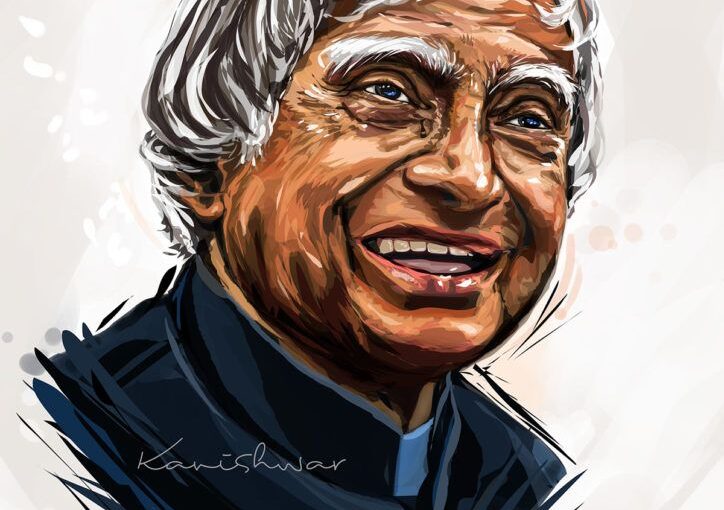
But while this post will examine the past, I want to focus on the now and future of Islam in India. That is why I chose to have possibly the most beloved Indian in history, Dr. APJ Abdul Kalam, as the heading photo for this post. But we will talk more about him and what he encapsulates later; let’s take a look back at the sands of time.
(No) Remorse
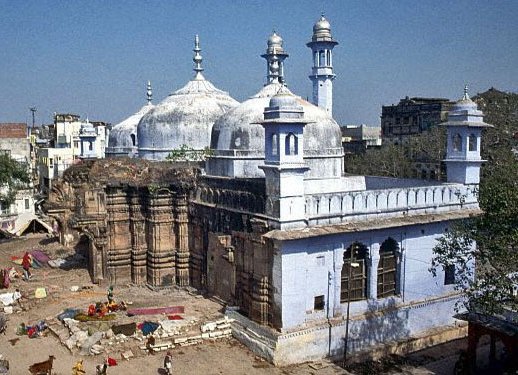
Gyanvapi Mosque in Varanasi; Built From Ruins of a Hindu Temple (See Left Side)
I’ll be upfront and say I have an overall negative view on Islam’s past impact on India.
One of the most eminent historians ever, Will Durant, wrote this of the Islamic invasion of India:
“The Islamic conquest of India is probably the bloodiest story in history. It is a discouraging tale, for its evident moral is that civilization is a precious good, whose delicate complex of order and freedom, culture and peace, can at any moment be overthrown by barbarians invading from without or multiplying within.” – The Story of Civilization: Our Oriental Heritage page 459.
History has witnessed monsters that have killed millions – Genghis Khan, Alexander the Great, the Spanish conquistadors of America, etc… – but Durant singles out the hundreds of years long siege of Islam on India as the bloodiest of them all. Millions dead, raped, or forcibly converted. Temples, universities, and entire cities lay in ruin. An indigenous culture repressed and humiliated all because they believed in a different god.
While this image is grave, it’s not what I want you to leave with in regards to India’s Islam. Amongst the carnage and deep darkness that swept the subcontinent, there was light.
Din-I-Ilahi
A fusion of Indian, Arabian, and Persian art styles would give birth to they beauty of Indo-Islamic architecture
Islamic rule in India produced great art, literature, opulence, but most beautiful of all – syncretism, the trademark of India. Akbar was one of the first rulers who recognized the underlying similarities between Islam and Hinduism; so much so, that he integrated both religions into his own system – Din-I-Ilahi – or the Religion of God (original…I know).
The Varanasi poet and weaver, Kabir, won the hearts of both Hindus and Muslims. His poetry would be recited till this day as an epitaph to his spirit of spiritual harmony. His musings would change how religion was practiced across North India, including influencing a newly born religion – Sikhism. Guru Nanak would continue Kabir’s compare and contrasting of Hinduism and Islam, while providing his own unique philosophy.
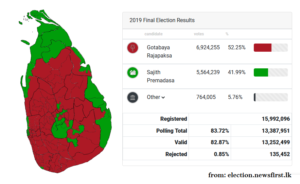
Gotabaya got less of the minority vote (less than 10%) compared Mahinda Rajapakse in 2015 (around 20%).
Tamils: Instead of reaching out for Economic development, its still pie in the sky separatism. These views are propagated by the Tamil leadership like Sumanthiran who live comfortably in Colombo, went to Colombo schools (and their children).
Sumathiran (or someone in the TNA) went as far as to say if we dont vote for Sajith we cant defeat the Sinhalese. The Tamils united and backed Sajith by over 70% in the North and East. That was the kiss of death for Sajith with the Sinhalese voters in the south
Muslims: Sajith, hobnobbed with Muslim MP’s who had been pals of the Easter Terrorists. The Muslims voted for Sajith en masse (again over 70%) and Sajith lost a lot of Sinhala votes.
The Sinhalese responded,and united in what they saw as Sajith’s apparent support for separatism and seeking support of Muslim MP’s sympathetic to Islamic Extremists. The SLPP party base is not sufficient to win. There has been UNP crossovers to Gotabya and he won with pretty much only the Sinhalese vote.
Background on Gotabaya Rajapakse
Was the all powerful Defense Secretary 2005-2015. Credited with ending the Civil Wat, Urban renewal and Infrastructure development. Diploma in IT from Uni of Colombo. MS in Defense Studies from the University of Madras and various Defense related training In SL Army, 1971-1992 retired after 20 years as Lieutenant Colonel. Unix Admin (1998-2015) at Loyola Law School, CA. Credited with being a Technocrat and authoritarian.
Jaydeepsinh Rathod · November 16, 2019 · 57 comments
November 09, 2019 was a momentous date in the history of modern India. An end to the decades and centuries old Ayodhya dispute has likely happened. The Supreme Court of India has, by a unanimous verdict of 5-0, pronounced that the disputed site of 2.77 acres be given for the building of a Ram temple while at the same time allotting a land of 5 acres somewhere else for the construction of a mosque.
In all respects this was a very fine judgement by the Supreme Court. However, there are mischief mongers who are busy spreading falsehoods about this judgement for their own vested interests. Let me here share a few videos which give us a very clear picture of why the SC judgement is neither biased nor is it giving precedence to faith over evidence.
https://www.youtube.com/watch?v=FoelD28UV28
Please also watch these two long presentations as they explain the available evidence at length.
Ayodhya is one of the seven holy cities of ancient India and for Hindus or Sanatan Dharmis. Its holy precisely because it is associated with the birth and life of Lord Ram, one of the most revered figures of Hinduism.
Now what exactly is the significance of Ayodhya for Muslims ?
Particularly with regard to the Ram Janmabhoomi/Babri Masjid site, it is clear and the SC judgement also points out that the Babri Masjid was not built on a vacant land but was built over a large pre-existing non-Islamic structure. Archaeologists and scholars have pointed out that this structure was most likely a Vishnu temple built by a feudatory of the Gahadavala King Govindchandra, the most powerful king of North India in his time and the grandfather of none other than Jayachand of Prithviraj/Samyukta fame.
While the SC has acknowledged the existence of this temple structure since the 12th century, it points out that between the 12th century and the early 16th century when the Babri Mosque was built on the site, we do not have records documenting what was happening at the site. The SC also states that the Archaeological Survey of India (ASI) could not prove that this earlier temple was destroyed to build the mosque i.e. perhaps the temple was already destroyed & lying in ruins. However, proving it conclusively is a tough ask.
Nevertheless, it has already been proven without a shadow of doubt that the remains of the pre-existing temple, including its pillars were used in the construction of the mosque.
Lastly, there are numerous eye-witness and other accounts in English, Persian, Arabic & Urdu from the 16th, 17th & 18th centuries which clearly prove that the particular site was holy for the Hindus and that the mosque was built by destroying the mandir or temple, and the site is often referred to in the accounts as the Ram Janamsthan.
Hindus were able to show that they were worshipping at the site for several centuries and people used to flock the site particularly on Ram Navami, the date of Lord Ram’s birth. They were also able to show the outer courtyard was always under the control of Hindus while there was often disputes between Hindus and Muslims for the inner courtyard of the mosque.
One may ask, what is the evidence that Lord Ram was born at this very site. And infact we don’t have any. But it can be shown that for several centuries it has been a Hindu belief that this very site was the birthplace of Lord Ram and that there is no other site at Ayodhya or elsewhere for which such a belief exists or has existed.
When one looks at this evidence in totality it is clear that the claim of Hindus on the site as an important place of worship for several centuries is supported by much more substantial evidence than anything the Muslim side could muster.
Therefore, the Verdict was a foregone conclusion. The Supreme Court has merely gone by the balance of evidence and has not buckled under the pressure of majoritarianism nor has the rights of the Muslim minority been suppressed by it, as alleged by some unscrupulous lot who perpetually want to keep the communal cauldron burning.
Special thanks to Mayuresh Madhav Kelkar for sending this. I would start watching this excellent Dari Farsi documentary 1 minute 19 seconds in. There are many excellent ancient maps of central and south Asia.
I just want to watch this again and again, just to listen to the narrator’s voice. Majestic, wise, soft and sweet. For those so sure Afghanistan will fall; any nation with voices like this is perchance stronger than she appears. This may be where the homo sapien sapien modern civilization was born.
A middle eastern student shares how deeply offensive a condescending pretentious patronizing xenophobic post modernist baizuo caucasian is towards them. The baizuo caucasian tells the middle eastern student that he is a genie for solving a math problem and then apologizes for it afterwards, since after all the word “genie” comes from the middle east. Two phenomenons might be at play. One is baizuo. The other is anti muslim islamaphobia.
If this is coming from baizuo, this is a very old problem. It comes out of European imperialism in the 1700s and 1800s. The European intelligentsia tried to colonize the minds of their imperial colonial subjects with inferiority complex to damage their self confidence. Europeans also tried to deconstruct colonized peoples, causing them to be embarrassed by, hate and reject their ancient history, technology, science, product development, process innovation, civilization, culture, religion, spirituality, art, literature, institutions, ancestors and elders. Post modernism divided colonized peoples into many categories of oppressed and oppressors (mostly manufactured irrational concepts) to turn different groups of people against each other; implying that power oppression rather than meritocratic competence defined local hierarchies. This European colonization of the mind sharply lowered total factor productivity and material living standards in the developing world ceteris paribus. The Latinos, Africans and Asians got sick of it, and kicked the Europeans and their baizuo European intelligentsia out. You can read more about this in a Nuanced understanding of British Colonialism.
Sadly the baizuo caucasian intellegentsia did not seem to learn from this. In the 1960s they tried to undermine America’s heroes Muhammed Ali and Malcolm X. Please watch Muhammed Ali’s and Malcolm X’s videos speaking about the baizuo in American Caste (a). And the baizuo seem to continue to get worse year after year. I don’t understand how this is happening. Perhaps could this be a xenophobic jealous backlash against the accelerating socio-economic rise of the rest–especially darkies?
What can we darkies do about this? Should we ask to be considered white?
To the middle eastern student who wrote Prof Saad, maybe the caucasian overlords should learn that the vast majority of Aryans are Asians. Asians (Iran, Afghanistan, Uzbekistan, Xinjiang, Tibet, Turkmenistan, Tajikistan, SAARC, South East Asia) are very proud to be Aryan or Arya, thank you very much. Arya or Aryan is a cultural rather than genetic marker. Arya means nobility. Maybe ignore the baizuo and become extremely successful in everything you do despite their efforts to sabotage you. Fewer and fewer foreigners are fooled by the hard bigotry of low expectations, by the lie that we cannot manifest our own miracles. Their time is almost up.
I would like to thank Prof Saad for being a glowing light of wisdom and inspiration for our world. Love you Saad!
In the comments, please mention if anyone would like to invite Prof Saad to be a guest for the Brown Caste podcast.
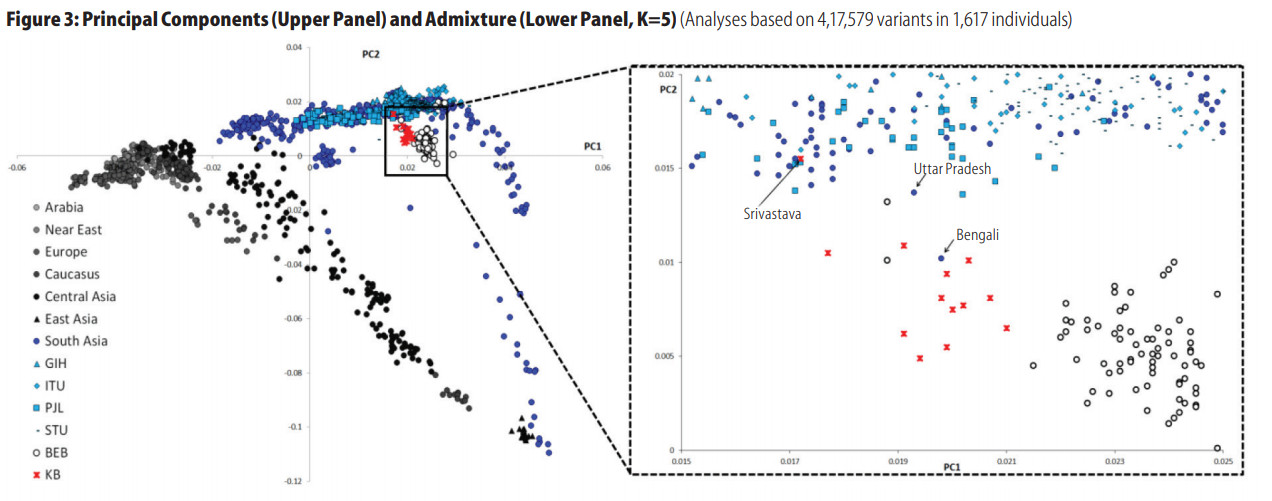
A few years ago there was a short paper that analyzed genotypes from some Kulin Kayasthas from West Bengal. The plot above illustrates what you really need to know. The Kayasthas are positioned on the PCA right between East Bengalis and people from the main India cline, with a slight shift toward more ANI.
I’ve looked at a few West Bengal Kayasthas myself, and that’s what I always see. When I look at individuals from Bangladesh, the ones with the most East Asian ancestry are invariably from the furthest east. So it looks like going from eastern Bengal to western Bengal there is progressively less East Asian ancestry. And, unlike Bengali Brahmins, Bengali Kayasthas do not seem to be that different from generic Bengalis as such. In contrast, Bengali Brahmins tend to have a strong shift toward Uttar Pradesh populations and look very similar to Uttar Pradesh Brahmins with a minority non-Brahmin Bengali admixture.
Finally, take a look at the Y and mtDNA. Though R1a is overrepresented, one of the Kayasthas has both male and female East Asian uniparental lineages.