
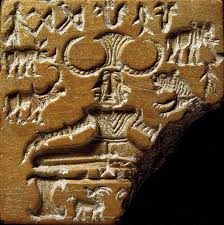
Pakistanis never Hindu | Islam destroyed everything? |Pakistanis were Hindu
Aslan Pahari’s videos are linked to the top where he essentially argues that the Indus region, before Islam, was a seamless Hindu civilisational block. It makes for neat storytelling. It is also historically careless.
Sun Temple of Multan
The subcontinent before the 8th century was not a flat religious plain. It was layered, regional, and politically fragmented. Yes, there was a broad Brahmanical tradition stretching across north India. Yes, temples like the great Sun temple at Multan testify to the strength of that religious order in what is now South Punjab. But to move from that to “all ancestors were Hindu” is to mistake dominance for uniformity.
Sindh
Take Sindh. When Muhammad bin Qasim entered the region in the early 8th century, he did not conquer a purely Brahmanical kingdom. The ruling Brahmin elite he defeated, had previously overthrown a Buddhist polity, and the religious landscape of Sindh included Buddhists, various Hindu sects, and local traditions. The frontier between Indic religions was not rigid. It was porous, competitive, and regionally specific.
It goes without saying that Buddhists emerged from a broader Brahmanical milieu, but I am referring specifically to the religious landscape immediately preceding the arrival of Islam.
Punjab
Punjab tells a different story. Much of it Islamised later, in the medieval period, through Sufi networks, agrarian expansion, and political realignment rather than immediate conquest. But Sindh and Multan were incorporated into the Islamic world centuries earlier. Multan’s later emergence as a major Sufi centre is not a coincidence. It had already been a sacred node in the pre-Islamic period. Civilisational centres do not vanish; they are repurposed.
Punjab is not Pakistan
The mistake some regional nationalists make is to universalise their province. A Punjabi trajectory becomes “the subcontinent.” A late-medieval conversion wave becomes the template for all. That flattens Sindh, Bengal, the Deccan, and the frontier zones into a single script. The subcontinent has never worked that way.
Caste
Caste complicates the picture further. Genetic studies show that caste stratification correlates strongly with deep North Indian ancestry patterns and crystallised roughly two millennia ago, long before Islam. That means the social architecture many now treat as timeless “Hindu civilisation” was itself an ongoing historical development. It hardened; it was not eternal. Religious identity sat atop social hierarchy; it did not erase it.
Frontiers i
Even the frontier populations complicate the story. Pashtuns and Baloch were not primordial inhabitants of every inch of the Indus highlands.
Pashtuns
The Pashtuns appear to be an eastern Iranian people who emerged in the frontier zone between the Iranian plateau and the northwestern subcontinent. Their language, Pashto, is firmly Eastern Iranic, and their culture reflects long interaction with both Indic and Iranian worlds. They are not “Hindu-Aryan” in any strict linguistic sense; rather, they represent an Iranic-speaking population that absorbed and interacted with Indo-Aryan societies along the frontier over many centuries.
Baloch
The Baloch, by contrast, are widely understood to have migrated eastward from the Iranian plateau in the medieval period. Their language is Northwestern Iranic, closely related to Kurdish, and many historians connect their movement into Makran and the southwestern borderlands to post-Islamic political shifts in Iran. In that sense, Baloch expansion into what is now southern Pakistan did overlay older populations in those arid, Dravidian-influenced and Indus-adjacent regions. But again, this was a layered migration, not a simple replacement.
Frontiers ii
What matters is this: the northwest of the subcontinent has always been a frontier ecology. Populations there were never frozen in place. Iranic-speaking groups moved in and out. Indo-Aryan groups moved westward. Tribal confederations formed, dissolved, and re-formed. To describe any one of these groups as pure or primordial is to misunderstand how frontier societies actually work.
Indus Zone
The Indus zone was never static. It was a hinge between plateau and plain. And hinges do not produce singular identities; they produce mixtures. Their expansions into parts of the subcontinent were later movements layered onto older populations. The region has always absorbed newcomers. That is not a sign of weakness. It is a civilisational constant.
The diverse pre-Islamic world
What existed before Islam was not a uniform Hindu nation. It was a civilisational field in which Brahmanical Hinduism, Buddhism, regional cults, and tribal structures coexisted and competed. Islam entered that field early in some zones and late in others. In places like Sindh, it became part of the political order within decades. In Punjab, it took centuries to become demographically dominant.
Simplistic paradigms crack
To insist that “all our ancestors were or were not Hindu” is as simplistic as insisting that “Islam arrived only by the sword.” Both collapse centuries of layered history into slogans. The subcontinent was never monocultural. It was a dense, stratified, competitive religious ecosystem long before the first Arab ships (or swords) touched its shores.
I’ll expand on this
.
To the mods on this site – Are you manually approving each one of my comments?
Also, why does it say – “Awaiting for approval” in the template? Can you change it to – “Waiting for approval”?
no idea what’s going on tbh; hopefully it’ll resolve itself
This is a specious line of argument. What is Hinduism today is still a non-uniform “civilisational field” of various ideologies. So you’re not adding much. Yet that didn’t stop the Turks, Persians, Mughals etc calling the local non-Muslims as Hindu.
Ultimately “Hindu” is a label for a scale o resolution of Indian society. To the foreigner all Indians appeared similar enough for their purposes. A specific class of foreigners (the British) took it upon themselves to count people in that category. If the Brits had done the same counting exercise in pre-Islamic Pakistan, the result would have been no different.