
Tom Holland has spent his career explaining how the ancient world made the modern one. In this episode, Unholy puts that to the test — with Iran and Israel at war in real time. Holland, co-host of The Rest Is History and one of Britain’s most celebrated historians, walks Jonathan Freedland and Yonit Levi through the questions that actually matter: why did the Jews survive when Carthage didn’t? What did Cyrus the Great mean to both Persians and Jews — and what does he mean now? And what is every American administration missing when they sit down to deal with Tehran? His answer to the last question is unsparing: they’re dealing with people who genuinely believe in prophecy and apocalypse, and no one in Washington has bothered to understand that. He’s also clear that the historical connection between Jews and the land of Israel isn’t a contested point — it’s an established fact that people choose to ignore.
Open Thread + A Note on Standards
Brown Pundits has always been a forum for the kind of thinking that most outlets are too timid or too tribal to publish. We intend to keep it that way. But that standard cuts both ways, and we are raising it.
Effective immediately, the moderation policy is zero tolerance.
This is not a crackdown on opinion. We welcome disagreement; sharp, even uncomfortable disagreement. What we will no longer tolerate is noise dressed up as insight.
What does noise look like? You know it when you read it. It is the rattling of nuclear talking points that have not been updated since 1998. It is the reduction of a civilisation of 220 million people, or of a billion-and-a-half, to a single variable: the Crescent, or the Saffron. It is venom without weight, and venting without argument.
Pakistan is complex. India is complex. Every human society is, at its foundation, irreducibly complex.
Any comment that treats either as otherwise will be moderated; sometimes publicly, sometimes silently. We apply the sniff test: does it smell right, given the context? Given how tight our Editorship and Commentariat is, we will be judicious, as we have always been; for instance the Precedent post on the controversial Dhuruandar sequel remains Gaurav Lele’s.
This applies to both sides of every line we cover; geographical, civilisational, sectarian, or political.
We are not asking for bookishness. We are not asking for academic caution or diplomatic hedging. We are asking for the one thing that separates a pundit from a troll: considered thought. If you are going to cast aspersions, earn them. Make the case. Bring the weight. If you cannot, do not post.
We have a large and growing commentariat. That is something to be proud of. It is also a responsibility; to each other, and to the readers who come here because they expect better than what they can find elsewhere.
We expect better. We will enforce it.
Thank you for your attention to this matter.
— The Editors, Brown Pundits Continue reading Open Thread + A Note on Standards
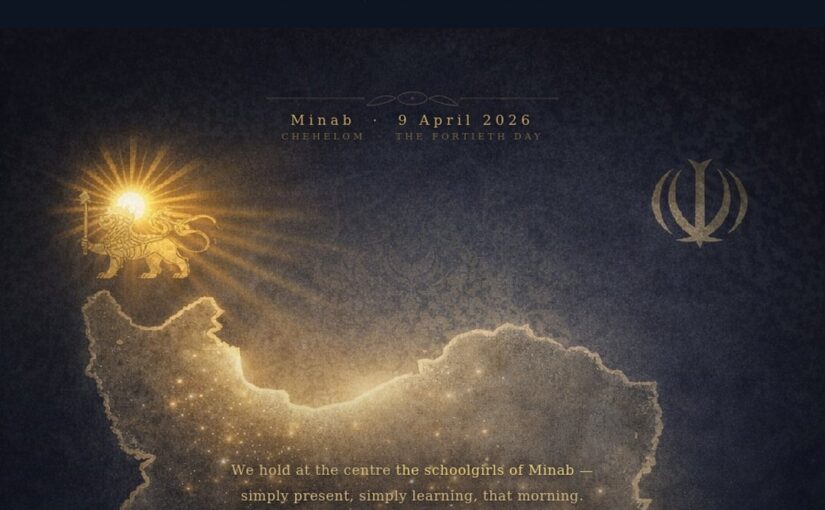
A Minute of Silence for the Schoolgirls of Minab | Chehelom, 9 April 2026
The Chehelom, چهلم, is the Persian tradition of gathering on the fortieth day after a death to pray, remember, and bear witness. It predates Islam and runs through every strand of Iranian culture. We mark it here not as a political act but as a human one. Set your alarm. One minute. That is all we ask. XTM
At 10:45am on 28 February 2026, 165 human beings, most of them schoolgirls aged 7–12 from the Bandari and Afro-Iranian communities of southern Iran, were killed in the bombing of the Shajareh Tayyebeh school in Minab.
9 April is their Chehelom; the Persian fortieth-day memorial.
Wherever you are in the world, please set an alarm for 10:45am Tehran time on Thursday 9 April and take one minute of silence.
For the girls of Minab. For every innocent life lost in this war. No hierarchy of grief; Jewish or Arab, Muslim or Persian, American or migrant.
We are all One.
🕰 Tehran 10:45 · London 08:15 · New York 03:15 · LA 00:15 · Sydney 17:15
Share as far as you can. 🕊 Continue reading A Minute of Silence for the Schoolgirls of Minab | Chehelom, 9 April 2026
What Iran means to Kashmir| War, identity, & 5000 years of history| The Kashmir Notebook Ep 12
In this episode of The Kashmir Notebook, Gowhar Geelani is in conversation with Professor Noor Ahmed Baba, a noted political scientist and IR expert, to explore the historical, cultural, and political connections between Kashmir and Iran. Why is Kashmir often referred to as “Iran-e-Saghir” (Little Iran)? What explains the strong emotional response in Kashmir to the ongoing conflict in West Asia? Professor Baba traces these connections back nearly 5,000 years—through ancient migrations, Central Asian linkages, the influence of the Sassanid Empire, and the gradual spread of Islam shaped by Persian cultural traditions. The conversation also moves to the present geopolitical moment. As tensions escalate in West Asia, Professor Baba analyses the implications of the Iran conflict for global power structures, the Strait of Hormuz and energy security, and the shifting balance from a unipolar to a multipolar world. He reflects on the roles of the United States, Israel, China, and Russia, and discusses what these changes could mean for South Asia, particularly India and Pakistan.
Dhurandhar, Politics of Bollywood & India Pakistan
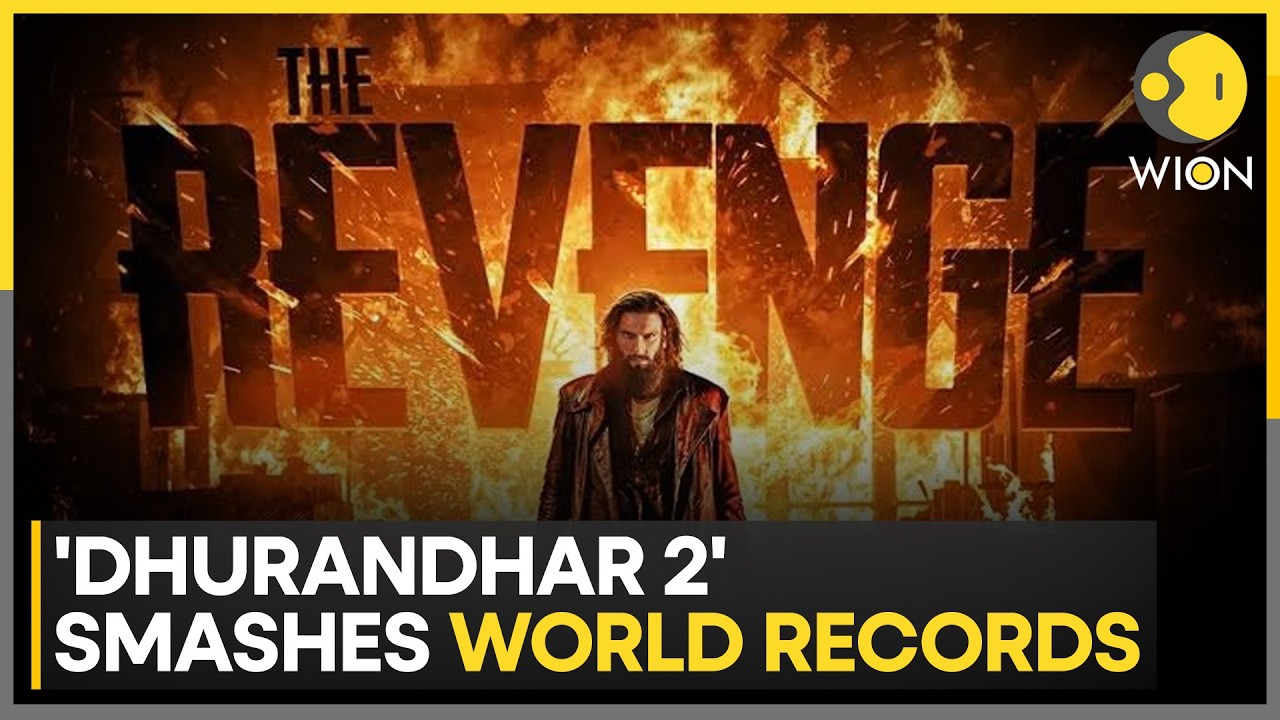
I had avoided the Dhurandhar hype for the last four months. I finally watched the first movie on Netflix and then read XTM’s review and watched the 2nd part in theatre. I profoundly disagreed with it—especially the line:
“By routing this grief through an anti-Pakistan narrative, the film asks Hamza to deny his Sikhness in order to become fully Indian, and frames that erasure as redemption.”
I’m not writing a formal review of the movie, but I will try to respond to a few generic questions raised on this forum and across social media regarding Dhurandhar.
Is the villain missing?
I agree with XTM that a central villain is missing in Part 1, but perhaps we should see Dhurandhar as a 7‑hour film split into two parts, rather than a standalone first installment.
Part 1 vs Part 2
Personally, I felt Part 1 was more tightly written and better dramatized. While some reviewers saw the love story as a needless distraction, I viewed it as a way to explore Hamza’s humanity despite his profession.
Is Dhurandhar Anti‑Islam?
On the contrary, I felt the filmmakers went out of their way to separate the issue of anti‑India terrorism from Islam—despite the fact that some terror groups do draw on fundamentalist interpretations of religion.
The villains are not portrayed as devout Muslims; they are not shown praying before missions. Rehman Dakait’s wife lighting his cigarette as a good‑luck gesture is a good example.
One could even argue that Dhurandhar focuses almost entirely on political motivations within Pakistan, while ignoring any potential religious motivations behind the Indo‑Pak conflict. I don’t know exactly how the ISI thinks, but I would wager that at least some religious motivations do exist—it cannot be purely political.
Is Dhurandhar Anti‑Pakistan?
Obviously, it is—but I disagree with XTM’s assertion that it dehumanizes Pakistani Muslims.
I didn’t enjoy the montage of political killings by “unknown gunmen”; it felt shallow. But it wasn’t the sort of random, gleeful violence we saw with Gaitonde in Sacred Games during the 1993 riots.
The film definitely leans dark, but I would still call it shades of grey, especially because of Hamza’s conversations with his wife.
I also believe that Major Iqbal’s character is humanized. He carries the burden of his father’s sins, and the mental torture he undergoes—while still maintaining a link to his wife and child—would break almost anyone. We can see why Major Iqbal becomes who he is. Ironically, this humanization also makes him a less effective villain than Rehman Dakait, as many reviewers have noted.
Is Dhurandhar pro‑Modi propaganda?
I may be wrong, but I felt the film used real politics—like demonetization—to weave its plot. Using real events increases impact, and I think that’s what the filmmakers were aiming for.
Does this mean it has no propaganda effect? Of course not. But compared to the list of A‑list Bollywood movies I’ve seen over the years, this is nothing unusual. We will probably see Hollywood films justifying the Iran war in a decade or so—that has always been the pattern.
If you pay attention, the film also touches upon how previous governments—Indira Gandhi’s as well as Manmohan Singh’s—played roles in shaping certain outcomes. It is not a “Modi or bust” narrative.
However, it would be blind to deny that the film does portray the Modi government’s actions toward Pakistan and terrorism in a positive light.
Jaskirat’s Arc
While I found certain aspects of the film underwhelming, I thoroughly enjoyed Jaskirat’s arc. Here, I completely disagree with XTM. The movie does not celebrate Jaskirat’s transformation into a killer—it shows the cost he pays at every step. It also explicitly shows how he is used by the establishment.
Jaskirat doesn’t become an intelligence operative because Pakistan “earned his hatred.” He becomes one because it was the best choice available to him. The film wants viewers to see the price soldiers pay for their “jobs.”
Also i absolutely do not understand why XTM thinks Jaskirat’s Sikhness is erased in the movie. Rather Jaskirat choses to travel back to Pathankot as a tired Sikh in full Pagdi not macho silky muscly Hamza. I think going beyond this straightforward narrative into the alleged drugs, land dispute, Khalistan angle while thinking erasure of Sikhness or History is something i absolutely do not get.
On Hatred Being ‘Installed’
XTM claims:
“The hatred is not earned. It is installed.”
I disagree. You do see Hamza’s transformation through Lyari’s horrific violence, the betrayal of the Baloch by Rehman, and 26/11. You can see a monster being born in Lyari, but even then he retains his humanity—which becomes evident again when he reacts to killing his friend.
The movie does not end with a “happily ever after” for either Hamza or Jaskirat. It wants you to examine that, not ignore it.
My Take
I enjoyed both movies. Like XTM and many others, I agree that Part 2 has more flaws while Part 1 is far more seamless. Still, Jaskirat Singh Rangi’s arc in Part 2 is the highlight of the entire seven hours.
On India–Pakistan
Contrary to what social media suggests, India as a whole has moved on from Pakistan. You can see this from the declining obsession with India–Pakistan cricket matches compared to the 1990s and 2000s.
Yet, a significant number of Indians derive a kind of sadistic pleasure from Pakistan’s struggles. You see this reflected in reactions to news, such as Pakistan mediating in the Iran crisis—where both the Hindu right wing and the opposition twist the narrative for political ends.
If you once hated your neighbour in the slum you grew up in, would you still mock his poverty after moving into a middle‑class apartment? Or should you aspire to grow on your own terms?
This attitude towards Pakistan is self‑defeating. I honestly pity it.
My message to fellow Indians: Grow up and move on. Look East.
What if Pakistan successfully mediates in the Iran crisis? What if Pakistan continues to punch above its weight diplomatically?
If their mediation helps solve an energy crisis—unlikely, but possible—shouldn’t I, as an energy‑deficient Indian, be happy? If Pakistan’s rise ever poses a genuine risk to India, I will worry about it then. Until that point, I prefer to leave it to the agencies and the government. If Pakistan becomes richer and doesn’t support terrorism against India why would that be a bad thing ? I am not being naive but i think there is a marginal chance of Ind- Bangladesh level relations with Pakistan in 20 years if not 10. Inshallah
Iran: The Illusion of a Peace Deal| John Mearsheimer and Stephen Walt
Professors John Mearsheimer and Stephen Walt explain why U.S. and Iranian demands are fundamentally irreconcilable — and why this crisis is far from over. Instead of bringing Tehran to terms, Washington now finds itself further from a diplomatic settlement than it was in May 2025. Iran has played a weak hand with discipline and patience. The United States, by contrast, risks stumbling into another major strategic failure in the Middle East. At the core of the impasse is a basic reality: both sides are demanding the impossible. Washington insists on the full dismantling of Iran’s nuclear and missile capabilities, while Tehran seeks sanctions relief, reparations, and long-term security guarantees. Neither side is prepared to yield. The result is not a pathway to peace, but a deepening stalemate — with escalation, not resolution, the more likely outcome.
nos ancêtres les Hindous
A pattern has emerged in these comment threads that deserves naming directly. When the Hindu hammer retreats, the space does not become neutral; it becomes anti-Hindu. The two are not the same thing, and conflating them is itself a form of intellectual dishonesty.
Hinduism is one of the most theologically complex systems humanity has produced. It is the root of Dharmic civilisation, the origin point of concepts, reincarnation foremost among them, that have radiated as far as East Asia, Southeast Asia, and arguably into the mystical strands of Abrahamic tradition. The sages, the philosophers, the vast literature: none of this coheres with the dismissal now fashionable in certain quarters, that Hinduism is simply a colonial administrative category, a British label slapped onto undifferentiated paganism.
This is the Pakistani foundational ideology speaking. It must deny Hindu civilisational continuity, because acknowledging it makes Temple destruction look like what it was: a pattern, not a series of unrelated incidents. It must deny that India had a civilisation, because if India had one, then the last pre-British colonisers of South Asia were Muslim; and that sits uncomfortably with postcolonial victimhood framing. The logic is circular and self-serving, but it is internally consistent. One cannot claim the mantle of the oppressed while being the penultimate oppressor.
The Dravidian Continue reading nos ancêtres les Hindous

Open Thread
Formerly Brown asked me to post this:
1. Six Ukrainians and one US citizen have been arrested by india while crossing over from Myanmar. Apparently they were helping to create trouble in Myanmar, an eventually trying for a Christian state there. Sheikh hasina had sounded about US interests in such a venture.
2. Tamilnadu elections might be closer than expected. Side show: seeman’s Tamil party is attracting Brahmins!! who are opposed to Dravidians.
3. LDF might pop UDF once again in Kerala. Ironically both fronts are accusing each other of being B team of BJP, who have 1 seat currently!!!
4. Indian lokasabha is to add 215 more seats reserved exclusively for women by the 2029 polls. Modi has changed india for ever.
On Dhurandhar, Decorum, and Where BP Draws the Line
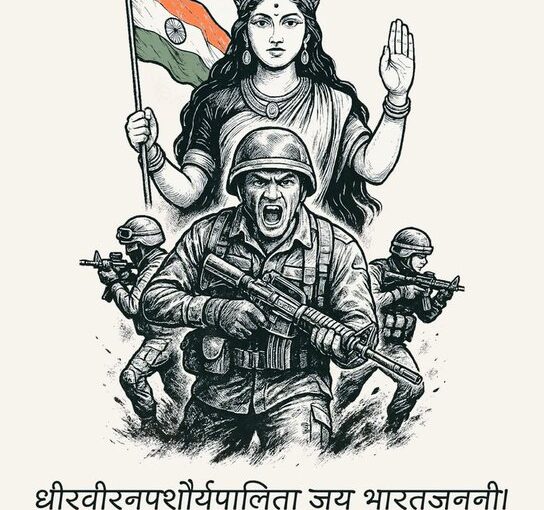
The review of Dhurandhar 2 has now been posted. Read it if you haven’t. The comment thread on the Ikkis post, which ran in parallel, illustrated the review’s central argument more vividly than any film still could.
A film that educates audiences to hate will eventually produce hateful audiences.
We have been moderating this site long enough to know that comment threads are a pressure gauge, not a debating society. What happened over the last 48 hours was not debate. It was escalation; predictable, cyclical, and ultimately ending where it always ends when people get sufficiently worked up: in the language of violence.
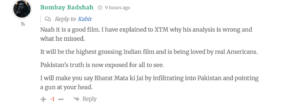
BB was on a Dhurandhar high. We understand this. There is something in the film’s rhythm, the josh of it, as he put it himself, that makes a certain kind of Punjabi Muslim-hating Bollywood patriot feel ten feet tall. We are not without understanding. He had just watched a four-hour film designed specifically to produce this effect. But understanding the cause does not excuse the consequence.
The line was crossed when he repeated, almost verbatim, dialogue from the film, the “ghar mein ghusega bhi, marega bhi” register, and directed it as a personal threat at Kair. Saying one will infiltrate Pakistan and hold a gun to someone’s head to make them chant a slogan is not josh. It is a threat. That it is practically unenforceable is beside the point. The language normalises exactly what we argued Dhurandhar 2 normalises: the idea that the other must be humiliated into submission, not merely defeated.
BB’s commentating rights are suspended until Thursday, 2nd April. Every comment he attempts in that period will be deleted. When the suspension ends, reinstatement of authorship will depend on whether the Saffroniate faction of our commentariat, can reason with him collectively that certain red lines exist even in the heat of subcontinental rivalry. Those lines are not about Pakistan. They are about the difference between argument and menace.
Kabir and Sbarrkum retain their authorship. Kabir was asked to stop and did not, and we say so plainly. But nothing in his conduct approached the violent register BB eventually reached. We are also honest about the asymmetry here: Brown Pundits tilts toward Bharat, that is India; everyone who reads this site regularly knows this. That soft tilt means Kabir, Sbarrkum and Qureshi operate in a forum that is structurally not neutral. The least we owe them is consistent application of the rules.
We want to say something about the Punjabi dimension behind all of this, because it is analytically interesting and not merely polemical.
Continue reading On Dhurandhar, Decorum, and Where BP Draws the Line
Dhurandhar 2: When the Villain Disappears, So Does the Film
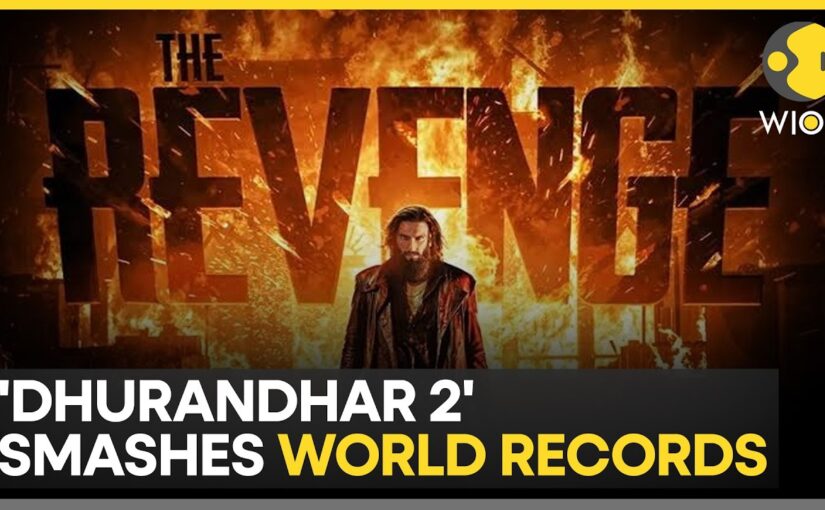
We wrote in December that Dhurandhar perfected Bollywood’s new formula: the fetishisation of Pakistan as the subcontinent’s most glamorous disaster. Dangerous, broken, desirable, and always in reach. Three months later, the world has changed more than the franchise has. Iran has seized the Strait of Hormuz. Pakistan is psychologically vacating South Asia. And Dhurandhar 2 arrives as a cinematic relic of a paradigm already dissolving.
It is not good.
The first film worked because the villain was the gravitational centre. Akshaye Khanna’s Rehman Dakait, Baloch, charismatic, smouldering, made Ranveer Singh’s Hamza credible by giving him something worth the deception. A spy story lives or dies by its antagonist. Remove the antagonist, and you don’t get a hero. You get a man punching air for four hours. That is Dhurandhar 2. Angrier, louder, emptier; and at 3 hours 55 minutes, a film that confuses scale with depth.
The structural collapse is ideological as much as narrative. Dhurandhar 1 had grey. Hamza was a man genuinely lost between two worlds; the film understood that proximity to Pakistan produces desire, not only contempt. That complexity, that slippage between intimacy and danger, was what made it aesthetically serious. Dhurandhar 2 closes that gap entirely. The Pakistani Muslim is now simply a target, and the film is at pains to multiply them faster than they can be eliminated. This is the Hydra error; the same mistake Mossad has made in Gaza. Cut off the head and ten more appear, until the only logical conclusion the audience is being nudged toward is collective punishment. You cannot make a film that glorifies this logic and then claim it is merely entertainment.
The Hindutva-Zionism convergence is now visible at the level of cinematic grammar. Both traditions have arrived at the same endpoint: the innocents cannot be separated from the combatants, therefore the innocents must go too. It is a short distance from that premise to a football scene with a severed head, which Dhurandhar 2 includes without irony. This is not complexity. This is an audience being educated to hate, and that is far more dangerous than any amount of bad plotting.
Bollywood has always used Pakistan as its erotic shadow; familiar enough to feel intimate, foreign enough to feel forbidden. That formula depended on the Pakistani figure retaining some glamour, some interiority, some capacity to make the Indian hero sweat. Dhurandhar 2 strips all of that away. What remains is a shooting gallery. The irony is that by dehumanising its villains, the film also destroys its hero. Hamza becomes less interesting the more Pakistan becomes merely a backdrop for his competence.
The music, which in the first film gave us a Persian Gulf aesthetic that became genuinely anthemic, is a significant step down. The background score intrudes rather than elevates. And Ranveer Singh, who is a serious actor, is given a character arc built almost entirely around rage; which is a waste of an instrument that can do much more.
There is a deeper geopolitical irony the filmmakers did not intend. Dhurandhar 2 is a film about Indian dominance of the AfPak axis at precisely the moment that axis is reorienting toward Iran. Pakistan is stepping into its role as a Muslim power, mediating with Tehran, psychologically decoupling from the subcontinent. The Baloch and Pashtuns are the eastern Iranians; Punjab’s future is as a lowland frontier of a broader Persianate world, not as the last redoubt of a subcontinent fixation. Dhurandhar 2 is the cinematic expression of an India that has not yet noticed.
What Dhurandhar 1 understood, and Dhurandhar 2 has forgotten, is that the most dangerous person in any room is the one you cannot stop watching. Rehman Dakait was that person. His absence is not a plot problem. It is the film’s entire problem.
The sequels that matter are the ones that deepen what came before. Dhurandhar 2 only amplifies it, and amplification without depth is just noise.
⚠️ SPOILERS BELOW – Read only if you have seen the film Continue reading Dhurandhar 2: When the Villain Disappears, So Does the Film