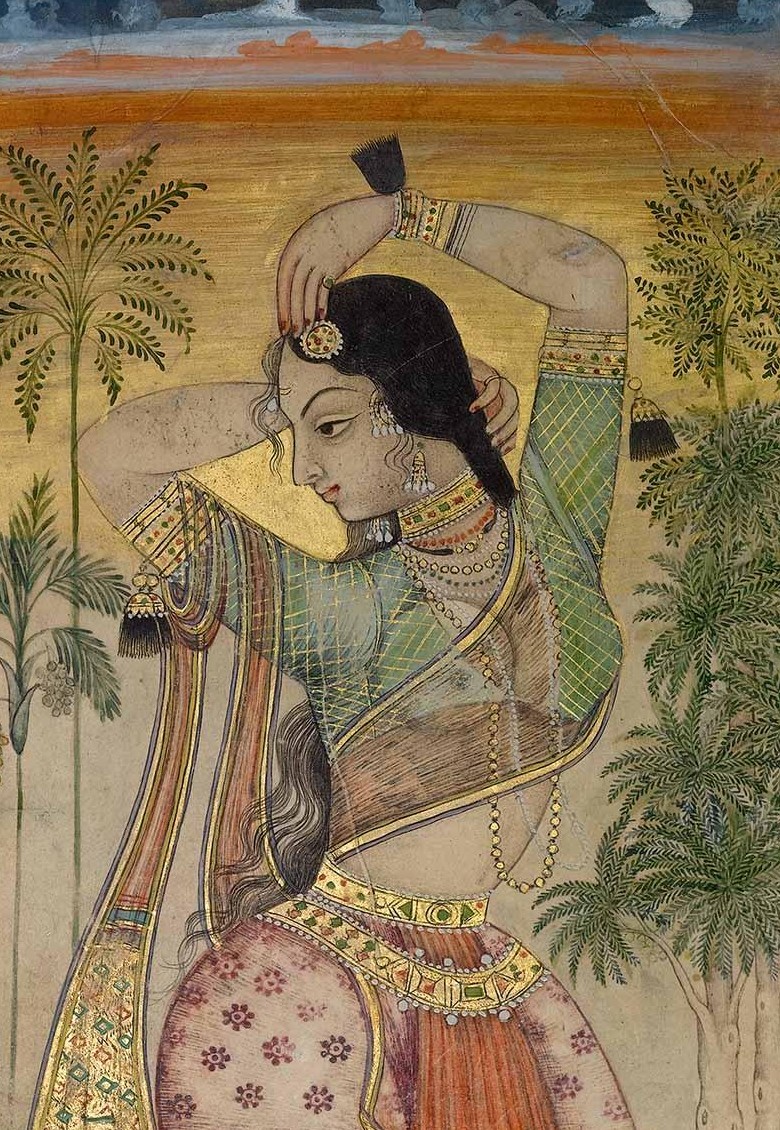
If China endured a century of humiliation, India has lived through a thousand years of it. Invasions and exploitation left it poor in wealth but rich in culture; intricate, adaptive, and resilient. That depth shows in Desi English, which often favours long, ornate sentences over plain ones.
This habit echoes Persian’s former role in the subcontinent: a prestige language whose mastery signalled rank. Even Ghalib’s vast Persian verse drew less love than his Urdu. In India, Persian was the colonial language of power; today, English plays that part.
In Iran, Persian changes fast. Slang, borrowed terms, and foreign tones reshape it so quickly that many in their forties struggle with teenage speech. My own Persian, kept alive in Kuwait and India, is closer to Shirazi and Tehrani standards than to the language my ancestors spoke. I’m self-conscious with Iranians, but with diaspora Persians, I speak freely; we share a looser, accented form of speech.
In Afghanistan, Persian survived as Dari. Later, it returned to Iran without losing its script or cultural depth. The same is true for Arabic and Hindustani: deep roots, constant use, and an unbroken script let a language absorb and reinvent.
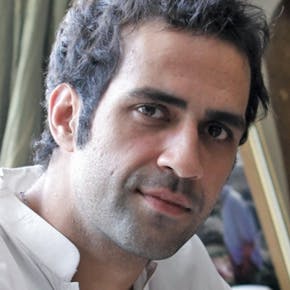
Indian English lacks those roots. It borrows the surface complexity of older tongues without the depth beneath. Writers like Aatish Taseer and Salman Rushdie embrace this style; Vikram Seth shows you can keep depth and still be clear.
The challenge for Desi English is to keep its richness without letting sentences sink under their own weight.
Rushdie quite famously tried to translate the rhythms of Indian speech into English. It’s a major hallmark of his style.
Aatish is a journalist so I think his English reflects that. As an aside, he’s not a very good novelist. I have read two of his novels and they didn’t make too much of an impression. The narrator in both was kind of a thinly veiled stand in for himself (in one book the narrator was even called “Aatish Taseer”).
He comes from quite a storied Pakistani family. His dada was M.D. Taseer and his dadi was Cristobel George (who was later known as “Bilquees Taseer”). Through his dadi, he is even related to Faiz Ahmad Faiz.
I’ve downloaded Aatish’s translations of Manto so let’s see how those are.
I knew the Taseer family somewhat well btw.. and I also did something with Aatish. we interviewed Aatish at Cambridge as well.
I thought “Taseer” was a gift (the name) from Faiz?
I actually like him a lot .. but in general, even over Salman Rushdi, I’d rate Suitable Boy as the best Desi Fiction of all thing.
I couldn’t power through God of Small Things alas but Suitable Boy really captured the spirit.
I don’t think the name came from Faiz. According to Wiki, M.D. Taseer’s father was named Mian Atta ud Din Taseer (he was Kashmiri btw).
I love “A Suitable Boy” but I think “Midnight’s Children” is considered to be the “Great Indian Novel”.
“God of Small Things” was my brother’s favorite novel.
Something I learnt in grad school. Do you want to show off your vocabulary or get the message across.
I choose to get the message across and simple sentences