Is Iran winning the war| UnHerd

While the usual suspects on BP are busy with their anti-Pakistan comments, the Iran war continues–which is far more important globally than Pakistan/India back and forth is.

The inordinate focus on Pakistan on this forum is quite something and deserves a deeper psychological explanation.

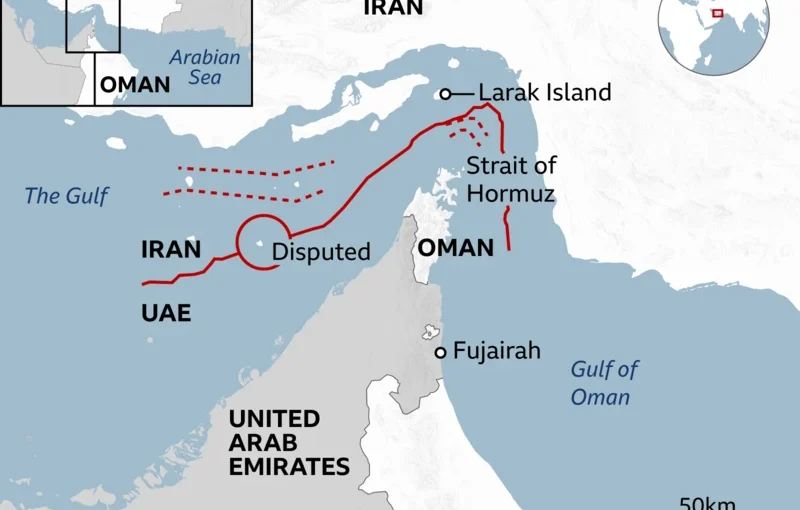
UnHerd’s Freddie Sayers speaks with Professor of Political Science at the University of Chicago, Robert Pape, to discuss the high-stakes ‘escalation trap’ unfolding between the United States and Iran – breaking down the tactical successes and failures of the US military campaign and analysing how Iran is leveraging its geographical position and control of the Strait of Hormuz through low-cost drone and missile harassment. As Professor Pape draws comparisons to the Vietnam War and 1973 oil crisis, has the Trump administration lost control of the conflict’s trajectory, and are we moving toward a dangerous ground power dilemma that threatens the global economy and the stability of the Western alliance?

Archeological Society of India to work with Indonesia on Prambanan Temple Complex Restoration

A brief respite from war, death and bombings. Some encouraging news from South East Asia.

I have had the privilege to visit the Angkor Wat Complex in Siem Reap, Cambodia. The ASI has done some decent work there in restoring some of the buildings within. The Prambanan temple complex dates back to the 10th century and after Angkor, its the largest one in SE Asia. I would love to visit someday.

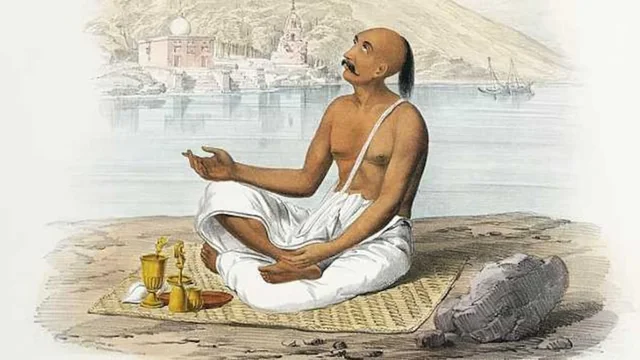
I did visit Bali briefly a couple of decades ago, which was a wonderful rabbithole to fall down into, in terms of Indic influence and syncretic culture in SE Asia. Balinese Hinduism is a fascinating fusion of what we Indians think of as ‘core’ Hinduism, along with local animist influences. What superficially can feel slightly alien and almost jarring – in terms of pooja thalis adorned with whole skinned chickens, is in fact, incredibly typical of how the Dharmic faith has spread all over the Indian sub-continent and beyond, absorbing local totems and figures into its mythology as manifestations and ‘Avtaars’ of its primary dieties.

Has anybody on BP or the commentariat visited Yogyakarta or any other Indonesian sites with Buddhist/Hindu influence?

Pakistan must not treat Afghanistan like Gaza

[A note to readers: BB’s open thread is taking a short break while he recalibrates to high-signal posting]

Pakistan Strikes a Hospital in Kabul.

Late on Monday night, the 28th night of Ramadan,  a missile struck the Omid (“Hope”) Addiction Treatment Hospital in Kabul. It is a 2,000-bed facility built in a former NATO camp, housing thousands of young Afghans receiving treatment for drug dependency. Witnesses said they heard three explosions just as patients were completing evening prayers. Two bombs struck patient rooms directly. “The whole place caught fire. It was like doomsday,” one survivor told Reuters. Al Jazeera

Taliban authorities say 408 were killed and 265 injured; figures that remain unverified by any independent party, though the physical destruction of the hospital and the ongoing rescue operation are not in dispute. Rescuers were still pulling bodies from rubble by flashlight through the night. The UN human rights expert for Afghanistan, Richard Bennett, said he was “dismayed” and urged all parties to “respect international law, including the protection of civilians and civilian objects such as hospitals.ABC News

Pakistan insists its strikes “precisely targeted military installations and terrorist support infrastructure” in Kabul and Nangarhar, with targeting “carefully undertaken to ensure no collateral damage.CP24

One witness at the scene noted military units were positioned around the hospital perimeter; which may explain the targeting logic, if not excuse it. No secondary explosions consistent with an arms depot were filmed.

Afghanistan-Pakistan border: new centre of the 'war on terror', by Philippe Rekacewicz (Le Monde diplomatique - English edition, December 2009)
the war

The pattern matters as much as the incident.

Continue reading Pakistan must not treat Afghanistan like Gaza

The ‘Hindutva’ attack protocol

A tweet reposted by Azad Essa, attacking Priyanka Chopra as “Hindutva-fascist”, asserting that she is somehow ‘uncomfortable’ standing next to Javier Bardem while he delivered remarks in support of Palestine. This, in spite of the fact that Priyanka Chopra has publicly supported Palestine – signing letters demanding ceasefires, tweeting on Rafah and so on.

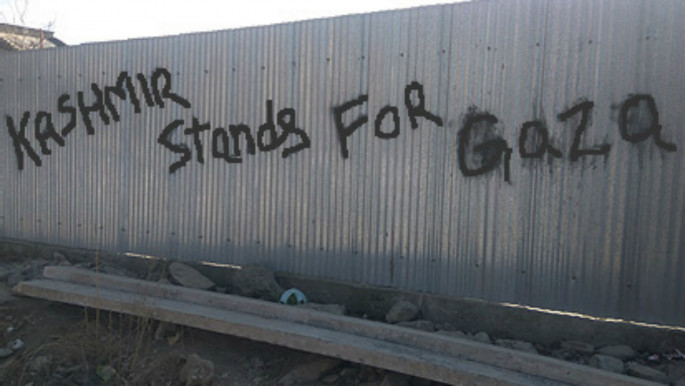
Azad Essa, is an author that was recently spotlighted on Brown Pundits itself, via his propaganda work on comparing Palestine to the Kashmir valley. This is a particular echo chamber driven by a very explicit agenda, that seeks to weaponize and co-opt the language of the left, in pursuit of demonizing India and Hindus. Facts do not matter, its Priyanka’s ethnicity that matters, and the fact that she dares to be publicly proud of her heritage, her religion and her nationality.

This is but an anecdotal example, but one that quite neatly spotlights the suspect credibility of aspiring ‘academics’ like Mr Essa. The question is how does the ecosystem of academia defend itself against such explicit bad actors that misuse concepts of ‘academic freedom’ and ‘journalism’ to peddle insidious agendas.

The Strait That Broke the World

On February 28, 2026, the United States and Israel struck Iran.

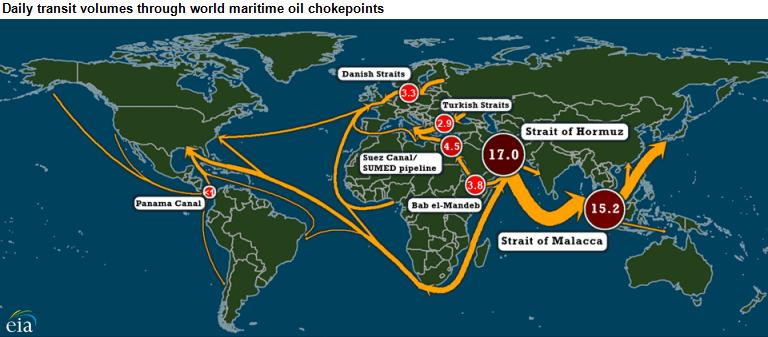
They hit fuel depots, missile sites, command infrastructure. Within seventy-two hours, the Strait of Hormuz, twenty-one nautical miles at its narrowest, carrying twenty percent of the world’s oil, closed. It has not reopened. Everything that follows from that sentence is not speculation. It is arithmetic.

The Price

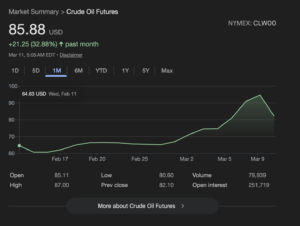
Oil was at sixty-five dollars a barrel when the bombs fell. Within days it touched one hundred and twenty. Analysts at Kpler said publicly that if Hormuz stayed shut through March, one hundred and fifty was not a ceiling. Barclays agreed. The IEA called the disruption the largest in the history of the global oil market, twice the scale of the 1956 Suez Crisis. People heard those numbers and thought: petrol prices. School run. Heating bills. They were thinking too small.

The Cascade

Oil is not just fuel. It is the circulatory fluid of the entire industrial world. When it doubles overnight, everything that moves, everything that is made, everything that is insured, financed, or shipped reprices simultaneously.

Marine insurance becomes unwritable. Trade credit freezes. Every CFO at every company in every sector looks at their cost assumptions, built at seventy dollar oil, and cancels the next quarter’s capex in the same morning meeting. That coordinated freeze is not a symptom of recession. It is the recession, arriving before a single GDP figure confirms it.

The banks come next. Energy loans, airline debt, shipping company bonds, all underwritten at sixty to eighty dollar oil. At one hundred and twenty sustained, covenant breaches begin quietly. Not crashes. Tightening. The marginal credit that keeps service businesses alive stops flowing.

Then the Gulf sovereign wealth funds. ADIA. PIF. QIA. Mubadala. Two to three trillion dollars in global assets, equities, real estate, private equity, deployed as patient capital into Western markets for fifteen years. They are nominally richer at one hundred and twenty dollar oil. But their export infrastructure is disrupted, their domestic spending obligations spike immediately, and their liquidity needs arrive precisely when their asset values are falling.

The moment even one major fund moves from net buyer to net seller, it removes the price support it has been providing silently for years. Other funds follow. The risk premium they have been suppressing across global asset classes reasserts overnight.

This is not the 2008 financial crisis. That was a fire in the financial system’s wiring. This is the fuel supply to the engine failing. Different category. Larger consequences.

The Trap Continue reading The Strait That Broke the World

GDP of South Asian countries 1 : nominal vs real

In March 1776, exactly 250 years ago, Scottish economist Adam Smith published his work The Wealth of Nations, widely considered to be one of the most influential books on political economy.  In this book he highlighted the fact that people often confuse the real wealth of a country (the ability to buy goods and services) with  its nominal wealth. The idea is still relevant today, so let us have a closer look. If we rank the major South Asian countries by their per capita nominal GDP (size of the total economy in the local currency divided by the price of a dollar), the list goes as follows :

1. SriLanka : USD 4516 
2. India : USD 3051
3. Bangladesh : USD 2960 
4. Pakistan : USD 1710
5. Nepal : USD 1550
6. Afghanistan : USD 417 

Many people assume that these numbers measure how poor or rich a country is. In particular, the average Sri Lankan is 50 percent wealthier than the average Indian, and the average Bangladeshi is 70 percent wealthier than the average Pakistani. This is not really true. The nominal GDP accurately measures the real wealth of a country only in an utopian world where there are no taxes or other barriers on tradable goods, and transportation costs are completely absent. In reality, Americans can not instantly transport themselves to India to get cheap haircuts, and South Asian countries often impose huge taxes on imported goods. So nominal GDP is a flawed yardstick if we want to compare different countries.

Here’s a simple puzzle based on this idea : What steps should the Indian government take if they want to increase the country’s per capita nominal GDP from USD 3000 to USD 6000 within this year?

At first glance, achieving this may seem unattainable, given that India’s economy is currently growing at a rate of 6-7 percent annually. However, once we realize that nominal GDP also depends on trade policies, it is easy to come up with strategies to make this happen. For instance, the Indian government could implement an extra import duty of Rs 45 per dollar on all imported goods while simultaneously offering a Rs 45 per dollar subsidy (through tax incentives, free land, etc.) for all exported products. This will reduce the price of the dollar from Rs 90 to Rs 45 and double India’s nominal GDP. It’s also easy to see that this will have no impact on the real economy. Since the USD isn’t utilized in local transactions, the domestic market will stay the same. The extra tax imposed on imports will be balanced by the decrease in the dollar’s value. Likewise, the lower dollar rate will be offset by subsidies provided in the export sector.


Kashmir is not Palestine.

It seems apparently that Kashmir is Palestine. That India is Israel. That Kashmiri Muslims are Palestinians.

Why the Return of Kashmiri Pandits Is Still a Distant Dream - The New York  Times
Displaced from their Vatan

First The Pandits were actually displaced. 100,000-200,000 people (estimates vary) fled the Valley in 1990 under explicit death threats, targeted assassinations, mosque loudspeakers announcing their departure was required. This is the closest thing to actual ethnic cleansing the Valley has seen in living memory, and it was directed at Hindus, by militants operating with Pakistani ISI support.

We are not arguing that everything is fine in the Valley. It is not that Delhi’s approach to Kashmir has been faultless, or that the revocation of Article 370 was without consequence for Kashmiri identity. Nor can it be denied that there is genuine anguish among Kashmiri Muslims.

Kashmiri Muslim Women Pray Relic Displayed Editorial Stock Photo - Stock  Image | Shutterstock Editorial
Kashmiri Muslim Women Pray

However the analogy to Palestine is not merely imprecise, for instance the Abdullah family chose India over Pakistan, whereas no Palestinian chose Israel. However this argument is increasingly offensive.

The Gaza Test

Start with the simplest possible question: what is actually happening to the Palestinians?

Gaza before

Continue reading Kashmir is not Palestine.

A Deleted Tweet Just Moved the Oil Price 17%. Welcome to the New World.

The Graph Nobody Is Talking About

Oil Prices

BP Admin Note

September 2025 – Brown Pundits
Punditji

Before the oil, a brief note on Brown Pundits itself. Over recent months we have tried to move the comment threads toward a simple goal: remove noise while preserving disagreement. This is not a place for ideological conformity. It is a place where arguments should challenge substance rather than inflame style.

The density of comments has fallen slightly but the quality of disagreement has improved.

What the threads also reveal is a persistent misunderstanding about the relationship between civilisation and crisis. The caricature, that certain societies simply “fail to modernise“, misses the deeper negotiation underway.

Every tradition older than industrial modernity faces the same question: how to carry inherited principles into a world not built around them. That is not a uniquely Muslim or Persian problem. It is the defining problem of our age.

With that said, to the oil!

Oil Tanker Routes at Kimberly Clifton blog
SoH > SoM

The Only Number That Matters

Continue reading A Deleted Tweet Just Moved the Oil Price 17%. Welcome to the New World.

Brown Pundits