Open Thread: Bharat wins at Norway Chess, but something is off with Bollywood

Our 2026 reader survey is open until 7 June – anonymous, roughly five minutes. Please take a moment.


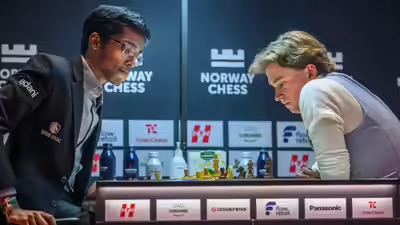
We are travelling, but South Indians, Tamilians?, are crushing it at chess. Praggnanandhaa took Norway Chess in Oslo this week with four straight classical wins to close, past Wesley So and over Gukesh on the way.

Which confirms the theory we have been quipping all trip: India, that is Bharat, owns the letter C. Chess, plainly. Cricket, obviously. Cuisine, beyond dispute. Culture, increasingly. Conversation, certainly (Desis are loud and loquacious). Caste, come to think of it..

However there is one C that has curdled: Cinema.

We caught the otherwise excellent Vadh 2 on the road. One scene was so gratuitously disturbing that we can’t shake it out of our minds.

Since Sacred Games, the sex and gore on Netflix India have not been there to serve a story. They are there to stimulate, and the audience being titillated are India’s masses. A young, idle, frustrated population is easiest to hold with sensation, so that is what is fed. This is not film-making. It is sedation at scale, and a restless country kept watching is silenced from increasing inequity (the largess of the Oligarchics) but perhaps deepening in rage (the constant ire at minorities)?

Ps: The Commentariat may also enjoy our newsletter piece on Mission Chandrayaan (Aug’23) witten prior to our re-engagement with BP, which we essentially inaugurated with Telugu being the Italian of the East (Sep’24).

The Newsletter and BP both started to kick off at roughly the same time; we decided to focus on BP since Substack is full of individual Auteurs but BP has a very venerable community, which we wanted to honour. The survey results are trickling through but what is astonishing is how sticky readers have been over this long decade and a half (BP will be 16 years in December; probably the oldest continuing Brown Blog on the internet).

Pps: Last call on the survey before it closes tomorrow.

Look closely and you may “see” what we have done throughout this post 🙂

.
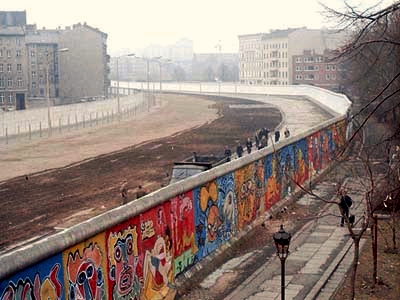
India’s Wealth will not turn Pakistan into East Germany

Our 2026 reader survey is open until 7 June – anonymous, roughly five minutes. Please take a moment.


The Comment thread is afire with the usual (and senseless) India-Pakistan arguments (essentially which of the two is poorer). Q waves the whole question away by pointing at the figure, unimpressed by “an average Indian producing only $2,800 in GDP every year,” and asks what the point even is. There is a point, two in fact.

First: per capita and scale measure different things. Per capita describes the life of a citizen. Scale describes the weight of a state. A single integrated market of 1.4 billion people generates agglomeration, economies of scale, and a pull on capital and talent that no small rich economy can match (India’s ascent in the world of cricket is an extremely interesting meditation). That is why India passed Japan in 2025 to become the world’s fourth-largest economy, why it is the fastest-growing major one, and why it is on course to take third from Germany by around 2028. The market no exporter can ignore, the trade terms a four-trillion-dollar base can lean on, the air defence and roads it can fund: that is concrete power, and it is not nothing. Much of the gain is siphoned by a clutch of oligarchic houses, but the dynamism is real.

Second: however that same wealth does not buy what BB imagines it buys. India outweighs Pakistan in GDP by something close to eleven to one. It has still not turned Pakistan into its East Germany, a dependent satellite drawn quietly into its orbit and, in time, absorbed. Pakistan remains sovereign, armed, and unbought. Pakistanis are not running across the Punjabi wall to their ethnic kin.

In May 2025, after Pahalgam, the larger economy did not dictate terms: Operation Sindoor ended not in surrender but in a ceasefire announced, awkwardly, from Washington, with both capitals claiming the win.

Look West. Iran is a fraction of the wealth of the United States and Israel, yet it has absorbed the most advanced air forces on earth, kept its regime, and kept the knowledge to rebuild what was struck. The guns fell silent at a ceasefire, not a capitulation. Wealth buys reach. It does not buy outcomes.

BB treats the GDP gap as a deed of ownership over Kashmir, and assumes Kashmiris will swallow their pride for a higher income per head, that prosperity purchases consent. It misreads the Islamicate moral economy entirely. In that ledger ‘Izzat and Deen, dignity and faith, are not line items to be outbid. The Hyderabadi Harvard PhD still sings the song of his lost people.

Peoples who set independence above comfort have done so across the whole anti-colonial century, and no balance sheet has ever talked them out of it. Money may buy luxury but not loyalty.

What price will any Indian or Pakistani nationalist accept for their love and loyalty to their homeland?

Open Thread: BP Survey

Our 2026 reader survey is open until 7 June – anonymous, roughly five minutes. Please take a moment.


Update – from the thread: More reading reccys. Furqan flagged Dr Naazir Mahmood’s The assassination that changed India, along with his own book review on Duniya Digital and a related op-ed, Stupidity or strategy, on the political economy of the subcontinent’s borrowed democratic forms. Kabir marked the passing of playback singer Suman Kalyanpur with two recordings: an unreleased Pakeeza song, introduced by Meena Kumari, and a Rafi duet. And from our own pages, the latest BRAHM newsletter: The Sky Above São Paulo.


Update, 1 June 2026 – links from the thread: The Peshawar Review has a new issue out, including Professor Harbans Mukhia’s reminiscences of Kirori Mal College (College Days) and Shan-e-Ahmed reading an Urdu transcreation of T. S. Eliot’s “The Love Song of J. Alfred Prufrock” (Prufrock in Pakistan). On the Tata Sons listing question, Agni flagged a cluster of commentary: the Indian Express “to list or not to list” column, The New Indian Express on the boardroom fight, Soonawala on why an IPO may not appeal to investors, and Business Standard on the 12 June board meeting. Survey responses are at 18 and counting; please add yours if you haven’t.


Editor’s note, 1 June: This Survey thread will sit on the front page through the week, until Sunday the 7th June, while we are travelling Eastbound, so we have made it an Open Thread. What strikes us, watching the comment threads, is that for all the constant bickering, BP is a community, and a recognisably Desi one.

It has the hue of a Hindu joint family (to be of the Indian subcontinent is, almost by definition, to have Hindu ancestors; “Hindu” is simply what the Persians called the people beyond the Indus) that has built a wall down the middle of the house and still cannot get over each other. The wall is real. So is the fact that nobody moves out.


Original Post: Every few years BP runs a reader survey. Razib began the tradition in 2019, and the responses then told us things the comments alone never could.

Seven years on, with a substantially different commentariat, we are running the 2026 edition. The prompt to revive it came from Kabir, whose recent post on what BP is and is not raised exactly the kind of question a survey can help answer, and we are grateful for it.

Nineteen questions, anonymous, roughly five minutes. The core spine is demographic in Razib’s tradition: age, sex, country, mother tongue, ethnic background, religion, caste, education, political ideology, and views on Hindu and Pakistani nationalism. A few behavioural questions follow on how often you visit, how long you have been reading, how you first found BP, and which topics you would like to see more of, with optional fields at the end for handle, newsletter signup, and anything else you would like the editors to know.

Please take the time to fill in this survey. Thank you for your engagement.

The Pakistani Voice That Isn’t in the Room

BB made a very sharp observation, and we want to put it on the record as a note rather than a finished argument, because it deserves more elaboration than we can give it today.

Who carries the Green Passport

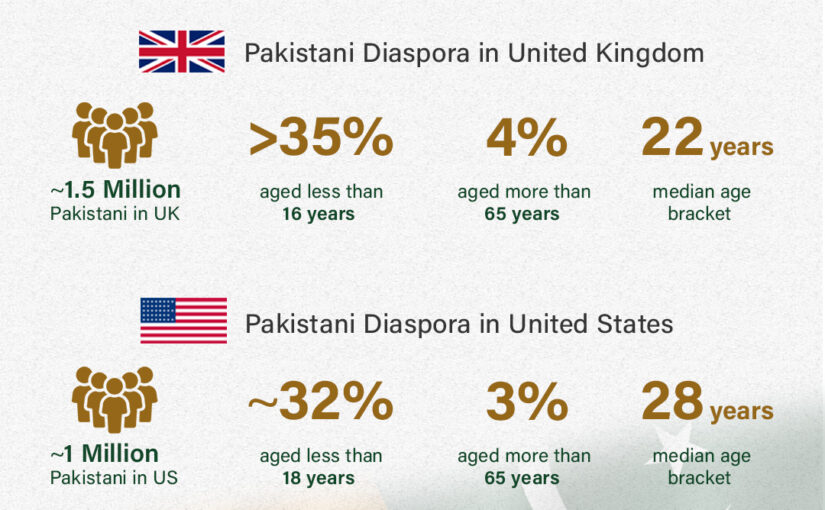
Look at who carries the Pakistani case at BP. Kabir holds a foreign passport. Q and EK write from the diaspora. Every voice that argues the Pakistani perspective here argues it from somewhere else. Not one of them speaks from inside the country: resident, middle or upper-middle class, holding a green passport with everything the green passport actually costs at the visa counter, at the airport, in what can and cannot be said at home. India, by contrast, is argued for in large part by Indians who live in India (BB is one such example). So the table is lopsided in a particular way. One side is represented by people inside the country it speaks for; the other, almost entirely by people outside it.

No photo description available.
The Great Cleft

Diasporas are powerful but deadly

Continue reading The Pakistani Voice That Isn’t in the Room

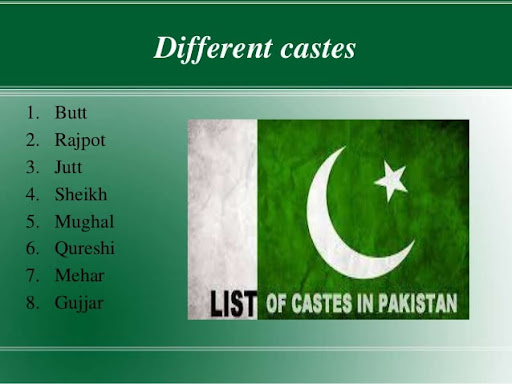
The invisibility of caste in Pakistan

I’ll do a larger post sometime later (maybe tomorrow) but a quick rebuttal of some points raised by Kabir in his latest post regarding caste.

Kabir mentioned this about privilege.

All the Pakistanis on BP are privileged given that we are all English-speaking and all of us have foreign citizenship (I assume).


All the Indians on BP are also privileged in that they are able to converse in English.

Notice the difference. The Pakistanis had to go abroad to live/study. The Indians didn’t. I don’t know about most Indians here (maybe they would like to enlighten) but I have spent my entire life in India. I have only gone abroad on vacation. There is no Pakistani equivalent here.

And that is telling.

India is better than Pakistan on all socioeconomic metrics. And I can link charts, data etc here but real world examples like this are more telling.

Sujatha Gidla, a Dalit was able to get education in some of India’s best educational institutions and make it to the United States where she could write a book in English. Unlike in Pakistan, one need not be a descendant of “doctors and lawyers” to be able to go down that path.

Again, I am not denying the existence of discrimination against Dalits (or for that matter Muslims) in India.

But the fact that Dalits (and Muslims) have dissenting voices as well as a visible presence in India speaks for India’s relative egalitarianism vis a vis Pakistan.

In fact, I would say caste is even more pervasive in Pakistan than India due to the complete denial by the privileged castes (as we can see here) and the complete invisibility of it. Kabir has multiple times spoken of his Iranian ancestry as well as EK of his Kashmiri Brahmin ancestry so they are very much “Ashrafs” speaking about “Ajlafs” and “Arzals”.

Poetry by Iqbal is fine and dandy but that doesn’t change the reality on the ground.

All those Muslims exist on the Indian side too where they receive affirmative action (as they should). What is called as “biradiri” is basically “caste”.

Kabir did make this comment about “proper Muslims”.

Proper Muslims (Arabs) don’t have caste.

First of all, it is good to see the acceptance by Pakistanis that they are not “proper Muslims”.

Secondly, since they are not “proper Muslims” but “Hindu Muslims” maybe time for them to examine their faults?


Bin Qasim’s Thousand-Year Wound

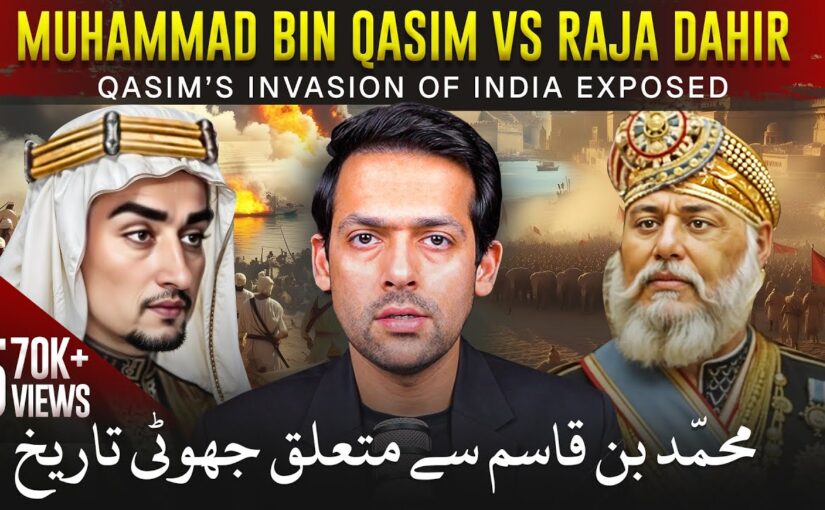
There is one fault line under everything that happens here, and it is old. Pakistan stands, whether it wishes to or not, as the proxy for the Muslims of the subcontinent, and India as the proxy for its non-Muslims. This is not a quarrel of the last election or the last war. It is a wound more than a thousand years old, set running when Muhammad bin Qasim landed in Sindh in 711, and it has been arguing with itself in the subcontinental subconscious ever since. Every thread on this site is a small, late episode of that argument.

There is a scene in The Devil Wears Prada, the cerulean one, where a colour chosen by Miranda Priestly (Meryl Streep) at the summit of fashion is followed down the seasons, runway to department store to clearance bin, until Andy (Anne Hathaway), who fishes it out is sure her choice owed nothing to any of it.

Anne Hathaway referencing the ICONIC cerulean sweater scene for her first  day filming The Devil Wears Prada 2 💙 Andy is back! , #AnneHathaway  #TheDevilWearsPrada #TheDevilWearsPrada2 #AndySachs ...

The subcontinent’s argument works the same way. Bin Qasim’s landing in 711 was a decision taken at the top of history, and it has filtered down through thirteen centuries of conquest, doctrine and memory into a comment thread, where two strangers swapping insults are certain the quarrel is about this week. It is not. It was chosen for them a thousand years ago, and they are wearing it without knowing the name of the colour.

What is new is that the argument is going quiet, and quiet is worse than loud. The subcontinent is partitioning itself a second time, in the mind. Indians increasingly talk only to Indians, Pakistanis only to Pakistanis, each inside a feed built to agree with them. The 1947 line cut the map; the algorithm is cutting the conversation. Against that, the value of Brown Pundits is simple and almost embarrassing to state. It is one of the few open places left where the two sides still argue with each other in public and mean it. That is worth defending even when the argument is ugly, because the alternative is not a calmer argument. It is no argument, and two rooms that never open the door.

Is BP sui generis on the Internet?

Continue reading Bin Qasim’s Thousand-Year Wound

On Bigotry

“Unfortunately, my experiences dealing with Indians (not all Indians obviously) have shown me…”

“I find a large subset of Hindus extremely toxic and hateful. I’m glad I don’t have to share a country with them. …”

“The “Saffroniate” cannot now claim innocence. The fact is that they get off on loss of life in Pakistan. They have real psychological problems.”

“There seems to be a genuine bloodlust for war and the decimation of Pakistan among Indian nationalists.”

Replace the target ‘Hindu’ with black, or even muslim, and what would happen if such statements are repeatedly published?

Pakistani claims of “false flag” has been a consistent pattern going back to the Mumbai attacks of 26/11/2008, where the Pakistani government for years refused to accept that Ajmal Kasab and his co-murderers were Pakistani.

It is deeply offensive for Brown Pundits to platform such preposterous assertions regarding the brutal massacre of Hindu tourists in Pahalgam. It has barely been a year since the tragedy occurred.

Platforming such propaganda is an overt choice. This is not free speech. This is spitting in the face of trauma.

The Crescent has a sharp edge

Context in BP is cumulative, mes amis.

As we know, certain members of the Crescentiate remain emotionally invested in Pakistan, and certain members of the Saffroniate respond by undermining Pakistan. Neither tendency is a criticism in itself, we try to keep as few Shibboleths as possible in BP.

As an aside the Crescentiate are “Zionesque” (or perhaps more appropriate Jinnahesque) in the sense of preferring Pakistan to Islam.

What is a criticism is repeatedly reaching across that line, eliciting the predictable reaction, and then presenting oneself as the neutral party once it arrives. This is a small community with a very long memory. The personality maps build over time, and we remember who did what first.

The Crescentiate, with whom Sbarrkum is aligned, correctly called Iran the victor in this year’s confrontation with the United States and Israel, a reading the Saffroniate has refused to grant. We deeply dislike the regime but acknowledge that its valiant defence of the homeland may augur new glimmerings for the Ummah (we are who we imagine ourselves to be hence why psych warfare is so dangerous).

Getting Indian Classical Music Wrong

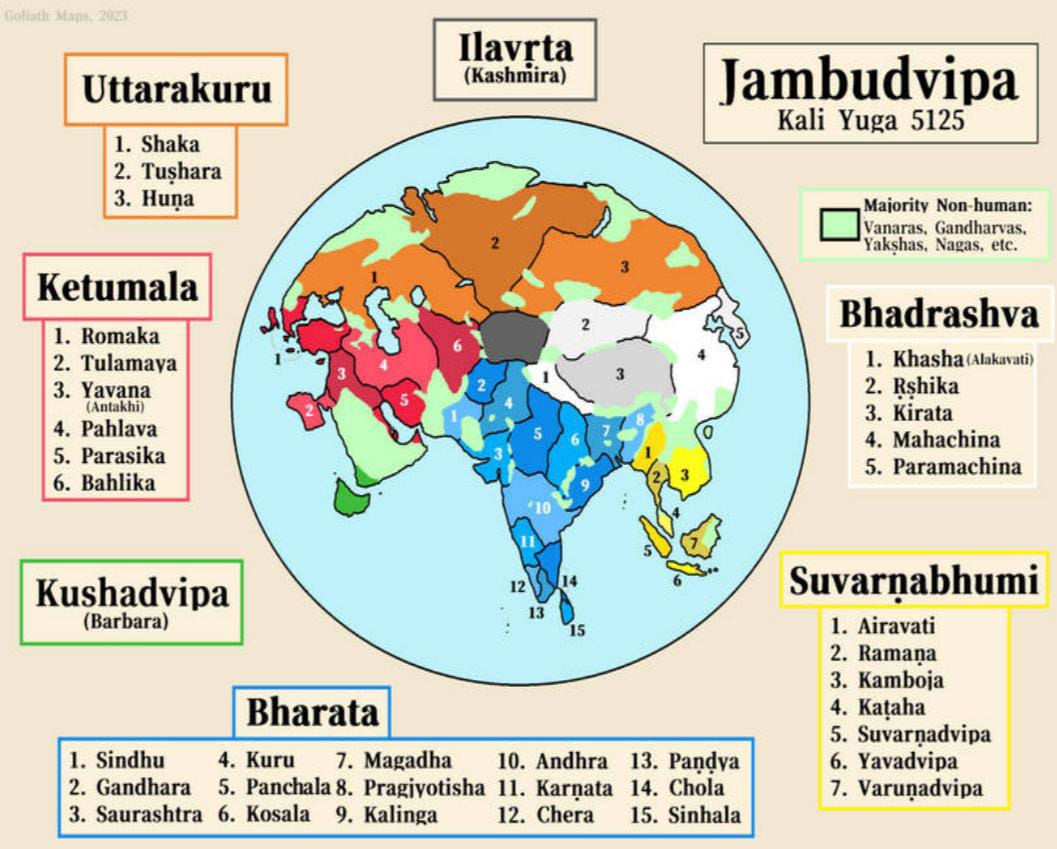
For instance, to tell our resident ethnomusicologist, an academic at Pakistan’s top university (Ivy+ crawls with LUMS researchers), that his field is entirely Hindu is ahistorical. Lest we be accused of green-washing, we prefer the Indian Continent be called Jambudvīpa.

Let's dive into the forgotten map of the ancients - Jambudvipa as described in our Puranas & Itihasas. This isn't just geography, it's cosmic cartography: mapping realms of humans, Devas, Nagas, Gandharvas

But we are also appreciative of historical truth: all major khayal gharanas have Muslim founders, converts or otherwise. Islam has long since moved past the mawali stage.

Imam Bukhari, compiler of Sahih al-Bukhari and the most authoritative hadith scholar in Sunni Islam, had a great-grandfather who was a Zoroastrian convert and mawla of the Banu Ju’fa.

So when someone is triggered, we will look to understand whether the trigger is justified, and what “triggered” the trigger, before acting.

Parliament at her Best:

Remember this is Parliament. And in Parliament, the curious thing is that members of opposing benches are often more cordial with one another than they are with members of their own party. The hostility you see across the aisle is theatre. The knife-work happens at home.

We moderate by nunchi, not by formula, encouraging congeniality both within and across the benches.

Brown Pundits