Pakistan, the Successor State to Islamistan

The settled view of Pakistan, is that it is the most ideologically Islamic state the world has ever produced, and that each decade carries it further into theocracy. We think the settled view is wrong.

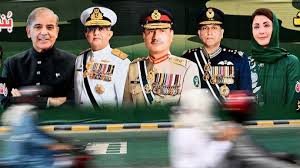
The Pakistani elite has quietly secularised. And far from hollowing the state out, this is precisely how Pakistan became what it was always designed to be: the successor state to British India’s Muslims. Islam was the vehicle. Pakistan is the destination.

Islam remains the public language of legitimacy.

Privately, among the stakeholders who actually run the place, the operating priorities are entirely secular. The society on the ground is conservative and devout. The class at the top, the one that keeps the state alive, believes in Pakistan far more than it believes in Islam.

It helps to separate three things that we mean by Islam. There is Islam as faith, the private conviction of the believer. There is Islam as identity, the badge of who one is and whom one stands with. And there is Islam as state language, in which Pakistan explains itself to itself and to the world.

The elite has not surrendered the third, and it has not wholly shed the second. What it has let go of is the first as a terminal value: the notion that the purpose of the state is to realise Islam, rather than to deploy it.

Faith has gone from ultimate to instrumental.

This migration is what we mean by secularisation. This is not the familiar story of liberalisation. We are not saying Pakistan grew tolerant, or irreligious, or fond of gin. We are saying something narrower and stranger. Pakistan’s elite secularised the priorities of the state without secularising its language. Strip away the Islamic vocabulary and look at what the stakeholder class optimises for, and the list is unmistakable: state survival, strategic depth, military capability, sovereignty, national prestige, and the reproduction of the elite itself.

Continue reading Pakistan, the Successor State to Islamistan

High-Intensity Precedent

Brown Pundits runs on attention. When we put hours into the site, it hums; when work and travel pull us across three jurisdictions at once, it slows. We have a backlog of pieces we want to write and lives that keep getting in the way. The June survey took the wind out of the schedule. We do not want to run this place as full-time editors, and we should not have to.

First, a thing worth saying plainly. Brown Pundits is not a magazine. It is a discussion community with essays attached, and it always has been. The life of the site is the conversation, not the rate of publication. Everything below follows from taking that seriously.

The principle is high-intensity posts. A lot of writing is rewriting, and we want authors to work their pieces hard before they go up. We have noticed the same thing for years. A post that carries real thought and attention never dies at ten or fifteen comments. Fifty is our quiet benchmark. Past a hundred, the thread stops being ours at all and takes on its own life, because people come here to argue with each other and use the post as fodder. Signal pulls signal. Thin posts pull nothing.

The rules:

  1. Fresh original writing is the post. Work it hard, put it up on its own, and let the comments run. This is the essay, and it keeps standing where it always has.
  2. Reposts do not each get a post. Links, columns, reviews, the odd video, other people’s work: these stack into a single running thread, one per author or theme. The author upranks the newest entry to the top, refreshes the timestamp, and lets the curation gather in one place. One dense thread beats ten thin link-drops that die overnight.
  3. Open threads, where the general cross-talk lives, stay scarce. We open a new one only when the current thread crosses fifty to a hundred comments, or once a week, whichever comes first. Two or three live threads, not twenty.

The obvious worry is that a long thread walls out newcomers. It does not, because the newest entry always sits on top, and the open threads rotate weekly or at a hundred, so the live conversation is never buried under a year of history.

An example. A contributor who shares a steady stream of links, a column here, a book review there, the odd YouTube, keeps one running thread for the lot instead of a dozen one-line posts. Each new link goes to the top. The older ones stay underneath. The regulars know exactly where to find it and argue about it, and the thread grows heavier and more valuable every week instead of vanishing down the feed in a day.

That is the whole idea. Original essays worked harder, reposts gathered in one place, cross-talk kept to a few live threads. We stay a discussion community with essays attached. We are just building better rooms for the discussion to happen in. Less churn for us, more weight for you.

Is Pakistan primitive?

By new Precedent, ceasefires are lifted by default, and maintained only where a commenter requests one on Online Safety grounds, as K has (BB – RNJ – 0M).

We argued in “The Patriarchy Survives Everything” that has no religion.

Over the last month, in order not to be Islamophobic, a line was surreptiously moved. The proposition that women should be confined to the home and kept out of higher education stopped being an outrage to be dismantled in public and became a “perspective” to be weighed.

Silence on the right of a woman to leave her own house, and called the silence respect. A space loud for one liberty and mute on another has not been even-handed; it has been captured. That is the moment the emperor lost his clothes and the courtiers agreed not to mention it.

How a country starts eating halal

RNJ consistently brings up Nassim Taleb’s seminal piece on “The Most Intolerant Wins: The Dictatorship of the Small Minority.” Continue reading Is Pakistan primitive?

The joy of watching Vaibhav Sooryavanshi

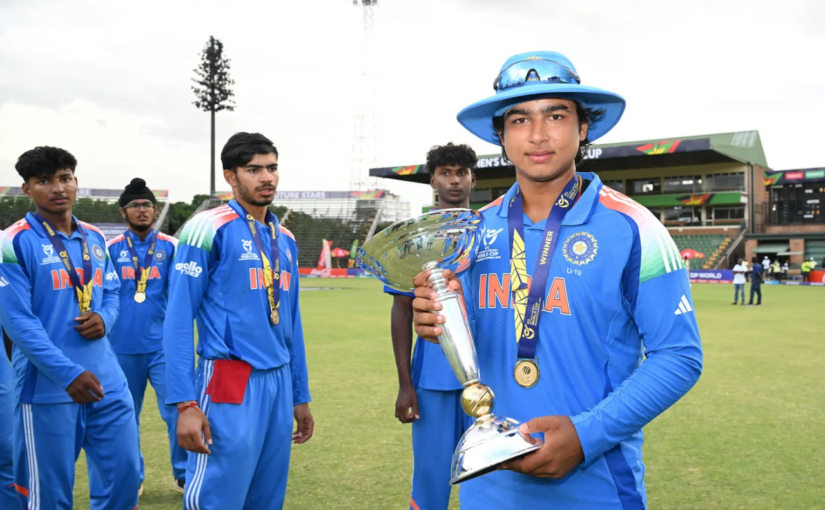
After the twin pleasures of the Indian cricket team’s campaign in the T20 World Cup in February and early March and Dhurandhar: the Revenge in late March, the thing that has given me a lot of joy throughout the months of April and May is watching Vaibhav Sooryavanshi’s batting in the IPL.

As I write this, he has been selected for the Ireland and England tours in late June-July, becoming the youngest Indian to get an international callup ever, surpassing the great Sachin Tendulkar. He also won the IPL MVP award along with the Emerging Player Award (usually people win them years apart, not in the same year) along with a variety of other awards. This follows the U-19 World Cup in February where he was Man of the Match in the final as well as Man of the Tournament.

And it is not just me, but the entire cricketing world which has been set aflutter by his exploits. His extremely fast pace of play (even compared to some of the fastest players in the world) plus his insane shot making and bat swing have made him a fan favourite already.

Continue reading The joy of watching Vaibhav Sooryavanshi

Is Kabir Right?

Kabir’s claim, is that much of the Saffroniate comes to Brown Pundits for one purpose: to litigate Pakistan, and to litigate the Muslim. Take that fixture away and the room goes quiet. The post on Hindustani classical music sinks without a ripple. The translated short story draws three comments and dies. Only the threads that arm the two camps against each other run to hundred+.

Is he right?

Continue reading Is Kabir Right?

The Patriarchy Survives Everything

The day before yesterday, we published a general interest piece on the Philippine birth rate. Within a day it had drawn over a hundred comments and stopped being about the Philippines at all. It became, in turn, a debate on female autonomy, a referendum on Islam, a quarrel about civility, and a meditation on why human beings have stopped reproducing themselves. This is what Brown Pundits does that almost no other space on the internet can do, and it is worth pausing to say why, and to say plainly where we stand.

The diagnosis and the cure

Qureishi proposed, with complete seriousness, that the only solution to collapsing birth rates is to restrict female access to contraception, higher education, employment, and political representation. We disagree with every word of that cure. Restricting half of humanity from education and public life is functional enslavement, whatever euphemism of “policy” it travels under, and we said so in the thread.

The ecumene does not breed any longer

But we will not pretend the diagnosis is wrong merely because the doctor is. Birth rates are plunging everywhere, faster than any demographer predicted, and the $300 billion South Korea spent on subsidies did not move the needle. Q is right that this is not a money problem. He is wrong about what kind of problem it is.

The fashionable answer is that women got free and chose otherwise. Our answer is the opposite: everyone got less free, and women are simply the first to act on it. People are voting with their wombs. They are refusing to manufacture children for a world whose only offer is endless consumption, a working (waged?) life that begins at twenty-five and ends at sixty-five, and a retirement of warehoused loneliness. Marx called the failure to see one’s own condition false consciousness. The modern consumer is the Ye Olde Peasant with better teeth and a credit card, and somewhere the peasant knows it.

On the day of the trillionaire

Continue reading The Patriarchy Survives Everything

Open Thread: India, Israel, US & Iran

What is going on? We haven’t been following the Middle East for the past month and a half. India-US relations seem to be shakier?

The Philippines Birth Rate Crash

Precedent. Every Brown Pundits post, new ones included, must be at least 70 percent original to BP. Reposts from other sites are allowed, but the reposted portion must not exceed 30 percent of the post.


The Philippines has just recorded one of the fastest fertility declines in modern history, and almost nobody saw it coming.

In 1993 the average Filipino woman had 4.1 children. By 1998 it was 3.9, by 2013 around 3.0, and by 2017 it was 2.7. Then it fell off a cliff. The 2025 National Demographic and Health Survey put the figure at 1.7, well below the 2.1 a population needs to replace itself. That is a 37 percent drop in about eight years, the steepest the country has ever recorded. In the early 1950s, Filipino women were having more than seven children each.

At 1.7 the Philippines is not yet as low as East Asia. It still sits above Japan at 1.2 and well above South Korea at 0.8. What unsettles demographers is not the level but the speed, and the direction, which is the same one every developed Asian society has already taken.

Why nobody expected it

Continue reading The Philippines Birth Rate Crash

Open Thread – Brutal clampdown, protesters shot in Kashmir (Pak administered)

The ‘K’ word serves as a lightning rod in any discussions involving Indians and Pakistanis. And the BP space is no different. That there are diametrically opposing views, fiercely dug in, is an understatement.

Over the past few days, the portion of J&K that came under Pakistani suzerainty after the ‘tribal’ invasion of 1948, has seen massive political protests that have led to violence and deaths of civilians. This isn’t the first time for such incidents in what Pakistani refers to as “Azaad” (free) Kashmir. The old Pakistani playbook of deploying military force, banning political organizations, and media blackout has been deployed once again. This time however, ‘feels different’ somehow. It has become increasingly difficult for totalitarian states to execute media clampdowns in the social media age, and videos and information are steadily streaming out of Rawalkot, Muzaffarabad and elsewhere.

I would hope that this open thread stays away from the always contentious circular ‘debates’ on whether India/Pakistan are the ‘rightful owners’ of Kashmir, and focuses on the specifics of the ongoing protests instead.

Why is that over the last decade or so, such repeated outbreaks of protests show up repeatedly, often swiftly followed with brutal state clampdowns. I think its reasonably fair to say that a strong majority of the residents of Pak-administered Kashmir were and continue to be, willing subjects of Pakistan. What then, is triggering such unrest, repeatedly?

The Pandits who read Brown Pundits

In May, Brown Pundits drew around sixty-one thousand visits, roughly two thousand a day and up about a third on the month. Thirty of those readers answered our survey, and while they agree on almost nothing, they are held together anyway by what they find interesting.

They are, on the same evidence, almost entirely male, forward-caste nearly to a person, and tilted in their politics. 

The survey can only make sense against the size of our readership. In May, Brown Pundits drew about sixty-one thousand visits, close to two thousand a day, up roughly a third on April. Nearly half of that traffic came direct, readers typing the address or returning by habit rather than arriving from a search or a feed, and the average visit ran about a minute and a half across a little over two pages. The largest national audiences were in Canada, India and the United States.

Brown Pundits, May 2026
Visits ~61,000, up about a third on April
Per day ~2,000
Direct traffic 49%
Average visit ~1m 27s, 2.2 pages
Largest audiences Canada, India, United States

Against those sixty thousand, thirty people answered our survey before we closed the form. This is the devoted few who filled in a form asking their caste and their politics, not a census of the many who pass through.

The comments show who shouts; the survey shows who is here.

Of the thirty who answered
Men 25+
Aged 30 to 49 18
Hold a Master’s or doctorate 21
Reading from outside South Asia 17
Hindu (five observant) 18
Muslim 4

The one thing everyone wants

Continue reading The Pandits who read Brown Pundits

Brown Pundits