
Category: Omar Ali
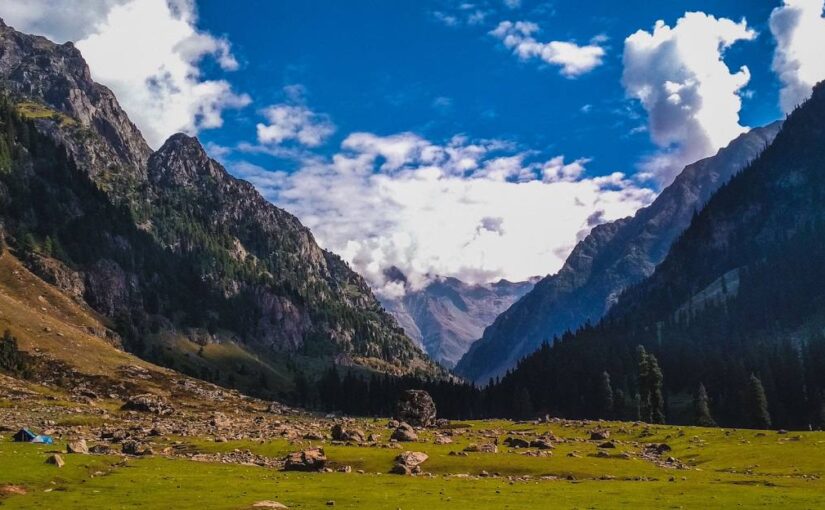
Pahalgam and Aftermath
Someone on Twitter asked me for my opinion on Pahalgam and its aftermath now that several months have passed. I wrote up a quick reply, which I am posting here. I realize I am not writing much on this blog these days, but life has been busy and I barely keep up with Twitter and reading books, this blog gets pushed down.. But lets see if this sparks some discussion. Continue reading Pahalgam and Aftermath
USA, India, Pakistan.. an eternal prickly braid
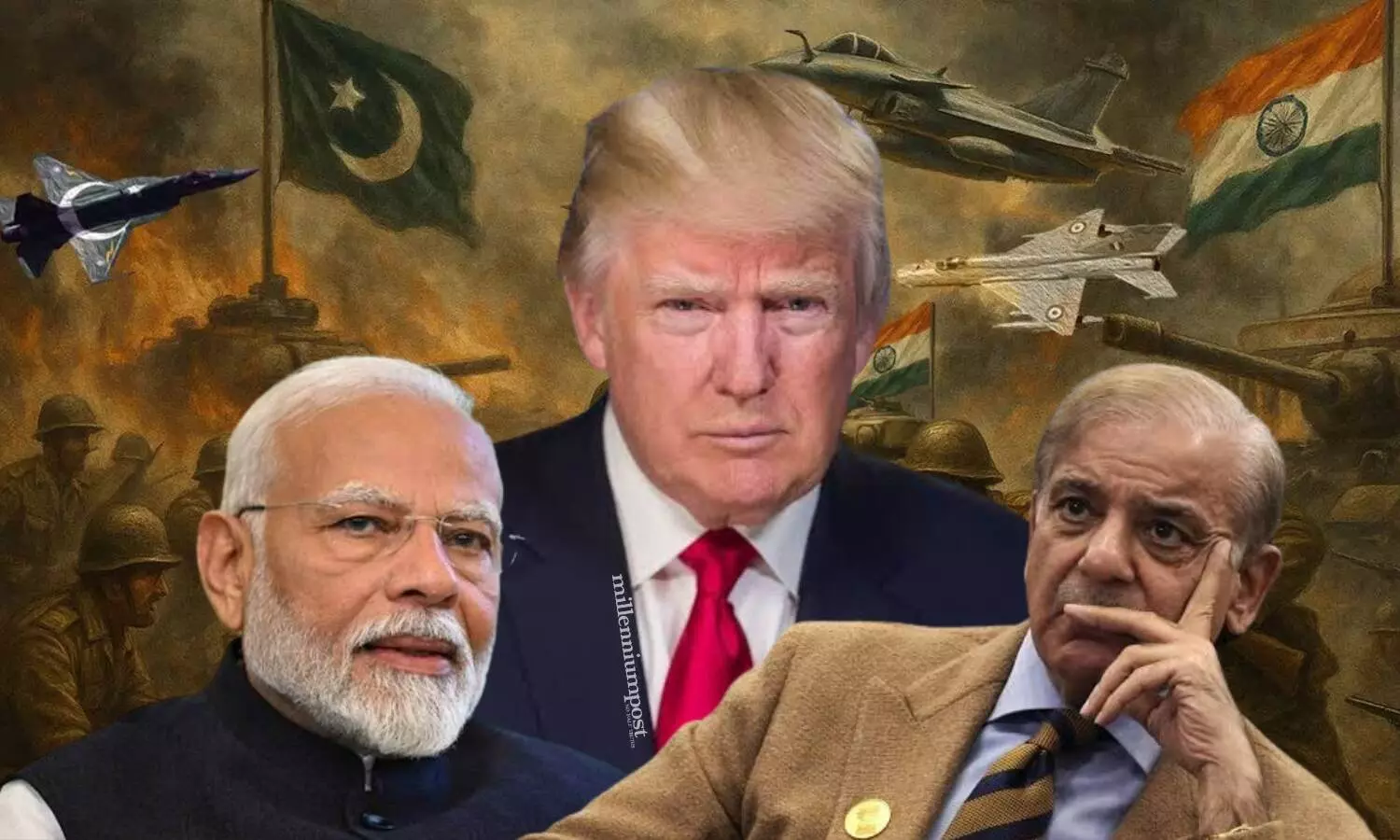
Since the 1990s, Western powers (aka the USA and it’s vassals) have been building up a relationship with India that paints India as a fellow liberal Democracy (and a possible future partner against the new enemy bloc led by China). Beyond these propagandistic talking points, there is supposed to be real convergence on some big things: Demographics, slowly laid economic foundations and baseline cultural strengths combine to make India a rising economy; At a time when birth rates are below replacement in the first world, there is going to be no bigger source of labor or talent. If businesses have to “derisk” from china, they have southeast Asia and India as the natural targets. If other Asian countries are to resist total Chinese hegemony, there is no way to do that without Indian help. And so on.
Throughout this period there have been many prickly issues between the partners (eg a recurring complaint from India that the West supports Pakistan, which sends terrorists into India; on the other hand there is a recurring Pakistani complaint that the USA does not pay enough and (especially in the last decade) is too willing to accept India as the regional hegemon; and well justified complaints from everyone that India is too protectionist) but the public diplomacy has remained positive and feelgood for the most part. All that started to change somewhere in May 2025 and it has been rapidly downhill in the last one month as Trump has publicly attacked India for being protectionist, accused it of being a dead economy, and completely ignored Indian “sensitivities” about Pakistan.
Until now, Indian officialdom has tried to stay sober and avoid inflammatory responses, but they have also resisted the choice (already taken as the path of least resistance by UK, EU and Japan) of massaging Donald’s massive ego and nominating him for some Nobel prizes to get past any personal hurdles. But of course India’s social media army has no such hesitation and on that front the bonhomie of the last few years has completely evaporated, with Indian nationalists and White Nationalists (let us not be coy and recognize that MAGA is a White nationalist movement at heart) going at it hammer and tongs.
So what is going on? and why? and what happens next? I have no inside information, so I am perfectly placed to make some general comments and then ask better informed people to tell me why I am wrong. Here goes: Continue reading USA, India, Pakistan.. an eternal prickly braid
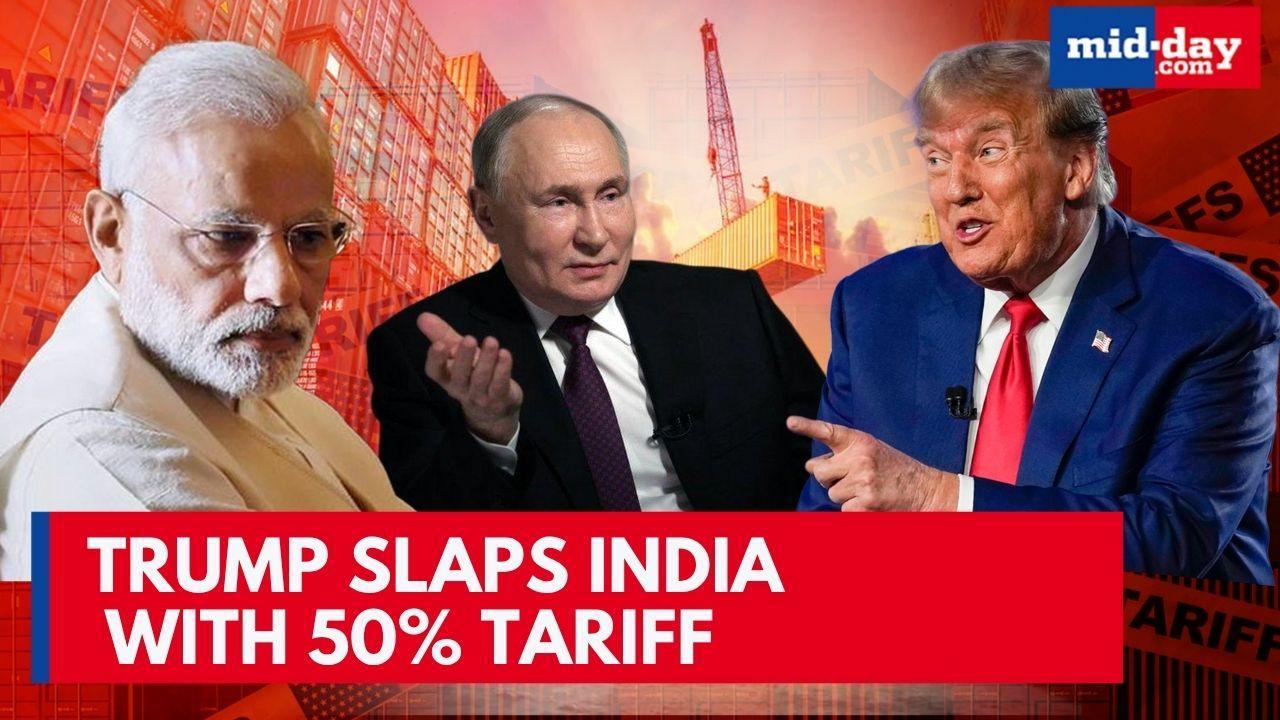
Browncast: Trump, Tariffs, Hurt Feelings, and India..
Another Browncast is up. You can listen on Libsyn, Apple, Spotify, and Stitcher (and a variety of other platforms). Probably the easiest way to keep up the podcast since we don’t have a regular schedule is to subscribe to one of the links above!
In this episode I talk to Kushal Mehra (Host of the Carvaka podcast) and regular Brownpundit Amey Chaugle about the tariff kerfuffle… the public (and on Trump’s side, frequently intemperate) war of words between the USA and India that is partly about India’s protectionist tariff regime but maybe mostly about other things (such as Donald’s ego and his desire to get that Nobel Peace Prize)..
Dig in and add your comments. We too don’t know exactly why this is going on and where it will end.. 🙂
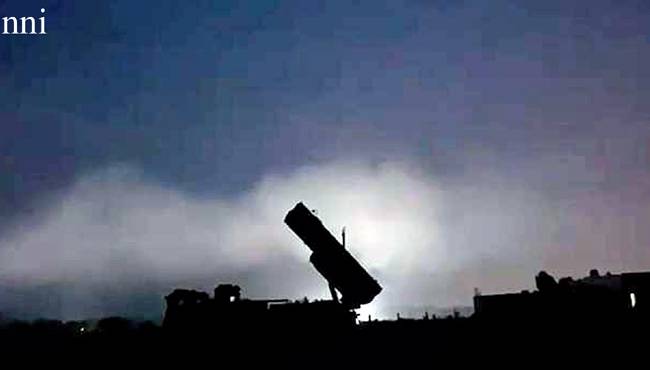
Belated Podcast: Operation Sindoor (and Bunyan al Marsoos)
Another Browncast is up. You can listen on Libsyn, Apple, Spotify, and Stitcher (and a variety of other platforms). Probably the easiest way to keep up the podcast since we don’t have a regular schedule is to subscribe to one of the links above!
In this episode Amey hosts myself (omar) and Poulasta (our resident Bengali expert) to talk about the recent India-Pakistan kerfuffle. Amey was ready for war, but we found common ground 😉 (as usual with India and Pakistan, a lot of the discussion is about partition and related misunderstandings)
India and Pakistan, Back to the Future..
A group of terrorists attacked tourists in a remote meadow in Kashmir, identified those who were non-Muslim, and shot them dead (they also shot dead a Muslim tour guide who tried to oppose them). The horrendous and barbaric attack has led to a predictable outburst of harsh anti-Pakistan (and in many cases, anti-Muslim) outrage in India and the govt has already announced some steps against Pakistan and is presumably planning to undertake some more in the coming days.
Meanwhile, Pakistan (and individual patriotic Pakistanis) have taken to social media and traditional media to paint this as a “false flag attack” (i.e. carried out or planned by the Indian authorities themselves, presumably to allow them to retaliate against Pakistan; why?) or at least as India being “too quick to accuse Pakistan” (ie “we did not do it, and they are accusing us without proof”). This is all as expected in the usual India vs Pakistan show, but it is important to keep in mind that the situation has supposedly changed a little since 2019. Before that date there were many terrorist attacks in Kashmir and every major event would be followed by tit for tat exchanges along the line of control, but with both sides respecting “red lines”. Then in 2019 there was a large attack in Pulwama that was followed by an Indian retaliatory attack on a militant camp in Balakot in Pakistan proper (which crossed the previous red line of what retaliation was permissible). Since then there had been relative peace in kashmir and many commentators felt that the balakot bombing had established a new “red line”, that India will respond to any major attack in this or similar manner, so Pakistan has dialed down the terrorism it previously promoted in Kashmir. But if that is the case, then this attack obviously crosses that threshold and will lead to response. Irrespective of who is at fault and who did what, this was the supposed line and it has been crossed, so what next?
As usual, i dont know. But lets list the questions and possible answers.
- IF this was indeed planned by Pakistan, then the question is “why”? Why now?
Possible answers and objections: Continue reading India and Pakistan, Back to the Future..
Constitutional Preambles in South Asia
an old article from our archive that has become hard to find, so reposting.
Most Countries around the world have a single consolidated written document as their Constitution (UK, New Zealand, Israel and Canada being notable exceptions here) and among these, a great many also have a preamble- a brief introductory text, preceding the main body of the written constitution. Preamble is essentially a polemic/set of guiding principles/visionary statement on the part of Constitution makers, before laying the foundation of a State in the main body. While it is of little consequence in day to day workings of a State, a Preamble does give us a fascinating insight into the ideals and cultural-historical myths propagated by a State- the context, the bigger picture, THE purpose behind that particular State’s existence.
Japan’s post-war preamble, for instance, vouches for International Peace and affirms that people of Japan shall never again be visited by horrors of war due to Government actions. French Preamble recalls Declaration of the Rights of Man and of the Citizen from 1789 and establishes France as a secular and democratic country. Likewise, North Korean Preamble promises a self-reliant socialist state that has realised the ideas and leadership of Kim Il Sung and Kim Jong Il.
And what do South Asian Preambles say? All 7 South Asian Countries
have a written constitution and all, but Maldives, have a preamble. Here’s the list:
have a written constitution and all, but Maldives, have a preamble. Here’s the list:
The Historic Task of the Pakistani Bourgeoisie
Every few months some Pakistani Nationalist gets upset with me when I say mean things about their beloved TNT (Two Nation Theory), and wants me to tell them what MY alternative is.. At the same time, some Hindutvvadis will jump in with “see, this is what Pakistan is really about, how can we ever have peace”. The latest was over this speech by the Pakistani army chief:
So here goes another attempt at trying to explain myself..
Background: This is my article on the ideology of Pakistan from 2013. Please do read it if you want to know more about that.. the main point is that Pakistan was insufficiently imagined prior to birth; and that once it came into being, the mythology favored by its establishment proved to be self-destructive; and that it must be corrected (surreptitiously if need be, openly if possible) in order to permit the emergence of workable solutions to myriad common post-colonial problems. I also argue that Having adopted Islam and irrational denial of our own Indian-ness as core elements of the state, the ‘modern’ factions of the establishment lack the vocabulary to answer the fanatics. This has allowed a relatively small number of Islamist officers to promote wildly dangerous policies (like training half a million armed Islamic fanatics in the 1990s) without saner elements being able to stop them. This unique “own-goal”, unprecedented in the history of modern states, is impossible to understand without reference to the Islamic and irrationally anti-Indian element in the self-image of the Pakistani state.
So what can be done? I believe it is the historic task of the Pakistani bourg to either make Pakistan a more normal country, or to watch it broken up. i.e. the historic task of the Pakistani bourgeoisie today is to defang the two-nation theory (TNT). Pakistani nation state is based on an intellectually limited and dangerously confrontational theory of nationalism. The charter state of the Pakistani bourgeoisie is the Delhi Sultanate.. the state valorizes turkic colonizers and looks down on the local people they colonized, and this conception lacks sufficient connection with either history or geography. Bangladesh opted out of this inadequate theory within 25 years, though its trouble may not be over yet. West Pakistan, now renamed “Pakistan” to obviate the memory of past losses, is now a geographically and economically viable nation state, but the military has failed to update the TNT and in fact, made a rather determined effort to complete the project using “militant proxies” in the 1990s, and if the Pakistani army chief is to be believed, he takes this commitment to TNT seriously even today. But the ideology in question is not compatible with regional peace or global capitalism and needs to be updated and brought in line with current requirements. This is now the great task of our under-prepared bourgeoisie. Continue reading The Historic Task of the Pakistani Bourgeoisie
Capsule Review: The Return of Faraz Ali
 Aamina Ahmed is an expatriate Pakistani (born in the UK, currently teaches in the USA) who has written a novel set in the intersection of the Red Light area of Lahore and the rich and powerful of the state, around the time of Yahya Khan’s martial law. The story is well crafted and the book is well written and has a “message” about inequality, oppression, patriarchy and fascism, but unfortunately her lack of direct experience of Pakistan does show. The plot is more or less believable, but the details and dialogues are off. Anyone with some familiarity with the Punjab police and the way people actually talk or react in Lahore will feel that this is a foreigner writing about Pakistan. Certainly there are books written by foreigners that sound and feel very authentic (Memoirs of a geisha comes to mind), but unfortunately this is not one of those books. Part of the problem is not Aaminah Ahmed’s fault, as any writer in English has to deal with the fact that most of the dialog actually happens in Punjabi or Urdu, but her foreign-ness goes a little beyond that.
That said, she has done her research and read everything she could about that era and it shows. Wajid and Ghazi and their adventures fighting the Germans in North Africa are clearly modeled on the experiences of Yahya Khan and Yaqub Khan, who were both German prisoners in WW2. A bengali officer shooting himself in Dhaka in 1971 is a story recorded in several memoirs from that era, and so on.
The book does try a little too hard to play around with the various timelines and while she does bring then together at the end, it can be hard to keep up with who is who. Still, the book is a fun read and the political and ideological slant is liberal and cosmopolitan. Worth a read, but could have been better.
Dr Manzur Ejaz. 1949-2025

Leading Punjabi intellectual and writer Dr Manzur Ejaz passed away at his home in Virginia on 3/30/25. Dr Ejaz was born in a village (chak 60/5-L Burjwala, Sahiwal) in central Punjab shortly after the creation of Pakistan. He contracted polio as a child and was partially paraplegic as a result, but he never let this hold him back. Familiar with traditional rural punjabi culture from his very traditional home, he became a left wing activist in college and remained active in Left wing politics all his life.
He did his masters in philosophy from Punjab University in 1970 and joined the same as a lecturer in philosophy. He remained a committed Marxist and also developed the idea that oppression took many forms and one of its forms was the denial of the language of the common people in favor of imperial languages that were used to impose a new imperial reality on the people. He always insisted that the cause of Punjabi language must be a central concern for any Punjabi Leftist and there could be no working class politics that did not include the defense and promotion of the only language in which that class was able to fully express themselves. It was at this point that Dr Manzur Ejaz and other Punjabi activists led by Najm Hussain Syed (the most famous Punjabi critic and writer of our age) started a weekly meeting (the “sangat”) to promote the modern study of classical Punjabi literature. They tried to hold their meetings in the university but this was the era in which the jamiat (student wing of the Jamat e Islami) was taking over Punjab university and they created hurdles such that the meeting was moved to Najm Sahib’s house and met there regularly until the Covid era, when it was converted to a virtual meeting. Around that time Dr Ejaz also met his future wife (he said the first time was at a bus stop) and Attiya Kokab and Dr Manzur got married in the late seventies and remained together ever since. Continue reading Dr Manzur Ejaz. 1949-2025