Jet Lag: India, Pakistan, and the Theatre of the Air

Since the commentariat can’t resist a good Indo-Pak exchange—especially when it involves fighter jets—here’s a fresh contribution to the theatre. Personally, I’m much more interested in Concord cafĂ©s and JD Vance’s selective memory, but one must feed the algorithmic gods. So here’s what S. Qureishi gleefully shared:

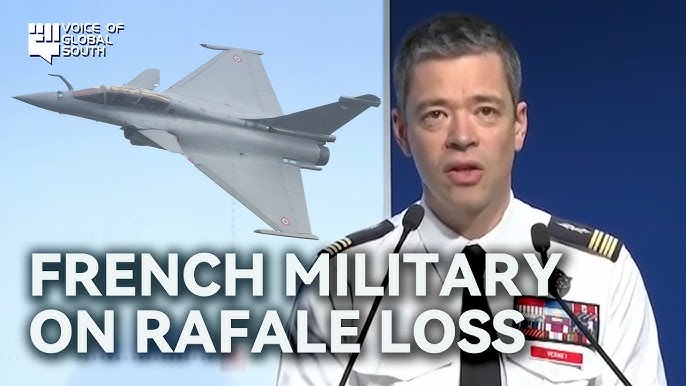
A day after Subramanian Swamy accepted 5 jets were down in a Hindi interview, Indian CDS Gen Chauhan accepts jet losses in the recent encounter to Bloomberg. What’s more he accepted that the Indian planes did not fly after May 6-7 and were grounded,

Take that as you will. Fog of war, political spin, or just belated candor—either way, the skies are louder than the silence.

As an aside, I’ve always found Pakistani commentary on India—the civilizational motherland, however estranged—to be oddly fixated. It’s like staring into a mirror with the lights off.

Anyway—comment away, and please play nice. After all, xperia2015 has author privileges and can selectively void what he likes.
Open Thread: From Murder to Mercy — The Midwives of Bihar

In the 1990s, rural midwives in Bihar were quietly killing baby girls under pressure from families. Some confessed to dozens of infanticides. Dowry, caste, poverty — all conspired to make daughters disposable.

Thirty years later, one of those girls has returned — adopted, loved, and thriving — to meet the women who chose to save rather than kill.

This story, told through BBC Eye’s The Midwife’s Confession, is brutal, human, and profoundly moving.

What does it say about India’s gender imbalance, social reform, and the moral grey zones of survival?

This thread is open for reflection. Please engage with care.

đŸŽ„ Watch on YouTube

📖 Read the full story

Open Thread: Rajiv Gandhi, 34 Years On

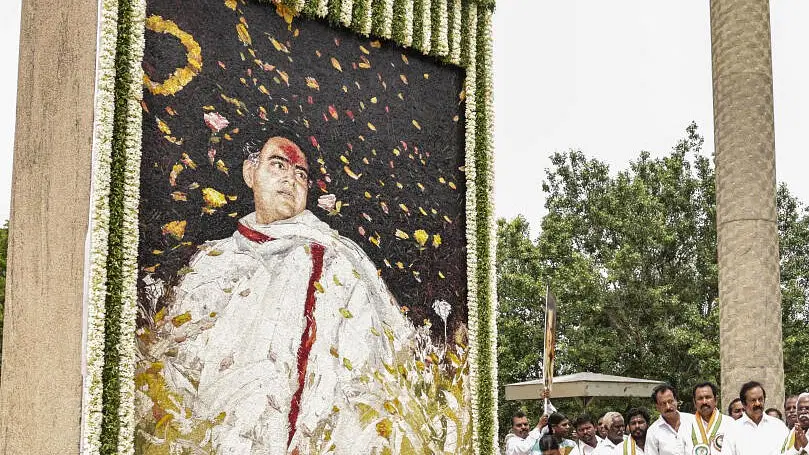
On this tragic day 34 years ago, Rajiv Gandhi was brutally assassinated in Chennai. It would be timely and worthwhile to respectfully reflect on his legacy — the good, the controversial, and the unresolved.

Rajiv Gandhi - Wikipedia Continue reading Open Thread: Rajiv Gandhi, 34 Years On

Southasia Is One Word

Reflections on Pervez Hoodbhoy at MIT

Zachary L. Zavidé | Brown Pundits | May 2025

Pervez Hoodbhoy needs no introduction. As one of Pakistan’s leading physicists and public intellectuals, he has long stood at the uneasy crossroads of science, nationalism, and conscience. He spoke this week at MIT’s Graduate Tower — the final stop on a grueling five-city U.S. tour, a new city every two days — in support of The Black Hole Initiative, a cultural and intellectual space he’s building in Pakistan. Despite its ominous name, the initiative is a wormhole, not a void: a cross-disciplinary bridge connecting physics, literature, art, and civic life.

What followed was less a lecture, more an exposition — sober, lucid, and grounded in decades of hard-won clarity.


The Logic of Annihilation

Dr. Hoodbhoy walked us through Pakistan’s nuclear doctrine: under long-standing military assumptions, if the north–south arterial route is severed, a tactical nuclear strike becomes viable. But the calculus is disturbingly abstract. Hiroshima’s 20-kiloton bomb killed 200,000. India and Pakistan each possess an estimated 200 warheads. One general once told him that, by crude arithmetic — obscene as it sounds — “only” 80 million would die in the event of a full exchange. Continue reading Southasia Is One Word

Flame Thread Warning

Comments are starting to get out of hand. I usually just trim the offending lines, but moving forward, moderation will be stricter. If something crosses a clear line, I may delete the entire comment—editing takes too much time. This is still a forum for disagreement. But juvenile antics help no one.

If you disagree with the moderation or with me, you’re welcome to voice it—respectfully—in the comments. I don’t want my own subconscious biases contaminating the tone of this site. But I also won’t let it descend into brawling.

A personal view: if Pakistan gave up all claims beyond the LoC, it would be a historic act of good grace—and help South Asia immeasurably. Knowing when to stop is also part of dignity.

First, gratitude to @phyecho1 for flagging the tragic assassination of Dr. Sheikh Mahmood Ahmad, a respected Ahmadi physician. He was a genuinely good man—returning from the UK to serve Pakistan, often offering treatment free of charge. May he rest in peace, and rise in the highest heaven.

Prominent doctor shot dead at hospital in Sargodha Continue reading Flame Thread Warning

“What You Hate is What You Love” — Reflections on the Indo-Pak Obsession

I hadn’t expected my open thread to ignite such a volume of comments. But it’s confirmed something I’ve long suspected: many Indians claim Pakistan is not their rival—but their reactions say otherwise.

Let me be clear: I deeply love India. I venerate her civilizational breadth. But the passion with which some Indian respondents—particularly North Indian Hindus and sections of the South Indian Brahmin class—engage with Pakistan is disproportionate. China, despite being a far more formidable geopolitical competitor, rarely evokes this level of visceral response.

Why? Because Pakistan is the sibling to Bharat. It’s the mirror. And rivalry with a sibling is always more intimate, more consuming. Continue reading “What You Hate is What You Love” — Reflections on the Indo-Pak Obsession

Open Thread — On Foundational Clefts and Brown Pundits’ raison d’ĂȘtre

It’s been remarkable to see Brown Pundits flicker back to life—fueled not just by posts, but by the comments. I’m realizing now that much of what I write draws direct inspiration from those who engage here. This is less a broadcast than a feedback loop.

And it’s made something clearer to me: BP’s real niche isn’t commentary—it’s incision. Academic, civilizational, ideological incision into the deepest fault line of the subcontinent: the Two-Nation Theory.

Every society has a foundational cleft: Continue reading Open Thread — On Foundational Clefts and Brown Pundits’ raison d’ĂȘtre

Browncast: Vishal Ganesan; The Hindu Case Against Hinduism?

Another Browncast is up. You can listen on Libsyn, Apple, Spotify (and a variety of other platforms). Probably the easiest way to keep up the podcast since we don’t have a regular schedule is to subscribe to one of the links above!

In this episode, hosts Amey and Dr. Omar Ali in conversation with Vishal Ganesan, a lawyer and thinker, about his essay “Frontier Dharma” and the meaning of being Hindu in the diaspora. Vishal discusses how his observations of mainstream media and academic discourse led him to research the historical representation of Hindus, which he found to be distorted by a lens stemming from 18th and 19th-century missionary narratives.

Vishal’s essay–  The Hindu Case Against “Hinduism”: A Reflection on Dharma in the Diaspora can be found here. 

(https://frontierdharma.substack.com/p/the-hindu-case-against-hinduism-a)

Auto-generated transcipt provided by our friends at scribebuddy.com

The Brown Pundits Browncast.

Dr. Omar Ali: Hi, good afternoon everyone and welcome to another episode of the Brown Pundits Browncast. We have a very special edition of the broadcast today. Vishal Ganesan, 1 of our regular Brown Pundits contributors and lurkers, who is also a lawyer and a thinker, wrote a very interesting essay on his sub stack called Frontier Dharma, and about what does it mean to be Hindu in the diaspora. And from that, I think it evolved that we will have a discussion about this topic. And we have Vishal with us today and we have Amey.

Continue reading Browncast: Vishal Ganesan; The Hindu Case Against Hinduism?

Brown Pundits