🧵Quick Moderation Note

Just a heads-up for everyone:

  • India–Pakistan threads are totally fine when the post is about India–Pakistan, or if it’s an Open Thread. Let the sparks fly there.

  • But on other posts—please avoid steering every conversation back to India–Pakistan. It’s not always relevant and derails useful discussion.

I won’t be actively moderating every thread. If something is genuinely offensive or disruptive, feel free to flag it—I’ll step in only if needed. Continue reading 🧵Quick Moderation Note

🇮🇳Op Sindoor: A Podcast on Pahalgam, Pakistan, and the Limits of Peace

I’ve just listened to the first half-hour of Op Sindoor, the latest Brown Pundits Browncast featuring Amey, Poulasta, and Omar. The full episode runs over 90 minutes; I’ll be reflecting on the rest in due course. For now, some thoughts on the opening segment, which focuses on the recent terror attack in Pahalgam and its aftermath.


🧨 The Attack Itself: Pahalgam as a National Trauma

The episode begins by recounting the massacre in Pahalgam, Kashmir—a tourist meadow turned execution ground. Twenty-six people, most of them honeymooning Hindus, were murdered after being identified through religious markers: circumcision, Kalma recitations, names. The hosts don’t shy away from calling it what it is: a targeted Islamist attack. The group responsible, the TRF (The Resistance Front), is introduced as a Lashkar-e-Taiba cutout, designed to launder Pakistan-backed militancy through a local Kashmiri lens.

There is a palpable sense of cumulative fatigue in how the Indian speakers describe it—not as an aberration, but as part of a 30-year continuum of such violence. The emotional register is high, but justified. The use of plain terms like terrorists over euphemisms such as militants or gunmen reflects a long-standing frustration with how such attacks are framed in international discourse.


🤝  Modi, Nawaz, and the Civ-Mil Waltz Continue reading 🇮🇳Op Sindoor: A Podcast on Pahalgam, Pakistan, and the Limits of Peace

On Moderation, Minoritization, and the Elite

Pulse: The Threads We Weave —

Lately I’ve wondered whether I over-curated the threads. Things feel quieter. Maybe too quiet. But perhaps that’s the cost of raising the bar—of asking for dialogue instead of dopamine. Still, this lull has me reflecting not just on moderation but on why some arguments no longer move me.

Take the Indo-Pak conflict: once electric, now strangely inert. That shift reflects my own evolution over two decades. I no longer inhabit that binary. I carry a layered identity—a South Asian Bahá’í sensibility shaped by Persian aesthetics, grounded in British institutions, and fluently navigated through English. That complexity is my compass. It’s why I care less about flags and more about forces.

And the real force that shapes our lives? The elite. Not as a pejorative, but as a structural reality. I see it as nested tiers: Continue reading On Moderation, Minoritization, and the Elite

Belated Podcast: Operation Sindoor (and Bunyan al Marsoos)

Another Browncast is up. You can listen on LibsynAppleSpotify, and Stitcher (and a variety of other platforms). Probably the easiest way to keep up the podcast since we don’t have a regular schedule is to subscribe to one of the links above!

In this episode Amey hosts myself (omar) and Poulasta (our resident Bengali expert) to talk about the recent India-Pakistan kerfuffle. Amey was ready for war, but we found common ground 😉 (as usual with India and Pakistan, a lot of the discussion is about partition and related misunderstandings)

US Economics and Theory of Collapse

A Theory of Collapse (After a US Economic Synopsis)

Note: Italicized comments are from another Brown Pundits contributor


Unless the US falls hopelessly behind in tech, they are “built” to retain a perpetual competitive edge.

I don’t think you’ve looked closely enough at the economic fundamentals. Off the top of my head:

  • National Debt: $30+ trillion
  • Interest on Debt: $1 trillion
  • Budget Deficit (2024): $1.8 trillion
  • Trade Deficit: $140.5 billion (heavy reliance on imports)
  • Defense Budget: $1 trillion

Moody’s recently downgraded US debt from Aaa to Aa1, citing worsening risk indicators. This downgrade was hard to avoid—US sovereign CDS spreads are now wider than those of China and Greece, suggesting higher default risk. Continue reading US Economics and Theory of Collapse

Request for Calm and Civility

Dear Punditeers,

A gentle reminder to take a breath and step back. Kabir is entitled to his views—there’s no obligation to counter every provocation point-by-point.

What’s troubling isn’t disagreement—it’s the sheer volume of rage replies. This doesn’t reflect the standard we aspire to. It’s neither civil nor intellectual. The only reason I’m stepping in is because, while I generally prefer light-touch moderation, the tone of these threads now reflects poorly on the broader community. It lowers the quality of both the commentariat and the platform.

We’ve seen this play out before—Sepia Mutiny is a cautionary tale. Let’s not replicate it.

So please: engage with ideas, not just identities. Let’s not derail into yet another endless Indo-Pak back-and-forth. We’re capable of better.

Warmly,

X.T.M

✉️ [Addendum]

On Nivedita’s query, I’ve finally re-created the Brown Pundits email account. It’s hosted on Gmail, but I’ve deliberately avoided posting the full address here to prevent spam harvesters. If you’d like to get in touch privately or share something offline, feel free to reach out via:

📧 brownpundits19 [@g]

🪙 What’s in a Name? Mukesh, Not Mukash.

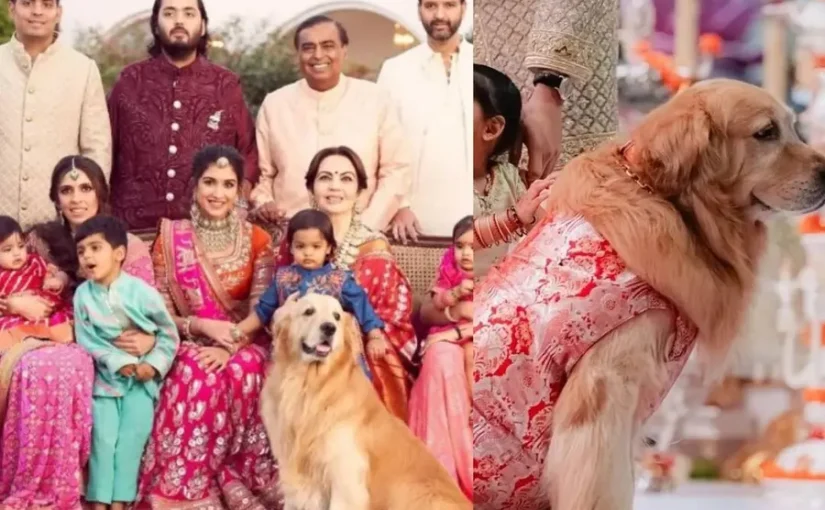
While reading Brad DeLong’s fascinating newsletter on centi-billionaires and political power (I’m going to ignore Elon’s self-imploding stunt), I noticed something that jarred me more than it should have: Mukesh Ambani’s name was misspelled as “Mukash.” A minor slip, perhaps. But it was the only error in a list that included Bernard Arnault, Warren Buffett, and Michael Bloomberg—men whose names command a certain global familiarity.

What does it say that even after spending nearly half a billion dollars on a wedding for his son, India’s wealthiest man doesn’t merit a spellcheck? It says a lot.

🧠 The Chimera of Respect via Capital Continue reading 🪙 What’s in a Name? Mukesh, Not Mukash.

💔Sana Yusuf Did Not Have to Die

The Pakistani Crisis Is Not Just Legal—It’s Civilizational

By X.T.M

As I write this, the news of Sana Yusuf’s murder is barely 48 hours old. A 17-year-old TikTok creator with over a million followers, she was gunned down in Karachi by a 22-year-old stalker. She was a rising star—funny, expressive, beloved. And now, she is dead.

We’ve been here before. Qandeel Baloch. Noor Mukadam. Khadija Siddiqui. Now Sana.

Every few years, Pakistan reels in collective shock at the killing of yet another woman by a man convinced of his right to possess, control, or erase her. And every time, some voices insist “this is not our culture.” But what if it is?

📍Not an Anomaly—But an Outcome

Sana’s murder is not an aberration. It is the predictable consequence of a society structured around honor, control, and male entitlement. Patriarchy in Pakistan isn’t just cultural—it’s systemic, generational, and fiercely defended. Continue reading 💔Sana Yusuf Did Not Have to Die

The Elder Race and the English-Speaking Heat

As I write this from Dublin, waiting to board my connecting flight—I’d nearly missed it in Newark, too absorbed in writing to hear the gate call—I’m struck by how a Euro sign or EU flag can alter one’s sense of place. Technically, I’m still in the British Isles. But culturally—unmistakably—I’m on the Continent. A sensation I never quite feel in England.

It’s a strange feeling, this flicker of European belonging. In the early millennium, I was a passionate Brexiteer—young, angry, seeking change. By the time of the referendum, a decade later, I found myself morally conflicted. I knew the EU was not a good fit but as a Bahá’í, I knew I could never advocate for disunity, of any sort. I abstained. Ironically, Commonwealth citizens could vote, but EU nationals couldn’t—a bit of imperial gatekeeping that deeply irritated my liberal British-Irish friend. (“Why can Indians vote, but not the French?” he asked.)

Today, standing in Europe, I feel the contrast sharply. The Continent is genteel, even decadent, locked into postwar consensus. Meanwhile, the English-speaking world feels like it’s on fire—politically, culturally, psychologically. It’s not just the UK or the US. India, too, belongs to this hot zone of rhetoric and reinvention. Pakistan, by contrast, while elite-driven in English, remains emotionally and socially an Urdu republic. Continue reading The Elder Race and the English-Speaking Heat

Merit, Class, and the Ossified Dream

Dispatch from Newark Airport

By X.T.M | Acting Editor, Brown Pundits

I lost my train of thought earlier, but I’m back now, writing this from Newark Airport, awaiting a flight back to the United Kingdom—then onward, as they say, to the old, old world.

What I’d begun to reflect on was social mobility—and how drastically it’s shifted over the past few decades. In much of the Global South, the idea of a working-class avant-garde—those who rose through grit, communal aspiration, and sacrifice—still retains cultural force. But in the Global North, that current has largely dissipated. Class structures have ossified. The ladder still exists, but the rungs are brittle.

I’ve been mapping that reality onto the commentariat, especially the highly educated, striving upper-middle-class Hindus who have, for the most part, embraced the system—IITs, IIMs, Oxbridge, the Ivies. These are not just institutions; they’re rites of passage. For many, the peak came at the point of entry. Twenty years on, what remains is not expansion, but a formula—one track, one ceiling. Continue reading Merit, Class, and the Ossified Dream


Brown Pundits