Mid-Nov Circular

Dear all,

With everything going on in the last 48 hours, we wanted to send a short note to everyone directly. BP has sputtered back to life in the past year, and with that revival comes all the familiar subcontinental pathologies: everyone believes they’re right, everyone believes moderation is biased, and everyone believes someone else is being unfair. In that sense, BP is working exactly as it always has.

We want to restate something very clearly: we’re not going to run a hyper-moderated blog. It takes too much time, too much energy, and, crucially, it’s an unfunded mandate. Nothing is more dispiriting than a dead space. Our approach has been simple and consistent:

1. Authors control their own threads.

If things escalate on your post, you shut it down when and where you see fit. That’s the cleanest system and the only one we can realistically sustain.

2. No bans, shadow bans, or entrapment games.

Once we go down the path of micro-policing, BP loses its character. That’s not the direction we want to take.

3. We do not manufacture controversy.

If anything, the only thing we are biased toward is what the audience reads and engages with. That’s it. Everything else is noise.

Reflections:

Some of you will have seen the recent exchanges where accusations were thrown in both directions, and where intentions were questioned. Without going into details: this is exactly how online political communities melt down; by assuming the worst in each other and by escalating minor provocations into existential battles. It’s the same pattern we saw a couple of years ago at a public talk by Rahul Gandhi in Cambridge: someone asked a loaded, “gotcha” question, the out of context reply went viral, people got outraged, and the whole thing became a cycle of reaction and overreaction. We’re drifting into the same dynamic.

Let’s not.

BP works only when people post, comment, disagree, and move on. If that stops, the blog dies. And as Omar’s recent post highlighted, we want authors to write more, not less.

So our simple request is this: Calm down, carry on, manage your own threads, and do not fall prey to the outrage factory.

If you feel strongly about a situation, reach out; if you want more balance, we’re happy to add an additional admin to offset the load (BP’s editorial board already functions with more factions than the Lebanese Parliament); if something crosses a line, handle it on your post. But let’s not turn BP into a miniature Whitehall where everything becomes bureaucratised. We’ve done extremely well this past year. Let’s keep the energy without burning down the house.

Warmly.

What Is Not India Is Pakistan

As Dave mentioned, there is a lively WhatsApp group of BP authors and editors, and it inevitably shapes the comment ecosystem. But one comment on the blog stood out:

“The very foundation of Pakistan is an anti-position. What is not India is Pakistan. So isn’t it obvious?”

It’s an extraordinarily crisp description of Pakistani identity-building. What is not India is Pakistan. That is not a slur; it is, in many ways, a psychologically accurate frame for how the state narrates itself.

What I increasingly find misplaced on this blog is the recurring assumption that Pakistanis are somehow “Indians-in-waiting,” or that Punjab is “West Punjab,” Pakistan “Northwest India,” or Bangladesh “East Bengal.” These are irredentist projections that simply do not match lived identities. This is not “North Korea” or “East Germany,” where both sides continue to imagine themselves as fragments of one common nation.

Yes, Pakistan consumes Bollywood and Hindi music, which themselves derive from Mughal and Indo-Persian syncretic traditions. Yes, Pakistan is culturally embedded in the greater Indo-Islamic civilizational sphere. But emotionally, Pakistan has severed itself from the Indian Subcontinent as a cohesive landscape. It has constructed a hybrid identity; part Turko-Persian, part Islamic internationalist, part anti-India.

I don’t personally agree with this move, and my own trajectory has been toward a strong Hinducised, Dharmic identification. But my view is irrelevant here. What matters is that Pakistani identity is defined negatively; as the commentator put it, “What is not India is Pakistan.

Whether that is healthy or sustainable is another matter. But identities can persist in unhealthy configurations for a very long time; the stock market can be irrational longer than your liquidity can survive.

The Broken Compact

Why the India, and American, Dream No Longer Holds

It was Dr V’s birthday this weekend, and we found ourselves in the Great English countryside; those great undulating fields and hedgerows that still whisper of an older order. There’s something about England’s pastoral stillness that throws modern anxiety into relief. The calm of inherited hierarchy, the sense that everything has already been decided, makes you think of those of us who were told that nothing was fixed, that we could climb forever if we just kept studying, working and performing.

The Dreams Continue reading The Broken Compact

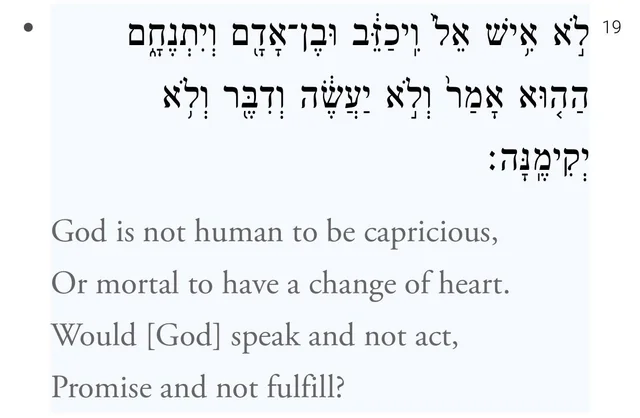
To be or not to be (Capricious)

The November circular was emailed earlier to all various stakeholders of BP. This will be sticky for a short period as unfortunately publishing all the drafts has pushed the current posts much further down.

You may also use this thread as an unmoderated Open Threads. Topics of interest include JD Vance’s comments, the stabbing in the UK by asylum seekers (presumably), and any other interest. I would suggest everyone engage with the email, after the jump; if you have been emailed it privately, I do expect private replies as well.

Continue reading To be or not to be (Capricious)

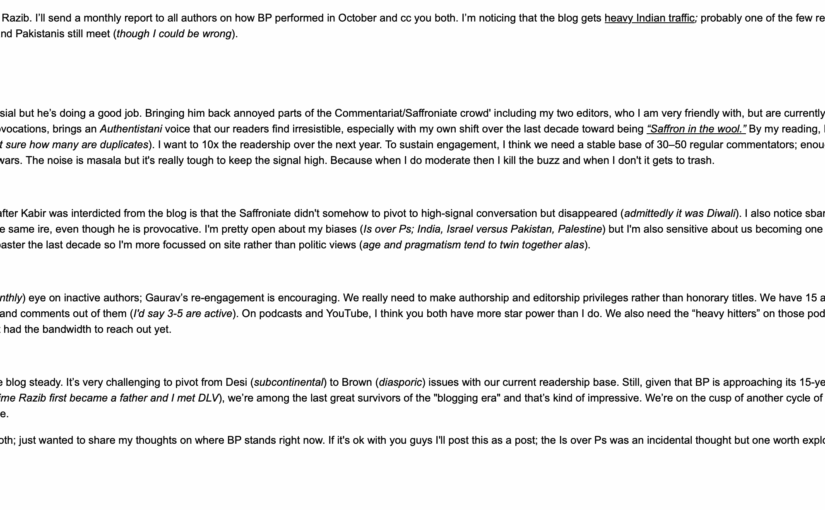
Co-Founders Confer

I sent this email to the CoFounders of the Blog (Omar | Razib) and tomorrow I will send through the Monthly Author Report.

Continue reading Co-Founders Confer

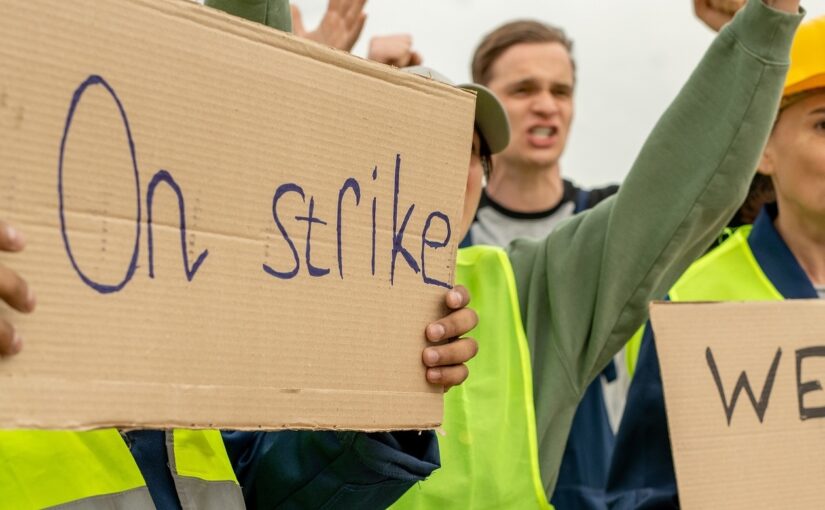
Saffron Strike

The silence on BP these past few days feels deliberate; a kind of Saffron Strike. If so, let it be known: this space was never meant to cater to ideological comfort.

It seems uncommonly quiet; I think I have been misunderstood. I do not care about the traffic and commentary of BP as much as I care about the integrity of the space.

For instance when I felt that Kabir had done wrong; interdiction was the answer. When I realised the narrative was being twisted so that I became his moderator (Kabir generally knows my red lines) then I realised I was wrong. Kabir’s recent postings and commentary have been very high-signal. Continue reading Saffron Strike

Homebound with Ishaan Khatter

Last night Dr. Lalchand & I watched Homebound, India’s submission to the Oscars, at Apple Cinemas in Cambridge, Mass. This sad film follows a Dalit (Chandan Kumar) and a Muslim (Mohammed Shoaib Ali) struggling against the odds during the pandemic, their solidarity fictionalized as a fragile bridge across India’s deepest divides.

On the surface, it is a familiar story: the disenfranchised facing systemic barriers. But what struck me was how privilege itself performed disenfranchisement. Ishaan Khatter, brother to Shahid Kapoor, plays the marginalized Muslim. Janhvi Kapoor, descended from Bollywood royalty, embodies a Dalit woman. Vishal Jethwa, a bright-eyed Gujarati, portrays the Bhojpuri Dalit lead. This is not unique to India; Hollywood, too, casts elites as workers. Yet it raises the question: when poverty is performed rather than lived, is it “Dalit-washing”?


Poverty, Emotion, and Representation

Watching the film, I reflected on poverty’s emotional landscape. For elites, emotions can be expansive, indulgent, aestheticized into art. For the working poor, emotions are often constrained by survival — narrowed into necessity. Homebound tried to humanize its characters, but I wondered whether it romanticized what in practice is a relentless narrowing of possibility.

The West rewards this narrative. Parasite in Korea, Iranian cinema, Slumdog Millionaire — poverty & Global South tribulations as spectacle becomes “poverty porn.” The Guardian gave Homebound four stars. Great art often tilts melancholic, yes, but here the melancholia is curated for Western consumption.


Identity, Vectors, and Islamicate Selfhood

More unexpectedly, the film stirred something personal. I realized how much I have vacated my own Islamic identity. It was not traumatic. As a Bahá’í with Persian cultural roots, I found overlap — even comfort — in Hindu traditions. Dalits, in their rapid Hinduization, represent one vector of assimilation; Muslims and scheduled-caste Muslims, often in tension, another. Homebound imagines solidarity, but in life these vectors pull unequally. Continue reading Homebound with Ishaan Khatter

Brown Pundits: Broad Church or Narrow Canon?

Brown Pundits Must Stay a Broad Church

Reading Kabir’s thoughtful post on the “soft Hindutva” bias at Brown Pundits, I found myself both agreeing with parts of his argument and diverging from its framing. My own journey with BP goes back to its inception. The blog was born in Twixmas December 2010; 10 days after I had met Dr. Lalchand, whose presence has profoundly shaped my civilizational views.

I say this not as a biographical aside but because BP, at its best, is where the personal and civilizational collide. We bring who we are; our marriages, our migrations, our contradictions, into this messy, brilliant conversation.

At the time, like many Pakistanis, I held a deep-seated assumption: that Hindus were fundamentally “other.” It wasn’t overt hatred; just a civilizational distance, internalized from birth. But Dr. V & Brown Pundits challenged that.

A Forum With Bias? Yes. But Which One?

The heart of BP is not neutrality; it’s the willingness to host contradiction. That is its genius, and it must be protected.

Continue reading Brown Pundits: Broad Church or Narrow Canon?

Pakistaniat & Urdu from Qasim to Quaid

UP’s very long shadow:

As I board my flight back to the UK after a brief but productive trip, I find myself reflecting on a language that continues to haunt and inspire me: Urdu.

It is a tongue caught between paradoxes. The language of courtesans and qawwals, of sacred supplication and sly seduction. It carries within it the scent of jasmine and blood, of Delhi’s dusk and Lahore’s lingering grief.

The Beloved Guardian of the Baha’i Faith once noted that while most Baha’i texts should be translated from English, Urdu alone is trusted for direct translation from Persian and Arabic. That proximity, that spiritual siblinghood with Persian, the language of kings, and Arabic, the language of God, renders Urdu magical.

Sanskrit, of course, is the language of gods, but Urdu, its stepdaughter of sorts, captures the longing of poet to partisan.

There’s a reason the Bahá’í prayer I share below is so piercing in Urdu. So here, before I cross back into another timezone, I offer this prayer—without commentary, without translation. Just Urdu, as it was meant to be heard.

And I wonder: perhaps this is what Pakistan truly is—a project in transcending the local. Not rooted in soil, but in sentiment. A place where Punjabis, Pathans, and Muhajirs are asked to shed skin and commune in Urdu. Where Pakistaniyat, for all its fractures, has succeeded in producing a common idiom: of piety, pride, and pain. Continue reading Pakistaniat & Urdu from Qasim to Quaid

Ta’arof & The Art of Flattery


Because Tarof isn’t about numerical formulae. It’s not just “no means yes after the third try.” It’s not a knock-knock joke.

Onunchi, Ta’arof, and High-Context Societies

Tarof is best understood as high-context negotiation within deeply hierarchical and emotionally attuned societies; a kind of cultural Onunchi (온눈치), for those familiar with Korean sociolinguistics. It’s the art of reading the room before the room speaks. More than etiquette, Tarof is a performance of dignity through flattery, deferral, and intuition.
And that’s precisely what’s being lost; not just in Rainn’s version, but in the Westernisation of diasporic Persian culture more broadly.


Read More Here

Brown Pundits