Pakistan’s Diplomatic Triumph (Trump?)

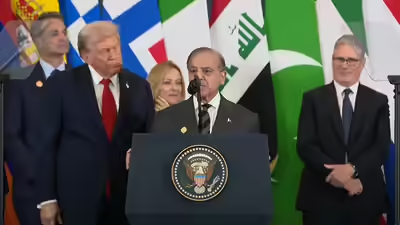
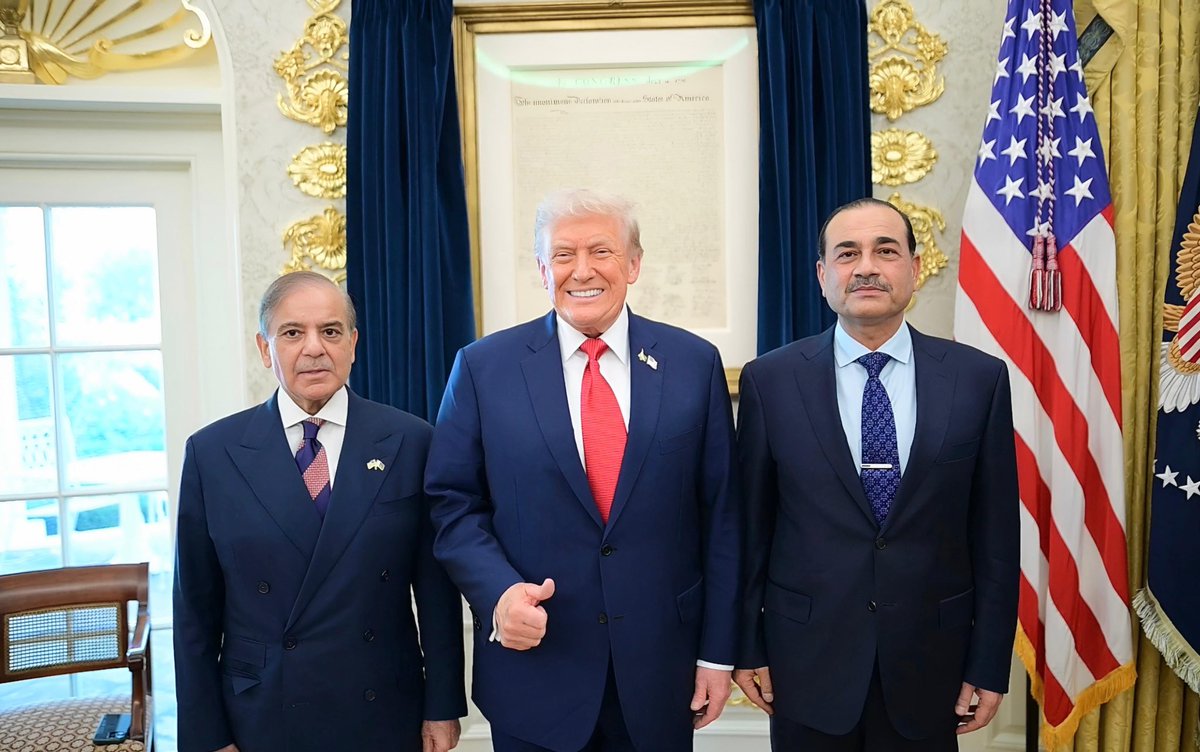
United States President Donald Trump especially thanked Prime Minister Shehbaz Sharif and ā€œmy favouriteā€ Field Marshal Asim Munir on Monday for their efforts in achieving peace in Gaza, among many other world leaders.

Trump thanks PM Shehbaz and ā€˜my favourite’ Field Marshal Asim Munir for Gaza peace efforts

I might expand on this tomorrow, but it’s telling that Dr. Lalchand finds all this quite amusing—Pakistan back again with a begging bowl. I, on the other hand, see it as something closer to a post-Pahalgam pivot. Perhaps India is underestimating Pakistan’s deep instinct for adaptation, especially as the region continues to drift in unpredictable directions.

Brown Pundits and the Echo Chamber Problem

The Echo Chamber of the Commentariat

It has been on my mind that Brown Pundits, for all its liveliness, risks drifting into an echo chamber. The commentariat is our lifeblood: their activity sustains the blog far more than page views alone. And yet, the very strength of that community can also be its blind spot.

I do not want Kabir to end up being the Cassandra of BP, always warning of decline, and being proved right in the end. If we are not careful, we could slide into a right-wing echo chamber where challenging voices fade, and the capacity for deep interrogation, the core of what makes BP unique, is diminished.


Pahalgam and the Question of Narrative Continue reading Brown Pundits and the Echo Chamber Problem

Pakistan: The Realpolitik State

In a recent exchange, Kabir suggested that Pakistanis often feel unwelcome in our discussions on Brown Pundits, and that constant criticism of their country creates a sense of unease. It is worth pausing to reflect on this. Pakistanis, like all of us, are shaped by history and circumstance. And yet, there is something in the cultural tenor of Pakistan that makes open engagement difficult.

I say this not to provoke but to observe. Pakistan, as a society, often leans heavily on hierarchism, patronage, and a culture of deference. To borrow an old saying about the Somalis, that every man thinks himself a SulṭÔn, one might say that Pakistanis often view themselves through the prism of status and validation. This instinct is hardly unique; Indians, too, have their caste-bound privileges and invisible hierarchies. But in India, these structures are embedded in a dense cultural fabric; family, caste, neighbourhood, ritual, that, for all their flaws, anchor society. Pakistan, by contrast, feels less rooted. It is a younger country (with old traditions), with fewer inherited cultural layers to draw on.

This is not simply an abstract point. When I married, we drew freely from Hindu rituals (dual ceremonies, BahÔ’í incl.), Persian customs, and Sindhi traditions, blending them into something whole. But I realised there was nothing distinctly ā€œPakistaniā€ to contribute; no cultural motif that stood outside India or Iran (we didn’t do a Walima, which is Muslim). Pakistan is, in many ways, a derivation: a state forged through separation, rather than a civilization with deep roots of its own. The cultural space it occupies has been overlaid with militant nationalism and, too often, Hindu-phobia (Kabir is so inured to it that he isn’t able to recognise that but on the flipside so is the Commentariat towards Islam).

To acknowledge this is not to deny the prejudices of Indians toward Muslims, which are very real and enduring. Nor is it to ignore the deracinated, secular archetype embodied by figures like Benazir Bhutto, who seemed neither fully Muslim nor fully Western, suspended between worlds and who are the cultural elite of Pakistan (what they give up on their bridge is their Hindu origins; more than being half-Persian, Benazir’s nani was Hindu). It is simply to note that Pakistan’s cultural story remains unsettled & thus interesting.


Validation and Audience Continue reading Pakistan: The Realpolitik State

Brown Pundits