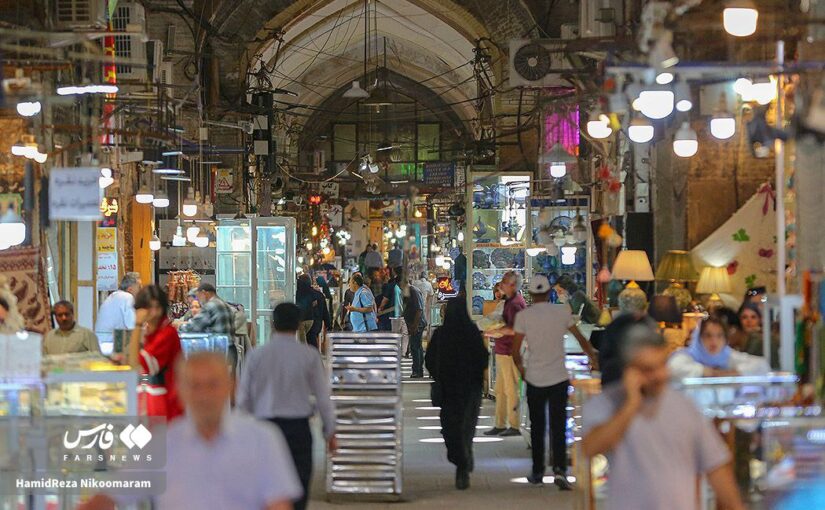
The Earth’s Lost Industrial Heart

After our discussion on industrialisation in India, I began to wonder: if the Earth were one country, one government, one infrastructure grid, one economy, where would its industrial heart lie?

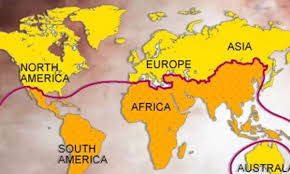
Geographically, the answer is obvious. The natural centre of the world, for energy, labour, and trade routes, isn’t London, New York, or Beijing. It’s the triangle between the Persian Gulf, the Indo-Gangetic plain, and the Red Sea.

Deserts rich in hydrocarbons. River basins dense with labour, water, and grain. Seas that touch every continent. If the world were united, this belt, Arabia to India to the Nile, would be the Ruhr, the Great Lakes, and the Pearl River Delta combined.

The Natural Order of Geography

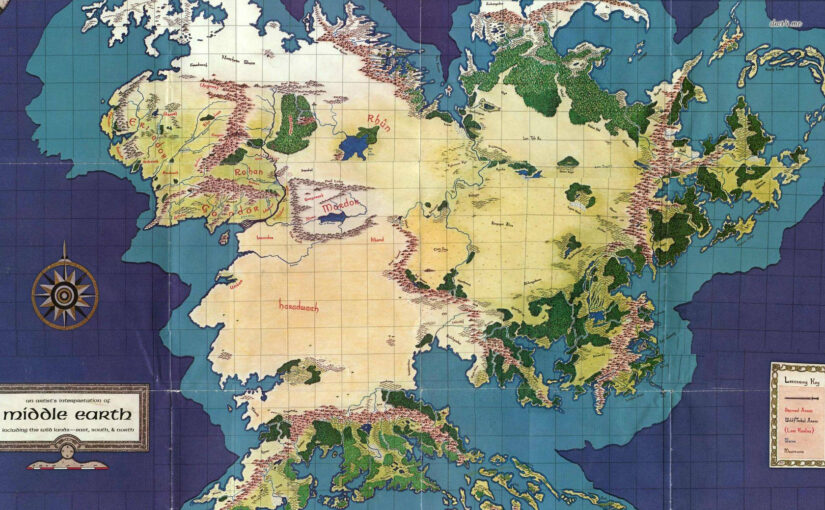
Before empire, this region was the planet’s connective tissue. Spices, silk, horses, and steel moved from India to Arabia to Africa. Energy, grain, and knowledge flowed through the Red Sea and the Persian Gulf like the arteries of the Earth. It was not the “Middle East”; it was Middle Earth. Continue reading The Earth’s Lost Industrial Heart

Pakistan as India’s Ukraine?

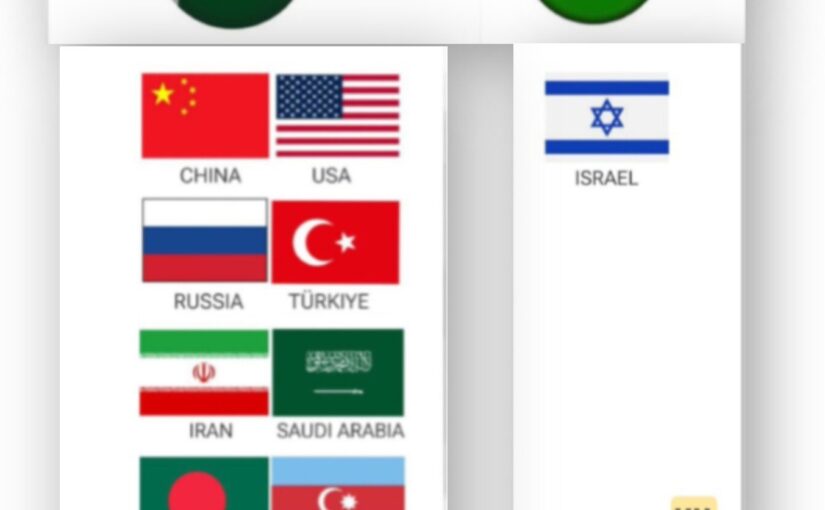
The chart above lays out “strategic partners” for 2025. Pakistan lists China, TĂŒrkiye, Iran, Saudi Arabia, and assorted others. India, by contrast, shows Israel. But the real issue isn’t who collects more flags; it’s whether any of Pakistan’s patrons will ever raise its HDI, improve infrastructure, or embed long-term stability.

I’m interested to hear what the commentariat thinks of this moment. India’s foreign policy is already locking it into superpower status. Pakistan remains reactive, borrowing survival from whoever will lend it.

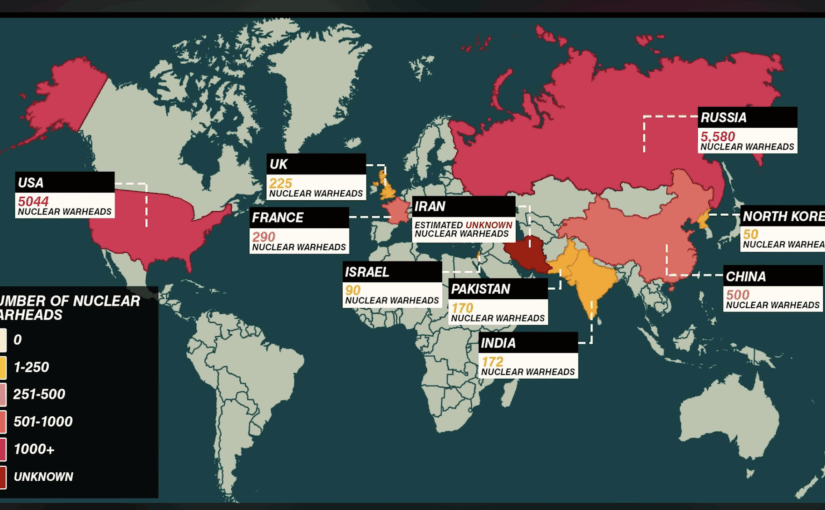
The analogy that strikes me: India–Pakistan resembles Russia–Ukraine, except if Ukraine had kept nuclear weapons. The parallels are strong:

  • Ukraine, like Pakistan, is a breakaway sibling — the “other half” of a civilizational whole.

  • Ukraine, like Pakistan, survives by appealing to larger patrons.

  • And interestingly, the GDP ratio gap between Russia and Ukraine is almost exactly the same as between India and Pakistan (please fact check me).

Just as Ukraine is considered the homeland of the Russian Empire (Kievan Rus’), Pakistan carries the legacy of Partition as the “Indus homeland.” That symmetry makes the analogy more than superficial.

On Kabir: I understand his consistent emphasis on Muslim rights and Muslim nationalism. Readers should be aware of that lens. I’m not moderating him out, but I would caution the commentariat against being gaslit into endless provocations by Kabir. The question here is not identity politics, but the direction of Indian and Pakistani foreign policy in a critical moment in global history (decades are happening in weeks).

Trump Has Birthed Eurasia

I’ve been busy, but I can’t shake the feeling that we’re living through the beginning of a new world.

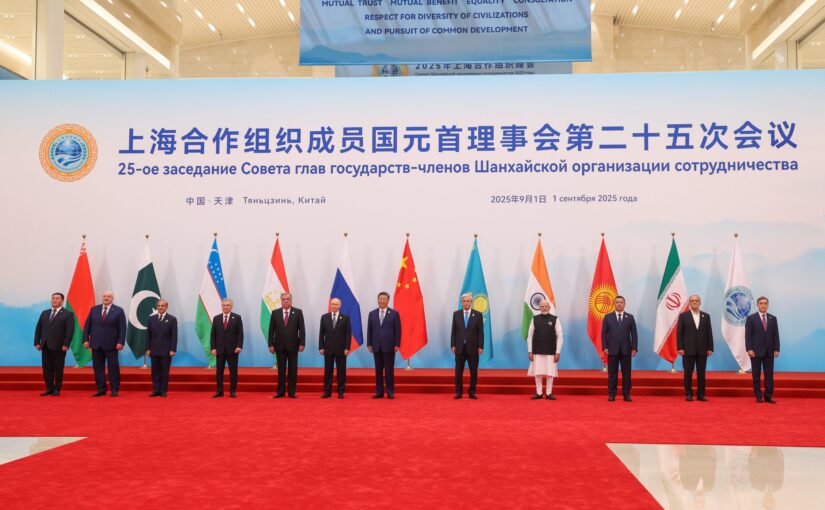
It was acute with the SCO summit; not just through the headlines, but the atmospherics. The handshakes, the body language, the ease. It’s the kind of thing that barely registered in Western media, but Modi’s presence, standing shoulder to shoulder with Xi, Putin, and Pezeshkian, felt like the curtain rising on a new geopolitical epoch.

And at the center of it all? Donald J. Trump. Not by design, of course. But by consequence.


đŸ”„ The Modi Factor Continue reading Trump Has Birthed Eurasia

The Gratitude Trap: On Escaping Asia but Staying Captive

In a recent video, a young Punjabi woman, likely Sikh, candidly shares her discomfort upon returning to India after living in Canada (this kind of echoes the Aussie influencer’s comments on chronic Indian inequality). The noise, the pollution, the density. Her frustration is raw, familiar, and deeply sincere.

But beneath her words lies something larger: the aesthetic asymmetry that defines the postcolonial condition. Wide roads, clean air, manicured parks; these are not just amenities. In the global South, they become symbols of escape, status, and salvation. And so, millions migrate. Or aspire to. Not just for jobs, but for dignity. For air that doesn’t burn. For order that doesn’t humiliate. For a feeling of being seen.

And when they do, when they arrive in Canada, the UK, Australia, something subtle happens: they become grateful. Not just for opportunity, but for escape. For the fact that the West “works.” That gratitude then curdles into deference.

They begin to believe that the world outside the West is meant to be chaotic, dirty, loud. That governance is a Western gift. That clean streets and quiet parks are civilizational rather than institutional. This is the gratitude trap; the soft power of asphalt, symmetry, and silence.

And it’s why postcolonial recovery is so difficult. Not because the global South lacks culture or potential, but because its own elites, shaped by extraction, not architecture, rarely build for elegance. Rarely build for pride. Rarely build for joy. What the West exported was not just railways or rule of law. It exported a built environment that still shames us. And until that is understood, until we take seriously the spatial dignity of our cities and the material form of our futures, the colonial spell will remain unbroken.

If You Have a Side, You Don’t Care for the Other Side

In a world increasingly defined by sides, partisanship often masquerades as empathy. Whether it’s Pakistanis performing concern for Indian liberalism, or Indians invoking the plight of Muslim minorities to score points against their ideological rivals, the truth is simple: if you already have a side, you’re not truly invested in the fate of the other.

This isn’t cynicism; it’s structure. Sides, by their nature, demand loyalty. And loyalty comes at the expense of dispassion. You can mourn injustice selectively, but don’t pretend it’s universalism. More often than not, tribalism puts on the mask of principle.

As a Bahá’í, I’ve been shaped by a millenarian vision that urges global unity; yet I’m also deeply influenced by Hindu pluralism and pagan elasticity. Nicholas Nassim Taleb once said the more pagan a mind, the more brilliant it might be (excellent article) because it can hold many contradictions without demanding resolution. That capaciousness allows one to see that not every question needs a single answer. Hinduism, with its deep pluralism, contrasts radically with Islam’s (and Judaism’s) uncompromising monotheism. And yet, these two traditions are bound together—enmeshed across centuries of history, thought, and blood. Their tension is real, but so is their shared life.

That’s the point: opposites don’t just coexist, they form a whole. But when we prescribe change for the “other side,” we ignore our own capacity for reform. It’s always easier to critique outward than to renovate inward. Especially in a world run by oligarchic elites and managed emotions, where empathy is choreographed and outrage monetized.

So no, the Dalit Muslims of Dharavi aren’t the problem. Nor are the marginalized Hindus of East UP and Biharis. The problem is that a single family can build a private skyscraper in Mumbai while the city gasps beneath it. It’s the system that rewards power accumulation, not its occasional victims, that should concern us.

I don’t offer neat solutions. Maybe it’s taxation. Maybe it’s redistribution. Maybe it’s noblesse oblige. But the first step is this: stop pretending your critique of the other side is altruism. It’s not. It’s strategy. And perhaps the more honest work begins at home—with your own side, your own people, your own self.

The West’s War of Decline

Dear friends,

I just wanted to share a thought that’s been on my mind lately. Yes, Trump has attacked Iran — but Iran hasn’t responded in any major way. That in itself is telling. It seems less a climax than a provocation, more bait than strategy. In truth, this might be part of a larger Western pattern: in its long twilight, the West no longer seeks peace but relevance — and sometimes, relevance requires war.

I recently heard a wild claim: that Norway was positioning a remote island of 150 people to tempt a Russian invasion, hoping to activate NATO’s mutual defence clause. Whether true or not, it captures something of the moment — the performative anxiety of a declining order, looking for conflict to reaffirm its own centrality.

As Amar writes, “It is heart-wrenching to see Iran being bombed by two nuclear states, while it remains a signatory to the NPT and compliant with IAEA inspections.” He recalls living in Tehran in 1980, a schoolboy witnessing warplanes above Mehrabad and the skies of Tehran blazing with anti-aircraft fire. That memory isn’t abstract — it’s personal, etched in smoke. His excellent comment is after the jump: Continue reading The West’s War of Decline

🧠 Inside the Mind of Trump: Empire, Restraint, and the Hemispheric Gamble

As an aside the latest FP’s post “India’s Great-Power Delusions” will make an interesting future post

Ten years ago, Donald Trump descended a golden escalator and upended American politics. He entered the White House not as a politician, but as a brand. Today, as the world stands at multiple geopolitical flashpoints—Israel–Iran, India–Pakistan, China–Taiwan—the question is not just what will Trump do, but what kind of world does Trump want to preside over?

Comeback King or New Emperor?

The interlude of Biden’s presidency—whether viewed as rightful or rigged—has only intensified Trump’s mythos. He is no longer just the comeback kid; he is the comeback king in a time when cries of “no king” echo through a fractured republic. A decade on from his initial successful run, he should be an elder statesman but in fact he’s just getting started with another 3 years to go. It’s unparalleled influence in the American Republic since FDR who managed to dominate the 30’s through to the mid 40’s; Trump will be the dominant force in US politics from mid teens through to at least 2029. Continue reading 🧠 Inside the Mind of Trump: Empire, Restraint, and the Hemispheric Gamble

Brown Pundits