Why Indian English Loves Long Sentences

If China endured a century of humiliation, India has lived through a thousand years of it. Invasions and exploitation left it poor in wealth but rich in culture; intricate, adaptive, and resilient. That depth shows in Desi English, which often favours long, ornate sentences over plain ones.

This habit echoes Persian’s former role in the subcontinent: a prestige language whose mastery signalled rank. Even Ghalib’s vast Persian verse drew less love than his Urdu. In India, Persian was the colonial language of power; today, English plays that part.

In Iran, Persian changes fast. Slang, borrowed terms, and foreign tones reshape it so quickly that many in their forties struggle with teenage speech. My own Persian, kept alive in Kuwait and India, is closer to Shirazi and Tehrani standards than to the language my ancestors spoke. I’m self-conscious with Iranians, but with diaspora Persians, I speak freely; we share a looser, accented form of speech. Continue reading Why Indian English Loves Long Sentences

Borders, Blind Spots, and the Mirror Game of South Asia

A recurring tension in South Asian discourse is the question of consistency: how states interpret borders, secession, and sovereignty; not in principle, but in practice.

Liberalstan’s case is that India acted selectively in 1947: Junagadh saw a plebiscite, Hyderabad faced military action, and Kashmir was referred to the UN. From this perspective, India chose whichever method suited its interests in each case. To Liberalstan, this isn’t pragmatism, it’s hypocrisy. The charge: if self-determination wasn’t good for Kashmir, why should it be for Balochistan? And what of Sikkim, Goa, Pondicherry, Khalistan, Nagaland, or the Naxalites?

Hindustan’s reply is rooted in realpolitik: decisions were shaped by demography, geography, and threats; not abstract norms. Q.E.A. Jinnah’s attempt to absorb Junagadh and court Jodhpur are seen as deliberate provocations, since Junagadh was Hindu-majority, non-contiguous, and largely symbolic (home to Somnath). After that, New Delhi abandoned any illusions of standard rules. From Hindustan’s view, Liberalstan’s moral framing is not only naïve but deeply asymmetrical; ignoring 1947, 1965, Kargil, Mumbai, and the long shadow of Pakistan’s own interventions.

When it comes to Balochistan, Hindustan notes its accession was closer to annexation, comparable to Nepal or Bhutan vanishing into India. Three major insurgencies since the 1960s complicate the narrative of “finality.” But here, Liberalstanflips the script: what is labeled a disputed territory in Kashmir is declared settled in Balochistan. This inversion doesn’t go unnoticed.

In truth, both sides are mirrors. Each demands flexibility for itself and finality for the other. Each invokes “consent”selectively; whether that of a prince, a people, or a state. The tragedy, perhaps, isn’t inconsistency but the absence of a shared regional framework for self-determination. One not held hostage by grievance, revenge, or exception.

Until then, accusations of hypocrisy will persist, each side fluent in the other’s blind spots.

Did the Muslim League and RSS Want the Same Thing?

Let’s just ask it plainly: if the Muslim League got what it wanted—a Muslim-majority Pakistan—then what, exactly, is the problem with the RSS wanting a Hindu-majority India? This isn’t a provocation. It’s a genuine question.

The Muslim League, by the end, wasn’t fighting for shared rule. It wanted partition. It wanted sovereignty. It wanted to exit the Hindu-majority consensus that the Congress represented. And it succeeded—through law, politics, and eventually blood.

The RSS, for its part, never pretended to want pluralism. It’s been consistent for nearly a century: it wants India to have a Hindu character, spine, and center. If the League could ask for a state that reflects Muslim political interests, why is it unthinkable for the RSS to want the same, flipped?

This is where I struggle with a certain kind of liberal-istan logic—found across both India and Pakistan. You’ll hear:

“India must stay secular! Modi is destroying Nehru’s dream!”

But what was Q.E.A-Jinnah’s dream? Was Pakistan built as a pluralist utopia? Or was it built—openly, unapologetically—as a Muslim homeland?

If Pakistan’s existence is predicated on Muslim majoritarianism, then India’s tilt toward Hindu majoritarianism isn’t an anomaly. It’s symmetry. Maybe even inevitability.

So either we all agree that majoritarianism won in the subcontinent—and everyone adjusts accordingly. Or we all agree that the Congress secular ideal was the better one—and try, equally, to hold both India and Pakistan to it.

But it can’t be:

  • Muslim nationalism is liberation

  • Hindu nationalism is fascism

That math doesn’t work. And yes, the Muslim League had more polish. Jinnah smoked, drank, defended pork eaters in court. The RSS wore khaki and read Manu Smriti. But don’t be fooled by aesthetics. At the core, both movements rejected the idea of a shared national project. They just took different exits off the same imperial highway.

So pick one: Either Nehru and Gandhi were right—and so was Maulana Azad. Or everyone else was right—and we all now live in our chosen majorities. But don’t demand secularism from Delhi while praying for Muslim unity in Lahore. That’s not secularism. That’s selective memory.

Why Iran Is Not Iraq

These reflections are evolving, and may shift without warning. The winds of change—Divine or otherwise—do not move by human forecast.

In the Western imagination, the idea that Iran could somehow be “dealt with” like Iraq is a dangerous illusion—one rooted not just in hubris, but in historical illiteracy.

Yes, Iraq was once the cradle of civilization. From Ur to Babylon, and later Baghdad under the Abbasids, its glories are undeniable. But geopolitically, Iraq is a lowland nation—deeply enmeshed within the Arab Mashreq, itself a corridor between Egypt and the Persianate world, susceptible to invasions, internal fragmentation, and competing powers.

Iran, by contrast, is a fortress civilization.

Continue reading Why Iran Is Not Iraq

🇮🇳Op Sindoor: A Podcast on Pahalgam, Pakistan, and the Limits of Peace

I’ve just listened to the first half-hour of Op Sindoor, the latest Brown Pundits Browncast featuring Amey, Poulasta, and Omar. The full episode runs over 90 minutes; I’ll be reflecting on the rest in due course. For now, some thoughts on the opening segment, which focuses on the recent terror attack in Pahalgam and its aftermath.


🧨 The Attack Itself: Pahalgam as a National Trauma

The episode begins by recounting the massacre in Pahalgam, Kashmir—a tourist meadow turned execution ground. Twenty-six people, most of them honeymooning Hindus, were murdered after being identified through religious markers: circumcision, Kalma recitations, names. The hosts don’t shy away from calling it what it is: a targeted Islamist attack. The group responsible, the TRF (The Resistance Front), is introduced as a Lashkar-e-Taiba cutout, designed to launder Pakistan-backed militancy through a local Kashmiri lens.

There is a palpable sense of cumulative fatigue in how the Indian speakers describe it—not as an aberration, but as part of a 30-year continuum of such violence. The emotional register is high, but justified. The use of plain terms like terrorists over euphemisms such as militants or gunmen reflects a long-standing frustration with how such attacks are framed in international discourse.


🤝  Modi, Nawaz, and the Civ-Mil Waltz Continue reading 🇮🇳Op Sindoor: A Podcast on Pahalgam, Pakistan, and the Limits of Peace

Belated Podcast: Operation Sindoor (and Bunyan al Marsoos)

Another Browncast is up. You can listen on Libsyn, Apple, Spotify, and Stitcher (and a variety of other platforms). Probably the easiest way to keep up the podcast since we don’t have a regular schedule is to subscribe to one of the links above!

In this episode Amey hosts myself (omar) and Poulasta (our resident Bengali expert) to talk about the recent India-Pakistan kerfuffle. Amey was ready for war, but we found common ground 😉 (as usual with India and Pakistan, a lot of the discussion is about partition and related misunderstandings)

Gana Sangha and Rajatantra in Ancient Bharat

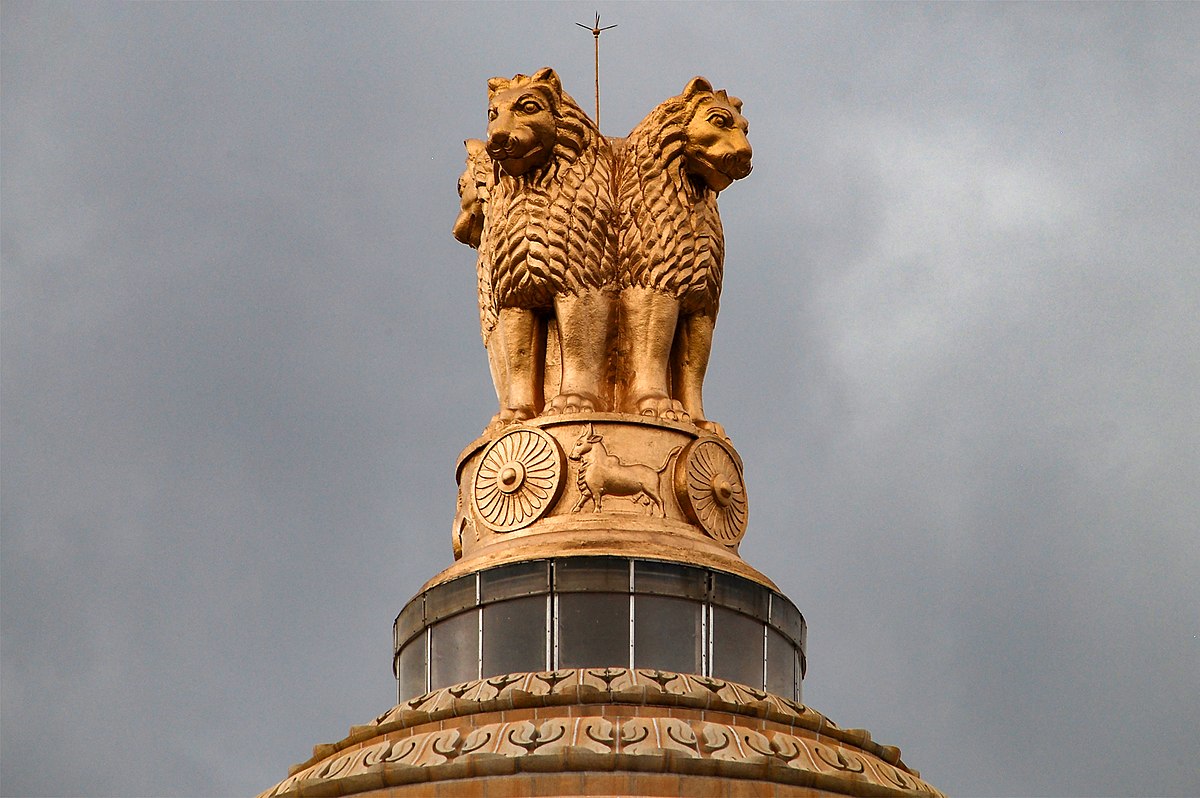
Lion Capital of Ashoka, Vidhana Soudha

Script for the Youtube Video:

Around the time of Mahavir and Gautam Buddha, a powerful ancient monarch named Bimbisar reigned on western side of Ganga.
On the east lay the ancient Vrjji Gana-Sanghas – Sakya Malla Licchavi Videha –
The lands to the east of Ganga had no Kings but were ruled by leaders of various Kshatriya clans in an assembly where every family had a voice.
As part of his strategy, Bimbasara married a princess of Videha and to her was born Ajatashatru – the one without any enemies.
When Ajashatru ascended to the throne of Magadha, he formed staging post on the western bank of Ganga and waged a terrible war against the Vrjji Republics lead by the Licchavis and won.
This staging post would be called Pataliputra and serve as the seat of the Magadhan Monarchs like Mahapadma Nanda, ChandraGupta Maurya and Ashok Maurya.
800 years later when Ancient Bharat lay fragmented and scattered after centuries of Yavana, Shaka and Kushana invasions, a Small King called Chandra entered a matrimonial alliance with the same Licchavis marrying Kumara Devi.
His fine golden coins carried images of both him and his queen.
His young son who called himself Licchavayah – to emphasise the backing of the prestigious Licchavis in the Gupta Game of thrones. This young man would go on the reshape Bharat with his sword and help usher in the Golden Age of Ancient India.
His name of Samudra-Gupta – which means Protected by the Sea because his sword had added the Southern coastal kingdoms into his Raja-Mandala.
But this Golden Era of Ancient India also meant the fight between the ideas of Gana-Sangha and Rajatantra was almost settled in the favor the Chakravatri in the ideal of a fearsome conquerer like the Licchavi Dauhitra – Samudragupta

They came not to bring peace but a sword


Recently there was a debate on Twitter about whether the legacy of the Indo-Aryans, one of the most impactful descendants of the Sintastha culture, was positive, significant and worthy of admiration. More generally, what have the descendants of the Yamnaya culture of the Pontic steppe done for us?

This is a complicated question. I think for Indian Hindus who revere the Vedas and the Vedic people the question has some broader and deeper implications. As I am not an Indian Hindu, any strident opinion on this is above my pay grade.

But I will repeat something that the Indo-Europeanist J. P. Mallory told me a few years ago: the reason that archaeologists fixate on the graves of these people is that these are among the few materials remains that they left. They were an agro-pastoralist society, and their arrival in Northern Europe 5,000 years ago saw the end of the ancient Neolithic traditions of megalith building. I think it is fair to say that these barbarians ushered in a “dark age” for a millennium in Europe.

What about elsewhere? In what became Greece the arrival of the steppe populations resulted in a synthetic culture that to be candid initially aped their Minoan predecessors, producing a coarser and more militaristic society. In ancient Elam, the arrival of the ancient Iranians resulted in the co-option by what became the Persians of much of the culture of the people of that region. Finally, the debates about India are endless in terms of what the influences on the Indic culture are in terms of whether they are Aryan or non-Aryan.

The daughter Indo-European societies were often quite culturally creative, in particular, the early Greeks and Indians. But I think this owes more to the fact that Indo-Europeans encountered either complexity (Minoans) or the faded elements of complexity (IVC), assimilated them, and leveraged their economic base to produce complexity and creativity societies. In contrast, Indo-European populations that remained closer to the ancient lifestyle, like the Slavs of the early medieval period, were culturally simple.

That being said, a skein of common Indo-European linguistic and oral culture did span Greece and India. Their origins were clearly brutal and barbaric, but the southern Indo-Europeans quickly assimilated and acclimated.

Adivasis are just like everyone else…sort of…but not

My previous post on Adivasis was not totally clear. So I’m going to try in shorter fragments and outline things so I’m more clear. I am not 100% correct with the model below (we’ll know more later), but this is my best current conception.

  1. 10,000 BC, end of the Ice Age, NW quadrant of the Indian subcontinent inhabited by a West Eurasian associated hunter-gatherers, related to the hunter-gatherers of the Zagros mountains in Iran, with some Siberian ancestry. The other three quadrants are dominated by hunter-gatherers with deep (40,000 years diverged)  associations with East Eurasians and Australo-Melanesians. These “Ancient Ancestral South Indians” (AASI) seem to have separated from the Andaman Islanders (AI) more than 30-35,000 years ago, but the AI are their closest current relatives (AI-related populations were dominant in mainland Southeast Asia until 4,000 years ago, when rice farmers from southern China migrated into the region).
  2. Between 7,000 and 4,000 years ago extensive admixture occurred within the IVC zone in the NW between the IVC-Iranian-related population and AASI groups moving northwest. The resultant population was far more Iranian-related than AASI (say 10-20% AASI), and these people eventually became the “Indus Valley Civilization.
  3. To the south and east the AASI populations probably did experience reciprocal gene flow at the same time, as Iranian-related populations spread south and east
  4. Why this distinction? I believe during the late Pleistocene the Thar desert was larger and more forbidding and blocked gene flow between the easternmost West Eurasians and westernmost East Eurasians.
  5. Steppe ancestry likely does not show up until after 2000 BC.
  6. I believe there was a Dravidian language spoken in Sindh, and later Gujarat and Maharashtra. These populations spread southward before and after 2000 BC, and eventually, they mixed with all the AASI groups in the same.
  7. In the period between 2000 and 1 BC there is more and more mixing and the arrival of steppe populations that become culturally ascendant across the subcontinent. In the south, the Dravidian-speaking zone, there is a distinction between post-IVC populations that engage with the expanding Indo-Aryans and those that do not engage with the Indo-Aryans

The period between 2000 and 1 BC is essential. In some areas, like the NW, large numbers of steppe people settled, and imposed their language and culture, albeit in synthesis with the local populations, who would be mostly IVC. While the IVC seems to have expanded only gingerly into the upper Gangetic plain and Gujarat, the Indo-Aryans pushed into the eastern zones, and parts of the south. The fact that Adivasi in the south have the canonically Indo-Aryan R1a-Z93 indicates that young bands of Indo-Aryan men penetrated all across the subcontinent. Their genetic imprint is clear in non-Brahmin southern groups like the Reddys, so they were ubiquitous.

But it is culture that matters more. The synthesis that developed in Punjab and Upper Gangetic plain eventually spread across the whole subcontinent and explains why Sangam literature has Sanskrit loanwords. The distinction between Adivasi and caste Hindu emerges from the distance to the expanding proto-Hindu culture based on a core of Aryan culture with indigenous accretions. This was a diverse religious and cultural matrix, but there were broad family similarities, and again, the Sangam literature alludes to “brahmins,” indicating that there was an early penetration of Aryan ritualists in the south. The Adivasi emerges not as a relict or the remnant of an early population, but as a set of societies at one of the spectra of the Aryan-indigenous synthesis that characterized the subcontinent.

The Aryan can become an Adivasi, as is attested by the Aryan men who clearly integrated themselves into those communities and lost their cultural distinctiveness. Similarly, Adivasis can become caste Hindus by adopting the norms of caste Hindus.

Rishi and the past

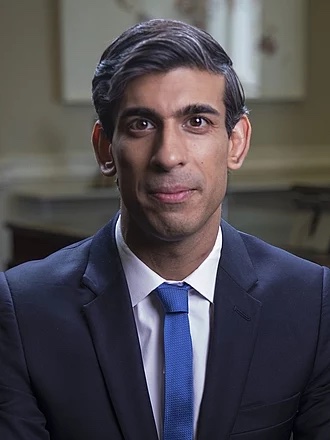
Rishi Sunak will lead the nation just below India in the world GDP nations. Racial or cultural triumphalism is gauche, so nice to see that that’s low-key so far. But I personally hope that this will be an opportunity for Indian elites to fixate less on the British past and engage more forthrightly with their Asian future.

The Conservative party looks to be in serious trouble, and Britain looks to be in for a rough few years. Good luck to him, he’ll need a lot of it.

Brown Pundits