
How will the Iranian Regime Survive? By Becoming Persian & Crowning a Pahlavi Queen

Iran After Ideology

The Iranian Revolution survived because it fused two forces that had long resisted foreign domination: Shi‘i Islam and Persian historical memory. It endures today because it still commands the machinery of the state. But endurance is not the same as viability. The revolution has reached a point where its original ideological heft, once an asset, has become its primary liability.

The Iranian Revolution must become Iranian. Not rhetorically, but structurally. Islam can no longer function as an export ideology or as a permanent mobilisation doctrine. It must become a civilisational substrate: Islam with Persian characteristics, not Persian life bent permanently around Islamic revolution. The clerical class has to accept a hard truth that other revolutionary elites eventually learn; that ideology is a ladder, not a house. Nuclear ambition, permanent resistance, and theological maximalism were once instruments of leverage. Today they are liabilities. Iran is not losing legitimacy because it is insufficiently Islamic; it is losing legitimacy because it insists on remaining revolutionary long after the revolution has exhausted its social utility.

The English Example Continue reading How will the Iranian Regime Survive? By Becoming Persian & Crowning a Pahlavi Queen

Saffron Strike

The silence on BP these past few days feels deliberate; a kind of Saffron Strike. If so, let it be known: this space was never meant to cater to ideological comfort.

It seems uncommonly quiet; I think I have been misunderstood. I do not care about the traffic and commentary of BP as much as I care about the integrity of the space.

For instance when I felt that Kabir had done wrong; interdiction was the answer. When I realised the narrative was being twisted so that I became his moderator (Kabir generally knows my red lines) then I realised I was wrong. Kabir’s recent postings and commentary have been very high-signal. Continue reading Saffron Strike

The Myth of the “Average Pakistani”

Dave’s comment:

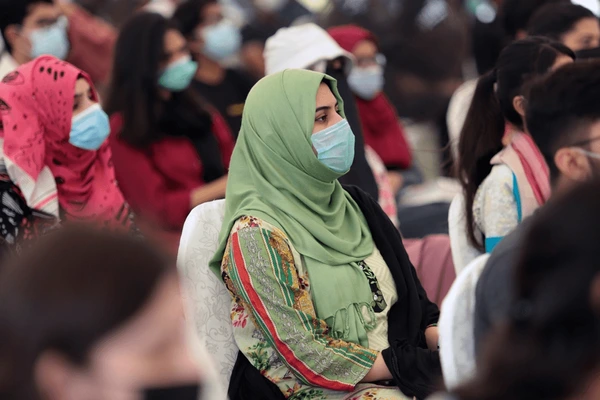
“I have in fact met some. In person. Ran into a lovely couple while on vacay in Guatemala. Excellent conversation along a 2 hour shared shuttle ride. Shia muslims from Baltistan – he took great pains to indicate that his community is not like the average Pakistani, and that in his biradari they are proud to educate their daughters and wives, have them take the lead in public lives. Both his daughters were young med students.

The tragedy for Pakistan is that such actual liberals with modern outlooks wisely avoid taking public positions. They don’t want to get lynched. Hence the domination by the nutters and fringe on the right continues. Leading to mis-categorization of the right-wing as “the center”.”

The above praises a “liberal” Shia couple from Baltistan for educating their daughters and living modern lives, contrasting them with “the average Pakistani,” portrayed as a backward, anti-education fanatic. This framing is not just lazy; it’s offensive.

It reflects a deeply colonial hangover: the idea that modernity is rare in Pakistan, that deviation from presumed fanaticism is a revelation. But let’s be clear, Pakistanis, like people anywhere else, are ambitious, aspirational, and complex. Medical colleges are oversubscribed. Education is highly prized. And many people, devout or not, are navigating life with dignity, values, and a deep desire to move forward; not just materially, but spiritually and ethically.

Politics of Projection

Just because a population is not obsessed with hyper-capitalism doesn’t mean it is “backward.” It may simply mean it has not surrendered entirely to the logic that everything must be monetized. That’s not regression; it might be restraint. In a world where the only metric that seems to matter is money, resisting that tide is itself a kind of wisdom.

This kind of patronizing liberalism, one that exoticizes progressive Muslims as rare exceptions, isn’t harmless. It feeds into a narrative that justifies erasure: of language, culture, self-rule, and civilizational continuity. South Asians speaking in English, debating one another with colonial grammars, is not a mark of modernity, it is a symptom of displacement. The Global South doesn’t need to be saved. We need to be seen, on our own terms.

Did the Muslim League and RSS Want the Same Thing?

Let’s just ask it plainly: if the Muslim League got what it wanted—a Muslim-majority Pakistan—then what, exactly, is the problem with the RSS wanting a Hindu-majority India? This isn’t a provocation. It’s a genuine question.

The Muslim League, by the end, wasn’t fighting for shared rule. It wanted partition. It wanted sovereignty. It wanted to exit the Hindu-majority consensus that the Congress represented. And it succeeded—through law, politics, and eventually blood.

The RSS, for its part, never pretended to want pluralism. It’s been consistent for nearly a century: it wants India to have a Hindu character, spine, and center. If the League could ask for a state that reflects Muslim political interests, why is it unthinkable for the RSS to want the same, flipped?

This is where I struggle with a certain kind of liberal-istan logic—found across both India and Pakistan. You’ll hear:

“India must stay secular! Modi is destroying Nehru’s dream!”

But what was Q.E.A-Jinnah’s dream? Was Pakistan built as a pluralist utopia? Or was it built—openly, unapologetically—as a Muslim homeland?

If Pakistan’s existence is predicated on Muslim majoritarianism, then India’s tilt toward Hindu majoritarianism isn’t an anomaly. It’s symmetry. Maybe even inevitability.

So either we all agree that majoritarianism won in the subcontinent—and everyone adjusts accordingly. Or we all agree that the Congress secular ideal was the better one—and try, equally, to hold both India and Pakistan to it.

But it can’t be:

  • Muslim nationalism is liberation

  • Hindu nationalism is fascism

That math doesn’t work. And yes, the Muslim League had more polish. Jinnah smoked, drank, defended pork eaters in court. The RSS wore khaki and read Manu Smriti. But don’t be fooled by aesthetics. At the core, both movements rejected the idea of a shared national project. They just took different exits off the same imperial highway.

So pick one: Either Nehru and Gandhi were right—and so was Maulana Azad. Or everyone else was right—and we all now live in our chosen majorities. But don’t demand secularism from Delhi while praying for Muslim unity in Lahore. That’s not secularism. That’s selective memory.

Brown Pundits