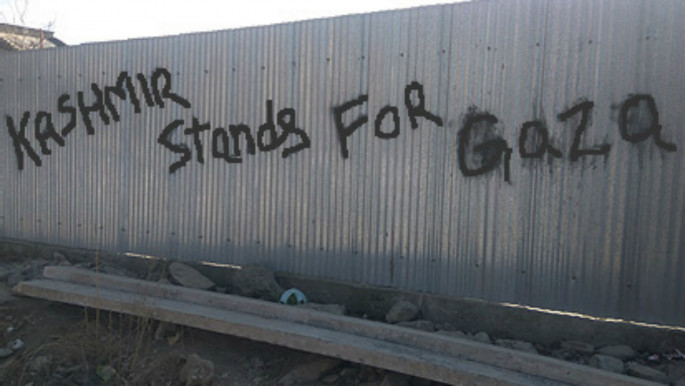
This is Not the India We Joined in 1947: MP Aga Syed Ruhullah Mehdi


In this in-depth conversation, Aga Syed Ruhullah Mehdi, current Member of Parliament hailing from National Conference in Jammu Kashmir. He was also the former Cabinet Minister of Jammu and Kashmir. He shares his unfiltered thoughts on the abrogation of Article 370, the political transformation of India, and the struggles faced by the people of Jammu and Kashmir. Ruhullah Mehdi discusses the foundation of Kashmir’s accession to India, emphasizing how Article 370 served as a unique bond that granted Jammu and Kashmir protections similar to those provided to regions like Himachal Pradesh, Lakshadweep, and the North-East. He passionately criticises the BJP-led government for reneging on the promises made in 1947, accusing them of steering the country toward becoming a “Hindu Pakistan.” Drawing from his personal and political experiences, Mehdi reflects on his journey in public life. He raises critical questions about the cultural and political invasion of Kashmir under the guise of tourism, the targeted killings that have devastated both Kashmiri Pandits and Muslims, and the ongoing challenges to preserving Kashmiri identity amidst the RSS’s ideological agenda.

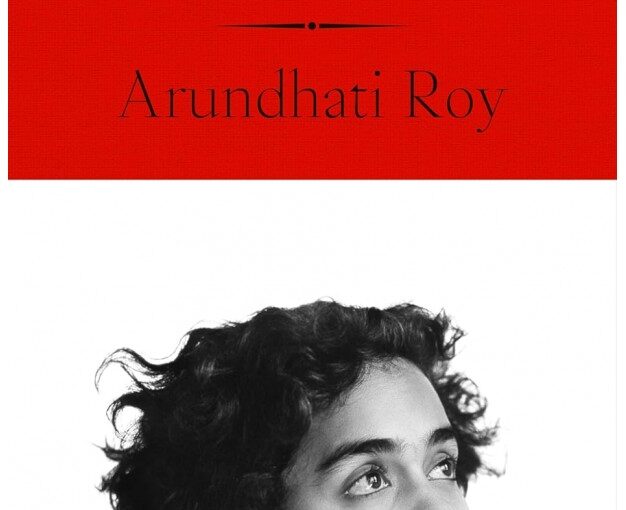
The Ministry of Utmost Happiness: A Look into the Underbelly of Modern India

[Note:  I have absolutely no issue with Sairav moderating his posts the way he sees fit–this is the right of all BP authors.  However, he doesn’t have the right to cast aspersions on other authors. Comments from others that I’ve “faked my degrees” are also ridiculous.  I frankly have no interest in interacting with Sairav so you all are free to discuss among yourselves. Similarly, I will be deleting any comments Sairav makes on my posts.]

From my Substack:

This review originally appeared on The South Asian Idea in June 2017. 

Ever since The God of Small Things was published to great acclaim in 1997, Arundhati Roy’s fans have been eagerly awaiting her next novel. It was a long wait—two decades—as Roy transitioned from being a novelist to being an activist and a non-fiction writer. Now, the wait has finally ended with the publication of The Ministry of Utmost Happiness.

The novel focuses on several characters, most of whom are outcasts from the new rising India. They include a hijra named Anjum, a Kashmiri separatist (or freedom fighter) named Musa and Tilottama, the Malayali woman who loves him. Over the course of the novel, these disparate characters encounter one another and their stories intersect, sometimes in surprising ways.

Much of the novel is set in the Kashmir Valley during the 1990s—at the height of the insurgency against the Indian state—viewed by many Kashmiris as an occupying force. Musa’s wife and daughter are killed in crossfire between the Indian Army and Kashmiri militants. Tilo herself is harshly interrogated by the Indian Army and is only let go because of her connections to an old college friend, who is high up in the Intelligence Bureau. In this section of the novel, Roy evocatively describes the brutality of life in Kashmir and the impact it has on those on both sides of the ideological struggle.

Those who have followed Roy’s non-fiction will find many resonances in this novel. Asides from the Kashmir conflict, the plot touches on rising Hindutva, the Maoist struggle in the forests of central India, and Dalit assertion against upper-caste violence. One consequence of such a large canvas is a certain fracturing of the narrative. For example, when the narrative moves to Kashmir, Anjum has to be abandoned in Delhi. Although Roy convincingly brings the characters together at the end, there is a sense of disconnect while reading the story. Continue reading The Ministry of Utmost Happiness: A Look into the Underbelly of Modern India

Genetics open thread

On popular request — or curiosity. Two recent studies are making the rounds:

I’m generally skeptical of population genetics papers, what is their point exactly? But presumably this will awaken the Commentariat, who have been quieter lately.

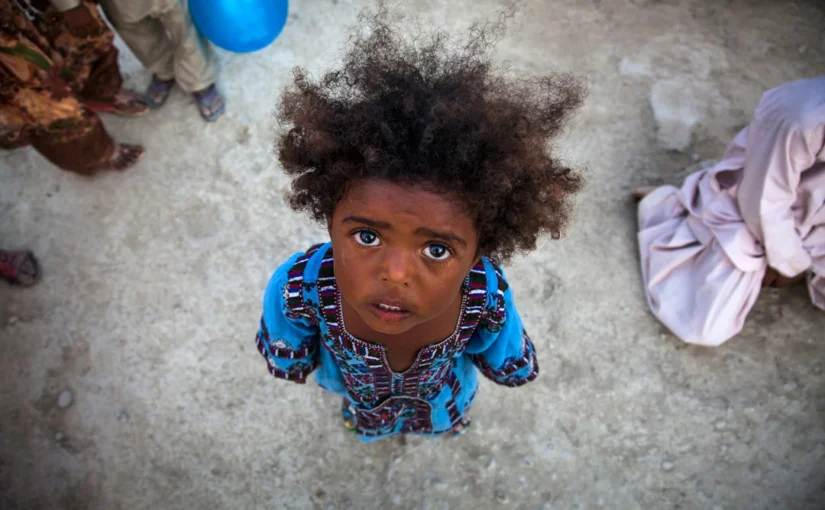
If nothing else, consider it intellectual cake; open to everyone, rich in speculation. As an aside the young girl featured is a Baloch.

The Honey Trap of the Ummah:

🕌 Reflections on Kabir, Afridi, and the Compact of Coexistence

The recent incident involving Kabir / Bombay Badshah / Honey Singh, and the orchestrated drama around his entrapment has, quite unexpectedly, become a catalyst for deeper discussion on Brown Pundits. While none have chosen to focus on analytics (“2,000 daily visitors”—thank you very much:-), the real story lies in how this drama has exposed, yet again, the deep ideological fissures within South Asian identity; especially in the India-Pakistan-Muslim triad.

Let’s begin by being honest: Brown Pundits, for all its digressions into Sri Lanka, Nepal, or Bangladesh, is still primarily a blog about India and Pakistan, and more crucially, about Indian and Pakistani Muslims. This is a feature, not a bug. The origins of the blog lie in the Sepia Mutiny, a scattered band of intellectually independent thinkers questioning dogma from every direction (which started in 2004 and if we are a “daughter blog” that we means have 20+yrs of intellectual antecedents on the Brownet), and it has now matured into one of the few platforms willing to wrestle with the ideological ambiguities at the heart of the subcontinent.

🧕 Kabir’s Point: Brotherhood, Boundaries, and the Big Choice

Kabir made an astute, if difficult, observation: that he views Indian Muslims as “brothers”, but does not feel the same about Pakistani non-Muslims.

This sounds contradictory until one understands the emotional exhaustion of watching Muslims oscillate between claiming ummah-hood when convenient, and weaponizing liberal values when needed. It’s a cognitive dissonance that creates what I can only call the moral coexistence trap: the idea that Muslims, especially in India, demand maximum accommodation, of their food (their nauseating right to murder Gau Mata on Bharat’s sacred soil itself), Faith, festivals, and foreign affiliations, while rarely extending the same pluralistic courtesy in return.

And then there’s that infamous Shahid Afridi clip, the one where he smashed his television after watching an Aarti, being performed. To many of us, that wasn’t just a cringe-inducing moment of bigotry; it begged a real question: Why do Indian cricketers continue to shake hands with Hinduphobes Hindu-hating men like Afridi and his ilk (the Pakistan cricket team)? At what point does tolerance become indulgence?

đŸš© The Compact of Indian Minorities: Understand It or Leave It

Continue reading The Honey Trap of the Ummah:

Borders, Blind Spots, and the Mirror Game of South Asia

A recurring tension in South Asian discourse is the question of consistency: how states interpret borders, secession, and sovereignty; not in principle, but in practice.

Liberalstan’s case is that India acted selectively in 1947: Junagadh saw a plebiscite, Hyderabad faced military action, and Kashmir was referred to the UN. From this perspective, India chose whichever method suited its interests in each case. To Liberalstan, this isn’t pragmatism, it’s hypocrisy. The charge: if self-determination wasn’t good for Kashmir, why should it be for Balochistan? And what of Sikkim, Goa, Pondicherry, Khalistan, Nagaland, or the Naxalites?

Hindustan’s reply is rooted in realpolitik: decisions were shaped by demography, geography, and threats; not abstract norms. Q.E.A. Jinnah’s attempt to absorb Junagadh and court Jodhpur are seen as deliberate provocations, since Junagadh was Hindu-majority, non-contiguous, and largely symbolic (home to Somnath). After that, New Delhi abandoned any illusions of standard rules. From Hindustan’s view, Liberalstan’s moral framing is not only naïve but deeply asymmetrical; ignoring 1947, 1965, Kargil, Mumbai, and the long shadow of Pakistan’s own interventions.

When it comes to Balochistan, Hindustan notes its accession was closer to annexation, comparable to Nepal or Bhutan vanishing into India. Three major insurgencies since the 1960s complicate the narrative of “finality.” But here, Liberalstanflips the script: what is labeled a disputed territory in Kashmir is declared settled in Balochistan. This inversion doesn’t go unnoticed.

In truth, both sides are mirrors. Each demands flexibility for itself and finality for the other. Each invokes “consent”selectively; whether that of a prince, a people, or a state. The tragedy, perhaps, isn’t inconsistency but the absence of a shared regional framework for self-determination. One not held hostage by grievance, revenge, or exception.

Until then, accusations of hypocrisy will persist, each side fluent in the other’s blind spots.

Let Hindus Decide for India

There’s a quiet but persistent coalition, inside and outside India, that seems intent on denying Hindus the right to define their own future. It includes unreformed Islamists who refuse to reckon with modernity, English-speaking liberal elites still shadowboxing for Nehru, minorities with veto power but no stake in cohesion, and a chorus of Western (and increasingly Chinese) voices, eager to manage India’s trajectory from afar. What unites them? A shared discomfort with Hindu political consolidation.

Let’s be clear: Hindu identity is not a new construct. Whether you place its roots 3,000 or 5,000 years ago, it’s one of the world’s oldest living civilizational continuities. That identity has always been plural, regional, and evolving. But it has also always been there; visible in memory, ritual, geography, and language. Today, that identity is waking up to its political form. And it will not be put back to sleep.

Hindutva is not going anywhere. Nor is the Indian Union. Those who hoped Kashmir would stay outside this arc have already seen the direction of travel. Pakistan’s decision to opt out of Hindustan, and then build an identity against it, has led not to strength but to strategic stasis. Bangladesh, too, for all its cultural richness, now stands as a separate civilizational lane. And so we arrive at the core truth: Hinduism and India are coterminous.

This isn’t a call for exclusion. But it is a reminder that those who opted out do not get to dictate terms to those who stayed in. That includes foreign commentators and diasporic gatekeepers alike. There is a difference between pluralism and paralysis. There is a difference between nationalism and denial. And if majoritarianism is the anxiety; perhaps the deeper fear is that Hindus are no longer apologizing for being the majority. Let India decide. Let Hindus decide. Let the world, finally, learn to listen.

Southasia Is One Word

Reflections on Pervez Hoodbhoy at MIT

Zachary L. Zavidé | Brown Pundits | May 2025

Pervez Hoodbhoy needs no introduction. As one of Pakistan’s leading physicists and public intellectuals, he has long stood at the uneasy crossroads of science, nationalism, and conscience. He spoke this week at MIT’s Graduate Tower — the final stop on a grueling five-city U.S. tour, a new city every two days — in support of The Black Hole Initiative, a cultural and intellectual space he’s building in Pakistan. Despite its ominous name, the initiative is a wormhole, not a void: a cross-disciplinary bridge connecting physics, literature, art, and civic life.

What followed was less a lecture, more an exposition — sober, lucid, and grounded in decades of hard-won clarity.


The Logic of Annihilation

Dr. Hoodbhoy walked us through Pakistan’s nuclear doctrine: under long-standing military assumptions, if the north–south arterial route is severed, a tactical nuclear strike becomes viable. But the calculus is disturbingly abstract. Hiroshima’s 20-kiloton bomb killed 200,000. India and Pakistan each possess an estimated 200 warheads. One general once told him that, by crude arithmetic — obscene as it sounds — “only” 80 million would die in the event of a full exchange. Continue reading Southasia Is One Word

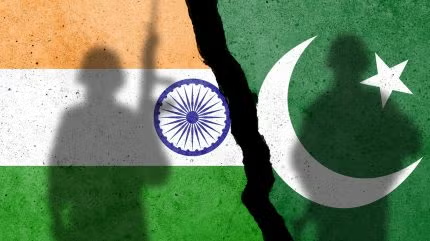
India and Pakistan, Back to the Future..

A group of terrorists attacked tourists in a remote meadow in Kashmir, identified those who were non-Muslim, and shot them dead (they also shot dead a Muslim tour guide who tried to oppose them). The horrendous and barbaric attack has led to a predictable outburst of harsh anti-Pakistan (and in many cases, anti-Muslim) outrage in India and the govt has already announced some steps against Pakistan and is presumably planning to undertake some more in the coming days.

Meanwhile, Pakistan (and individual patriotic Pakistanis) have taken to social media and traditional media to paint this as a “false flag attack” (i.e. carried out or planned by the Indian authorities themselves, presumably to allow them to retaliate against Pakistan; why?) or at least as India being “too quick to accuse Pakistan” (ie “we did not do it, and they are accusing us without proof”). This is all as expected in the usual India vs Pakistan show, but it is important to keep in mind that the situation has supposedly changed a little since 2019. Before that date there were many terrorist attacks in Kashmir and every major event would be followed by tit for tat exchanges along the line of control, but with both sides respecting “red lines”. Then in 2019 there was a large attack in Pulwama that was followed by an Indian retaliatory attack on a militant camp in Balakot in Pakistan proper (which crossed the previous red line of what retaliation was permissible). Since then there had been relative peace in kashmir and many commentators felt that the balakot bombing had established a new “red line”, that India will respond to any major attack in this or similar manner, so Pakistan has dialed down the terrorism it previously promoted in Kashmir. But if that is the case, then this attack obviously crosses that threshold and will lead to response. Irrespective of who is at fault and who did what, this was the supposed line and it has been crossed, so what next? 

As usual, i dont know. But lets list the questions and possible answers.

  1. IF this was indeed planned by Pakistan, then the question is “why”? Why now?

Possible answers and objections: Continue reading India and Pakistan, Back to the Future..

BrownCast with Rahul Pandita on Kashmir, Delhi Riots, Maoism

Another BP Podcast is up. You can listen on Libsyn, Apple, Spotify, and Stitcher (and a variety of other platforms). Probably the easiest way to keep up the podcast since we don’t have a regular schedule is to subscribe to one of the links above!

In this episode of Browncast Omar and I (Gaurav) talk to Rahul Pandita, the journalist and author. We spoke on a range of topics from Kashmir to Maoism. Rahul’s is a refreshingly insightful voice among the English speaking journalists based around Delhi – do check out his writings. His twitter bio is Rahul Pandita.

I would highly recommend his books – especially his memoirOur Moon Has Blood Clots

Below the fold here I am posting the transcript as well. This is auto-generated and unedited, so expect to see MANY errors, but it may help you jump to whatever part interests you, or give you at least a gist of the conversation. Continue reading BrownCast with Rahul Pandita on Kashmir, Delhi Riots, Maoism

The Role of the Ahmediyya Movement in Kashmir

From Dr Hamid Hussain

20 December 2019

I wrote a piece about recent changes in Kashmir.  While working on the background, I stumbled on an interesting chapter of Kashmir & Pakistan history that I have never seen in any mainstream publication.  I decided to dig a more deeper to understand it better.  Following is the outcome of that exercise.  I thought it was important for those interested in the history of the region.  Enjoy.

Regards,

Hamid

Ahmadis and Kashmir

Hamid Hussain

“Independence of Kashmir can only be achieved by Kashmiris.  Outsiders can only help in two ways; with financial support and by advocating their cause.  Kashmiris should forget that outsiders will fight their war.  Such outside help will not be useful; in fact, it will have opposite effect on the struggle for independence. If control of the struggle is in the hands of outsiders, it is possible that they will sell Kashmiris for their own interests.  It is in the interest of Kashmiris that they should get advice as well as financial help from outsiders but never ask them to come and fight their war in Kashmir.  In this case they will lose control.  Long term sacrifice and not temporary emotional outburst will serve their cause and long term sacrifice can only be done by Kashmiris”.  Head of Jama’at Ahmadiyya, Mirza Bashir Uddin Mahmud, 27 September 1931

Jama’at Ahmadiyya is a sect founded by Mirza Ghulam Ahmad (1835-1908).  In early twentieth century, it was a small community with disciples mainly from Punjab; the birthplace of the founder.  There was much hostility against the group in view of doctrinal differences especially when Mirza claimed to be Messiah and prophet.  Agitation of orthodox clerics over decades finally culminated in an unprecedented act where Pakistan’s parliament declared the sect non-Muslim in 1974.  This started a wave of persecution forcing many Ahmadis to leave the country and find refuge all over the world.  General hostility including outright abuse against the group is at such an abnormal state that it is impossible to have any kind of meaningful discourse about the role of Ahmadis in Kashmir as well as independence movement of Pakistan.  This part of the history disappeared from almost all historical works in Pakistan.

Kashmir was a Muslim majority princely state ruled by a Hindu Dogra ruler.  Kashmiri Muslims were economically poor and politically powerless. Muslims of neighboring Punjab, many with Kashmiri heritage were concerned about the plight of Kashmiri Muslims.  In 1911, they established All India Kashmiri Muslim Conference (AIKMC) in Lahore.  This organization remained only on paper with no connection with Kashmiri Muslims and no program.  In the summer of 1931, simmering discontent in Kashmir resulted in riots.  On 25 July 1931, leading Muslims mainly from Punjab gathered at Simla and established All India Kashmir Committee (AIKC).  The list of attendees of this meeting included literary and intellectual powerhouse Sir Muhammad Iqbal, head of Ahmadiyya community Mirza Bashir Uddin Mahmud Ahmad, leading Punjabi politician Sir Mian Fazal Hussain, Nawab of Maler Kotla Sir Muhammad Zulfiqar Ali Khan, Nawab of Kanj Pura Ibrahim Ali Khan, leading cleric of Delhi’s Barelvi community Khawaja Hassan Nizami and a former teacher of the leading orthodox Sunni seminary Darul-Uloom Deoband Maulvi Mirak Shah.  Fazal Hussain wanted Iqbal to head the organization but on recommendation of Iqbal, Mirza Mahmud was unanimously chosen as president of AIKC.  Muslims of different walks of life were members of AIKC including politicians affiliated with different parties, lawyers, educationalists, landed aristocracy, clerics from different schools of thoughts, journalists and businessmen.  At no other time, such a consensus developed among diverse Muslim population of India. Continue reading The Role of the Ahmediyya Movement in Kashmir

Brown Pundits