How can it be a fair election if the Awami League were banned?
It’s like saying Pakistan is a democracy with Imran Khan still in jail?
The only true democracy in undivided India remains Bharat that is India.
How can it be a fair election if the Awami League were banned?
It’s like saying Pakistan is a democracy with Imran Khan still in jail?
The only true democracy in undivided India remains Bharat that is India.
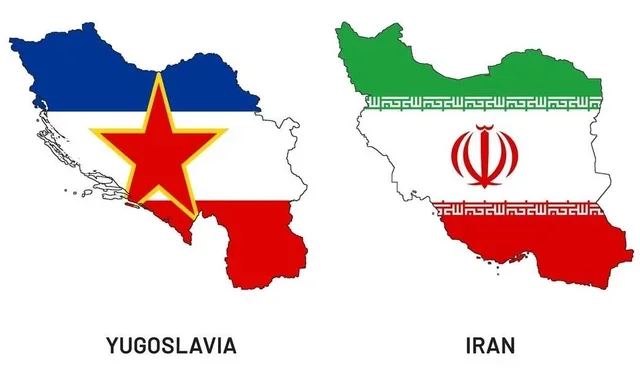
There is a recurring Saffroniate habit, when it comes to Pakistan, that deserves to be named plainly. It assumes collapse. It treats Pakistan as a Yugoslavia-in-waiting, a state held together only by force and denial. This is not analysis. It is projection, reinforced by confirmation bias.
Pakistan is not Yugoslavia. It is, in many ways, the opposite.
Yugoslavia fractured once the external logic binding it disappeared. Pakistan was born under siege and continues to organise itself around that fact. Whatever one thinks of this psychology, it has consequences. States that internalise permanent vulnerability do not casually dissolve. They centralise, harden, and adapt. That is not a moral defence. It is an empirical observation.
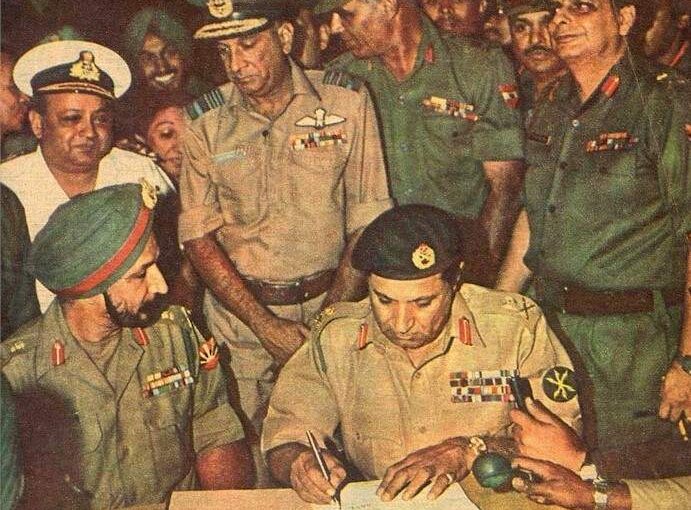
“Pakistan army remains the only one after WW2 to have carried out a large scale genocide. The comparison to the Nazis is a fact-based one. Mentioning this simple historical fact isn’t “anti-Pakistan”. RNJ
The events of 1971 in East Pakistan involved large-scale violence, mass civilian deaths, displacement, and grave violations of humanitarian norms. These facts are not contested. What remains contested is classification. Continue reading Pakistan, 1971, and the Misuse of the Holocaust Analogy
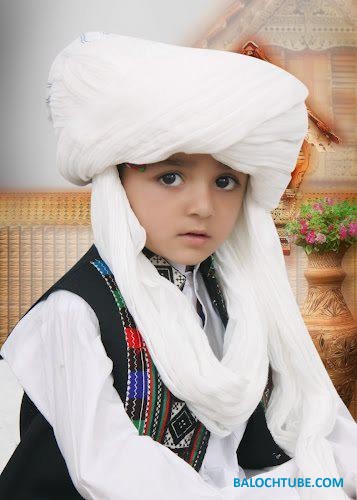
The argument over Balochistan exposed something deeper than maps or borders. It revealed a confusion about what Pakistan is supposed to belong to.
Formally, Pakistan is one of the most nationalistic states on earth. Its red lines are absolute. Its territorial language is uncompromising. Its founding trauma has hardened into doctrine. And yet, beneath this rigidity sits a quieter truth: Pakistan’s elite does not actually live inside a closed nation-state imagination. They live in English.
They think in Western legal categories, read Western literature, speak the language of international institutions, and send their children into global circuits of education and finance. At the same time, their social world remains unmistakably South Asian; family-centred, hierarchical, ritualised, and deeply embedded in subcontinental habit. They are neither fully Western nor comfortably Indic. This produces a tension that Pakistan has never resolved.
The Nation-State After 1945: A Container That No Longer Holds
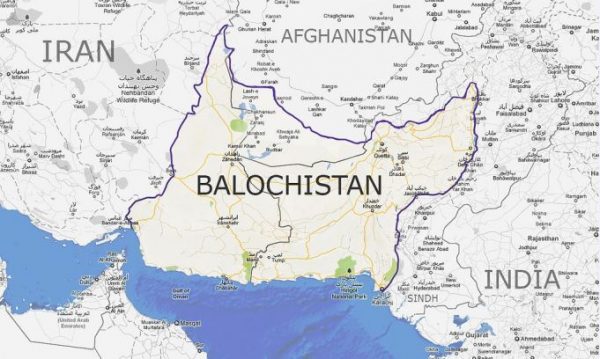
This is a near zero likelihood of happening but never say never.
Iran cannot be analysed using the same political categories as Pakistan or most modern states. The difference is not whether a regime is monarchical, clerical, or military. It is the age of the civilisation being governed. Pakistan is a young state. Its borders, institutions, and political language were assembled in the twentieth century. In such states, power fills a vacuum directly.
Power in Young States, Authority in Old Ones
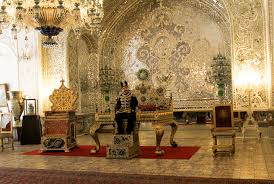
A military dictatorship governs by force, hierarchy, and command. Its legitimacy is procedural and immediate: order, security, survival. This form works where political memory is thin and inherited meaning is limited. Pakistan’s army did not overthrow an old order. It stepped into an empty one. Iran is structured differently. It is a civilisational state that has existed in recognisable form for roughly three thousand years. Power there has never been exercised through force alone. Authority has always been tied to ideas that predate any single regime.
Monarchy as Civilisation, Not Administration Continue reading Iran and Pakistan Are Not the Same Kind of State
So a new edition of the T20 WC is coming up and it is already embroiled in some controversy. Bangladesh refused to play in India and ICC had them replaced with Scotland.
Cue the usual voices from Pakistan – “BCCICC”, “India’s money is ruining cricket” blah blah.
But it led me to ponder something – Pakistan itself has a huge population of 250 million + and it isn’t that “much” poorer than India. India’s GDP pci is $3050 while Pakistan’s is $1710 (around 1.8x) . Similarly India’s GDP is $4.51 trillion while Pak is $410.5 billion (around 11x).
So the other numbers should be in the same ratio right?
Here is where the difference comes
Revenue of cricket boards
BCCI – INR 20686 crore
PCB – INR 458 crore
That is around 45x
T20 leagues media rights
IPL – $6.2 billion for four years
PSL – $24 million for two years
That is around 130x (normalized on a per year basis)
And if you look at other stuff these huge ratios persist
Cars sold annually
India – 4.1 million
Pakistan – 200,000
Forex reserves
India – $710 billion
Pakistan – $21 billion
Stock exchange market caps
BSE – $5 trillion
PSE – $65 billion
Why do you think that is?
My theory is because the Pakistan military is stronger than the 1/10 ratio, it kind of effects everything else which leads to these lop sided ratios.
Give your thoughts in the comments below.
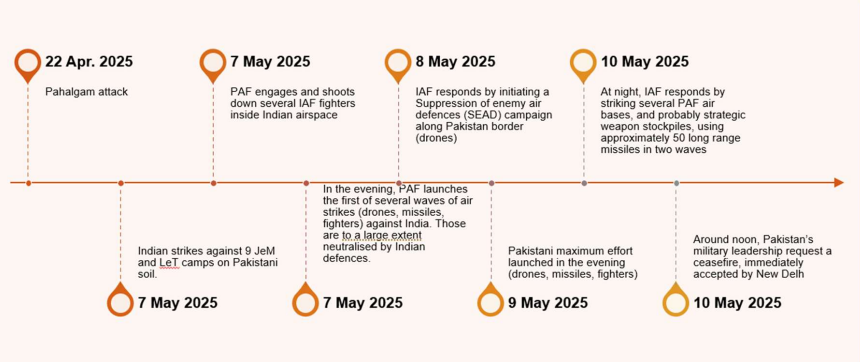
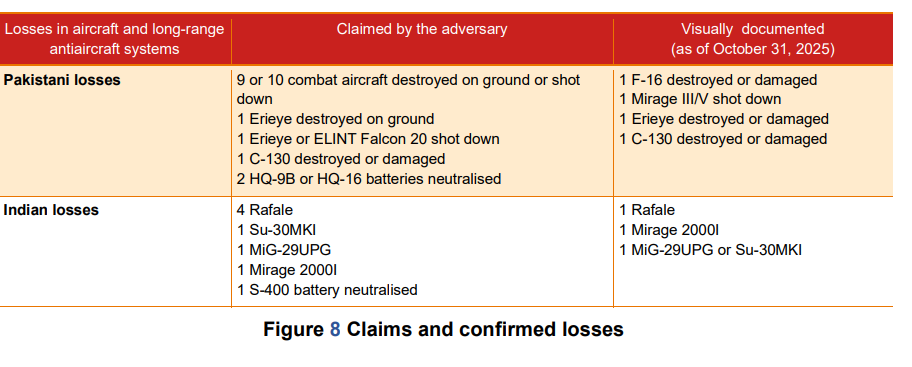
Link to the entire report.
Nevertheless, sufficient elements appear to indicate that, by the morning of 10 May 2025, the Indian Air Force had succeeded in achieving air superiority over a significant portion of Pakistan’s airspace. This in turn enabled it to continue long-range strikes against enemy infrastructure at will, at least for as long as it retained sufficient stocks of munitions such as BrahMos or SCALP-EG. At the same time, the Pakistan Air Force had lost the ability to repeat the operations it had conducted so successfully on 7 May 2025, owing to the loss of its forward air-surveillance radars and the threat posed by S-400 systems to its AWACS standoff weapons delivery platforms, while its own strikes conducted between 7 and
10 May 2025 had been largely thwarted by Indian defences.
Meanwhile, Islamabad demonstrated its manifest superiority in strategic communication, which notably benefitted from support within Chinese, and to some extent Western, information spheres. The destruction of one or more Rafales, for example, effectively masked the defeat of the adversary air force, which had reportedly suffered at least equivalent losses but had also proven incapable of defending its most important air bases or of delivering comparable, documented strikes against its adversary.
Operation Sindoor marked a significant evolution in Indian counter-terrorism doctrine, which now equates a terrorist attack to an act of war warranting a decisive response. It also eliminates the distinction between terrorist groups and their state sponsors, with the latter automatically becoming legitimate targets in the event of a renewed attack. Finally, it reaffirms New Delhi’s resolve, in such a case, not to be deterred by Islamabad’s nuclear arsenal. The potential for escalation on the Indian subcontinent therefore remains higher than ever, while developments since 1999 have constantly illustrated the stability/instability paradox
TL;DR take:
IAF won in air and the land after sustaining initial losses whereas PAF won in the media (which is not as trivial as it sounds).
Pakistan does not announce itself as a great power. That is precisely why it works.
Prussia, built on Position, not Pretension
In a world that is reorganising around blocs, chokepoints, and undersea cables, Pakistan has emerged as one of the most dextrous middle powers on the planet. Not because it dominates geography, but because it understands it. Not because it leads alliances, but because it survives them. Most states are trapped by their alignments. Pakistan is not. It sits at the hinge of the Eurasian landmass: between the Gulf and Central Asia, between China and the Muslim world, between the Indo-Pacific and the Middle East. This position is dangerous for weak states. For competent ones, it is leverage. Pakistan has learned how to convert constraint into flexibility.
Dexterity & Diplomacy as Strategy Continue reading Pakistan, the deciding hinge between the West & CRINK
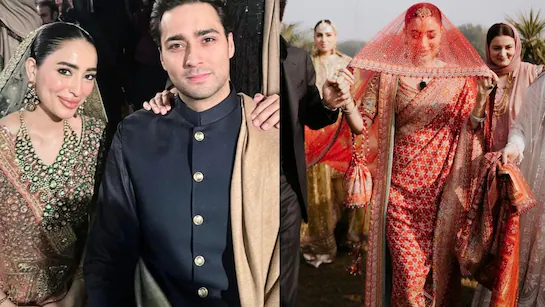
There is a tweet circulating of Nawaz Sharif’s grandson’s wedding. It is meant to be ordinary; the bride wore Indian designers, Sabyasachi and Tarun Tahiliani. Instead, it is revealing, the extent of Indic soft power. The colours are unmistakably Indian: red, gold, marigold. The symmetry is ritualistic rather than theological. The staging is ceremonial, not Quranic. The aesthetics are not Arab, Persian, or Turkic. They are Hindu-Indian; not in belief, but in form.
This is not a criticism. It is an observation. For seventy-five years, Pakistan has insisted that it is not India. That it broke away not only as a state but as a civilisation. That Islam did not merely replace Hinduism but erased it. Yet when Pakistan’s most powerful family marries its children, what appears is not a purified Islamic aesthetic but a recognisably Indic one.
Civilisation does not obey ideology.
Islam in Jambudvīpa did not enter an empty space. It arrived in a world already shaped by colour, hierarchy, procession, music, and spectacle. It adapted to that world. It did not abolish ceremony; it repurposed it. Nikah replaced vivah, but the social grammar remained. Weddings stayed long, public, ornate, and familial. They did not become austere. They became Muslim in name and Indian in structure.
Continue reading A Pakistani Wedding That Refused Not to Be Indian