
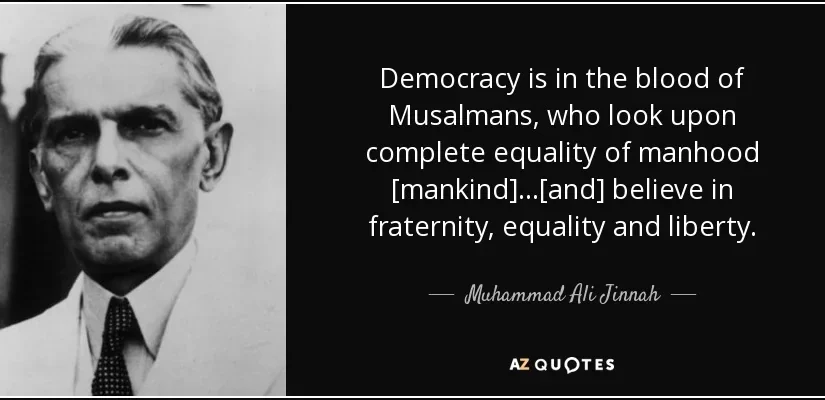
Similarly the core Hindu-Dharmic civilizational nature of India, that is Bharat, is for Indians to decide. Outsiders demanding secularism often mistake their own preferences for universal law.
Tag: political Islam
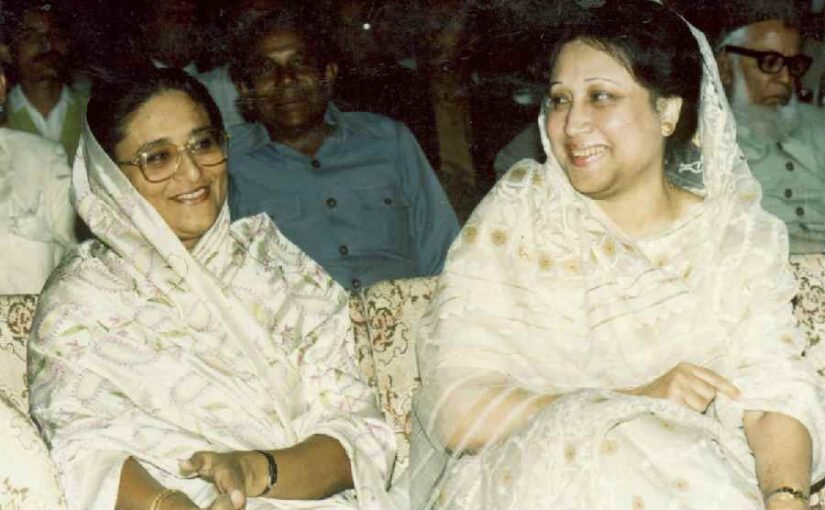
After the Begums: Bangladesh searches for a new order
In the tea stalls of Bangladesh, where politics is consumed with the same sugary intensity as the cha, the mood is one of jittery anticipation. For 18 months the country has been a state in parenthesis.
On 12 February that parenthesis would close. Voters will go to the polls in a unique double act: casting one ballot for a new parliament and another in a referendum on the “July Charter,” a package of constitutional reforms designed to prevent the rise of another autocrat.
The election is framed as the culmination of a “Second Liberation,” born of the student-led uprising that ousted Awami League in August 2024 after 15 consecutive years in power.
Observers from the Commonwealth, the EU and other nations are in place; the ballot boxes are ready.
Continue reading After the Begums: Bangladesh searches for a new order
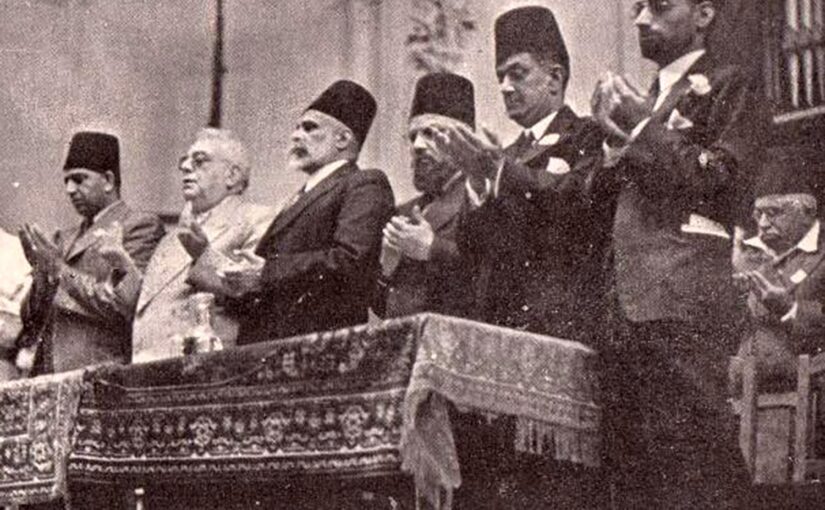
Was Partition Good for Muslims?
Kabir:I will remind you of the Sachar Committee Report which stated that the condition of Indian Muslims was worse than that of Dalits. This was a report commissioned by the Congress government not by Pakistanis. India has never had a Muslim Prime Minister. I would be willing to bet that this is not going to happen in my lifetime. The Muslim League succeeded in getting the Muslim majority provinces a country of our own. This is a huge achievement.
Partition was sold as deliverance. In hindsight, it may have been the most sophisticated act of self-disinheritance in modern Muslim history. A century ago, Muslims on the subcontinent were a political force — deeply embedded, numerically significant, and intellectually diverse. Today, they are divided, disenfranchised, and disoriented. Three nations. No unity. No power. No clear path forward. Let’s take stock:
1. Divided into Three
Pakistan. Bangladesh. India. Three fractured expressions of one civilizational legacy — none of which fully represents or protects the totality of South Asia’s Muslims.
2. No Electorate Leverage
In India, Muslims lost their negotiating bloc overnight. From being a decisive vote in undivided India, they became a permanent minority — politically cautious, rhetorically silenced, and often viewed with suspicion. In Pakistan, Muslim identity became so hegemonic it erased internal plurality. In Bangladesh, it became suspect altogether.
3. Psychological Cleft
Two-thirds of Muslims had to unlearn India. Partition forced them to disown their history. The other third had to choose between being Muslim or becoming more Indian. This psychic wound — of being here, but not quite belonging — has never healed.
4. Urdu: From Bridge to Burden
Urdu, once the cultural glue of the Muslim elite, is now:
- Enforced in Pakistan (to the resentment of Sindhis, Baloch, and Pashtuns)
- Marginalized in India
- Extinct in Bangladesh
A shared language was replaced by suspicion and statecraft.
5. Islam as a Spent Force
Partition Islam was meant to be political. It became performative. There is no robust Muslim political expression in the subcontinent today — only tokenism, sectarianism, or silence. It resembles post-revolution Iran: Islam was not discredited by the West, but by what its stewards did in its name. Partition didn’t solve the “Muslim Question.” It just made it unspeakable — in three different politicised idioms.
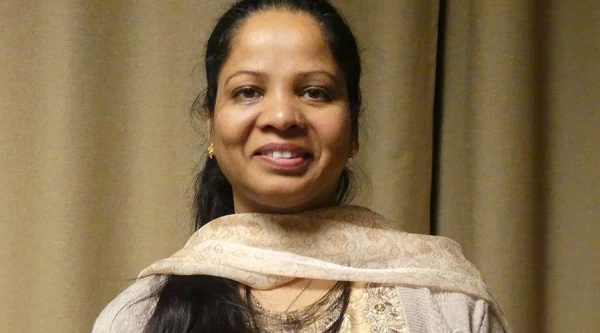
Why I Repeated Aasia Bibi’s Alleged Words
Kabir was right to question why I repeated the remarks Aasia Bibi was accused of making. The point did not require repeating them. But the principle did.
I try to be respectful towards all religions. I’ve even been accused of being too sympathetic to Islam and to Pakistani narratives. But many people still do not grasp that the rage some believers feel when they think their Prophet has been insulted is the rage I feel when a powerless Christian woman spends years on death row for something she did not do—or had every moral right to say.
Aasia Bibi is the clearest example in our era of what happens when a blasphemy taboo becomes a blasphemy law.
And what happens when a blasphemy law becomes a political weapon.
If we cannot speak the very words that put her in prison, then the injustice done to her cannot be fully confronted. Sanitising the allegation only sanitises the cruelty.
This is the core of the matter:
Freedom of expression is meaningless unless it protects speech that some consider offensive or sacred.
It cannot protect only polite dissent. It must also protect speech that religious authority hates.
I don’t indulge in theatrics or gratuitous insults. But the principle has to be clear: in a free society, no religion, none, can demand immunity from criticism, satire, or even irreverence. If believers wish to revere, they are free to do so; if others do not, they are free not to.
What troubles me is the growing chorus of Western liberal Muslims and “hijabi feminist” activists who demand respect under the banner of “Islamophobia,” while simultaneously insisting that Muhammad must never be depicted, mocked, or even discussed without ritualised reverence. This is simply a diplomatic version of the same rule that keeps women like Aasia in prison: the Prophet’s honour is more important than human freedom.
And the moral inconsistency is glaring.
There is deafening anger over Gaza. There is a whisper, at best, over Aasia Bibi. For some, outrage is selective, calibrated to global cause-identity. Aasia is inconvenient because she reveals an uncomfortable truth about the political uses of piety.
This is why I repeated the alleged words. Because the principle they engage is non-negotiable:
In a free society, all ideas, including religious ones, must be open to criticism.
No faith gets to write exceptions into the law.
Aasia Bibi paid for that principle with a decade of her life.
The least I can do is speak the words that she was punished for—even if only to show how absurd it was to punish her at all.