
Some Thoughts on Pakistani Culture

Last week, there was a lot of discussion about Basant and its place in Pakistani culture.Ā  In that context, I’m sharing this essay I wrote while I was preparing for my panel at the Faiz festival last weekend.Ā  The panel was entitled “Faiz and the Cultural Policy of Pakistan”.Ā  My co-panelists were Asad Gilani— presently serving as Secretary National Heritage and Culture Division– and Mahtab Akbar Rashdi-– a former actress, bureaucrat, and parliamentarian.Ā 

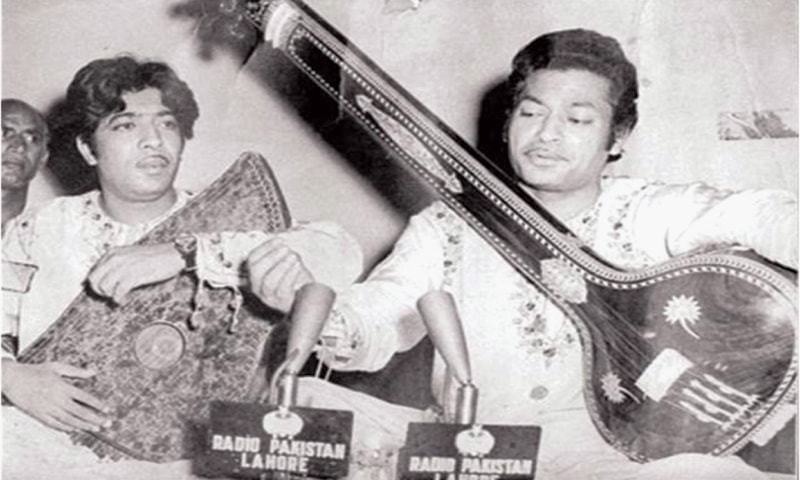
I spokeĀ  at the 10th Faiz Festival held in Lahore last weekend (February 14-15)Ā  as part of a panel titled ā€œFaiz and the Cultural Policy of Pakistanā€. I was invited to be a part of this panel primarily because of my book A New Explanation for the Decline of Hindustani Music in Pakistan (Aks Publications 2024).1 Though my book–a republication of my M.Mus thesis in Ethnomusicology– focuses narrowly on Hindustani music, I did discuss the Faiz Cultural Report of 1968, particularly in the context of arguments that Hindustani music declined in Pakistan because it did not accord with the national identity of the newly formed Pakistani state.

I thought I’d briefly share some of my thoughts here since others might find them interesting.

What is the Faiz Report? Continue reading Some Thoughts on Pakistani Culture
Caste and the Structure of Discourse

I’ve come to realise that it’s often more productive to write full posts than to engage in fragmented comment threads. The richness of thought requires a form that can hold tension, contradiction, and nuance but comments, by design, resist that.

The Upper-Caste Template of South Asian Dharmic Discourse

Take, for example, sbarrkum, who shares personal reflections and images from his life on the common board. While one might raise questions about permissions or boundaries, it’s also important to respect dialectical differences in how people choose to engage. There’s no single valid mode of expression.

That brings me to a broader reflection: how the very structure of discourse in Dharmic South Asia has long been shaped by upper-caste templates; especially under Western influence. Over two centuries, upper castes have Brahmanised, Saffronised, Persianised, and then Westernised themselves, adopting and enforcing norms of discourse, authority, and ā€˜rationality.’

Why Intermarriage Doesn’t Erase Hierarchy Continue reading Caste and the Structure of Discourse

Life expectancy in South Asia

India is very heterogeneous. Nevertheless, the contrast between Assam and Bangladesh is very curious to me.

1 Kerala 74.9 74.0
2 Delhi 73.2
3 Jammu and Kashmir 72.6
4 Uttarakhand 71.7 60.0
5 Himachal Pradesh 71.6 67.0
5 Punjab 71.6 69.4
5 Maharashtra 71.6 67.2
8 Tamil Nadu 70.6 66.2
9 West Bengal 70.2 64.9
10 Karnataka 68.8 65.3
11 Gujarat 68.7 64.1
12 Haryana 68.6 66.2
13 Andhra PradeshĀ (includesĀ Telangana) 68.5 64.4
14 Bihar 68.1 61.6
* India 67.9 63.5
15 Rajasthan 67.7 62.0
16 Jharkhand 66.6 58.0
17 Odisha 65.8 59.6
18 Chhattisgarh 64.8 58.0
19 Madhya Pradesh 64.2 58.0
20 Uttar Pradesh 64.1 60.0
21 Assam 63.9 58.9
Brown Pundits