
I’ve found myself drifting further left than I expected this year. Much of that is circumstantial, being involved in local activism in the United States naturally places one within progressive coalitions. Yet even in this frame, my ideological compass is firmly rooted in some admiration for Brahminical continuity and Bharat Mata as civilizational anchor.
At times I speculate on where Bharat truly ends. Is it the Hindu Kush? The Iranian plateau? The Persian world has always seemed to me about 20–30% Indianise; its mythology, musicality, and memory bear the imprint of the Indo-Aryan stream more than the Indo-European one, no matter how insistently modern Iranians lean toward a Westward identification.
This brings me to a provocative thesis I’ve often floated: that Brahmins are the civilisational custodians of the Indian subcontinent, and that their displacement often signals a broader cultural erasure. The tragedy of the Kashmiri Panditsis not merely a community’s trauma, but a warning. Without Brahminical continuity, Vedic frameworks falter. Hinduism in Pakistan and Bangladesh remains vulnerable precisely because it lacks the embedded authority and supervisory function of Brahmin elites to anchor Vedic traditions and calibrate resistance to incessant Islamisation.
I’ve long suspected that some contemporary coalitions, while often formed in the name of Dalit justice, may in fact contain strong anti-Brahmin undercurrents. And while I absolutely support Dalit rights and empowerment, the political cost of Brahmin exclusion may be civilisational.
Take Urdu culture, for example. I’ve previously described it, somewhat provocatively, as a “circumcised version of Brahminical culture.” This was meant to highlight how deeply Indianised many of the cultural artefacts associated with Indo-Islamic identity truly are: Kathak, biryani, the Taj Mahal, and much of the Mughal aesthetic are either rooted in Indian forms or heavily domesticated by Indian cultural logics.
However, in the interest of fairness, I want to acknowledge an important corrective offered by Kabir, who responded with a high-signal comment drawing on his training as an ethnomusicologist:
“Your point on high culture is frankly incorrect and completely contrary to the scholarly consensus. Take Hindustani classical music, for example—it is most definitely an Indo-Islamic art form. The patron saint is Hazrat Amir Khusrao. The first gharana was the ‘Qawaal bachon ka gharana’. The music developed in the Mughal courts. To this day, the vilambit khayal composition often carries the signature of Sadarang, a Muslim. As late as the early 20th century, the major gharanas were dominated by Muslims. Pandit Bhatkhande himself lamented that ‘our music was in the hands of Muslims and dancing girls’.”
This is a powerful and necessary clarification. It reminds us that civilisational memory is never unilinear and that “high culture” in the subcontinent has always been a space of entanglement and exchange, often under Muslim patronage, and sometimes against Brahminical orthodoxy.
Still, my broader point remains: many elements considered emblematic of “Islamicate” identity on the subcontinent were birthed, brokered, or indigenised in ways that blur any neat Arab, Persian, or Central Asian genealogy. That tension, the fusion and the friction, is the hallmark of India’s civilisational genius.
Kabir’s correction elevates the conversation, and I thank him for it.
the vigorous presence of Brahmins to supervise Vedic cultures
Thank goodness Sri Lanka never had Brahmin Culture. (somewhat less in Kerala and Tamil Nadu) That why it is the most egalitarian and equal society in South Asia.
The Kings built huge reservoirs for the greater good of the peoplem 30,000 of them and still in use. The oldest recorded is Abhaya Wewa now called Basawakkulama Reservoir,, built by King Pandukabhaya in the 400 BC, They did not build huge temple or palaces for their (kings) edification
Just a reminder two if the Greatest figures in India are Non Vedic Buddhists, Asoka and The Buddha
but they are also both Indian..
but they are also both Indian..
Non Vedic and non Indo Aryan Indians
I guess you missed the detail I wrote
two if the Greatest figures in India are Non Vedic Buddhists, Asoka and The Buddha
Buddhism comes from the vedic lineage, or is that not accepted?
Buddhism comes from the vedic lineage
Not according to Sri Lankan history which is the mode extensive of the Buddha (also dated consistently)
I doubt there is a pre 10th Century AD Hindu Indian text on the Buddha
https://mahavamsa.org/mahavamsa/original-version/02-race-mahasammata/
Chandragupta Maurya -> Bindusara – > Ashoka..the mauryan empire lineage…the political genius behind this lineage was Chanakya, a brahmin, author of arthashastra..I am sure you know all this so apologies for posting this…now we will wait for wikipidia to prove this wrong..
Chandragupta Maurya -> Bindusara – > Ashoka..the political genius behind this lineage was Chanakya
Chanakya, was just an employee/advisor of ChandraGupta/
No Different from Indian Brahmins employed at Vellala (Farmer Caste) owned Hindu Temples in Sri Lanka.
No different from Sundar Pitchai (Brahmin) employed at Google bu its Stock Holder Board. Google Founded by Larry Page and Larry Page and Sergey Brin. Together, they own about 14% of its publicly listed shares
That how an egalitarian society should work. Anyone from any walk in life can create create an Empire (Non Aryan Chandragupta) and hire specialized talent (Brahmin Chanakya)
now we will wait for wikipidia to prove this wrong
Not necessary, I have the Sri Lankan History Wikipidia, the Mahavamsa. Has a whole chapter on the Nandas – Chandragupta -> Asoka
Oh ye of little knowledge, find me a Hindu Indian text (pre 10th Century AD) that has this depth of description.of Chandragupta->Asoka
Asoka was wiped out from Indian History and found thru.the Mahavamsa
https://mahavamsa.org/mahavamsa/original-version/05-third-council/
No need to name call pls
Apologies..wont do it again..please delete the comment
it’s fine..
Buddha didn’t vedas. Your anti hindu tirades are tiring.
Buddha didn’t vedas. Your anti hindu tirades are tiring
Buddha didn’t vedas, what did you mean by that
the buddhist community in india is getting a bit of traffic from educated dalits. now, budddhist bhantes (monks) are being called for all functions from naming ceremonies, gruhapravesh, weddings, and funerals. a new priestly class in india is emerging. this can be called brahminisation or sankritisation of buddhists.
the attached clip, where a group of bhantrs wish mallikarjuna kharge a long life after his recent illness.
https://www.threads.com/@shrikanth_hosamani/post/DPjW4tsDPu3?xmt=AQF0THqOfRZcHwSUP6Qcw_5-uZgnX8FTHvga3H0Qdzp82Q&source_surface=35&slof=1
gruhapravesh, weddings
I have no idea what a gruhapravesh is, guess something to do with the house
Weddings; In Sri Lanka Biddhist monks are Not Welcome at a Wedding. Renunciation and Celibate. The Buddha left his wife and child to find Enlightenment.
a new priestly class in India
Not quite as in passed down by Birth. Anyone who learns can be Initiated
Wanted to post a couple of thoughts.
Wherever you find a steppe element you find extreme levels of rigidity and ossification. There are two thesis as to why this is:
1) Since they migrated a lot it became an adaptation to maintain some cultural contiguity.
2) It’s almost an overdevelopment of the skeletal system, as if big bony noses go with ossified cultural traits. Some phrenologists from the 19th c mentioned how big noses indicate fixed habits, but also steadiness and dependability.
3) The feudalism also comes with aryan heritage, obviously conquest and all but it seems to be deeply embedded.
Look at Rajasthan, north Gujarat, Kutch, Afghanistan. Almost the same culture.
There are other thoughts I will add about Orwell’s essay because I had the exact same observation returning from China to India, however brain too fuzzy on keto at the moment.
Good Observation.
The extreme of this “gig nose” theory are the Arabs and Jews. In my Opinion Arabs and Jews are the same Semitic people with different related religions.
Iranian and Bahais
lol Sbarrkum; Bahá’í Faith is a religion not an ethnicity, of whom a substantial # are Persian/Iranian.
You answered my question
Iranian and Bahais
Bahá’í Faith is a religion not an ethnicity, of whom a substantial # are Persian/Iranian
Like Judaism and Jews
Most Jews are of the Jewish faith
As a trained ethnomusicologist, I just have to say that your point on the high culture is frankly incorrect and completely contrary to the scholarly consensus.
Let’s just stick to Hindustani classical music for a minute: This is most definitely an Indo-Islamic art form. The patron saint of this genre of music is Hazrat Amir Khusrao. The first gharana was the “Qawaal bachon ka gharana”. The music developed in the Mughal courts. To this day, the standard composition of the vilambit khayal (the slow portion of a khayal performance) usually has Sadarang’s name in it. Sadarang was very much a Muslim.
As late as the early 20th century, all the major gharanas of North Indian music were completely dominated by Muslims. Pandit Bhatkhande is on record as stating that “our” (by which he meant Hindu) music was in the hands of “Muslims and dancing girls”. Naturally, he was not pleased by this.
So your generalization about Urdu culture being a “circumcised version of Brahmin culture” is not tenable.
and who dominates it now?
Obviously, Hindustani classical music is doing much better in India than in Pakistan. I’m not disputing that. My dissertation was entitled A New Explanation for the Decline of Hindustani Music in Pakistan.
But that doesn’t take away from my point that it is an example of a mixed Indo-Islamic culture. It’s not “merely a version of Brahmin culture”. I think your emphasis on Brahmins is misplaced.
Urdu itself is another example of a mixed culture. There would have been no Urdu had the Islamic and the Indic civilizations not mixed. There would have been no need for a language whose grammar is Indic but the vocabulary is highly influenced by Persian and Arabic.
And one certainly cannot make the argument that Urdu is “Brahmin” culture. It is the national language of Pakistan. The poetry of Ghalib, Mir, Faiz and Iqbal is an important part of Pakistan’s cultural heritage.
So the generalization is weak.
history is fluid; the parts of the culture itself is Partitioning into Pakistani and Indian-Hindu.
as you said classical music now seems to have become very “Hindu”
Urdu became mainstreamed as “Hindi”
the historical origins may have been one thing but also remember Iqbal had Brahmin forbears, of whom he was very proud of..
I didn’t say classical music is “Hindu”. Sorry, but I have to push back on this. This is incredibly offensive and this false belief is part of why Hindustani music has declined in Pakistan. Hindustani classical music is Indo-Islamic. Any serious practitioner or scholar of it cannot minimize the Muslim contributions to it.
Hindi is not the same as Urdu. In India, Urdu is increasingly considered a “Muslim” language (which is ridiculous because languages don’t have religions). Obviously, the fact that the “enemy” state of Pakistan adopted Urdu as the national language didn’t help Urdu’s cause in India.
I have nothing against Brahmins but let’s not minimize the Muslim contributions to the high culture.
Why is something Hindu, offensive?
This argument is used by Indian right-wingers to disclaim the Muslim contributions to the high culture. That’s why it is offensive.
As I explore in my dissertation (too long to get into here), part of the decline of Hindustani music in Pakistan has to do with uncritically accepting that certain genres of music (khayal, thumri etc) are “Hindu” and thus have no place in Pakistan. This is ahistorical. Khayal developed in the Mughal courts. Thumri is largely the creation of (Muslim) tawaifs.
This high culture belongs equally to Pakistan. I will push back against any attempts to say that it does not.
and what does Pakistan actually do with it?
That’s a different matter. Part of the struggle of Hindustani music in particular is that Pakistan too uncritically ceded that music to India and tried to replace it with Qawaali and ghazal. But Hindustani music continues to struggle along in Pakistan.
My whole point is that this is a mixed Indo-Islamic culture. It doesn’t belong exclusively to either India or Pakistan.
updated my post to incorporate your high signal comment!
How does it being the national language of Pakistan obviate the possibility that it’s origin is Brahmin? Isn’t that the Author’s exact point.
I don’t know where people get this idea that Urdu has anything to do with “Brahmins”.
Urdu and Hindi are two registers of Hindustani. Urdu being the more Persianized while Hindi is more Sanskritized. Both are grammatically largely the same.
Urdu and Hindi have their origins in Khariboli– the prestige dialect of Delhi. One of the first writers associated with Urdu is Hazrat Amir Khusrao (he called his language “Hindavi”). Amir Khusrao was obviously not a Brahmin.
My entire point is that Urdu is part of Indo-Islamic culture. Minimizing the Muslim contributions to North India’s high culture (Ganga-Jamuni tehzeeb) is ahistorical and something that is mainly done by the Hindu Right.
i had read that khusro’s father was an turk and mother was a rajput. upon his father’s early death, he grew with his maternal grand parents. he would have in all probability be educated by brahmin pundits as was the norm. this might explain……
Oh look, a ‘unicorn’ moment. One where I agree with Kabir and disagree with XTM (:
I was being provocative
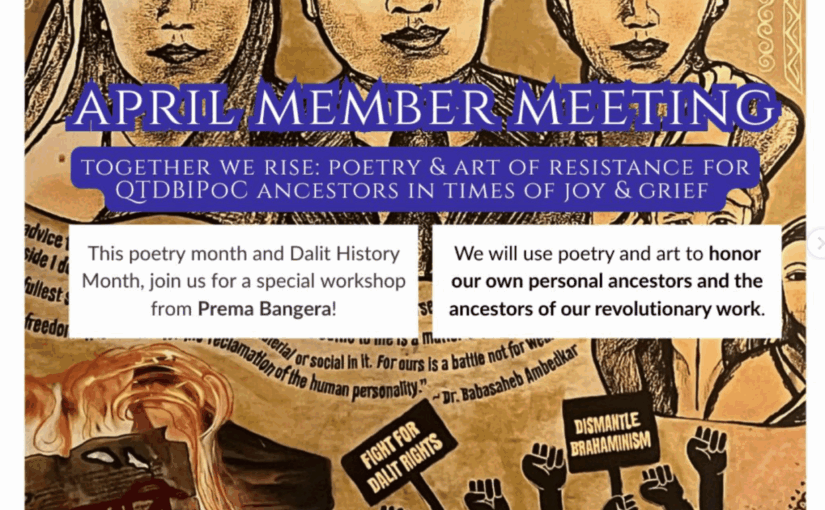
bangera caste is generally associated with (mogaveera), i.e sea fishermen and bhillavas ( generally toddy tappers). they are not schedule caste, hence not ‘dalit’ ???
not important. The grift that was in vogue over the last decade or so doesn’t require factual basis.
“I’ve long suspected that some contemporary coalitions, while often formed in the name of Dalit justice, may in fact contain strong anti-Brahmin undercurrents. And while I absolutely support Dalit rights and empowerment, the political cost of Brahmin exclusion may be civilisational.”
Indeed, much of political difference in india is race difference. Marathas hate brahmins, maratha politics is ambedkar dominated?
Nietzsche said a long time ago, that the rising socialism in europe of the time was probably a reversion to the pre-aryan past.
Indeed it should be accepted as a given at this point that morality is blood and blood is morality.
Welcome amir_timur