The Mirage of Exoticism & The Curse of the Almighty Dollar

I was drafting an email to the author of a fascinating piece on Terra Nullius, “Lost in Google Translation,” but as I fleshed out my thoughts, I realized I had more to say—so here we are.

There’s something fascinating about how Japan represents the pinnacle of exoticism for many Westerners. A country deeply integrated into the global system, yet still cloaked in an aura of mystery and cultural otherness. But when I think of places that feel genuinely distinct, my mind doesn’t go to Japan—it goes to the Persianate world.

Iran, Afghanistan, and Pakistan share a cultural continuum that, despite centuries of globalization, still retains an unmistakable distinctiveness. In many ways, these places remind me of Cuba, Venezuela, and North Korea—not in their governance, but in how they have remained insulated from Western homogenization.

Commodification vs. Authenticity Continue reading The Mirage of Exoticism & The Curse of the Almighty Dollar

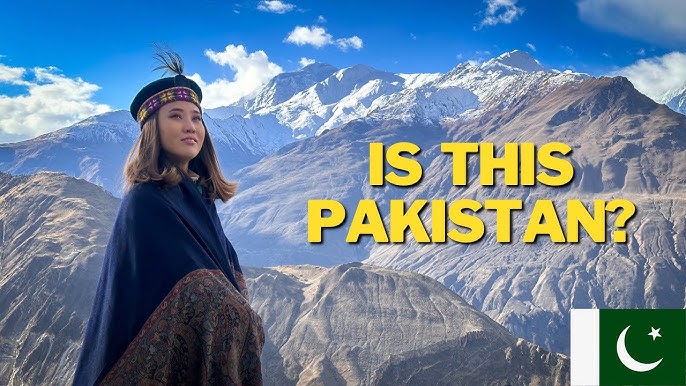
“I’m not white, I’m Pakistani.”


She has strikingly European features—reminiscent of the last Tocharians. But what’s more interesting is how deeply assimilated Muslims in the English-speaking world are—everyone immediately understood the Daywalker joke.

Presumably, she’s Pathan (or mixed), and if she had been Afghan instead of Pakistani, she’d likely have actively identified as white. But in Pakistan, “whiteness” is too remote as a social identity to be meaningfully claimed—Urdu writes like Dari/Farsi but speaks like Hindi, reinforcing its deep Desi-ness.

I once knew a Hindu Punjabi boy who looked entirely white—not even remotely South Asian. His entire social world reflected that. Whether we acknowledge it or not, racial presentation subtly shapes everything—from friendships to careers to dating.

Yalta vs. Helsinki – Sir Alex Younger and the New Global Intelligence Order

As I prepare to head back to the USA, it’s intriguing to be crossing the Atlantic at a time when the Special Relationship feels strained. This video offers key insights, and I wanted to share my thoughts on it.

The Battle Between Yalta and Helsinki, the Return of Intelligence-Led Warfare, and What It Means for the World

The world is in flux. The unipolar moment of U.S. dominance that followed the Cold War is over, replaced by a multipolar contest where power is contested, alliances shift, and intelligence warfare has overtaken traditional military confrontations. In this new era, Sir Alex Younger, former head of MI6 (2014-2020), argues that the most decisive battles will not be fought on the battlefield but in the realms of cyber warfare, disinformation, economic leverage, and intelligence operations.

At stake is nothing less than the future of the global order. Sir Alex frames the contest as a battle between two competing models:

1. The Yalta Model – Named after the 1945 conference where the world was divided into spheres of influence, this model promotes the idea that great powers dictate regional politics. Russia, China, and other revisionist states advocate this vision.

2. The Helsinki Model – Based on the 1975 Helsinki Accords, this vision defends national sovereignty, democracy, and a rules-based international order, championed by NATO, the EU, and Western democracies.

The Ukraine war is the most explicit manifestation of this ideological war—Russia seeks to reassert its sphere of influence, while the West’s military, economic, and intelligence support to Kyiv is meant to preserve a rules-based world order. But this is only one front in a much larger, more complex intelligence-driven geopolitical war.

Continue reading Yalta vs. Helsinki – Sir Alex Younger and the New Global Intelligence Order

Modi’s Sufi Gambit: Is Hindu India the True Heir to Urdu Culture?

I’m deeply impressed by Prime Minister Modi’s patronage of Jahan-e-Khusrau, a festival celebrating the syncretic and refined traditions of Urdu culture. Given the backdrop of Babri Masjid’s destruction and the Gujarat riots, both of which left lasting scars, Modi the Wise’s pivot towards fostering a secular, aesthetic Urdu culture is both unexpected and strategic.

In doing so, Hindu-defined India may be poised to accomplish for Urdu culture what the Pahlavis did for Persian—modernizing it, making it sophisticated and aspirational, and removing the excesses of exclusivist religious overtones.

If Pakistan has long seen itself as the custodian of Urdu, Modi is now positioning India as its true inheritor—one that can mainstream it, integrate it, and make it a cultural powerhouse beyond sectarian confines.

J.E.M (Jeff, Elon & Mark); The Billionaire Glow-Up

How Money, Power, and Aesthetics Reshape Identity, Masculinity & Race

Chamath Palihapitiya’s transformation is more than just an upgrade in tailoring—it’s a case study in how extreme wealth reshapes identity, optics, and even racial presentation. A simple side-by-side comparison of Chamath in his early career versus today reveals something deeper: his facial features appear sharper, his skin tone subtly lighter, and his overall aesthetic more racially ambiguous. This isn’t just aging—it’s the billionaire glow-up in action.

Chamath, on the right, in the 90’s

The billionaire transformation isn’t just about wealth; it’s about recalibrating masculinity, refining racial ambiguity, and aligning with the aesthetics of power. And Chamath is just one example.

Chamath now

From Ethnic to “Global”: The Billionaire Morph

As non-Western elites ascend into America’s upper echelons, they undergo subtle but undeniable aesthetic shifts—moves that position them as more palatable to the global elite. The process is shaped by multiple factors:

Continue reading J.E.M (Jeff, Elon & Mark); The Billionaire Glow-Up

Baloch, Aboriginal, and Beyond: Tracing Forgotten Lineages & Evolving Identities

I recently came across a fascinating family history article by Sabah Rind, a writer of Baloch and Australian Aboriginal descent. Her lineage is remarkably complex—she is at least a quarter Iranian, predominantly Baloch (5/8), with the remainder Malay (1/16) and Aboriginal (1/16) heritage. Yet, despite generations of intermarriage, her roots remain deeply embedded in the Global South and the Islamicate world.

Sabah Rind, the authoress, a “Baluch descendant”

Her father is Baloch, but her grandfather was half Baloch, a quarter Aboriginal, and a quarter Malay—a lineage shaped by centuries of Indian Ocean migration, trade, and cultural fusion.

dr umber rind
Dr. Umber Rind- a “Pakistani descendant”

Among the 400 descendants of the original Badoola-Marium pairing, Sabah remains one of the most ethnically Baloch, while many others have assimilated or drifted toward new identities over time. Her cousin, Dr. Umber Rind (they seem to share the same grandfather, Numrose, and it’s a bit confusing since they discuss different ancestries) writes on being a proud Indigenous Muslim woman descended from the cameleers.

gulam
Gulam and Mariam’s four children (l-r): Nurdin, Mirdost, Nora, Numrose

Continue reading Baloch, Aboriginal, and Beyond: Tracing Forgotten Lineages & Evolving Identities

Speculative Writings in a busy Quarter

It’s been a particularly busy quarter, so I haven’t been as active in my writing as I’d like. Life seems to shift its focus depending on where I am:

• In Asia, I’m immersed in “living”—self-growth, relatives, and experiencing the richness of the moment.

• In the UK, it’s about managing deliverables. HQ is there, as are the deep connections I’ve built over a lifetime. It’s also where our beloved doggos (the family is collectively nicknamed Munoos, a playful spin on Munaa) keep life very lively.

• In the US, life is starkly clinical—laptop-centric, disciplined, and productive. I work, work out, and worship. As Dr. V quips, “India is great for the soul, the UK great for life, and the US great for work.” Boston-Cambridge, oddly enough, is a nexus point for Liverpool fans (it is a very sports mad city), adding a quirky charm to an otherwise streamlined lifestyle, which is nice to have during term-time.

Despite the whirlwind, I finally managed to write two pieces I felt were “out there,” enough that I hesitated to post them directly to Brown Pundits. Instead, I shared them quietly through my newsletter, refraining from circulating them widely on the email distribution even. However, I think this community would appreciate the thought-provoking nature of these topics.

Here are the links if you’re curious:

1. JD Vance’s Selective Morality

My short reflections on the “Normalise Indian Hate” fiasco and its implications.

2. Founding Charter of the Golestan Union

If Pakistan ever had a Manifest Destiny. It is this, it is this.

Partition’s Impact on India’s Regional Quadrants

Partition profoundly reshaped the subcontinent’s socio-political and cultural framework. Undivided India can be thought of five main regional quadrants—Northwest (“Punjab”), North (-“United Provinces”), Northeast (“Bengal”), Central (“Bombay & Central”), and South (“Madras Province”).

The Indo-Gangetic: Fragmented Identities

Partition shattered Punjab’s cultural and linguistic cohesion, severing ties from Delhi to Peshawar. The Indo-Gangetic heartland also suffered, with mass migrations and communal violence stifling regional solidarity. Bengal’s Eastern periphery faced similar disruptions, where linguistic fragmentation replaced unity, limiting potential cross-regional influence (that’s why the 1905 Partition of Bengal was met with such outcry by the Bhadralok).

Bengal and the Northeast: Diluted Cultural Power

The partition of Bengal broke the economic synergy between Kolkata and Dhaka. Dhaka’s industrial vibrance, lost to East Pakistan, left Bengal diminished, while the Seven Sisters languished in isolation. Greater Bengal, once poised to rival the Hindi Belt, was splintered, its cultural and linguistic reach thwarted by communal, geographical & international barriers. Continue reading Partition’s Impact on India’s Regional Quadrants

14 Years of Brown Pundits: A Journey of Growth, Transformation, and Reflection

No photo description available.

It’s hard to believe that it’s been 14 years since Brown Pundits was founded. I can still recall the exact moment it all began—during Twixmas’10, that quiet week between Christmas and New Year’s when the world seems to pause. Things were slow, but intellectually, it was a time of fervent excitement. I remember the many stimulating conversations on either GNXP or Razib’s Discovery site about South Asia. That’s where it all started.

I had just turned 26, and Razib was about to become a father. At the time, I couldn’t have known how much my life would change, nor could I have foreseen the transformations I’d undergo in the years ahead.

A week earlier (on my birthday), I met Dr. V at a work event, and in the blink of an eye (the following Cheti Chand, but that date was entirely a coincidence since we had agreed to meet at Holborn), over coffee, I mentioned that I’d marry her come what may, as my way of asking her out. At that point, I was deeply immersed in my British Pakistani Bahá’í identity, thriving in my single London bobo life.

Continue reading 14 Years of Brown Pundits: A Journey of Growth, Transformation, and Reflection

Capitalism’s New Skin: Navigating Identity in a Post-Racial, Hyper-Global World

Razib’s observation on the 2020 “BIPOC” era echoed my reflections on how capitalism now defines our hyper-globalized, multi-ethnic world. Growing up in the ’90s, when “coolness” mattered more than wealth, the shift to today’s influence-driven, materialistic culture feels profound. Social media and global digital spaces have accelerated this change, where capitalism acts as the only cohesive force in an era of fractured identities.

The transformation is multi-layered. Decolonization’s legacy, the Cold War’s end, technological advances, and globalization have created a world where multi-racial societies thrive, yet economic systems dominate. In the UK, immigration complicates old class hierarchies, and categories like “British Asian” are fragmented by religion, migration waves, and economic stratification. Social media amplifies these shifts by establishing Anglo-Western ideals as global standards of aspiration, blending diversity into an overarching capitalist framework.

Platforms like YouTube exemplify these dynamics. Channels such as T-Series and Sony TV reflect Global South audiences, but creators like MrBeast and PewDiePie dominate influence.

Continue reading Capitalism’s New Skin: Navigating Identity in a Post-Racial, Hyper-Global World

Brown Pundits