Pakistan, 1971, and the Misuse of the Holocaust Analogy

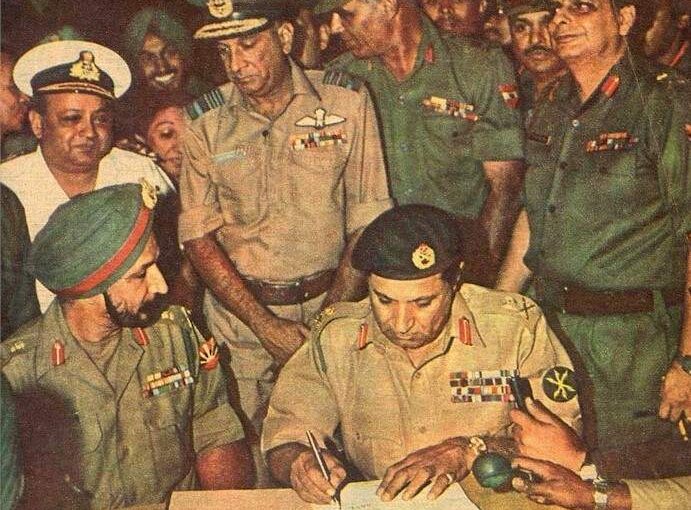
“Pakistan army remains the only one after WW2 to have carried out a large scale genocide. The comparison to the Nazis is a fact-based one. Mentioning this simple historical fact isn’t ā€œanti-Pakistanā€. RNJ

The events of 1971 in East Pakistan involved large-scale violence, mass civilian deaths, displacement, and grave violations of humanitarian norms. These facts are not contested. What remains contested is classification. Continue reading Pakistan, 1971, and the Misuse of the Holocaust Analogy

Open Thread Modi and Drumpf announce US-IND Trade deal

https://x.com/narendramodi/status/2018377090840830101

With typical bluster, the Donald declares victory and claims that India will ‘stop buying Russian oil (eventually’, and buy ‘$500 billion’ in US goods (no timeline given). Modi’s announcement doesn’t even mention those vague commitments notably.

18% is lower than Vietnam, lower than China, and also lower than Pakistan’s tariff rates, in spite of the ….abject genuflection given to the Drumpf Administration by Pakistani elites over the last few months.

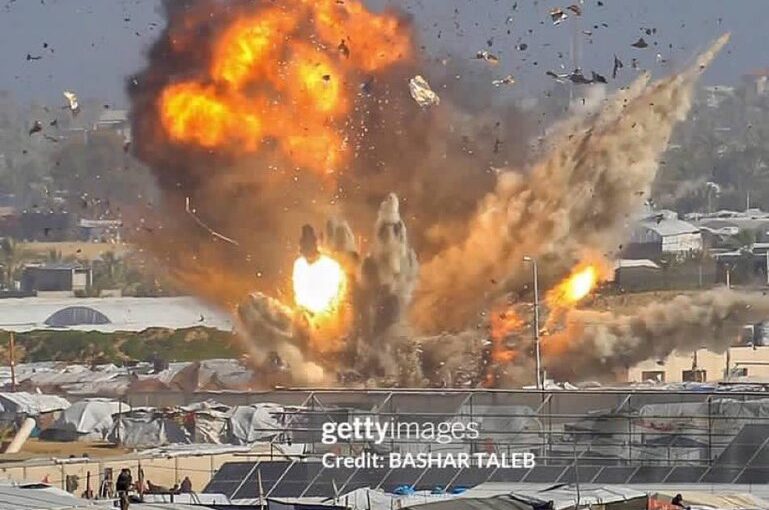
Israel: Ongoing Genocide now Concentration Camps

Israels Genocide in Gaza is the Greatest Crime of this Century.

Update as of Feb 3rd 2026
As expected as much of Gaza has been destroyed and Gaza Palestinians have Ethnically Cleansed, Israel is now turned its attention on the West Bank

Israeli authorities have intensified their campaign of forced displacement across the occupied West Bank, issuing expulsion orders to an entire Bedouin community east of Ramallah and escalating demolition policies in occupied East Jerusalem.

The measures come amid a surge in settler violence targeting educational institutions in the Jordan Valley and residential homes in Qalqilya, further shrinking the living space for Palestinians under military occupation.

Original Article

Israel has cleared land in southern Gaza for the construction of a tightly surveilled concentration camp for Palestinians in preparation for their displacement from the strip, Reuters reported on 28 January, citing a retired Israeli general who advises the military.
Retired reservist Brigadier-General Amir Avivi told the news agency in an interview that the camp would be built in an area of Rafah that has been destroyed by Israeli bombing and the ruins cleared by bulldozers. “Avivi said the camp would be used to house Palestinians who wish to leave Gaza and cross into Egypt, as well as those who wish to stay,” Reuters wrote. Avivi’s comments come as Israel prepares for a “limited reopening” of Gaza’s Rafah border crossing with Egypt as part of US President Trump’s 20-point plan for the strip.

Reuters reported earlier this month that “Israel wants to ensure more Palestinians leave Gaza than are allowed in.” Immediately after the start of Israel’s bombing and invasion of Gaza in October 2023, Israel’s Ministry of Intelligence proposed expelling Gaza’s 2.3 million Palestinians under the guise of humanitarian concerns.
Since then, Israel has systematically destroyed Gaza, ensuring that the strip becomes uninhabitable and giving Palestinians little choice but to abandon their destroyed homes and exit to Egypt and beyond if allowed.

Israeli Finance Minister Bezalel Smotrich and National Security Minister Itamar Ben Gvir advocate annexing Gaza to establish settlements for Jewish Israelis on confiscated Palestinian land.

Brigadier-General Avivi said that currently, “There are no Gazans, almost at all, in Rafah,” which has remained under complete Israeli control following the ceasefire that took effect in October. Continue reading Israel: Ongoing Genocide now Concentration Camps

Pakistan’s Civilisational Orphanhood

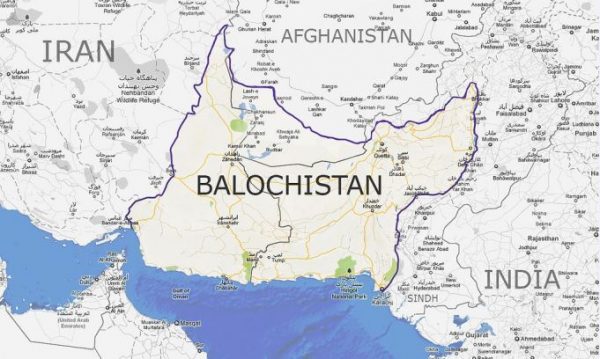
The argument over Balochistan exposed something deeper than maps or borders. It revealed a confusion about what Pakistan is supposed to belong to.

Formally, Pakistan is one of the most nationalistic states on earth. Its red lines are absolute. Its territorial language is uncompromising. Its founding trauma has hardened into doctrine. And yet, beneath this rigidity sits a quieter truth: Pakistan’s elite does not actually live inside a closed nation-state imagination. They live in English.

They think in Western legal categories, read Western literature, speak the language of international institutions, and send their children into global circuits of education and finance. At the same time, their social world remains unmistakably South Asian; family-centred, hierarchical, ritualised, and deeply embedded in subcontinental habit. They are neither fully Western nor comfortably Indic. This produces a tension that Pakistan has never resolved.

The Nation-State After 1945: A Container That No Longer Holds

Continue reading Pakistan’s Civilisational Orphanhood

Two Hours in Delhi, and the Myth of Sudden Alignment

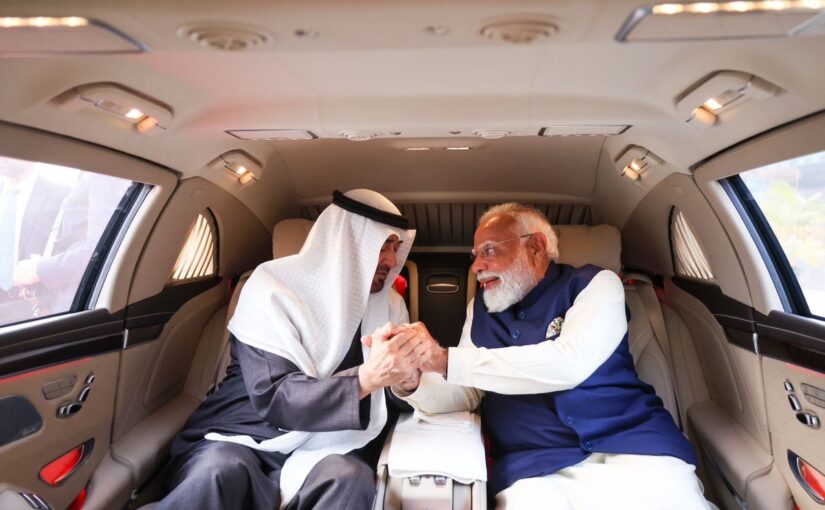
A popular thread this week argues that a two-hour stopover in Delhi, by MBZ, proves that India has replaced Pakistan as the Gulf’s preferred partner, and more than that, has become the gateway to the entire non-Western axis. The imagery is cinematic: land, sign, leave; a Pakistan deal collapses days later; Moscow follows. Read as theatre, it is persuasive. Read as geopolitics, it is misleading. Two hours did not change the map. They revealed it.

Serious agreements are never written on the tarmac. When a head of state spends two hours anywhere, it is precisely because alignment already exists. The documents are negotiated months in advance. The ceremony is optional. Speed signals confidence, not conversion. The absence of banquets is not contempt; it is efficiency.

India is valuable to the Gulf because it is large, stable, demographically young, and not ideologically intrusive. It offers scale without sermons. That makes it an excellent partner. It does not make it a hub through which all other alignments must pass.

Continue reading Two Hours in Delhi, and the Myth of Sudden Alignment

Iran and Pakistan Are Not the Same Kind of State

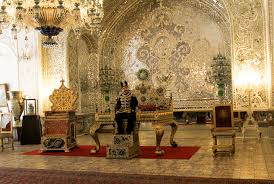
Iran cannot be analysed using the same political categories as Pakistan or most modern states. The difference is not whether a regime is monarchical, clerical, or military. It is the age of the civilisation being governed. Pakistan is a young state. Its borders, institutions, and political language were assembled in the twentieth century. In such states, power fills a vacuum directly.

Power in Young States, Authority in Old Ones

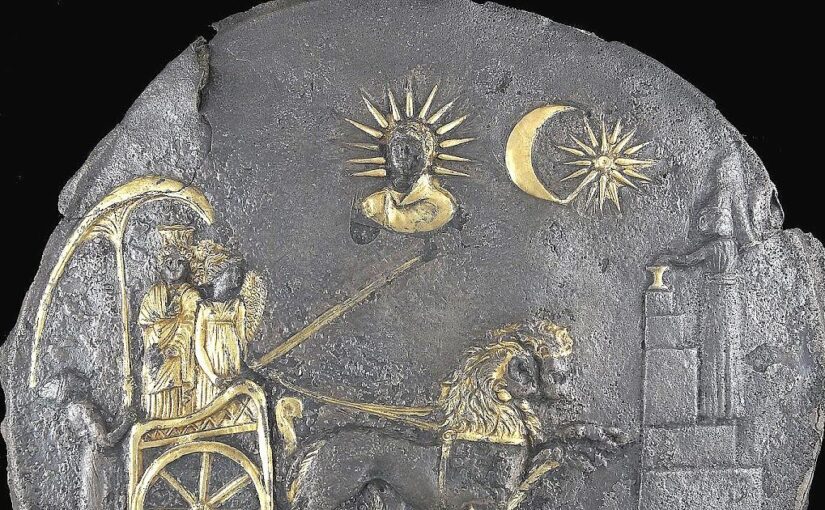
A military dictatorship governs by force, hierarchy, and command. Its legitimacy is procedural and immediate: order, security, survival. This form works where political memory is thin and inherited meaning is limited. Pakistan’s army did not overthrow an old order. It stepped into an empty one. Iran is structured differently. It is a civilisational state that has existed in recognisable form for roughly three thousand years. Power there has never been exercised through force alone. Authority has always been tied to ideas that predate any single regime.

Monarchy as Civilisation, Not Administration Continue reading Iran and Pakistan Are Not the Same Kind of State

Why is the Pakistani consumer so poor?

So a new edition of the T20 WC is coming up and it is already embroiled in some controversy. Bangladesh refused to play in India and ICC had them replaced with Scotland.

Cue the usual voices from Pakistan – “BCCICC”, “India’s money is ruining cricket” blah blah.

But it led me to ponder something – Pakistan itself has a huge population of 250 million + and it isn’t that “much” poorer than India. India’s GDP pci is $3050 while Pakistan’s is $1710 (around 1.8x) . Similarly India’s GDP is $4.51 trillion while Pak is $410.5 billion (around 11x).

So the other numbers should be in the same ratio right?

Here is where the difference comes

Revenue of cricket boards

BCCI – INR 20686 crore
PCB – INR 458 crore

That is around 45x

T20 leagues media rights

IPL – $6.2 billion for four years
PSL – $24 million for two years

That is around 130x (normalized on a per year basis)

And if you look at other stuff these huge ratios persist

Cars sold annually

India – 4.1 million
Pakistan – 200,000

Forex reserves

India – $710 billion
Pakistan – $21 billion

Stock exchange market caps

BSE – $5 trillion
PSE – $65 billion

Why do you think that is?

My theory is because the Pakistan military is stronger than the 1/10 ratio, it kind of effects everything else which leads to these lop sided ratios.

Give your thoughts in the comments below.

Listening to Iran

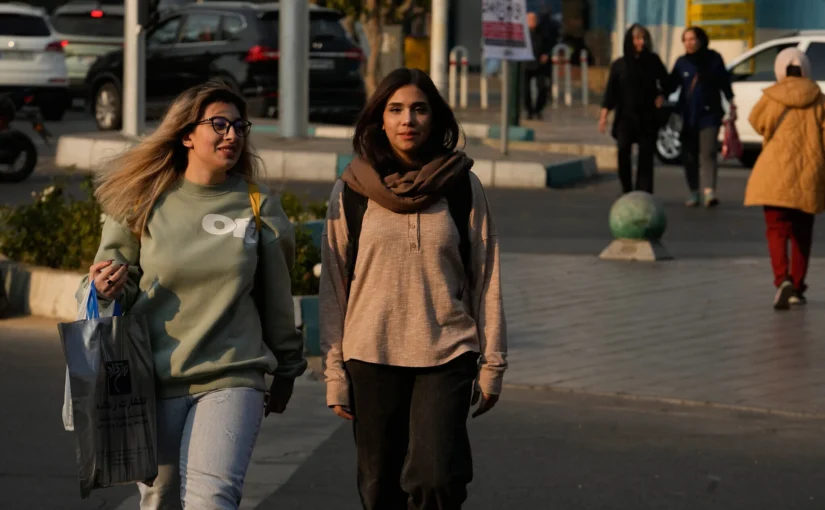
I was not reading reports. I was speaking to Iran. After weeks of silence, the internet briefly opened. Voices percolated through. What they described was not protest energy. It was systemic strain.

The figures circulating privately are severe. Tens of thousands dead, according to some accounts. Whether the numbers are precise is less important than where the pressure is concentrated. This is not confined to Tehran or large cities. It is acute in smaller towns and provincial centres.

The big urban areas remain relatively stable. It often is. But towns in the North and across the interior are absorbing the worst of the economic collapse. Inflation there is not political language. It is daily arithmetic.

This marks a shift. The Islamic Republic rested on a broad social base: provincial populations, lower-income groups, and religious constituencies. That base is now under strain. Discontent is no longer segmented. It is shared. Continue reading Listening to Iran

Tamil Islam Is Not a North Indian Story

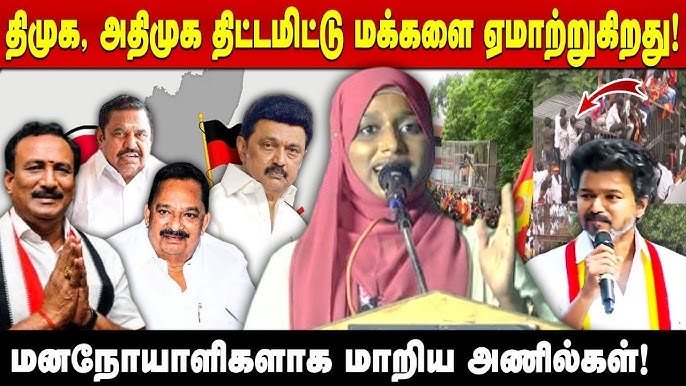
Sbarr sent a simple reel: a female Tamil Muslim politiciann in Ranipet, near Vellore, waving an LTTE flag during an election campaign. What followed was not simple at all. The reaction treated the image as an ideological provocation rather than a local political act. Why is a Muslim woman waving a Tamil separatist symbol? What does this say about loyalty, religion, or the nation?

Islam in South India did not arrive through conquest. It arrived through trade. Arab merchants settled along the Malabar and Coromandel coasts centuries before the Delhi Sultanate existed. They married locally, learned the language, adopted food, dress, and social habits, and became Tamil, Malayali, or Konkani Muslims. Religion changed. Civilisation did not.

This is why South Indian Islam does not behave like a foreign layer imposed on a hostile society. It is woven into the local fabric. Tamil Muslims are Tamil first in language, culture, and political instinct. Their solidarities are shaped by region before theology. This is not syncretism as rebellion. It is indigeneity as habit.

Tamil identity in Tamil Nadu routinely transcends religion. I was reminded of this years ago in Chennai, asking my dentist, who was Christian,about her name. Like many South Indian Christians, it was a mix of Hindu and Christian forms. I asked whether they were also Tamil. She looked at me as if the question made no sense. Of course she was Tamil, “very Tamil.”

That response explains more than a thousand editorials.

In Tamil Nadu, religion is real but it is not totalising. Tamilness is older, deeper, and more organising. This applies to Hindus, Christians, and Muslims alike. Political expression follows that logic. A Tamil Muslim expressing Tamil nationalist sentiment is not a contradiction. It is normal.

This is what happens when South India is constantly interpreted through North Indian assumptions. Islam is assumed to be oppositional. Symbols are assumed to be exclusive. Politics is assumed to be communal by default. None of this holds in the Tamil world.

Tamil lands occupy a distinct face of Indian civilisation. Fully part of India, yet unmistakably their own. Deeply Indian, yet not reducible to Gangetic history or North Indian templates. This is not fragmentation. It is civilisational strength.

India has always had multiple faces. The Tamil one is maritime, linguistic, ancient, and self-assured. It absorbed religions without surrendering itself to them. That is why its Muslims do not behave like guests. They behave like natives.

The reel was never the problem. The inability to see India’s southernmost face was.

Brown Pundits