West vs the Rest
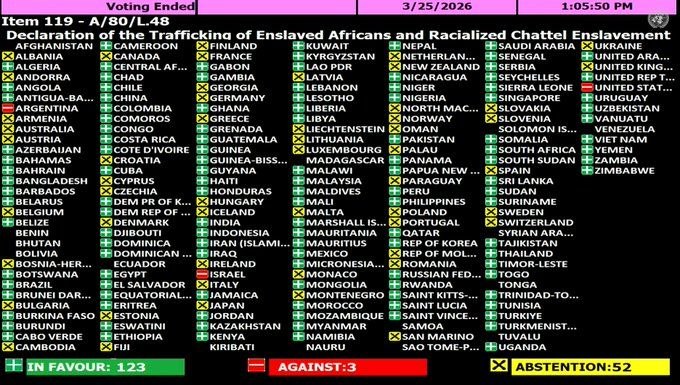
Today’s UNGA vote, 123 for, 3 against, 52 abstentions, is a clean ledger of where the world stands. The resolution declares the transatlantic slave trade “the gravest crime against humanity.” Three countries voted against: the United States, Israel, and Argentina. The UK and all 27 EU members abstained.
The 52 abstentions are the more revealing column. The EU’s stated objection was legal: calling this the “gravest” crime implies a hierarchy among atrocity crimes, which has no basis in international law. That’s a defensible position. It’s also a convenient one for countries that ran the trade.
The US was blunter; its representative objected to the “cynical usage of historical wrongs as a leverage point to reallocate modern resources.” At least that’s honest about what reparations actually means in practice.
The UN is essentially asking whether countries whether they were colonised or not?
The 123 is the story. This isn’t Russia and China championing the Global South; it’s Africa, the Caribbean, and most of Asia doing it themselves. This marks the first floor vote at the UN specifically on transatlantic slavery as a crime, and a call for reparations.
The resolution is non-binding, so nothing material changes today. But the vote is a data point: on a question of historical accountability, the West is either against or abstaining, and everyone else is not.
That’s the fault line. West vs the Rest; and the Rest has the numbers. Gaza, Russia, Iran: all proxies for the same fracture. Russia ran an empire, but its Soviet collapse was so total it no longer reads as imperial. China likewise. So both get to stand on the other side of the line.
And underneath the EU’s legal objection, the “hierarchy of crimes” argument, is something unspoken: the Holocaust has long held the position of singular atrocity in Western moral architecture. This resolution is, implicitly, a challenge to that. The Rest is saying: your crime towards us was graver, or at least as grave. Europe couldn’t vote yes without conceding the point.