šŸ“Æ Back at Peak: 22,453 Monthly Readers and Rising

Even the stats now confirm it: we’re back at our highest readership in our ~15 years.

22,453 monthly readersĀ and rising. 100+ comments on most new posts.

No ads. No algorithm. No social media amplification. Just a small, steady core of thinkers, returners, and writers keeping the conversation alive. This isn’t mass media — it’s a deliberately narrow beam.

A place for:

  • Tight but Broad Church curation

  • Long-form thinking

  • Commentary that draws blood when needed but never aims cheap

The current moment feels like a return, not just of older names, but of why BP was built in the first place: a public space for Brown(ish) minds to work through power, faith, identity, language, and sometimes just the week’s news Ā on our own terms.


Related: Brown Pundits, big in India!

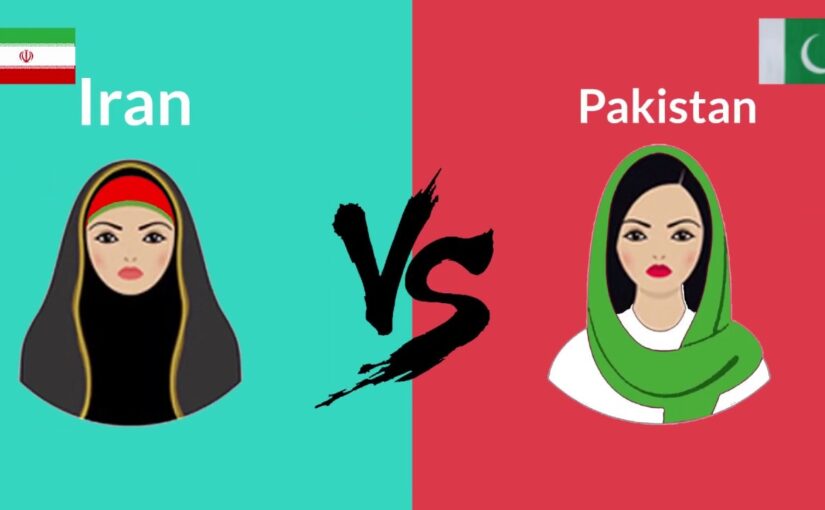
Why Pakistan Won’t Go the Way of Iran

I’ve been enjoying the new direction Brown Pundits has taken since the recent shake-up. Posts are now generating 100+ comments, and that kind of engagement creates a virtuous cycle. You want to write more, think more, respond more. I’m leaning into that.

For now, a lot of the content burden rests on me and that’s okay. It’s been encouraging to see older names return: Girmit, for instance. It feels like a slow reconsolidation of the original readership. Letting people return on their own terms.

Meanwhile, BRAHM, my newsletter, has taken on a different role; a home for more composed writing, life pieces, and the slow launchpad for my business. I just posted something there recently, which I’ll link to for now and follow up on soon. But here, on BP, is where I let myself think in public. Where I go long. Where thoughts breathe.

Continue reading Why Pakistan Won’t Go the Way of Iran

Pakistaniat & Urdu from Qasim to Quaid

UP’s very long shadow:

As I board my flight back to the UK after a brief but productive trip, I find myself reflecting on a language that continues to haunt and inspire me: Urdu.

It is a tongue caught between paradoxes. The language of courtesans and qawwals, of sacred supplication and sly seduction. It carries within it the scent of jasmine and blood, of Delhi’s dusk and Lahore’s lingering grief.

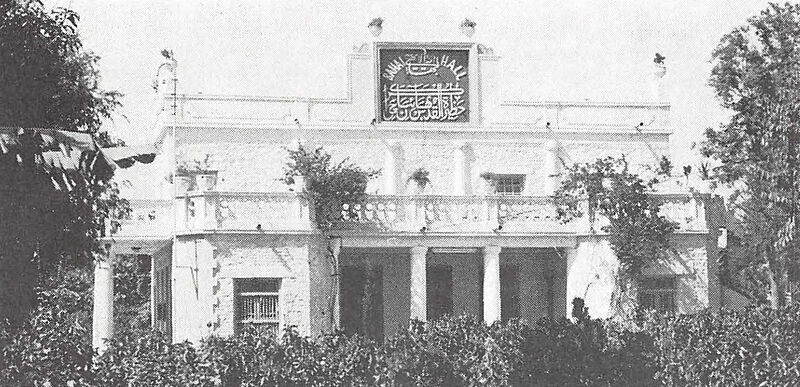
The Beloved Guardian of the Baha’i Faith once noted that while most Baha’i texts should be translated from English, Urdu alone is trusted for direct translation from Persian and Arabic. That proximity, that spiritual siblinghood with Persian, the language of kings, and Arabic, the language of God, renders Urdu magical.

Sanskrit, of course, is the language of gods, but Urdu, its stepdaughter of sorts, captures the longing of poet to partisan.

There’s a reason the BahÔ’í prayer I share below is so piercing in Urdu. So here, before I cross back into another timezone, I offer this prayer—without commentary, without translation. Just Urdu, as it was meant to be heard.

And I wonder: perhaps this is what Pakistan truly is—a project in transcending the local. Not rooted in soil, but in sentiment. A place where Punjabis, Pathans, and Muhajirs are asked to shed skin and commune in Urdu. Where Pakistaniyat, for all its fractures, has succeeded in producing a common idiom: of piety, pride, and pain. Continue reading Pakistaniat & Urdu from Qasim to Quaid

Ta’arof & The Art of Flattery


Because Tarof isn’t about numerical formulae. It’s not just ā€œno means yes after the third try.ā€ It’s not a knock-knock joke.

Onunchi, Ta’arof, and High-Context Societies

Tarof is best understood as high-context negotiation within deeply hierarchical and emotionally attuned societies; a kind of cultural Onunchi (온눈치), for those familiar with Korean sociolinguistics. It’s the art of reading the room before the room speaks. More than etiquette, Tarof is a performance of dignity through flattery, deferral, and intuition.
And that’s precisely what’s being lost; not just in Rainn’s version, but in the Westernisation of diasporic Persian culture more broadly.


Read More Here

Everyone Western Becomes White Eventually


brown: if the fresh inputs from india is reduced ( because of immigration laws and raising prosperity back home), how long can ā€˜indians in u s a’ remain an effective group? i feel that they will dissolve in next 20 years.

Nivedita: That is such an interesting take! I agree actually. Indians are pretty much white adjacent and are intermarrying with whites, so in all probability what you predict might actually happen.

That’s a sharp observation, and worth expanding. The truth is, in the West, all immigrants eventually become ā€œwhiteā€ā€”not in phenotype, but in assimilation, in aesthetic, in aspiration. Continue reading Everyone Western Becomes White Eventually

Southasia Is One Word

Reflections on Pervez Hoodbhoy at MIT

Zachary L. ZavidƩ | Brown Pundits | May 2025

Pervez Hoodbhoy needs no introduction. As one of Pakistan’s leading physicists and public intellectuals, he has long stood at the uneasy crossroads of science, nationalism, and conscience. He spoke this week at MIT’s Graduate Tower — the final stop on a grueling five-city U.S. tour, a new city every two days — in support of The Black Hole Initiative, a cultural and intellectual space he’s building in Pakistan. Despite its ominous name, the initiative is a wormhole, not a void: a cross-disciplinary bridge connecting physics, literature, art, and civic life.

What followed was less a lecture, more an exposition — sober, lucid, and grounded in decades of hard-won clarity.


The Logic of Annihilation

Dr. Hoodbhoy walked us through Pakistan’s nuclear doctrine: under long-standing military assumptions, if the north–south arterial route is severed, a tactical nuclear strike becomes viable. But the calculus is disturbingly abstract. Hiroshima’s 20-kiloton bomb killed 200,000. India and Pakistan each possess an estimated 200 warheads. One general once told him that, by crude arithmetic — obscene as it sounds — ā€œonlyā€ 80 million would die in the event of a full exchange. Continue reading Southasia Is One Word

Gana Sangha and Rajatantra in Ancient Bharat

Lion Capital of Ashoka, Vidhana Soudha

Script for the Youtube Video:

Around the time of Mahavir and Gautam Buddha, a powerful ancient monarch named Bimbisar reigned on western side of Ganga.
On the east lay the ancient Vrjji Gana-Sanghas – Sakya Malla Licchavi Videha –
The lands to the east of Ganga had no Kings but were ruled by leaders of various Kshatriya clans in an assembly where every family had a voice.
As part of his strategy, Bimbasara married a princess of Videha and to her was born Ajatashatru – the one without any enemies.
When Ajashatru ascended to the throne of Magadha, he formed staging post on the western bank of Ganga and waged a terrible war against the Vrjji Republics lead by the Licchavis and won.
This staging post would be called Pataliputra and serve as the seat of the Magadhan Monarchs like Mahapadma Nanda, ChandraGupta Maurya and Ashok Maurya.
800 years later when Ancient Bharat lay fragmented and scattered after centuries of Yavana, Shaka and Kushana invasions,Ā a Small King called Chandra entered a matrimonial alliance with the same Licchavis marrying Kumara Devi.
His fine golden coins carried images of both him and his queen.
His young son who called himself Licchavayah – to emphasise the backing of the prestigious Licchavis in the Gupta Game of thrones. This young man would go on the reshape Bharat with his sword and help usher in the Golden Age of Ancient India.
His name of Samudra-Gupta – which means Protected by the Sea because his sword had added the Southern coastal kingdoms into his Raja-Mandala.
But this Golden Era of Ancient India also meant the fight between the ideas of Gana-Sangha and Rajatantra was almost settled in the favor the Chakravatri in the ideal of a fearsome conquerer like the Licchavi Dauhitra – Samudragupta

Ertugrul is badass


I watched a few episodes of Ertugrul and it’s pretty good. I would prefer less of a Marvel-comics style character…Ertugrul and his alps basically are just killing machines who never get injured while taking down dozens of Christian knights. But it is good for what it intends to be, a dramatic rendering of the origins of the Ottoman mythology.

What’s the Indian equivalent? I assume a Shijavi TV series, but is there something with good production values?

Brown Pundits