Visibility, Voice, and the Indian Muslim Dilemma

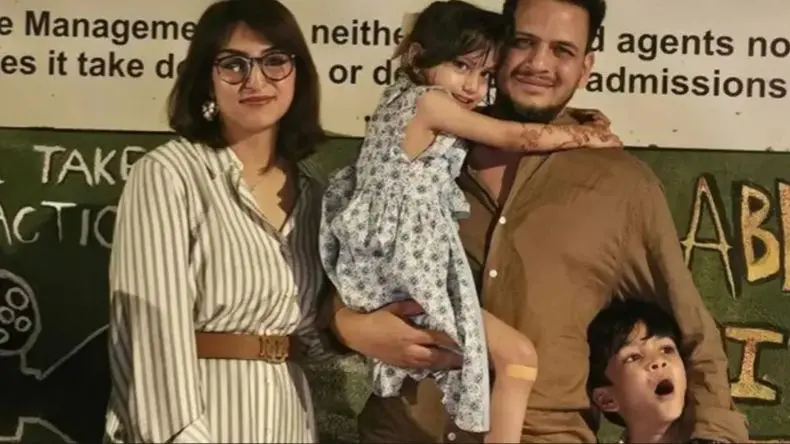
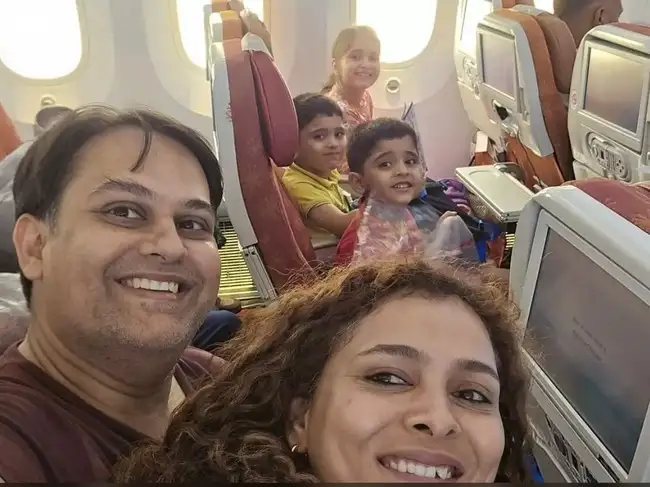
In the aftermath of the extremely tragic plane crash in Ahmedabad (the photo features the late Ali family, may they rest in the Highest Heaven), one tiny detail stood out; not the cause of the disaster (still contested), but who was being heard. Many of the victims’ families interviewed by the BBC were of Muslim origin (it was also during the Eid Holiday break). And while that may seem incidental, it reveals a subtle, recurring pattern in India’s public discourse.

Three threads emerge:

Continue reading Visibility, Voice, and the Indian Muslim Dilemma

The Gratitude Trap: On Escaping Asia but Staying Captive

In a recent video, a young Punjabi woman, likely Sikh, candidly shares her discomfort upon returning to India after living in Canada (this kind of echoes the Aussie influencer’s comments on chronic Indian inequality). The noise, the pollution, the density. Her frustration is raw, familiar, and deeply sincere.

But beneath her words lies something larger: the aesthetic asymmetry that defines the postcolonial condition. Wide roads, clean air, manicured parks; these are not just amenities. In the global South, they become symbols of escape, status, and salvation. And so, millions migrate. Or aspire to. Not just for jobs, but for dignity. For air that doesn’t burn. For order that doesn’t humiliate. For a feeling of being seen.

And when they do, when they arrive in Canada, the UK, Australia, something subtle happens: they become grateful. Not just for opportunity, but for escape. For the fact that the West “works.” That gratitude then curdles into deference.

They begin to believe that the world outside the West is meant to be chaotic, dirty, loud. That governance is a Western gift. That clean streets and quiet parks are civilizational rather than institutional. This is the gratitude trap; the soft power of asphalt, symmetry, and silence.

And it’s why postcolonial recovery is so difficult. Not because the global South lacks culture or potential, but because its own elites, shaped by extraction, not architecture, rarely build for elegance. Rarely build for pride. Rarely build for joy. What the West exported was not just railways or rule of law. It exported a built environment that still shames us. And until that is understood, until we take seriously the spatial dignity of our cities and the material form of our futures, the colonial spell will remain unbroken.

Zohran Mamdani and the Question of Civilizational Belonging

Kabir:

I would question how one defines “Indian” culture vs “Hindu” culture (this is a real question, I’m not being snarky). Zohran speaks Urdu/Hindi, wears shalwar kameez and uses Bollywood references in his campaign. So clearly, he has no issues with Indian culture. He’s not a Hindu so he doesn’t go to temples etc. I’m not sure exactly what you expect him to do?

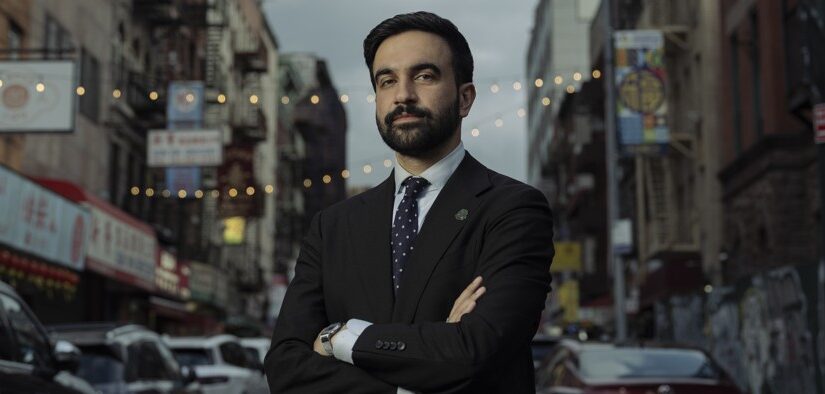
While Zohran Mamdani expresses outward familiarity with “Indian” culture — speaking Hindi/Urdu, referencing Bollywood, wearing traditional attire — these are surface markers. They do not, on their own, constitute rootedness in Indian civilizational identity. Indian culture, especially post-Partition, is not simply a composite of languages and aesthetics. It is anchored in Dharma — a diffuse but pervasive civilisational ethos shaped over millennia by Hindu, Buddhist, Sikh and Jain worldviews.

Despite being born to a Hindu mother, Zohran’s public identity is strongly framed within a Muslim, Middle Eastern, and postcolonial activist context. His political and cultural instincts appear more aligned with pan-Islamic and Western progressive causes than with any articulation of Indian philosophical or spiritual heritage. His Syrian Muslim spouse, activist framing, and lack of visible engagement with Indic traditions contribute to this perception.

This is not a religious critique but a civilizational one. Just as Israel defines its national identity through a broadly Jewish character — irrespective of belief — India’s cultural self-understanding is inseparable from its Hindu roots. To be Indian, in this view, is not to perform cultural familiarity but to resonate with the metaphysical and historical rhythms of the civilization.

By that measure, Zohran — despite South Asian ancestry — does not code as civilizationally Indian, but rather as an American progressive of South Asian Muslim extraction. The distinction is subtle but important.

Rest in Peace

This is so incredibly heartbreaking; this beautiful family excited about a new life in the United Kingdom.

The picture was taken to celebrate ‘new beginnings’ as Komi Vyas, a doctor who worked in Udaipur, had quit her job and was moving to join her husband, Dr Prateek Joshi, in London, with their three children. 

Joshi family killed in Ahmedabad crash

But, tragically, the family are among the at least 241 dead after the Gatwick-bound aircraft crashed moments after take-off from Ahmedabad Airport in the northwestern Indian state of Gujarat yesterday. 

May they and the rest of the victims of the Air India crash rest in the Highest Heaven.

Browncast: Vishal Ganesan; The Hindu Case Against Hinduism?

Another Browncast is up. You can listen on Libsyn, Apple, Spotify (and a variety of other platforms). Probably the easiest way to keep up the podcast since we don’t have a regular schedule is to subscribe to one of the links above!

In this episode, hosts Amey and Dr. Omar Ali in conversation with Vishal Ganesan, a lawyer and thinker, about his essay “Frontier Dharma” and the meaning of being Hindu in the diaspora. Vishal discusses how his observations of mainstream media and academic discourse led him to research the historical representation of Hindus, which he found to be distorted by a lens stemming from 18th and 19th-century missionary narratives.

Vishal’s essay–  The Hindu Case Against “Hinduism”: A Reflection on Dharma in the Diaspora can be found here. 

(https://frontierdharma.substack.com/p/the-hindu-case-against-hinduism-a)

Auto-generated transcipt provided by our friends at scribebuddy.com

The Brown Pundits Browncast.

Dr. Omar Ali: Hi, good afternoon everyone and welcome to another episode of the Brown Pundits Browncast. We have a very special edition of the broadcast today. Vishal Ganesan, 1 of our regular Brown Pundits contributors and lurkers, who is also a lawyer and a thinker, wrote a very interesting essay on his sub stack called Frontier Dharma, and about what does it mean to be Hindu in the diaspora. And from that, I think it evolved that we will have a discussion about this topic. And we have Vishal with us today and we have Amey.

Continue reading Browncast: Vishal Ganesan; The Hindu Case Against Hinduism?

Why the Diaspora is not as interesting to me

A friend of the podcast mentioned with a bit of surprise that so much of it was focused on India as opposed to the Indian Diaspora (you can substitute “South Asia(n)” into “India(n)”). When this weblog was started at the end of 2010 it was probably more Diasporic in orientation. That was the era when Sepia Mutiny was winding down, after all.

Today I’m not as interested in Diasporic topics for two reasons. First, the Diasporic identity in the USA is pretty stable and clear. Most Indian Americans are basically Americans with their own particular cultural twist or accent.  This is widely understood. In particular, culturally young Indian Americans have assimilated to the same broad identity as liberal white Americans (with some exceptions). The big questions of who and what brown Americans are going to be seem to have been answered.

The second issue is that India is a bigger deal today than it was in the 2000s. From a purely anthropological perspective, what’s going on with 1.3 billion Indians (+ 400 million other assorted South Asians) is more interesting to me than the concerns of tens of millions of Diasporic browns.

(the exception is something like an interview with an India American going through the modern arranged marriage; in contrast, telling me you only date other South Asians is not too interesting, as it’s basically what everyone else does, but brown)

Brown Pundits