What does it feel like to be a Muslim in Modi’s India? Have they become second class citizens?

In the context of X.T.M’s post “Who can speak for the ‘Muslim minority’ of India?” , this video is extremely relevant.

I am often accused on BP of having an “anti-Indian” agenda when I state facts such as that the BJP doesn’t have a single elected Muslim parliamentarian.  Yet, these are the exact same arguments being made by Najeeb Jung, who has been the Lt. Governor of Delhi and the Vice Chancellor of Jamia Milia Islamia and thus is not at all a Pakistani.

Today we focus on questions that few people are likely to address yet they are important and need to be honestly answered. What does it feel like to be a Muslim in Modi’s India? How do Muslims feel when they are lynched in the name of cow protection, accused of love jihad, hear calls to boycott their businesses, pilloried in campaign speeches and told to go to Pakistan? Does this suggest that Muslims are becoming second class citizens in India? As a result has the fraternity that binds India’s communities been fractured and weakened? And what is the Prime Minister’s response to this?

Has Indian democracy entered a one-party era? Pratap Bhanu Mehta explains|SpeakEasy-Episode 2

In the second episode of Frontline’s SpeakEasy, independent journalist Amit Baruah speaks with political scientist Pratap Bhanu Mehta about the future of Indian democracy and the global turn towards strongman politics. Mehta examines whether India is drifting toward one-party dominance, why Hindutva has become the ideological centre of gravity, and how political fragmentation, weakened institutions, and a fading opposition have reshaped the democratic landscape. He warns that India’s constitutional norms are being stretched to “infinite elasticity”, that authoritarian trends are deepening, and that the ruling elite may no longer find it easy to relinquish power if pushed into opposition. From the collapse of AAP’s political promise to the Congress’s leadership crisis, from institutional capture to the dangers of partisan citizenship, Mehta draws parallels between India and other democracies sliding toward executive overreach—including the United States and France.

Nehru bashing has become very old but is it ineffective yet ?

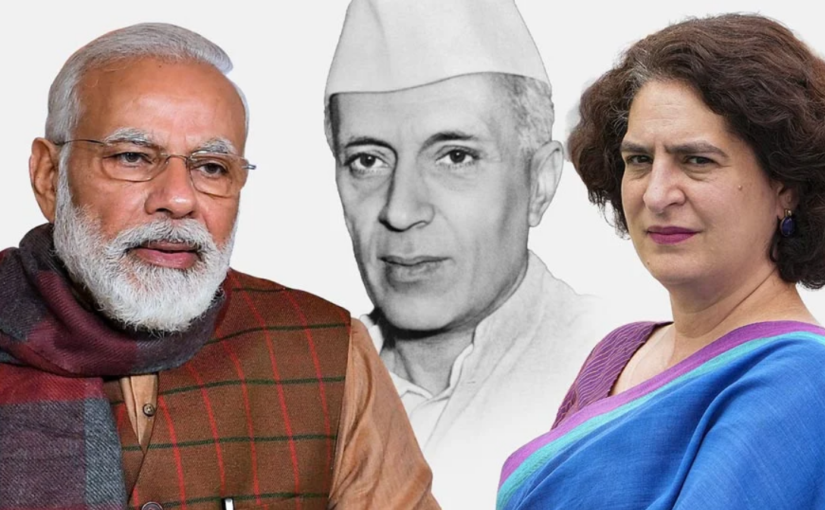
Priyanka Gandhi Vadra targeted PM Modi over the latter’s repeated Nehru bashing, and i felt a some happiness that someone was voicing what i had felt for 6 odd years now, and done so in a rhetorically effective way (unlike her brother).

“When Done Nehru Bashing, Debate Unemployment”: Priyanka Gandhi’s Top Quotes

You can find the entire speech on YouTube : LIVE: Smt. Priyanka Gandhi ji speaks in Parliament on the 150th anniversary of ‘Vande Mataram’.

Ram Guha has said multiple times that if Rahul and Priyanka were to leave the INC, the charge of dynasty and sins Nehru and Indira (real and alleged) wouldn’t pull the INC back as much as it does. But i think we are at a point where even firm BJP supporters are fed up of BJP’s Nehru bashing and its bound to have diminishing returns.

Its been 12 years and Nehru bashing brings cheers from only the hardcore supporters and none others. Maybe we are at an inflection point, maybe not.

Personally I remain an admirer of Nehru while disagreeing with his decisions profoundly. Maybe i will expand upon my criticisms and praise at some point but i do not think Gandhi erred massively in choosing Nehru over Patel. While i do think Gandhi shouldn’t have gone against democratic nature of congress (which had chosen Patel), I do think Nehru would have been a better PM had Patel remained alive longer into Nehru’s term. A bit cliched but Nehru’s life kind of reminds me of famous lines from Dark knight trilogy.

You die a hero or you stay alive long enough to become a villain.

I am not into fortune telling but i think the path Modi is following is very similar to his great opponent (atleast in his own mind), Jawahar Lal Nehru. I think they’re a bit more alike that their followers think. But all thats for another time.

Salman Rushdie on Free Speech, India and How He’s Making the Most of Life|The Mishal Husain Show

Salman Rushdie was nearly killed when he was stabbed 15 times on stage in upstate New York in 2022. His injuries were so severe that he lost an eye. It was an attack that came decades after he was first subjected to death threats over his novel, The Satanic Verses. Once he had recovered, he found he was unable to write fiction. However, after publishing an account of what happened to him, the stories returned, with five brought together in his latest book, The Eleventh Hour. In this conversation with Mishal Husain, Rushdie talks about free speech, the family connection they both share and the places he’s called home, from India to Britain and the US.

The Unfinished Contract II: Citizenship, Partition, and the Questions Liberalism Won’t Ask

A far-right senator, Pauline Hansen, recently walked into the Australian Senate wearing a burqa. Muslim MPs (one of whom wearing a hijab) angrily called it racist, bigoted, Islamophobic. They were right. But they also dodged the underlying question: What does citizenship mean when communities fracture along religious lines?

The same evasion dominates debates about Indian Muslims after 1947. One camp says: “They stayed, they’re citizens, case closed.” The other mutters about loyalty tests and fifth columns. Both positions are intellectually lazy. Neither grapples with what Partition actually did to the social contract.

This isn’t about defending bigotry. It’s about refusing to let bigots monopolize legitimate questions.

I. The Contract That Never Closed Continue reading The Unfinished Contract II: Citizenship, Partition, and the Questions Liberalism Won’t Ask

Thomas Blom Hansen, Qurban Ali & Harsh Mander on the RSS’s role in communal violence

Note: Whoever keeps deleting this post must know that I will keep re-posting it.   Non-interference in other people’s threads is a sacred principle on BP. 

In this episode of Saffron Siege, the anthropologist Thomas Blom Hansen and journalist Qurban Ali join Harsh Mander to examine how the RSS has triggered, enabled and executed riots, targeted communal attacks and other forms of communal violence in India over the 100 years of its existence. Qurban Ali who has reported on many of these incidents on the ground documents how many commissions have found the RSS culpable in riots dating back to Sholapur in 1967. Hansen talks about how violence is a central thesis of the RSS not only as a physical act but as a state of mind.


The Ministry of Utmost Happiness: A Look into the Underbelly of Modern India

[Note:  I have absolutely no issue with Sairav moderating his posts the way he sees fit–this is the right of all BP authors.  However, he doesn’t have the right to cast aspersions on other authors. Comments from others that I’ve “faked my degrees” are also ridiculous.  I frankly have no interest in interacting with Sairav so you all are free to discuss among yourselves. Similarly, I will be deleting any comments Sairav makes on my posts.]

From my Substack:

This review originally appeared on The South Asian Idea in June 2017. 

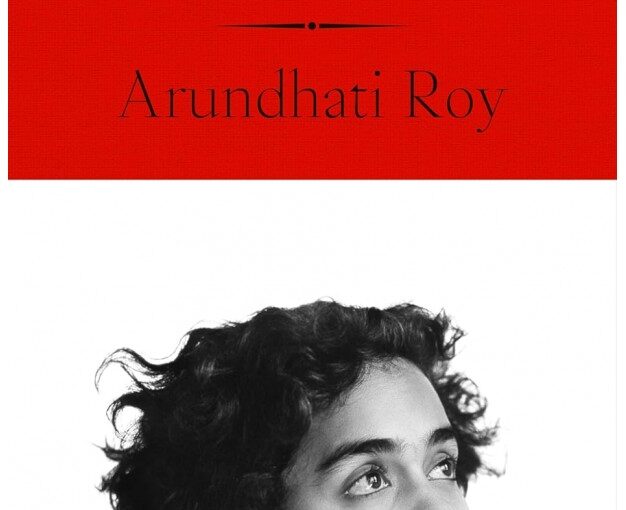
Ever since The God of Small Things was published to great acclaim in 1997, Arundhati Roy’s fans have been eagerly awaiting her next novel. It was a long wait—two decades—as Roy transitioned from being a novelist to being an activist and a non-fiction writer. Now, the wait has finally ended with the publication of The Ministry of Utmost Happiness.

The novel focuses on several characters, most of whom are outcasts from the new rising India. They include a hijra named Anjum, a Kashmiri separatist (or freedom fighter) named Musa and Tilottama, the Malayali woman who loves him. Over the course of the novel, these disparate characters encounter one another and their stories intersect, sometimes in surprising ways.

Much of the novel is set in the Kashmir Valley during the 1990s—at the height of the insurgency against the Indian state—viewed by many Kashmiris as an occupying force. Musa’s wife and daughter are killed in crossfire between the Indian Army and Kashmiri militants. Tilo herself is harshly interrogated by the Indian Army and is only let go because of her connections to an old college friend, who is high up in the Intelligence Bureau. In this section of the novel, Roy evocatively describes the brutality of life in Kashmir and the impact it has on those on both sides of the ideological struggle.

Those who have followed Roy’s non-fiction will find many resonances in this novel. Asides from the Kashmir conflict, the plot touches on rising Hindutva, the Maoist struggle in the forests of central India, and Dalit assertion against upper-caste violence. One consequence of such a large canvas is a certain fracturing of the narrative. For example, when the narrative moves to Kashmir, Anjum has to be abandoned in Delhi. Although Roy convincingly brings the characters together at the end, there is a sense of disconnect while reading the story. Continue reading The Ministry of Utmost Happiness: A Look into the Underbelly of Modern India

TM Krishna & Harsh Mander on Tamil Nadu’s resistance of the RSS

This podcast is part of Season 2 of “Partitions of the Heart”.  “Saffron Siege” runs from 17 September to 3 December 2025, with a new episode releasing every Wednesday.

In this episode, musician and political commentator T M Krishna speaks to Harsh Mander about Tamil Nadu’s long history of social movements that has led to this resistance. They examine how the state’s linguistic and language-based faith traditions have stood as a bulwark against the RSS’s attempts at homogenisation under a Hindutva umbrella. Krishna points out the multiple streams of religious influence on arts in India, especially in music, and how the RSS has tried to deny this past in service of the ideological project. “Carnatic music is symbolic of something for the RSS. It is symbolic of that puritanical and cultural superiority
 Homogenisation, or rather a linearisation, of that is convenient for them.”


The Honey Trap of the Ummah:

🕌 Reflections on Kabir, Afridi, and the Compact of Coexistence

The recent incident involving Kabir / Bombay Badshah / Honey Singh, and the orchestrated drama around his entrapment has, quite unexpectedly, become a catalyst for deeper discussion on Brown Pundits. While none have chosen to focus on analytics (“2,000 daily visitors”—thank you very much:-), the real story lies in how this drama has exposed, yet again, the deep ideological fissures within South Asian identity; especially in the India-Pakistan-Muslim triad.

Let’s begin by being honest: Brown Pundits, for all its digressions into Sri Lanka, Nepal, or Bangladesh, is still primarily a blog about India and Pakistan, and more crucially, about Indian and Pakistani Muslims. This is a feature, not a bug. The origins of the blog lie in the Sepia Mutiny, a scattered band of intellectually independent thinkers questioning dogma from every direction (which started in 2004 and if we are a “daughter blog” that we means have 20+yrs of intellectual antecedents on the Brownet), and it has now matured into one of the few platforms willing to wrestle with the ideological ambiguities at the heart of the subcontinent.

🧕 Kabir’s Point: Brotherhood, Boundaries, and the Big Choice

Kabir made an astute, if difficult, observation: that he views Indian Muslims as “brothers”, but does not feel the same about Pakistani non-Muslims.

This sounds contradictory until one understands the emotional exhaustion of watching Muslims oscillate between claiming ummah-hood when convenient, and weaponizing liberal values when needed. It’s a cognitive dissonance that creates what I can only call the moral coexistence trap: the idea that Muslims, especially in India, demand maximum accommodation, of their food (their nauseating right to murder Gau Mata on Bharat’s sacred soil itself), Faith, festivals, and foreign affiliations, while rarely extending the same pluralistic courtesy in return.

And then there’s that infamous Shahid Afridi clip, the one where he smashed his television after watching an Aarti, being performed. To many of us, that wasn’t just a cringe-inducing moment of bigotry; it begged a real question: Why do Indian cricketers continue to shake hands with Hinduphobes Hindu-hating men like Afridi and his ilk (the Pakistan cricket team)? At what point does tolerance become indulgence?

đŸš© The Compact of Indian Minorities: Understand It or Leave It

Continue reading The Honey Trap of the Ummah:

Come Fly with me to Far Bombay

I. Bombay: Between Beauty and Brutality
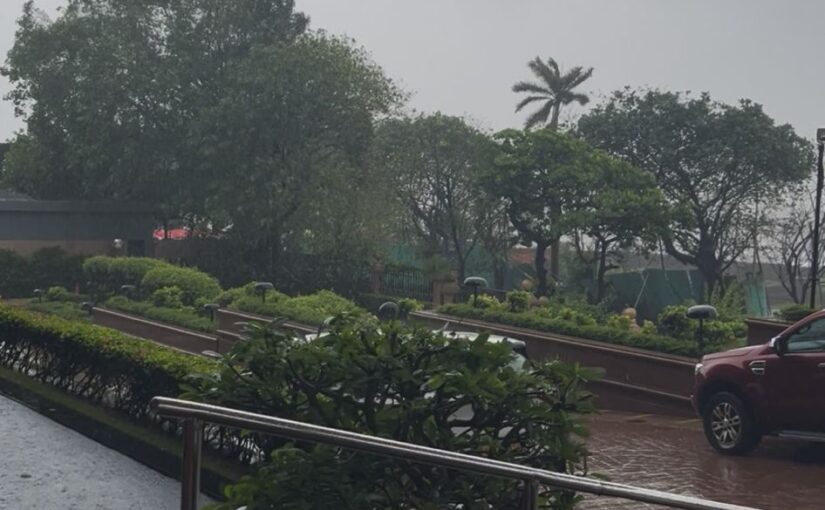
I’m writing from Bombay, where the monsoon floods are overwhelming; visually and viscerally. The rain hammers the city with a kind of sublime fury. From certain vantage points, it’s breathtaking. But it’s also undeniably brutal for those without scenic surroundings or structural shelter. It’s a reminder that Indian beauty is often doubled with burden.

II. Burden Burst: The Commentariat Awakens
Lately on Brown Pundits, I’ve noticed a revival. Old voices returning, new ones emerging, and many ideas worth engaging. But some themes have worn thin; for instance I’m in broad agreement with Indosaurus & I don’t want to waste too much breath on Audrey Truschke. And frankly, Aurangzeb is not a hill I want to die on. In fact, perhaps one of the key misreadings by Muslims in the subcontinent was turning every ideological disagreement into a hill to die on. Maybe it began with QeA-Jinnah and the Great Allama but it ossified into a pattern. Everything became a matter of principle, rather than pragmatism.

III. Concession Is Not Compromise
Compromise is seen as weakness, but I’m more interested in the capacity to concede especially when history clearly shows you’re wrong. The Mughals installed a two-tier system, subordinating Hindus and even native Muslims. Contrast that with the Suri dynasty, particularly Sher Shah Suri, who in just two decades built the Grand Trunk Road and reshaped governance without the alienation that marked the Mughals. If Hindutva attacked the Suri legacy, I’d call it pure bigotry. Sher Shah ruled with the land, not over it. Continue reading Come Fly with me to Far Bombay

Brown Pundits