On Whose Side Is God?

The Wrong Question About Barbarians

Omar’s excellent piece raises the question of barbarians. I want to raise a harder one: whose side is God on? I ask this not as theology but as military analysis. Because the planners of Operation Epic Fury appear to have assumed the answer is obvious; and that assumption may be the central miscalculation of this war.
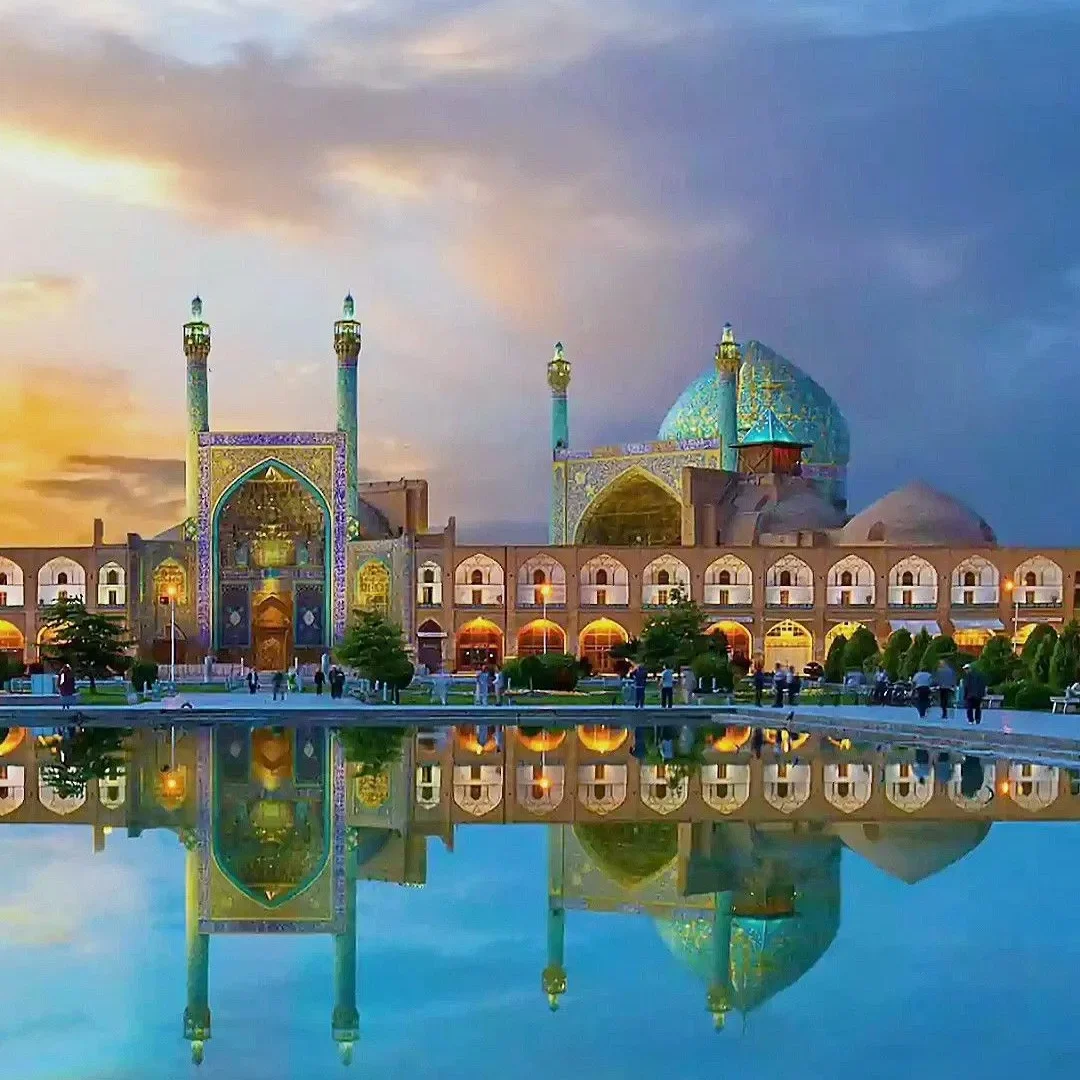
Isfahan: A Rich History and Unique Tourist Attractions - Persis Collection
Barbanians

The Pahlavist Map of Iran

The Pahlavists who helped guide this operation are, broadly speaking, secular liberals. Their Iran is Tehran’s northern suburbs, Los Angeles, Paris. Their model of the enemy is a man like themselves: attached to life, afraid of death, protecting assets and family and position.

Rational actors in the economic sense. You remove the leader, you remove the fear, the system collapses. This is a coherent theory of change. It just happens to be wrong about the specific civilization it was applied to.

Iran faces a pivotal moment. Can a tired regime contain a fresh wave of ...
Pretender to the Peacock Throne

The Gift of Martyrdom

Shia Islam is not organised around the fear of death. It is organised around the embrace of honourable death as the supreme spiritual achievement. Karbala is not a trauma to be processed; it is a template to be repeated. Husayn did not miscalculate when he rode into the plain knowing Yazid’s army outnumbered him. He made a theological choice.

The willingness to die without surrendering is not a bug in the Shia operating system. It is the entire point of the operating system. When you assassinate a Supreme Leader who has spent forty years framing his rule in exactly these terms, you do not break the system. You hand it the most powerful gift available: a martyr. Khamenei is now Husayn. The Americans gave him that.

Ashura Mourning Procession in Karbala, Iraq by students. - Islamic ...
Yá Husayn

On Sky Gods and the Human Spirit Continue reading On Whose Side Is God?
Zahak versus Husayni

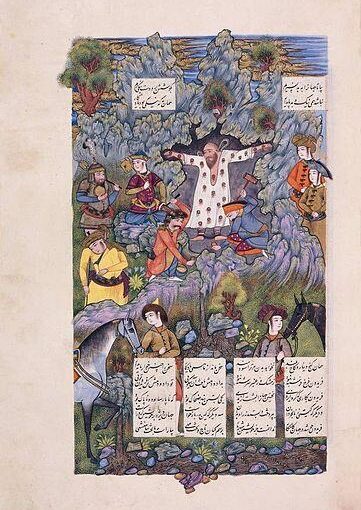
On March 1, 2026, Reza Pahlavi issued his statement on the killing of Ali Khamenei: “Ali Khamenei, the Zahhak of our time; the evil being who, just a few weeks ago, issued the order to slaughter tens of thousands of Iran’s finest children, is gone.

The Shahnameh framing was not ornamental. For years, Pahlavi has used the Zahhak figure, the serpent-shouldered tyrant who fed on the brains of Iran’s youth, as his shorthand for the Islamic Republic.

Zahhāk: An Etiology of Evil - The Markaz Review

And Khamenei, symmetrically, had organized his entire ideological project around the Husayni archetype: the martyr of Karbala, the one who refused submission before Yazid’s overwhelming power. Every day is Ashura. Every land is Karbala. That was the grammar of the revolution.

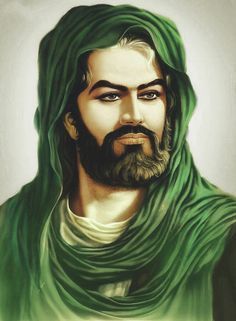
Imam Hussain: The Man Who Opposed the Founding Fathers of ISIS | HuffPost  Contributor

Now the “Zahhak” is dead (or the Husseiny attained martyrdom depending on your viewpoint). The question that follows is the only one that matters: who is Iran? Continue reading Zahak versus Husayni

Open Thread: Israel Strikes Iran

Tehran has been bombed; University Street, home to a Military Intelligence base, has been struck.

Today is 9/11 in the Muslim calendar: the 11th of Ramadan, the 9th and holiest month.

US Marine guards at the American Consulate in Karachi opened fire on Shia protesters attempting to storm the compound, killing at least 12. Pakistani police and paramilitary Rangers were also present. The Sindh chief minister has ordered a probe into the deaths.

Shia communities in Kargil are mourning the death of their leader.

Imam Khamenei was not just a leader for Iran but seemingly for Muslims around the world. The Muslims of Kashmir took to the streets upon hearing news of Seyyed Khamenei’s martyrdom.

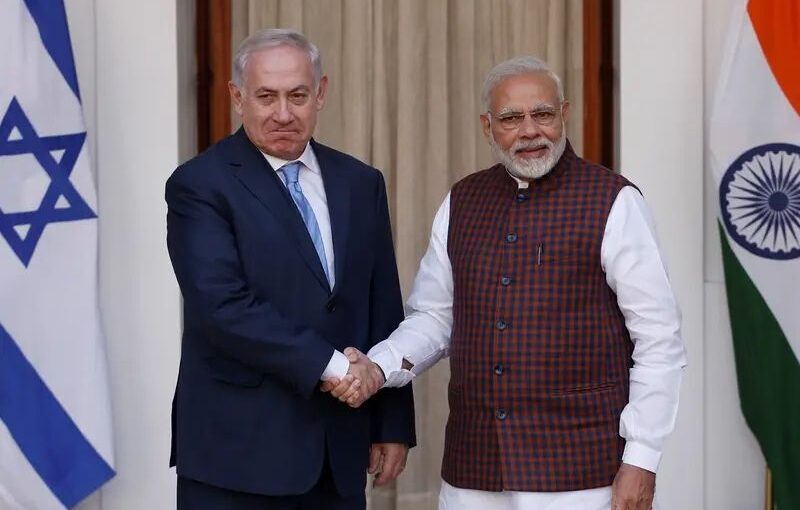
Double Standards, Modi’s Gamble, and Why Ramadan Gets It Right

Two comments overnight exposed different sides of the the same problem.

You Can’t Weaponise Islamophobia and Then Kneecap Hinduism

Kabir tried to circulate a link around Manu Pillai’s Gods, Guns and Missionaries, a serious book, framed around whether Hinduism was, in some sense, constructed. The question is legitimate. All traditions are constructed. All identities consolidate under pressure.

Top 10 Muslim Inventions in History - The Muslim Vibe

But Hinduism and Islam are pari passu in this respect. The nineteenth century shaped both. Colonial enumeration shaped both. Reform movements reshaped both. Romila Thapar, Wendy Doniger, Sheldon Pollock; the literature on Hindu consolidation is vast. So is the literature on Islamic reform: Wahhabism emerging from Najd in the 1740s, Deoband crystallising in 1867 directly in response to 1857, Barelvism as counter-movement to both. All traditions have formation moments. All traditions modernise under pressure.

To apply the deconstructive lens to Hinduism while leaving Islamic historiography untouched is not intellectual rigour. It is asymmetry. Kabir, who deploys “Islamophobia” as a first-strike weapon with the hair-trigger of a seasoned litigator, has never shown the slightest inclination to subject his own tradition to equivalent scrutiny. If the lens is universal, use it universally. If it is selective, say so.

Anything else is prosecution dressed up as scholarship.

Pakistan’s Literacy Problem Is Real. The Comparison to India Is Useless. Continue reading Double Standards, Modi’s Gamble, and Why Ramadan Gets It Right

Pakistan Does Not Need to Imitate India to Be Stable

I would like Pakistan to be a secular democracy and give up its ambitions on Kashmir. Badshah

Similarly the core Hindu-Dharmic civilizational nature of India, that is Bharat, is for Indians to decide. Outsiders demanding secularism often mistake their own preferences for universal law.

Pakistan’s dramatic drop in fertility

Meanwhile, Pakistan’s average number of children per woman has dropped sharply from 3.61 in 2023 to 3.19 in 2024, reflecting shifting fertility patterns. By comparison, India’s rate declined more modestly from 2.14 to 2.12.

Why women in South Asia are aging faster than in Europe, US

Those are not marginal adjustments. That is acceleration. For decades, Pakistan was treated as a demographic outlier. India fell below replacement. Bangladesh stabilised. Iran collapsed to European levels. Turkey dropped. The Gulf states hollowed out. Pakistan remained “young.” That youth dividend now looks fragile.

Economic Pressures

The fertility transition is no longer creeping. It is sprinting. The familiar explanation is economic pressure. Urban housing costs more. Education lasts longer. Children are expensive. Women delay marriage. This is all true but incomplete. The deeper shift is cultural. Modernity changes how individuals see time.

Rural Norms

In agrarian societies, children are labour, security, and continuity. In urban societies, children are choice. Once children become a choice rather than a necessity, fertility becomes elastic. It bends downward.

Social Media Continue reading Pakistan’s dramatic drop in fertility

Iran and Pakistan Are Not the Same Kind of State

Iran cannot be analysed using the same political categories as Pakistan or most modern states. The difference is not whether a regime is monarchical, clerical, or military. It is the age of the civilisation being governed. Pakistan is a young state. Its borders, institutions, and political language were assembled in the twentieth century. In such states, power fills a vacuum directly.

Power in Young States, Authority in Old Ones

A military dictatorship governs by force, hierarchy, and command. Its legitimacy is procedural and immediate: order, security, survival. This form works where political memory is thin and inherited meaning is limited. Pakistan’s army did not overthrow an old order. It stepped into an empty one. Iran is structured differently. It is a civilisational state that has existed in recognisable form for roughly three thousand years. Power there has never been exercised through force alone. Authority has always been tied to ideas that predate any single regime.

Monarchy as Civilisation, Not Administration Continue reading Iran and Pakistan Are Not the Same Kind of State

Listening to Iran

I was not reading reports. I was speaking to Iran. After weeks of silence, the internet briefly opened. Voices percolated through. What they described was not protest energy. It was systemic strain.

The figures circulating privately are severe. Tens of thousands dead, according to some accounts. Whether the numbers are precise is less important than where the pressure is concentrated. This is not confined to Tehran or large cities. It is acute in smaller towns and provincial centres.

The big urban areas remain relatively stable. It often is. But towns in the North and across the interior are absorbing the worst of the economic collapse. Inflation there is not political language. It is daily arithmetic.

This marks a shift. The Islamic Republic rested on a broad social base: provincial populations, lower-income groups, and religious constituencies. That base is now under strain. Discontent is no longer segmented. It is shared. Continue reading Listening to Iran

Lord Zoroaster’s Fire Still Burns

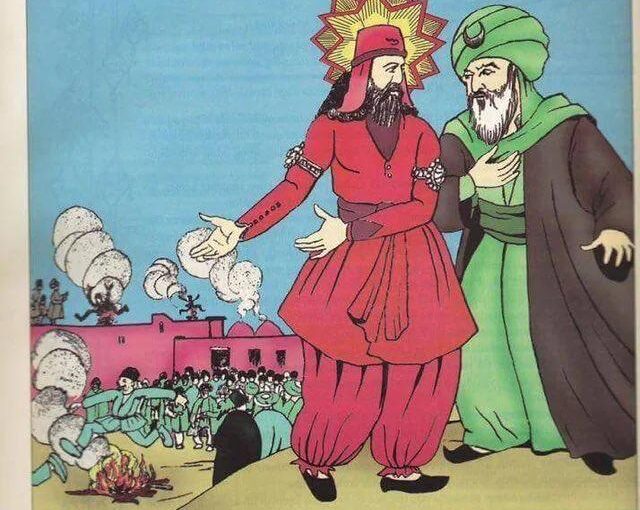
In the 1920s, Soviet Azerbaijan produced a remarkable satirical magazine called Molla Nasreddin. It mocked clerics, superstition, empire, and authority with a sharpness that would soon be extinguished by Stalinist conformity. One cartoon from that period shows two figures standing side by side: Lord Zoroaster in red, radiant and amused; Prophet Muhammad in green, solemn and slightly defensive. Below them, a crowd leaps over a fire.

Lord Zoroaster turns and says: “You claimed to bring them a new religion, but they still jump over my fire.”

The joke is simple. The implication is not. It is a jab at how ancient Persian customs; Nowruz, fire-jumping, seasonal rites, survived Islamic conversion not as relics, but as living practice. Islam arrived. The civilisation did not leave. The fire stayed lit.

Iran Is Not a Regime Problem Continue reading Lord Zoroaster’s Fire Still Burns

Brown Pundits