Call for Authors

Brown Pundits has always thrived on debate, commentary, and detail. Our compact team—three co-founders, two editors (Nivedita & Indosaurus), and three authors (sbarrkum, Gaurav Lele, Saiarav and Manav); keeps the conversation alive.

We’d like to expand. If you’ve been a regular voice in the comments or simply feel you have something to add, please apply to write for BP. Sharp observations, whether about Modi Ji’s birthday celebrations or broader cricketing analogies, are exactly what we value.

The word Pundit comes from Sanskrit, meaning ā€œlearned manā€ or Brahmin. It reminds us that Brown intellectual life is rooted in centuries of plural, complex traditions of debate. This is our inheritance, and BP stands on those terms; not reducible to any ideology.

I’d especially encourage regulars like brown, Daves, Hoju, Pandit Brown,Ā and BB to consider joining the author list.

Threads, Carpets, and PM Modi’s 75th

Happy Birthday Pradhan Mantri:

I watched several videos — four or five, maybe more — of public figures sending their wishes. Among them: Donald Trump, Narendra Modi, Benjamin Netanyahu, Shah Rukh Khan, Aamir Khan, Mohammed Siraj, and Mukesh Ambani.

Mukesh Ambani, of course, remains closely aligned with the establishment, and Aamir Khan seemed to lean heavily into his Hindu heritage — adorned with Rakhis on his wrist, even a Bindi. He’s presenting himself now in a distinctly Hindu cultural idiom, though he comes from a very prominent Indian Muslim family.

By contrast, Shah Rukh Khan stood out. His message was subtly sardonic — he remarked that the recipient was ā€œoutrunning young people like me.ā€ It was light, but just subversive enough to feel intentional. Interestingly, both Shah Rukh and Aamir spoke in shuddh Hindi, which added a certain performative weight to their gestures.


Hindu Art

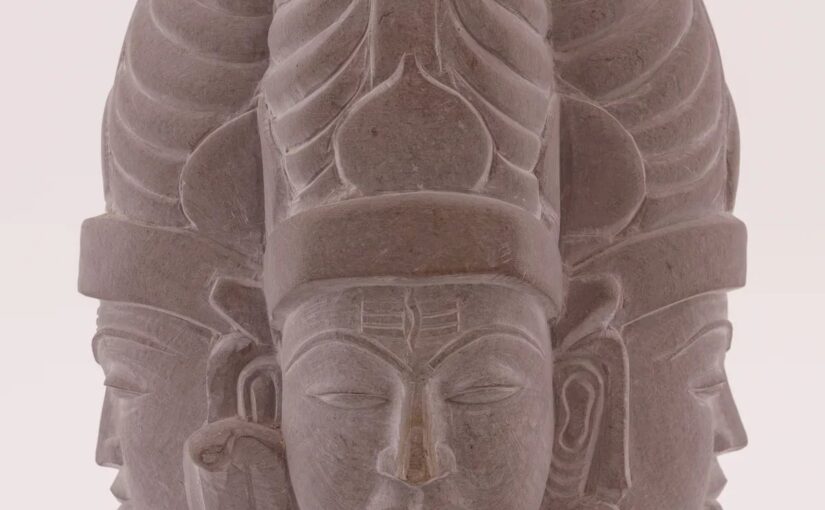
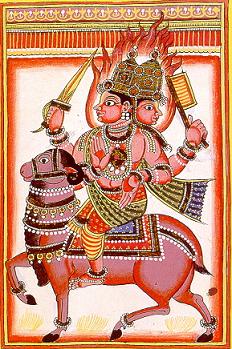
I’ve been fairly busy the past few days, mostly focused on BRAHM Collections;Ā writing about carpets, curating Trimurti sculptures, and exploring Ardhanarishvara iconography. It’s been a deep dive into the civilizational grammar of India and by extension, the porous boundary between sacred art and civil religion.

In the background, I’ve also been chipping away at longer-form reflections; trying to crack the formula for my newsletter (believe it or not the readership is neck to neck with BP but different demographics). It’s all a bit scattered, but the writing has become its own brown paper trail.


On the Commentariat (and Why I’m Stepping Back)

I still follow the commentariat but I’m slowly easing off. There’s a rhythm to it, sure, but too often it turns into exhaustion. I’ve removed all of Honey Singh’s abusive posts. Abuse is now a hard red line for me, but beyond that, I’m stepping back from constant moderation or sparring. Continue reading Threads, Carpets, and PM Modi’s 75th

The Honey Trap of the Ummah:

šŸ•Œ Reflections on Kabir, Afridi, and the Compact of Coexistence

The recent incident involving KabirĀ / Bombay Badshah / Honey Singh, and the orchestrated drama around his entrapment has, quite unexpectedly, become a catalyst for deeper discussion on Brown Pundits. While none have chosen to focus on analytics (ā€œ2,000 daily visitorsā€ā€”thank you very much:-), the real story lies in how this drama has exposed, yet again, the deep ideological fissures within South Asian identity; especially in the India-Pakistan-Muslim triad.

Let’s begin by being honest: Brown Pundits, for all its digressions into Sri Lanka, Nepal, or Bangladesh, is still primarily a blog about India and Pakistan, and more crucially, about Indian and Pakistani Muslims. This is a feature, not a bug. The origins of the blog lie in the Sepia Mutiny, a scattered band of intellectually independent thinkers questioning dogma from every direction (which started in 2004 and if we are a “daughter blog” that we means have 20+yrs of intellectual antecedents on the Brownet), and it has now matured into one of the few platforms willing to wrestle with the ideological ambiguities at the heart of the subcontinent.

šŸ§• Kabir’s Point: Brotherhood, Boundaries, and the Big Choice

Kabir made an astute, if difficult, observation: that he views Indian Muslims as ā€œbrothersā€, but does not feel the same about Pakistani non-Muslims.

This sounds contradictory until one understands the emotional exhaustion of watching Muslims oscillate between claiming ummah-hood when convenient, and weaponizing liberal values when needed. It’s a cognitive dissonance that creates what I can only call the moral coexistence trap: the idea that Muslims, especially in India, demand maximum accommodation, of their food (their nauseating right to murder Gau Mata on Bharat’s sacred soil itself), Faith, festivals, and foreign affiliations, while rarely extending the same pluralistic courtesy in return.

And then there’s that infamous Shahid Afridi clip, the one where he smashed his television after watching an Aarti, being performed. To many of us, that wasn’t just a cringe-inducing moment of bigotry; it begged a real question: Why do Indian cricketers continue to shake hands with Hinduphobes Hindu-hating men like Afridi and his ilk (the Pakistan cricket team)? At what point does tolerance become indulgence?

🚩 The Compact of Indian Minorities: Understand It or Leave It

Continue reading The Honey Trap of the Ummah:

Brown Pundits: Broad Church or Narrow Canon?

Brown Pundits Must Stay a Broad Church

Reading Kabir’s thoughtful post on the ā€œsoft Hindutvaā€ bias at Brown Pundits, I found myself both agreeing with parts of his argument and diverging from its framing. My own journey with BP goes back to its inception. The blog was born in Twixmas December 2010; 10 days after I had met Dr. Lalchand, whose presence has profoundly shaped my civilizational views.

I say this not as a biographical aside but because BP, at its best, is where the personal and civilizational collide. We bring who we are; our marriages, our migrations, our contradictions, into this messy, brilliant conversation.

At the time, like many Pakistanis, I held a deep-seated assumption: that Hindus were fundamentally ā€œother.ā€ It wasn’t overt hatred; just a civilizational distance, internalized from birth. But Dr. V & Brown Pundits challenged that.

A Forum With Bias? Yes. But Which One?

The heart of BP is not neutrality; it’s the willingness to host contradiction. That is its genius, and it must be protected.

Continue reading Brown Pundits: Broad Church or Narrow Canon?

What Kind of Space Is Brown Pundits

A few of us authors have been actively discussing the future of Brown Pundits;Ā the space, the tone, and the deeper ideas we’re engaging. It started informally on our WhatsApp group, but the questions are foundational: What kind of platform is BP becoming? What should it strive to be? And what kinds of ideas does it host best?

At its best, Brown Pundits is a bridge; across nations, faiths, ideologies, and lived experiences. It’s a space where one can be deeply Indian, wholly Pakistani, broadly Bangladeshi, or diasporic and disillusioned but still belong. But like any bridge, it needs conscious upkeep. If a conversation leans too far in one direction, it doesn’t stretch, it collapses inward.

Some contributors feel the platform has become overly shaped by one ideological current. Others argue that the real problem isn’t dominance, but disengagement ; those who want plurality must also show up. And both perspectives can be true.

Comments, Censorship, and the Cultivation of Voice

Over the past 45 days, I’ve had far less time for BP than I’d have liked. But now that I’m back in the US, I finally have space to refocus on what matters most for BP: stewarding it as a platform for intelligent, plural, and principled discourse.

Updated Commentator Guidelines

We’re evolving how we manage our comment threads. Here’s the updated approach:

1. Authors moderate their own threads.

Each Author is free to shape the conversation under their posts. If you post it, you own the thread. Also to the commentariat, if you put a picture and capitalise your handle, it makes you more “human” and memorable (without having to trade in your anonymity, thank you Indosaurus).

2. Do not delete comments; void them.

Deletion removes our memory. If a comment crosses the line, Authors may void it (ideally only the offending items but I can understand the temptation to void it all), but we preserve it as part of the archive. Cultivating a robust commentariat is a core BP value.

3. Authors may never moderate another Author’s comment.

If an Author has a concern with another Author’s comment, they should reach out to me directly. I will arbitrate. No unilateral actions between Authors.

4. Want to avoid moderation? Become an Author.

If you’re serious about your voice, join us. Monthly posting is enough. I ask only for basic human decency; plural views are welcome, and I’m always happy to edit drafts to preserve your tone and intent.

5. Respect BP for what it is.

Brown Pundits isn’t just a site. It’s a conversation space. And like any serious space, it requires some light rules; not to control, but to protect. Let’s build something lasting where people from all sides of the divide can meaningfully engage with one another.

What Is Brown Pundits For?

Brown Pundits has always been an open tent—not a monolith, not a movement, and certainly not a megaphone. A forum. A space where ideas, arguments, and identities from across the Brown world are aired, examined, and sometimes clashed over—with the hope that we all leave a little sharper than we arrived. But with that openness comes tension. How do we balance quality and quantity? Principle and pluralism? Coherence and contradiction?

It’s something I’ve reflected on often in other matters of my life (like party-planning for instance). When I’m in the UK, time is tight. When I’m in the US, there’s more room for Brown Pundits. In that ebb, others—like Kabir—have stepped in, contributing with energy and range. And I’m grateful.

Some of Kabir’s posts may align politically with The Wire. That’s fine. Other Pundits lean toward a down-low Hindu Right. Also fine. This was never a place for orthodoxy. We aren’t here to gatekeep belief—we’re here to grow through encounter. The real question isn’t what side are you on? It’s why are you here?

If you’re here to dunk, to declare, to dominate—maybe this isn’t the right space. But if you’re here to engage, to learn, to argue in good faith—welcome. As authors, we don’t always agree. We shouldn’t. But how we disagree matters. To that end, I’d like to lay out four standing principles—not as commandments, but as shared norms that keep our house in order:

Brown Pundits Continue reading What Is Brown Pundits For?

Brown Pundits