Tamil Islam Is Not a North Indian Story

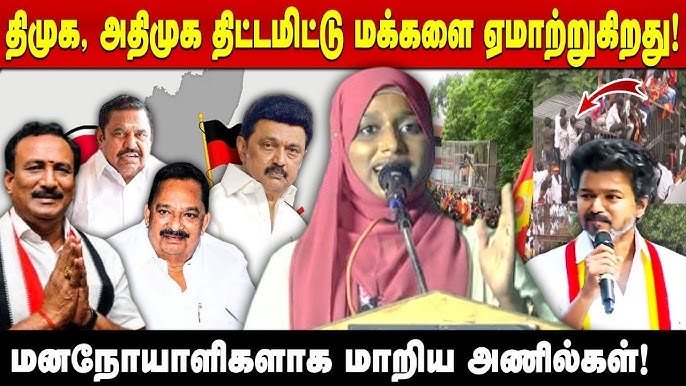
Sbarr sent a simple reel: a female Tamil Muslim politiciann in Ranipet, near Vellore, waving an LTTE flag during an election campaign. What followed was not simple at all. The reaction treated the image as an ideological provocation rather than a local political act. Why is a Muslim woman waving a Tamil separatist symbol? What does this say about loyalty, religion, or the nation?

Islam in South India did not arrive through conquest. It arrived through trade. Arab merchants settled along the Malabar and Coromandel coasts centuries before the Delhi Sultanate existed. They married locally, learned the language, adopted food, dress, and social habits, and became Tamil, Malayali, or Konkani Muslims. Religion changed. Civilisation did not.

This is why South Indian Islam does not behave like a foreign layer imposed on a hostile society. It is woven into the local fabric. Tamil Muslims are Tamil first in language, culture, and political instinct. Their solidarities are shaped by region before theology. This is not syncretism as rebellion. It is indigeneity as habit.

Tamil identity in Tamil Nadu routinely transcends religion. I was reminded of this years ago in Chennai, asking my dentist, who was Christian,about her name. Like many South Indian Christians, it was a mix of Hindu and Christian forms. I asked whether they were also Tamil. She looked at me as if the question made no sense. Of course she was Tamil, “very Tamil.”

That response explains more than a thousand editorials.

In Tamil Nadu, religion is real but it is not totalising. Tamilness is older, deeper, and more organising. This applies to Hindus, Christians, and Muslims alike. Political expression follows that logic. A Tamil Muslim expressing Tamil nationalist sentiment is not a contradiction. It is normal.

This is what happens when South India is constantly interpreted through North Indian assumptions. Islam is assumed to be oppositional. Symbols are assumed to be exclusive. Politics is assumed to be communal by default. None of this holds in the Tamil world.

Tamil lands occupy a distinct face of Indian civilisation. Fully part of India, yet unmistakably their own. Deeply Indian, yet not reducible to Gangetic history or North Indian templates. This is not fragmentation. It is civilisational strength.

India has always had multiple faces. The Tamil one is maritime, linguistic, ancient, and self-assured. It absorbed religions without surrendering itself to them. That is why its Muslims do not behave like guests. They behave like natives.

The reel was never the problem. The inability to see India’s southernmost face was.

Hijab: Between Revelation and Regulation

When Bahá’u’lláh wrote that every word of the Qur’ān bears meaning and intention, he was reminding us that revelation, properly read, resists reduction.  Scripture, like language itself, is alive; it breathes, it hesitates, it renews.  Yet somewhere between the living word and the legislated code, the hijab became a symbol, of modesty, of defiance, of cultural siege, of theological purity, until its nuance was lost to politics.

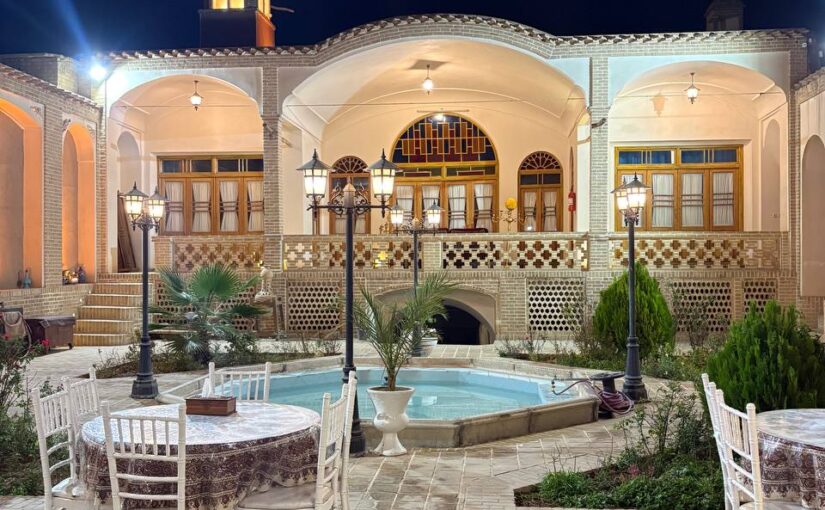
My friend is in Kashan, a city of gardens and scholars, and perhaps among the most traditional pockets of Iran.  She forgot her hijab back in her home city and now cannot step out of her hotel.  The irony is sharp: the veil that once signified spiritual privacy has become an enclosure of space.  Kashan’s cobbled lanes whisper poetry, but they also enforce silence.

Meanwhile, the liberal axis of Iran, Shiraz, Tehran, Gilan, Mazandaran, Semnan, walks the tightrope between revelation and rebellion.  The North dresses as Europe, the Centre prays as Qom.  Mahsa Amini’s martyrdom was Kurdish, and therefore doubly liminal: ethnically marginal, religiously symbolic (the Kurds are very secular as a rule of thumb; more Zoroastrian than the Persians).  Her death reopened a question the Qur’ān itself leaves open — what, after all, does ḥijāb mean?

1. The Qur’ānic Vocabulary of Modesty Continue reading Hijab: Between Revelation and Regulation

🕊️ On Iran, Israel, and the Right to Self-Defense

Why loving Israel, believing in peace, and opposing regimes means defending Iran’s right not to be bombed.

Dear Friends,

I don’t usually write about politics. And when I do, I try to centre peace — not provocation.

Anyone who knows me knows I have always believed in the dignity of Israel, the rights of Palestinians, and the intertwined destinies of both peoples. I love Israel. I love Iran. I believe in Palestine. I believe in peace. And I believe that each nation — each people — has a right to their own story, their own future, and yes, their own defense.

Which is why I write today, with care and some sorrow, in response to the recent Israeli strikes on Iran’s nuclear facilities. Let me be clear: I oppose the Iranian regime. Vehemently. I stand with the brave women and men who chanted “Zan, Zendegi, Azadi” — women, life, freedom. But I cannot condone this unprovoked assault.

Read the rest at this link and please subscribe to my newsletter.

Brown Pundits