The Ilhan Omar of Brown Pundits

Every movement has its lightning rods. In American politics, Ilhan Omar is one: progressive, unyielding, often correct in substance but polarizing in style. She calls out genuine injustices, but her timing and tone can sometimes drown out the very points she is trying to make.

I’ve begun to realize that Kabir plays a similar role on Brown Pundits. Like Ilhan, he often raises necessary truths (for instance Israel has just killed an American family in Lebanon). Like Ilhan, he brings traffic, visibility, and energy. But also like Ilhan, he has a way of inflaming rather than persuading.

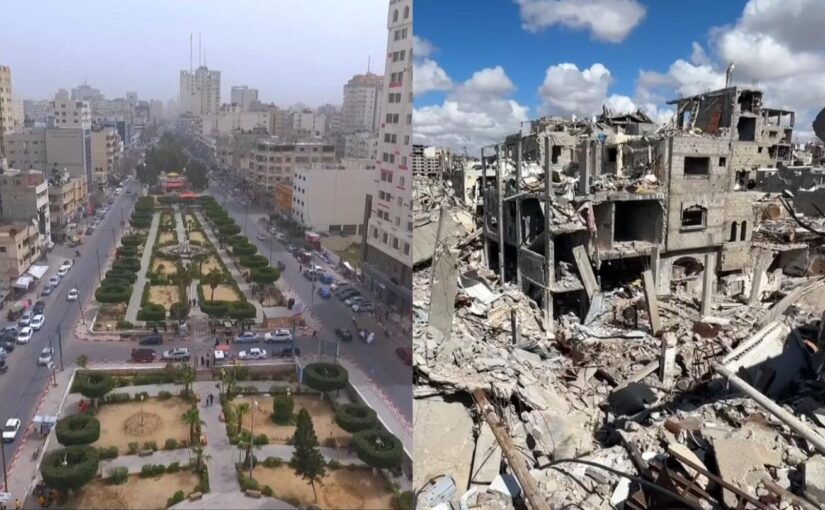
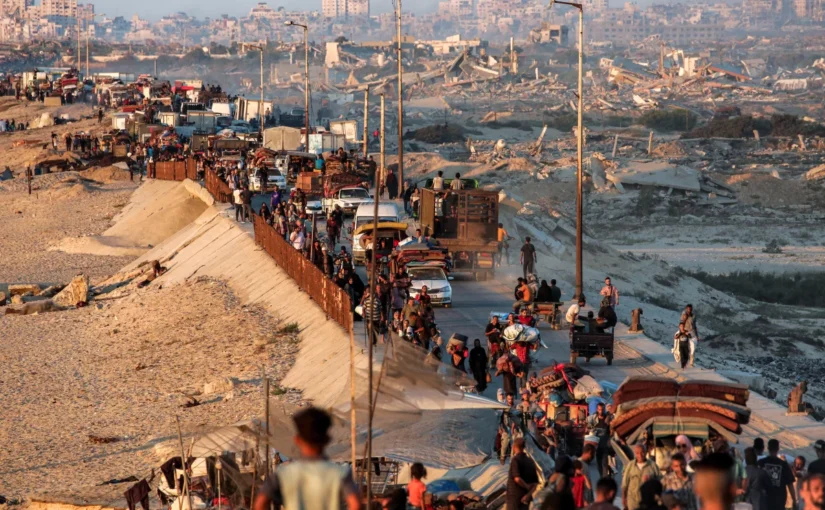
Charlie Kirk’s remarks illustrate why Ilhan Omar’s critiques resonate, even if her tone divides. When Kirk sneers that there are ā€œno tall buildings left in Gaza,ā€ or jokes that Palestinians are ā€œstupid Muslimsā€ for resisting, he is not just making political commentary. He is engaging in dog-whistling — racialized, sexist, Islamophobic rhetoric that devalues human life. Combined with his earlier comments about the supposed lack of ā€œbrain processing powerā€ among prominent Black women, the pattern is unmistakable. One does not have to be a progressive to see that such speech corrodes the civic space. At the same time, none of this justifies violence: the murders of Charlie Kirk and Irina Zarutska are deplorable and must be condemned without qualification.


The Progressive Dilemma Continue reading The Ilhan Omar of Brown Pundits
Pakistan: The Realpolitik State

In a recent exchange, Kabir suggested that Pakistanis often feel unwelcome in our discussions on Brown Pundits, and that constant criticism of their country creates a sense of unease. It is worth pausing to reflect on this. Pakistanis, like all of us, are shaped by history and circumstance. And yet, there is something in the cultural tenor of Pakistan that makes open engagement difficult.

I say this not to provoke but to observe. Pakistan, as a society, often leans heavily on hierarchism, patronage, and a culture of deference. To borrow an old saying about the Somalis, that every man thinks himself a SulṭÔn, one might say that Pakistanis often view themselves through the prism of status and validation. This instinct is hardly unique; Indians, too, have their caste-bound privileges and invisible hierarchies. But in India, these structures are embedded in a dense cultural fabric; family, caste, neighbourhood, ritual, that, for all their flaws, anchor society. Pakistan, by contrast, feels less rooted. It is a younger country (with old traditions), with fewer inherited cultural layers to draw on.

This is not simply an abstract point. When I married, we drew freely from Hindu rituals (dual ceremonies, BahÔ’í incl.), Persian customs, and Sindhi traditions, blending them into something whole. But I realised there was nothing distinctly ā€œPakistaniā€ to contribute; no cultural motif that stood outside India or Iran (we didn’t do a Walima, which is Muslim). Pakistan is, in many ways, a derivation: a state forged through separation, rather than a civilization with deep roots of its own. The cultural space it occupies has been overlaid with militant nationalism and, too often, Hindu-phobia (Kabir is so inured to it that he isn’t able to recognise that but on the flipside so is the Commentariat towards Islam).

To acknowledge this is not to deny the prejudices of Indians toward Muslims, which are very real and enduring. Nor is it to ignore the deracinated, secular archetype embodied by figures like Benazir Bhutto, who seemed neither fully Muslim nor fully Western, suspended between worlds and who are the cultural elite of Pakistan (what they give up on their bridge is their Hindu origins; more than being half-Persian, Benazir’s nani was Hindu). It is simply to note that Pakistan’s cultural story remains unsettled & thus interesting.


Validation and Audience Continue reading Pakistan: The Realpolitik State

Moderation Note: On Gaza, October 7, and the Limits of Tolerance

Kabir’s Muslim nationalism cosplaying as liberalism is vexatious (it would be excellent if he just disclosed his priors), but I give the admin full authority to handle that directly.

My immediate concern is with BB-HS. I have barred him from becoming an author and have removed his last twenty comments. Despite his earlier misrepresentation about being ā€œhalf-Muslim,ā€ I allowed him to return under a new handle, tabula rasa. His output, however, is increasingly defined by ā€œfantasiesā€ about what a model minority should be; deracinated and devoid of meaningful character.

BB’s Response (after I had deleted his past 20 comments)

ā€œWhy though? The only animus I have is with Kabir because he represents a demographic I loathe – The soft Islamist | The ā€˜liberal’ English-speaking version who whitewashes his more hardcore cousins’ atrocities. Actual people have died due to Islamists which Kabir downplays (Pahalgam, October 7th). Some ribbing online is nothing in comparison. And I haven’t even said anything insulting.ā€

My Response

    1. Kabir is not an Islamist. He is a Muslim nationalist—since Pakistan itself is sine qua non Muslim nationalism (the idea that Indian Muslims were entitled to their own nation). Just as every Israeli is, by definition, a Zionist/Jewish nationalist, even if individuals disagree with its implications, Kabir represents that current.
    2. What stands out is that BB mentions only Pahalgam and October 7—both undeniably tragic events, and I say this as someone who is not Muslim—while omitting the ongoing genocide in Gaza.It is akin to referencing 9/11, a devastating moment in history, without also acknowledging the destruction of Afghanistan and Iraq and the millions of lives lost in their aftermath.
    3. Unlike Kabir, vexatious, but rarely personal, BB makes his attacks direct. He is not Kabir’s friend indulging in ribbing; he is simply ā€œHoneyā€ under another guise.
    4. What sets him apart is an openly hierarchical stance: non-Muslim lives ranked above Muslim ones, echoing the very post-colonial divide-and-rule strategies we are meant to reject.
    5. Kabir manipulates through weaponised victimhood; BB chooses blunt hostility, lacing personal abuse into his commentary. I have permanently removed Honey’s comments for that reason, vulgarity leaves no space for debate and I treat BB and Honey as a single entity.
    6. Beneath the very different styles of BB-HS & Kabir lies the same contempt: the belief that the only acceptable minority is one hollowed out, compliant, and dead on the inside.

Moderation Philosophy

As a Founder, my job is to ensure Brown Pundits does not become an echo chamber. I have repeatedly critiqued Kabir’s contradictions, but once I accepted him as a Muslim nationalist cosplaying liberalism, I could also accept his place in the debate. We have multiple Hindu nationalists here, and when Kabir is challenged\moderated, the balance tends to restore itself. The ecosystem can correct for his presence.

Finally, let me stress: the comment boards are not the only heart of this site. Too often they descend into noise. If regular commentators want to influence debate constructively, they should apply to become Authors; where they can speak directly to our 2,000+ daily readers, not just the dozen or so regular commentariat.

Brown Pundits is rapidly emerging as the most interesting Indo-Pak cross-channel precisely because it is not an echo chamber. We literally upset everyone and that is a great thing because it means we are covering new difficult terrain. My moderation began with strict principles, but like everyone else, I have a life, job, and family. That means I must also be pragmatic.

Call for Authors

Brown Pundits has always thrived on debate, commentary, and detail. Our compact team—three co-founders, two editors (Nivedita & Indosaurus), and three authors (sbarrkum, Gaurav Lele, Saiarav and Manav); keeps the conversation alive.

We’d like to expand. If you’ve been a regular voice in the comments or simply feel you have something to add, please apply to write for BP. Sharp observations, whether about Modi Ji’s birthday celebrations or broader cricketing analogies, are exactly what we value.

The word Pundit comes from Sanskrit, meaning ā€œlearned manā€ or Brahmin. It reminds us that Brown intellectual life is rooted in centuries of plural, complex traditions of debate. This is our inheritance, and BP stands on those terms; not reducible to any ideology.

I’d especially encourage regulars like brown, Daves, Hoju, Pandit Brown,Ā and BB to consider joining the author list.

Links on My Browser Right Now – Open Thread

A few pieces I’ve been reading this week:


Reflections

On the Ummah: Muslims have often failed to concede ground in internal debates, which has left them politically boxed in. One reform across all denominations would be to return directly to the Quran as the primary authority. That alone would dissolve many cultural accretions, halal (animals should be stunned before slaughter), hijab (a Sassanian trait), and other practices, into something more adaptive.

And here’s a more speculative question: if the ā€œSatanic Versesā€ were reconsidered if Al-Lat, Al-Uzzah, and Al-Manat were understood as sacred divinities at the threshold of the Lote Tree, would that make Islam more fluid, especially for minority-majority dynamics?

On Kabir: I’m not moderating him out, but readers should be aware that he frames everything through Muslim-rights activism. Engage, but don’t get gaslit into endless provocations. Everyone is entitled to their nationalisms — but they can’t claim liberalism at the same time. That tension makes it worth examining how plurality is treated within the Hindu fold itself. Dharma, unlike the Abrahamic Faiths, tends to all for multiple truths co-existing with each other (Buddhism and indigenous East Asian religions).


šŸ‘‰ Over to you. I’m retreating from heavy moderation — I see BP’s strength in letting the commentariat lead. Biases are fine. Gratuitous abuse is not.

Image

ā€œIn March 1998 the Indian PM Gujral, told … ā€œPakistan was not capable of making atomic bombs.ā€ he had been convinced by Indian Intelligence and Dr Raja Raman, the head of Indian Atomic Energy Commission, who had publicly claimed that nuclear weapon were beyond Pakistan’s reach.ā€

Pakistan as India’s Ukraine?

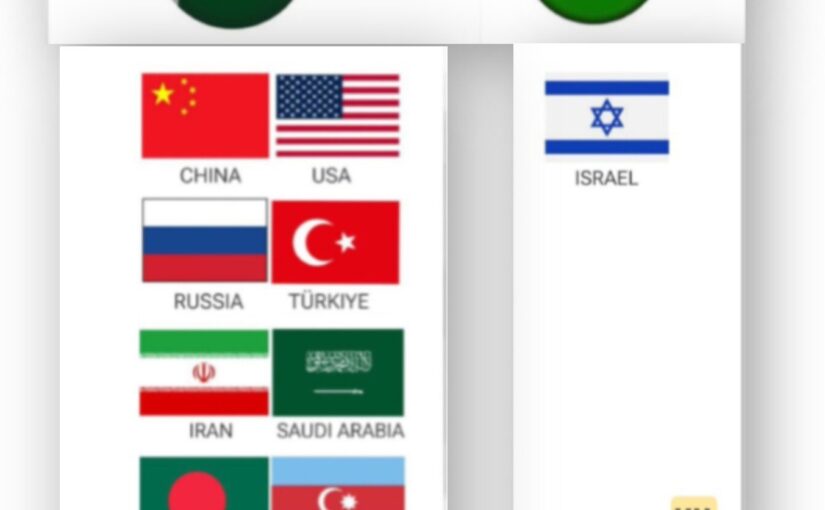
The chart above lays out ā€œstrategic partnersā€ for 2025. Pakistan lists China, Türkiye, Iran, Saudi Arabia, and assorted others. India, by contrast, shows Israel. But the real issue isn’t who collects more flags; it’s whether any of Pakistan’s patrons will ever raise its HDI, improve infrastructure, or embed long-term stability.

I’m interested to hear what the commentariat thinks of this moment. India’s foreign policy is already locking it into superpower status. Pakistan remains reactive, borrowing survival from whoever will lend it.

The analogy that strikes me: India–Pakistan resembles Russia–Ukraine, except if Ukraine had kept nuclear weapons. The parallels are strong:

  • Ukraine, like Pakistan, is a breakaway sibling — the ā€œother halfā€ of a civilizational whole.

  • Ukraine, like Pakistan, survives by appealing to larger patrons.

  • And interestingly, the GDP ratio gap between Russia and Ukraine is almost exactly the same as between India and Pakistan (please fact check me).

Just as Ukraine is considered the homeland of the Russian Empire (Kievan Rus’), Pakistan carries the legacy of Partition as the ā€œIndus homeland.ā€ That symmetry makes the analogy more than superficial.

On Kabir: I understand his consistent emphasis on Muslim rights and Muslim nationalism. Readers should be aware of that lens. I’m not moderating him out, but I would caution the commentariat against being gaslit into endless provocations by Kabir. The question here is not identity politics, but the direction of Indian and Pakistani foreign policy in a critical moment in global history (decades are happening in weeks).

Netanyahu Depicts Grim Economic Future for Israel, Need to Become an Autarky, ā€œSuper Spartaā€ Due to Isolation; Are There More Meanings?

A must read.
Excerpts

Larry Wilkerson, who both regularly reads Israel press and has many contact, has repeatedly said Israel has taken such serious economic and societal damage that he predicts it will no longer exist in ten years.

The fact that the next day, a UN commission of inquiry released a report finding that Israel has engaged in four of five genocidal activities as defined by relevant law puts even more pressure on the ethnosupremacist state.

Microsoft, Google, Amazon, Palantir, IBM and HP are named in a groundbreaking UN report for their role in automating apartheid and accelerating genocide.

Tech companies and weapons manufacturers are the most complicit enablers of Israel’s economy. Escalate BDS pressure against them and send a clear message: No tech for apartheid and genocide.

GOLDMAN SACHS YOU CAN’T HIDE!

Goldman Sachs is the biggest holder of Israeli bonds and a key investor in the weapons companies making the bombs Israel drops on Gaza. Continue reading Netanyahu Depicts Grim Economic Future for Israel, Need to Become an Autarky, ā€œSuper Spartaā€ Due to Isolation; Are There More Meanings?

šŸ—“ļø One Year Ago Today: The Taj Mahal, Sacred Lands, and the Power of Timing

Friends,

The spirit of Brown Pundits has always been dialogue — open, searching, and at times, fierce. But dialogue only flourishes when it is consistent and principled.

Recently, a contradiction has emerged in Kabir’s contributions: applying one set of standards to India and Pakistan, and a different set to Israel. This has led to repeated cycles of disruption, rather than genuine exchange.

To preserve the integrity of our space, Kabir’s participation will be paused until this inconsistency is clarified (we will remove any of his comments that do not address and acknowledge the contradiction; we will also remove any replies to his comments). This is not censorship, but stewardship. Free speech here is not about endless repetition; it is about coherence, accountability, and respect for the whole.

šŸ•Šļø On Confirmation, Coincidence, and the Return of Brown Pundits

Exactly one year ago today, 17 September 2024,Ā I published a piece titled ā€œThe Battle for the Taj Mahal: India’s Sacred Lands & Waqf Boards Under Fireā€.

At the time, Brown Pundits was stirring from hibernation. Readership had dwindled to near-zero, the commentariat was dormant, and the site, once lively and interrogative in its heyday, felt like a forgotten archive. That post, like so many others before it, was written in solitude. There was no traction, no expectation. Just thought, laid down with care.

And yet here we are, one year to the day, and the blog has roared back to life.


šŸ“æ What the BahÔʼí Tradition Calls ā€œConfirmationā€

In the BahÔʼí tradition, we don’t reduce these moments to mere coincidence. Instead, we speak of confirmation; divine endorsement coupled with meaningful alignment. A subtle assurance that what was offered in silence may still echo in relevance.

Sometimes, truth takes time. It must be planted, and it must ripen. And then, if the conditions are right, it re-emerges at the very moment it’s needed again.


šŸ›ļø Revisiting the Taj & the Sacredness of Land

That post, exploring Waqf Boards, sacred lands, and the Taj Mahal’s place in India’s civilizational memory,Ā was written in a moment of saturation. Too many headlines, too little context. My intention wasn’t to settle the argument, but to recast it: What makes land sacred? Who has the right to remember? Who gets to reclaim?

Reading it now, what’s striking is not just how relevant it remains, but how the same debate has reassembled; not just thematically, but almost ritually, with new voices circling back in familiar orbits.


šŸŒ€ Same Debate, Same Deflection

And so we arrive back, with uncanny symmetry, to Kabir. He’s long argued that nations must be judged by their own internal frameworks: Continue reading šŸ—“ļø One Year Ago Today: The Taj Mahal, Sacred Lands, and the Power of Timing

Threads, Carpets, and PM Modi’s 75th

Happy Birthday Pradhan Mantri:

I watched several videos — four or five, maybe more — of public figures sending their wishes. Among them: Donald Trump, Narendra Modi, Benjamin Netanyahu, Shah Rukh Khan, Aamir Khan, Mohammed Siraj, and Mukesh Ambani.

Mukesh Ambani, of course, remains closely aligned with the establishment, and Aamir Khan seemed to lean heavily into his Hindu heritage — adorned with Rakhis on his wrist, even a Bindi. He’s presenting himself now in a distinctly Hindu cultural idiom, though he comes from a very prominent Indian Muslim family.

By contrast, Shah Rukh Khan stood out. His message was subtly sardonic — he remarked that the recipient was ā€œoutrunning young people like me.ā€ It was light, but just subversive enough to feel intentional. Interestingly, both Shah Rukh and Aamir spoke in shuddh Hindi, which added a certain performative weight to their gestures.


Hindu Art

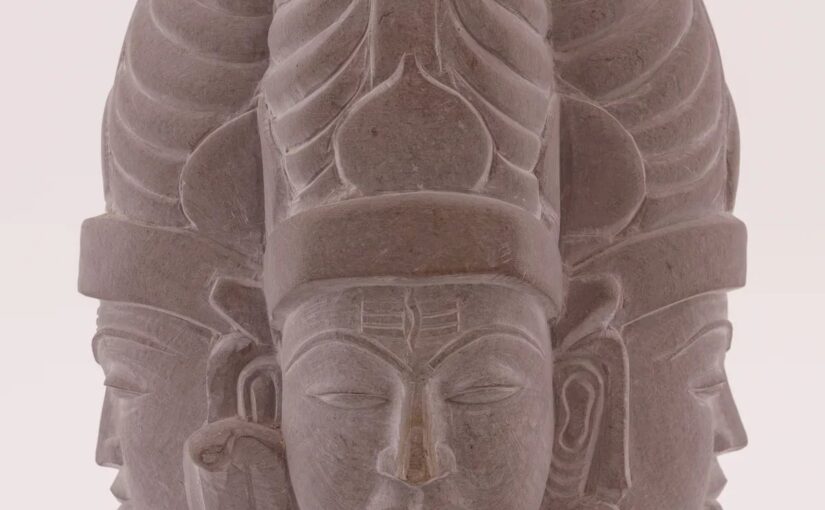
I’ve been fairly busy the past few days, mostly focused on BRAHM Collections;Ā writing about carpets, curating Trimurti sculptures, and exploring Ardhanarishvara iconography. It’s been a deep dive into the civilizational grammar of India and by extension, the porous boundary between sacred art and civil religion.

In the background, I’ve also been chipping away at longer-form reflections; trying to crack the formula for my newsletter (believe it or not the readership is neck to neck with BP but different demographics). It’s all a bit scattered, but the writing has become its own brown paper trail.


On the Commentariat (and Why I’m Stepping Back)

I still follow the commentariat but I’m slowly easing off. There’s a rhythm to it, sure, but too often it turns into exhaustion. I’ve removed all of Honey Singh’s abusive posts. Abuse is now a hard red line for me, but beyond that, I’m stepping back from constant moderation or sparring. Continue reading Threads, Carpets, and PM Modi’s 75th

Brown Pundits