Links on My Browser Right Now – Open Thread

A few pieces I’ve been reading this week:


Reflections

On the Ummah: Muslims have often failed to concede ground in internal debates, which has left them politically boxed in. One reform across all denominations would be to return directly to the Quran as the primary authority. That alone would dissolve many cultural accretions, halal (animals should be stunned before slaughter), hijab (a Sassanian trait), and other practices, into something more adaptive.

And here’s a more speculative question: if the ā€œSatanic Versesā€ were reconsidered if Al-Lat, Al-Uzzah, and Al-Manat were understood as sacred divinities at the threshold of the Lote Tree, would that make Islam more fluid, especially for minority-majority dynamics?

On Kabir: I’m not moderating him out, but readers should be aware that he frames everything through Muslim-rights activism. Engage, but don’t get gaslit into endless provocations. Everyone is entitled to their nationalisms — but they can’t claim liberalism at the same time. That tension makes it worth examining how plurality is treated within the Hindu fold itself. Dharma, unlike the Abrahamic Faiths, tends to all for multiple truths co-existing with each other (Buddhism and indigenous East Asian religions).


šŸ‘‰ Over to you. I’m retreating from heavy moderation — I see BP’s strength in letting the commentariat lead. Biases are fine. Gratuitous abuse is not.

Image

ā€œIn March 1998 the Indian PM Gujral, told … ā€œPakistan was not capable of making atomic bombs.ā€ he had been convinced by Indian Intelligence and Dr Raja Raman, the head of Indian Atomic Energy Commission, who had publicly claimed that nuclear weapon were beyond Pakistan’s reach.ā€

šŸ—“ļø One Year Ago Today: The Taj Mahal, Sacred Lands, and the Power of Timing

Friends,

The spirit of Brown Pundits has always been dialogue — open, searching, and at times, fierce. But dialogue only flourishes when it is consistent and principled.

Recently, a contradiction has emerged in Kabir’s contributions: applying one set of standards to India and Pakistan, and a different set to Israel. This has led to repeated cycles of disruption, rather than genuine exchange.

To preserve the integrity of our space, Kabir’s participation will be paused until this inconsistency is clarified (we will remove any of his comments that do not address and acknowledge the contradiction; we will also remove any replies to his comments). This is not censorship, but stewardship. Free speech here is not about endless repetition; it is about coherence, accountability, and respect for the whole.

šŸ•Šļø On Confirmation, Coincidence, and the Return of Brown Pundits

Exactly one year ago today, 17 September 2024,Ā I published a piece titled ā€œThe Battle for the Taj Mahal: India’s Sacred Lands & Waqf Boards Under Fireā€.

At the time, Brown Pundits was stirring from hibernation. Readership had dwindled to near-zero, the commentariat was dormant, and the site, once lively and interrogative in its heyday, felt like a forgotten archive. That post, like so many others before it, was written in solitude. There was no traction, no expectation. Just thought, laid down with care.

And yet here we are, one year to the day, and the blog has roared back to life.


šŸ“æ What the BahÔʼí Tradition Calls ā€œConfirmationā€

In the BahÔʼí tradition, we don’t reduce these moments to mere coincidence. Instead, we speak of confirmation; divine endorsement coupled with meaningful alignment. A subtle assurance that what was offered in silence may still echo in relevance.

Sometimes, truth takes time. It must be planted, and it must ripen. And then, if the conditions are right, it re-emerges at the very moment it’s needed again.


šŸ›ļø Revisiting the Taj & the Sacredness of Land

That post, exploring Waqf Boards, sacred lands, and the Taj Mahal’s place in India’s civilizational memory,Ā was written in a moment of saturation. Too many headlines, too little context. My intention wasn’t to settle the argument, but to recast it: What makes land sacred? Who has the right to remember? Who gets to reclaim?

Reading it now, what’s striking is not just how relevant it remains, but how the same debate has reassembled; not just thematically, but almost ritually, with new voices circling back in familiar orbits.


šŸŒ€ Same Debate, Same Deflection

And so we arrive back, with uncanny symmetry, to Kabir. He’s long argued that nations must be judged by their own internal frameworks: Continue reading šŸ—“ļø One Year Ago Today: The Taj Mahal, Sacred Lands, and the Power of Timing

šŸ“Š Brown Pundits Hits 63,094 Visits in August (+156% Surge)

That’s more than 2,000 visitors a day. What’s driving it?

āœ… Open Threads

āœ… Honest takes

āœ… And yes — argumentation.

But arguments only work if they spark thought, not just heat. Take Kabir; he’s a regular, and I’ve given him free rein. But his tendency to argue without reflection rubs people the wrong way. He blames his relative unpopularity on identity, but it’s more about tone than religion;Ā highhandedness vs humility.

In my own recent disagreement: I paused, thought, reflected deeply. That’s the spirit of BP; a messy, open-minded search for truth.

šŸŽ­ Meanwhile, the real tamasha isn’t cricket šŸ (India did trounce Pakistan) — it’s on X, and on the BP comment section.

X 🧵:

Image

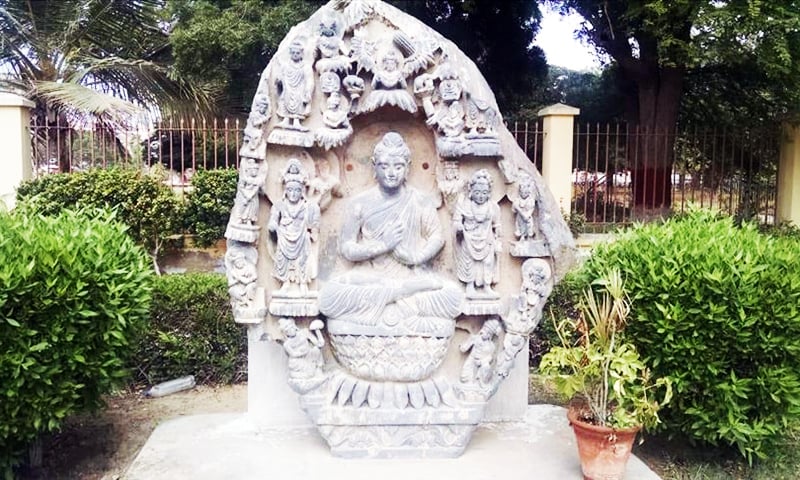
The stupas raises a deeper question:

How central was Buddhism to the Indian subcontinent — and how total was its erasure? In the heartlands, Brahmanism absorbed and displaced it; in the frontier zones, Islam swept away what remained. What we see today are ruins — but once, this was the dominant civilizational framework of the region.

Was its disappearance a slow assimilation, or a deliberate effacement?

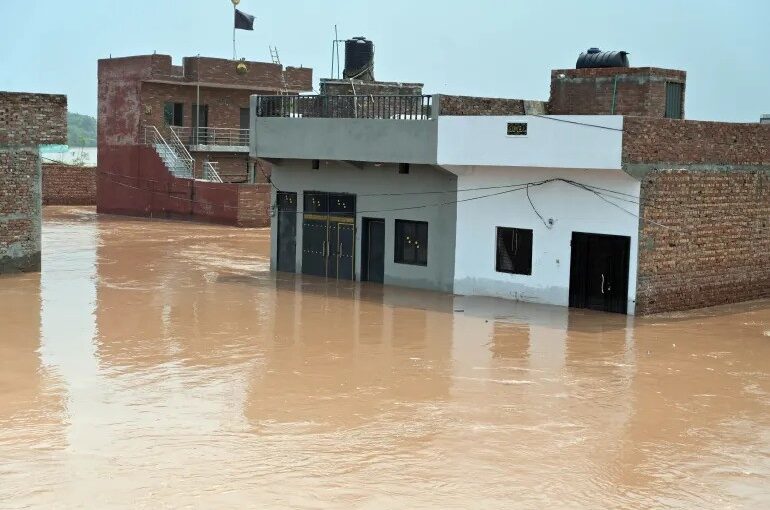
Open Thread: Pakistan Floods – Let’s Talk

Massive floods have hit Pakistan’s Punjab province after record-breaking monsoon rains and the overflow of major rivers. Officials report nearly 300,000 people displaced from the province alone and more than a million affected as the Ravi, Sutlej, and Chenab overflowed their banks. Over 1,400 villages are underwater, and there are growing fears of disease outbreaks and food shortages.

šŸ‘‰ ā€˜The water left nothing’: Pakistan’s Punjab province reels from deadly floods (The Guardian)

This thread is for everyone to share thoughts, updates, and questions about what’s happening.

Jump in and share your perspective.

Gaza open thread

This is a genocide every which way but I would be interested to hear the views of the commentariat.

I am very pro Zionist for what it’s worth.

I’ll explained my thoughts later on in a proper post, but I am interested to see RW Indians reflect on Gaza.

The Long Defeat: How Hinduphobia Hollowed Out Pakistan

I lost an entire post earlier, but perhaps it’s for the best. I’ve had the time now to clarify my thoughts and this is better to make clear the new policy of just junking comments that don’t “smell right.”

What prompted me to write again was a small but telling excerpt from a recent Dawn article. It wasn’t just that they misspelled ā€œBrahmanā€; they wrote ā€œBarhaman,ā€ a word that doesn’t exist in any linguistic tradition. It was also the order in which they listed religions. They wrote:

ā€œā€¦revered for not only the followers of the world’s three major religions — Buddhism, Sikhism and Hinduismā€¦ā€

Hinduism, the oldest and most foundational of the three, was placed last. This is not trivial. Both Buddhism and Sikhism evolved from Hinduism. Yet in Pakistani discourse, so marked by dislocation and disavowal, Hinduism is routinely treated as a junior or fringe faith. This is what endemic Hinduphobia looks like: not explicit violence, but civilizational misordering, semantic erasure, and the subtle, continuous downgrading of Hindu memory.

It’s barely recognized. And that’s the point. Continue reading The Long Defeat: How Hinduphobia Hollowed Out Pakistan

Open Thread: Rasam, Stray Dogs, and the Battle Over India’s Story

Life in Chennai has been calm. For breakfast I have rasam. It is a superfood: light, hot, and full of spice. Indian food is the only cuisine where I could be vegetarian. I know Persians who try. I feel sorry for them. No meat, no masala, no spice. There is only so much hummus one can eat.

But calm at the table contrasts with what I read in the news. The Delhi order to remove stray dogs is disturbing. I cannot look at the pictures of the removals.

Across the Trans-Wagah line, another current runs. The Pakistan Cricket Board may change its revenue-sharing with players. A small story, yet it speaks of a larger one: Pakistan may gain small tactical wins by tying its path as the flexible adversary to India. But for the top ten percent of its economy, the block is clear. They cannot flow into India’s success. They remain tied to Western patrons.

Meanwhile, old arguments are stirred again. Audrey Truschke has been active with fresh claims on Aurangzeb. The same week, Kabir wrote that Western philosophy outweighs Dharmic wisdom, and that Greek thought shaped Buddhism (I can’t remember if it was him). I wonder who first wrote this propaganda. It is damaging, and it lingers.

India’s stories stretch from the taste of rasam to the fate of stray dogs, from cricket boards to Aurangzeb’s ghost, from Kabir to the Greeks. Each is part of the same struggle: who owns the narrative of Bharat, and how it is told.

Links:

To the Dutch, a German Shepherd holds more worth: https://www.instagram.com/reel/DNYEoQForz2/?igsh=MTVrZW1kZW94NHdieQ==

Serial Killing at a Famous Karnataka Temple: https://youtube.com/shorts/YexL_ASaGqE?si=mQ-Kdj6jSMzNPrAx

Could be Social Media Frenzy: https://www.thehindu.com/news/national/karnataka/dharmasthala-burial-case-political-temperature-soars-as-no-major-recovery-after-digging-17-spots/article69937387.ece

Not one Football: https://youtube.com/shorts/DR8SFCTCaoQ?si=tut2ymQB3EcDHTY6

Review: The Music Room by Namita Devidayal

From my Substack:

Namita Devidayal’s memoir The Music Room is a chronicle of her relationship with her guru Dhondutai Kulkarni (1927-2014). The book describes Devidayal’s initiation into Hindustani classical music as a reluctant ten-year-old from Bombay’s upper-middle class. Along with describing her growing appreciation for Dhondutai and the music that she imparts to her, the narrative also tells the story of two other important figures in Hindustani music: Ustad Alladiya Khan (1855-1946)–the founder of the Jaipur-Atrauli gharana–and Keserbai Kerkar (1892-1977)–one of the most famous khayal singers of the 20th century. Through telling the stories of these individuals, Devidayal elucidates several important themes such as communalism and ā€œHinduizationā€ of music as well as the place of women in classical music.

Devidayal describes the process through which Hindustani music became communalized and ā€œHinduizedā€. Though Dhondutai is extremely proud of the musical legacy passed on to her by Alladiya Khan Sahib’s family, she still expresses some bigoted views about Muslims. When pressed on this by Devidayal, Dhondutai attempts to square the circle by telling her that Ustad Alladiya Khan was not a real Muslim since he was (allegedly) descended from a Brahmin singer who had been forced to convert to Islam by a Muslim king. She also notes that he always wore the caste thread usually worn by Brahmins. This story allows Dhondutai to hold the belief that Hindustani classical music is essentially Hindu despite the fact that many of the most prominent gharanas had Muslim founders. Dhondutai’s prejudices connect back to the broader process through which–during the colonial period– Hindustani music was ā€œHinduizedā€ by reformers such as Pandit Bhatkhande and Pandit Paluskar. Bhatkhande wanted to create a ā€œnational musicā€ and believed that Hindustani music had been degraded by Muslims and dancing girls and needed to be rescued from both. This process has been extensively discussed by Janaki Bakhle in her book Two Men and Music: Nationalism in the Making of an Indian Classical Tradition. Unfortunately, while most ethnomusicologists agree that Hindustani music is a syncretic tradition, many (on both sides of the India-Pakistan border) persist in claiming it for one or the other religion. Continue reading Review: The Music Room by Namita Devidayal

🧵 Open Thread: Hate Speech, Travel Notes, and Diplomatic Surprises

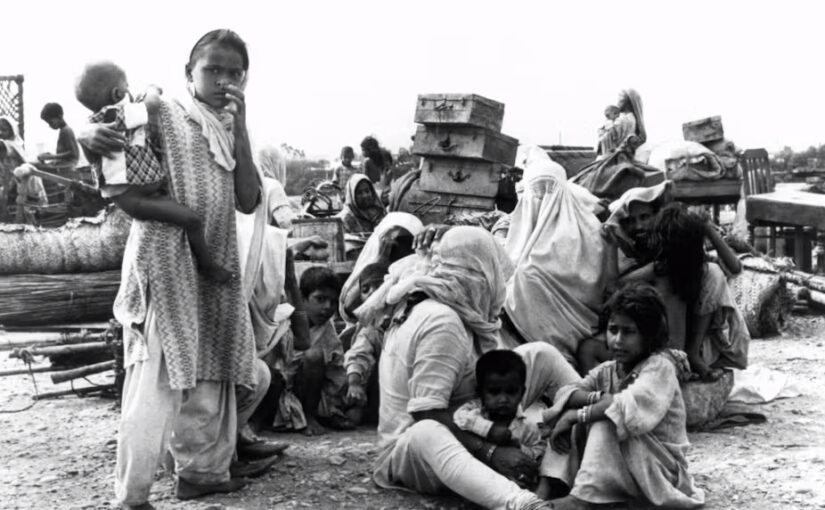
I just saw a comment that genuinely crossed the line; not just a misstep, but something hateful, dehumanizing, and deeply communal. It invoked Partition violence in a way that glorified massacre. That’s not just a dogwhistle, that’s a foghorn.

As most of you know, I’m a light-touch moderator. I tolerate a lot. I believe in messy dialogue. I’ve been fair on my WhatsApp groups, fair on BP, and generally try to err on the side of letting things play out. But this? This wasn’t a close call. It was a clear failure of moral language.

Even if the commenter didn’t ā€œmean it,ā€ this kind of rhetoric has consequences. When you’re speaking about events like 1947, where entire families were destroyed, you need to speak with care, not contempt. There’s no room for casual violence, coded language, or historical gloating. None. Zero.

Before this commenter contributes further to the blog, he will need to fully retract and apologise for the communal language he used. Criticism is fair game. But hate speech is not. Kabir can be theatrical, yes but he does not traffic in dehumanization. The standards must be consistent, and that comment clearly crossed the line.

Please observe this on the thread. I’m traveling, and this is an open post. I’ll be back with more soon. I’ve written a bit in my newsletter but I will expand on those.

In the meantime:

āž”ļø Yes, it appears Pakistan is running smart diplomacy — both with Iran and the U.S.

āž”ļø  I don’t have time to share the links (plane about to take off); they’re all Google-able.

āž”ļø But credit where it’s due. There is no infallibility in foreign affairs. But when someone cannot stand to see Pakistan get anything right, it reveals more about their own biases than about geopolitics.

This isn’t about defending states or “sides”; it’s about defending basic decency in discourse.

Brown Pundits