💔Sana Yusuf Did Not Have to Die

The Pakistani Crisis Is Not Just Legal—It’s Civilizational

By X.T.M

As I write this, the news of Sana Yusuf’s murder is barely 48 hours old. A 17-year-old TikTok creator with over a million followers, she was gunned down in Karachi by a 22-year-old stalker. She was a rising star—funny, expressive, beloved. And now, she is dead.

We’ve been here before. Qandeel Baloch. Noor Mukadam. Khadija Siddiqui. Now Sana.

Every few years, Pakistan reels in collective shock at the killing of yet another woman by a man convinced of his right to possess, control, or erase her. And every time, some voices insist “this is not our culture.” But what if it is?

📍Not an Anomaly—But an Outcome

Sana’s murder is not an aberration. It is the predictable consequence of a society structured around honor, control, and male entitlement. Patriarchy in Pakistan isn’t just cultural—it’s systemic, generational, and fiercely defended. Continue reading 💔Sana Yusuf Did Not Have to Die

Denial Isn’t Just a River in Egypt—It’s a Dammed Indus Too

By X.T.M | Acting Editor, Brown Pundits

“Qureshi” has glibly informed me that caste doesn’t exist in Pakistan, and that had I not deleted his comment, I would have seen his thoughtful explanation on why his ancestors would (or wouldn’t- tough to follow) have “embraced caste.”

Let’s address both claims.

I. Denial, and the Geography of Amnesia

First: the deletion. The reason I removed Qureshi’s comment was simple—it referred to “when the Hindus left Pakistan in 1947.” As if they left. As if it were a long vacation. That turn of phrase is emblematic of a deep, disturbing historical erasure—a civilizational amnesia that’s not just inaccurate, but actively offensive.

To phrase the violent dislocation of millions as “leaving” is a textbook case of internalized Hinduphobia—a posture so normalized in Pakistani elite discourse that it barely registers as cruelty.

This is not about word policing. It’s about confronting the inherited violence buried in euphemism. Continue reading Denial Isn’t Just a River in Egypt—It’s a Dammed Indus Too

Southasia Is One Word

Reflections on Pervez Hoodbhoy at MIT

Zachary L. ZavidĂŠ | Brown Pundits | May 2025

Pervez Hoodbhoy needs no introduction. As one of Pakistan’s leading physicists and public intellectuals, he has long stood at the uneasy crossroads of science, nationalism, and conscience. He spoke this week at MIT’s Graduate Tower — the final stop on a grueling five-city U.S. tour, a new city every two days — in support of The Black Hole Initiative, a cultural and intellectual space he’s building in Pakistan. Despite its ominous name, the initiative is a wormhole, not a void: a cross-disciplinary bridge connecting physics, literature, art, and civic life.

What followed was less a lecture, more an exposition — sober, lucid, and grounded in decades of hard-won clarity.


The Logic of Annihilation

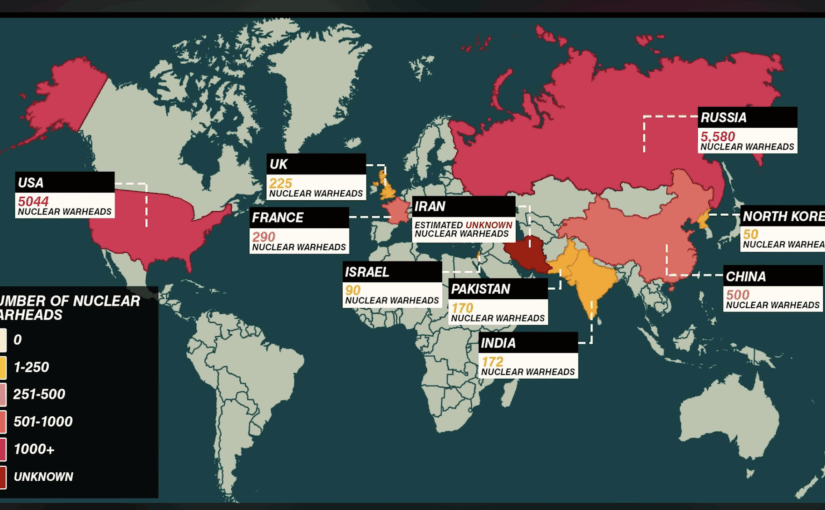
Dr. Hoodbhoy walked us through Pakistan’s nuclear doctrine: under long-standing military assumptions, if the north–south arterial route is severed, a tactical nuclear strike becomes viable. But the calculus is disturbingly abstract. Hiroshima’s 20-kiloton bomb killed 200,000. India and Pakistan each possess an estimated 200 warheads. One general once told him that, by crude arithmetic — obscene as it sounds — “only” 80 million would die in the event of a full exchange. Continue reading Southasia Is One Word

China: The Unseen Winner of the Indo-Pak Skirmish?

Now that comments are back—let’s look at this dispassionately. Set aside emotion and accept a simple civilizational fact: South Asia should be plural, civil, and syncretic. Its unity lies in its AASI roots and Sanskritic inheritance, whether acknowledged or not. Otherwise who were the winners, losers and in-betweeners of this senseless conflict?

Prefacing the below with Xperia’s comment in the interests of neutrality and impartiality:

There is however a ton of evidence that Pakistani airfields were put out of operation, at least one hanger hit killing personnel inside. Runways blown up. C130 in flames.
This was was not a dogfight, it was a drone and missile war. The Indian defence was layered and effective. All airports operational and runways intact.
Op sec was also much better on the Indian side, you don’t have any pictures of army personnel firing missiles and jumping around next to locals.
Don’t worry so much about the stock prices. The Chinese market is propaganda in itself.

https://x.com/ConflictMoniter has good OSINT in case you want to take a look.
https://x.com/MenchOsint is more neutral and unbiased.

That said, the data circulating on Telegram suggests a major strategic recalibration is underway.

Without speculating on war origins, the result is seismic: India just suffered its worst aerial defeat. Five high-end aircraft—3 Rafales, 1 MiG-29, 1 Su-30—and 1 Israeli Heron drone were downed. None returned. This is more than battlefield loss. It’s a realignment.

1. Chinese Systems, Pakistani Trigger

For the first time, Pakistan deployed Chinese-made HQ-9B, LY-80, HQ-16 air defenses and J-10C, JF-17 fighters in live combat. All Indian aircraft were neutralized. Not a single Chinese platform was hit.

This wasn’t just retaliation. It was a demonstration. Rafales—France’s pride—were shot down for the first time in history. With zero Pakistani losses, China’s weapons just outperformed Western tech on a global stage.

2. Markets Reacted
• Dassault Aviation (Rafale): ↓ 1.6%
• Chengdu Aircraft Corp (J-10C): ↑ 18%

A $25M Chinese jet took out over $100M in Western tech. That resets the cost-benefit of warfare. Permanently.

3. Strategic Ripples
• Pakistan’s dependence on China is now military, not just economic.
• Chinese systems will gain traction in the Middle East, especially with Egypt.
• India’s strategic posture faces urgent questions—its French, Russian, Israeli kit just got field-tested—and failed.

India and Pakistan, Back to the Future..

A group of terrorists attacked tourists in a remote meadow in Kashmir, identified those who were non-Muslim, and shot them dead (they also shot dead a Muslim tour guide who tried to oppose them). The horrendous and barbaric attack has led to a predictable outburst of harsh anti-Pakistan (and in many cases, anti-Muslim) outrage in India and the govt has already announced some steps against Pakistan and is presumably planning to undertake some more in the coming days.

Meanwhile, Pakistan (and individual patriotic Pakistanis) have taken to social media and traditional media to paint this as a “false flag attack” (i.e. carried out or planned by the Indian authorities themselves, presumably to allow them to retaliate against Pakistan; why?) or at least as India being “too quick to accuse Pakistan” (ie “we did not do it, and they are accusing us without proof”). This is all as expected in the usual India vs Pakistan show, but it is important to keep in mind that the situation has supposedly changed a little since 2019. Before that date there were many terrorist attacks in Kashmir and every major event would be followed by tit for tat exchanges along the line of control, but with both sides respecting “red lines”. Then in 2019 there was a large attack in Pulwama that was followed by an Indian retaliatory attack on a militant camp in Balakot in Pakistan proper (which crossed the previous red line of what retaliation was permissible). Since then there had been relative peace in kashmir and many commentators felt that the balakot bombing had established a new “red line”, that India will respond to any major attack in this or similar manner, so Pakistan has dialed down the terrorism it previously promoted in Kashmir. But if that is the case, then this attack obviously crosses that threshold and will lead to response. Irrespective of who is at fault and who did what, this was the supposed line and it has been crossed, so what next? 

As usual, i dont know. But lets list the questions and possible answers.

  1. IF this was indeed planned by Pakistan, then the question is “why”? Why now?

Possible answers and objections: Continue reading India and Pakistan, Back to the Future..

Open Thread, 2/17/2023, Brown Pundits

Nimrata Nikki Haley is running for President of the United States of American.

1) She’s a donor-class wet dream and a throwback to the pre-Trump Republican party. I don’t think this is going to work, but who knows?

2) It’s America, you do what you want, but not going to lie; Bobby Jindal was always a bit too unctuous in his urge to emphasize his American bonafides. Haley’s biography strikes me as more natural and relatable.

3) I think she may be tapped for VP on identity politics grounds by the Republican party. Interesting VP debate with Kamala Devi Harris.

Open Thread, 1/27/2023, Brown Pundits

Some stuff from my Substack: Genetic history with Chinese characteristics – How two Bronze-Age tribes became the world’s 1.3 billion Han (without even changing much genetically) and Venerable Ancestors: untangling the Chinese people’s hybrid Pleistocene origins origins – More than 40,000 years of human evolution in East Asia. I’ve written more about India because it’s super genetically variable, unlike China. But China has more written history.

Also, if anyone wants to know what I’ve been doing with most of my time the last few years, I founded a tech startup, GenRAIT.

South Asian nations

I dislike the “GDP wars” that sometimes crop up on this message board. Comparing India to Bangladesh or Pakistan is apples to oranges. India is economically a collection of nations, and the average can be misleading. That being said, a lot of the Indian commentators also seem to engage in a lot of cope when it comes to GDP comparisons between Bangladesh and India; on the whole I often agree with them…but the fact that there can be a comparison despite India having relatively dynamic economies in Gujarat, Maharashtra, and around Delhi, Bangalore and Hyderabad, should lead to some soul-searching about inter-regional inequalities, rather than arguing about statistics.

But, as a biologist I like looking at health indicators. Harder to fake (thought not impossible), and clearer in interpretation.

First, let’s be honest: Pakistan is now the “slow kid” in the subcontinent. Mind you, many South Asians will admit that they are more handsome people because they are taller and lighter skinned (let’s be frank here), the advantages Pakistan accrued through its Cold War alliance with the US and less strident adherence to socialism than India have been frittered away. Anytime India sees itself clustering with Pakistan, it has to wonder “what are we doing wrong???” (again, the story in India is inter-regional variation). Despite over a generation of war and strife, Sri Lanka still had a lead in these indices, but the other nations are catching up. Finally, Bangladesh’s status is a basket case still shadows some of the numbers, like the number of physicians per thousand and age at teen births and motherhood. All that being said, what’s the good of having physicians if your life expectancy isn’t that great?

Brown Pundits