Saffron Strike

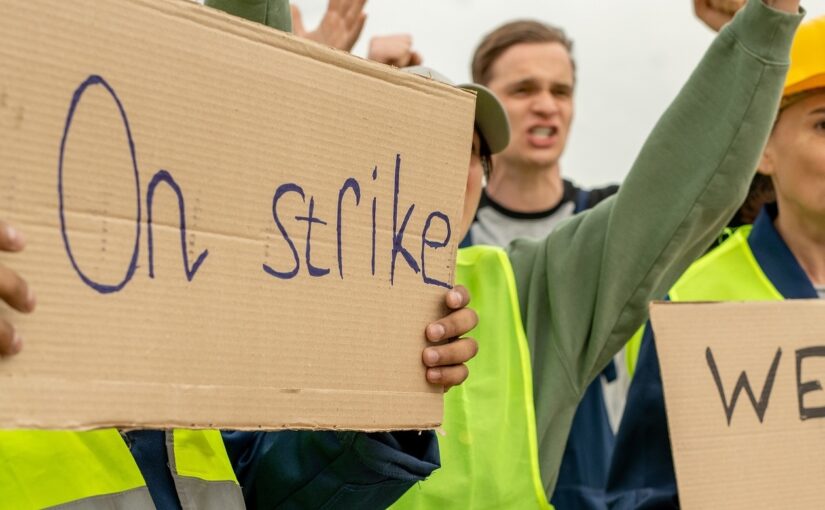
The silence on BP these past few days feels deliberate; a kind of Saffron Strike. If so, let it be known: this space was never meant to cater to ideological comfort.

It seems uncommonly quiet; I think I have been misunderstood. I do not care about the traffic and commentary of BP as much as I care about the integrity of the space.

For instance when I felt that Kabir had done wrong; interdiction was the answer. When I realised the narrative was being twisted so that I became his moderator (Kabir generally knows my red lines) then I realised I was wrong. Kabir’s recent postings and commentary have been very high-signal. Continue reading Saffron Strike

Zia-Era Pakistan & Today’s India

There are actual leftists and other folks who don’t regurgitate PakMil propaganda – of this I’m aware. But even amongst those, illiteracy on India is rife. I laugh with bemusement at the number of times self-appointed Pakistani intellechawals sagely nod their heads and compare Zia-Era Pakistan to present-day Hindootva. I ā€˜get’ that such comparisons soothes Pakistani insecurities vis-a-vis its larger, democratic neighbor, but it really destroys their credibility.

Kabir removed three of Dave’s comments, and while I felt it was over-moderation, I’ve kept my promise not to interfere unnecessarily in his threads.

The excerpt above, though, is interesting — the comparison between Zia’s Pakistan and Modi’s India. What’s striking about both is the twin emphasis on capitalism and cultural conservatism: the promise of economic growth wrapped in moral revival. It raises a deeper question — whether right-wing politics are, paradoxically, the only antidote societies find to extreme inequality.

Class, even more than caste or creed, is the fundamental distinction in any society. The bottom half ultimately has more in common with each other than with the top half. Yet society endures only when that bottom half is so compromised that it cannot mount effective resistance. When the Establishment promise uplift but depend on the passivity of the lower half, then the “distribution of prosperity”, twinned with ideology, itself becomes the subtlest form of control.

New writing ideas

G’s future posts:

Ā« I am thinking on a longish post on how the Hindu Epics actually made Geographical India into cultural India – more than wars of Ashoka or Gupta’s or Mughals.Ā Ā»

A very high Signal Comment by G again:

Guys discussing high HDI and Low HDI of North and South without discussing coastal connectivity?

All states which have a sea barring Odisa are doing well. Bengal used to do well but has gone to shit due to 70 years of Communist and bad economic strategies.

Among ā€œNorthernā€ states GJ has a long coastline.
HR PJ are doing fine due to connectivity to capital and extremely high irrigation and other stuff.

The only places which comprise the ā€œbackwardā€ north are UP,Bihar – badly governed since independence and landlocked and JH and CH which have extremely difficult terrains and very very dense forests along with being landlocked.

Geography, historic and economic reasons often supersede cultural though people who want always focus on those.

the highest signal comment of the last 48 hours

The Pakistani establishment elites have zero understanding of modern India. They don’t make any serious effort to understand it.

India-Pakistan: A link sustained only through violence


girmit‘s response is probably the most nuanced I have seen in a long while. Quality comments like this keep Interdiction holding up. Girmit has been making such type of qualified and interrogated comments for more than a decade now at BP (after the jump): Continue reading the highest signal comment of the last 48 hours

Fire and the Saffroniate

We had a quiet Diwali dinner with some South Asian literati here in Cambridge, Mass. No fireworks, but some useful clarity especially about the need for a unified South Asian voice, and where Brown Pundits fits in.

Threads, Fire, and a New Warrior Class

Kabir remains catnip for the Commentariat or as I’ll now call them, the Saffroniate (Brahmins or Brahminised). They pretend otherwise, but the numbers don’t lie. The threads light up when he’s around and yes, I’m aware of the layered joke: threads mean something else too, especially to our youngest Pundits-in-training. Continue reading Fire and the Saffroniate

Caste, Aurangzeb, and the Price of Belonging

1. On Chasing Lost Voices and Losing the Plot

JTL suggested we bring back “Bhimrao, Saurav, Prats, the Tam Brahm married to a Sri Lankan.” Let’s be clear: BP isn’t going to go chasing ghosts. We already have 14 active authors; the goal now isn’t expansion, it’s distillation.

Authorship should mean something. To make it valuable, the inactive will have to go and be replaced. There’s a point at which nostalgia becomes necrosis; when a space keeps trying to resurrect the same arguments instead of evolving beyond them. Kabir’s Substack is a window into Elitestan, which I respect.


2. The Echo Chamber Problem

Endlessly reinforcing a Saffronite echo chamber isn’t vitality; it’s entropy. Even when these voices appear ā€œdiscordant,ā€ they’re usually quibbling on details inside the same frame. And when genuine Pakistani voices are sidelined so that incorrect takes on Pakistan can circulate unchallenged, something’s gone wrong.

The country has done remarkably well post-Pahalgam and navigated certain transitions far better than many care to admit. I rarely see the Saffroniate yield on that except grudgingly; how can one properly analyse what they hate?

Right now, the blog has rhythm. Diwali may be over, but the interdiction hasn’t lifted yet (apparently in anticipation, Qureshi has taken on a new Avatar, as I like to say scratch a Pakistani, wound a Hindu)— meaning, metaphorically, Loki has yet to return with the forces of Ragnarƶk.

In the interim let us strengthen Asgard itself & let’s see where that leads.


3. On Caste and the Polite Lie

There’s this cultivated discomfort around talking about caste — as if it’s rude or too personal.cBut caste isn’t a dinner-table topic; it’s the architecture of Indian society and the Saffroniate. Pretending it’s impolite to speak about it simply preserves privilege. Most of the saffronite commentariat are upper-caste; when they do speak of caste, it’s often un-interrogated.

Brown Pundits was designed to be uncomfortable. If you come here to feel safe, you’ve mistaken the room.


4. The Aurangzeb Clause

Now, on a personal note — since Dr. V’s identity (IHS) takes precedence over mine (BPB), that hierarchy inevitably colors how I write. It lends the blog its saffron hue, and I’m fine with that. It’s the tension that gives this space its elasticity.

People sometimes ask why I don’t ā€œinterrogate my own biases.ā€ Well of course I have but the answer is simple: Aurangzeb is not a hill to die on. The Mughals were complex; the demolition of Babri Masjid was inhumane and reckless (the equivalent to destroying the Aya Sofia). I know that. But complexity is the price of belonging.

To gain full entry into Bharat; to speak as one of her own, you pick your battles and who you must give up. I chose to kick my Mughal padres to the wayside in my Hindufication and baptism from Mleccha to caste Hindu. And virtually no kin of mine, even the most liberal-minded in the Ummah, will ever do the same.


5. The Work Ahead

So, no, we’re not reviving old cycles. We’re pruning, refining, and staying porous enough to hold contradiction. Caste is not impolite. Aurangzeb may not be evil. They are the two mirrors in which this subcontinent still sees itself — one social, one civilizational. The task is to look straight into both and while I can’t & won’t fight those battles since I took on the Saffron orders and joined Asgard, I won’t disallow lost kin from waging their own battles in what they see as truth. The Golden Age in Norse Mythology, only starts after Ragnarƶk is concluded.


Was Kabir Right?

A week ago, I imposed an interdiction on Kabir ; a move I felt was necessary at the time, not because of his views, but because of the manner in which they were expressed. His tone, his dismissal of this platform, and his tendency to escalate rather than de-escalate all contributed to that decision. But now, I find myself wondering: was Kabir right about Brown Pundits?

Since his departure, the commentariat has gone unusually quiet. Threads that once sparked with disagreement, energy, and engagement have gone still. There is a strange calm but it feels like the calm of a museum, not a marketplace of ideas. And what’s become increasingly clear is that the ā€œpeaceā€ has come at a cost. That cost is vibrancy. That cost is friction. That cost is participation. Kabir, for all his faults, drew fire, and fire draws people.

This raises a more fundamental question: am I overestimating the commentariat’s interest in the core mission of Brown Pundits? Were people here for civilizational dialogue, or were they here for the masala of Indo-Pak antagonism? It’s disheartening to admit, but the numbers speak for themselves. Kabir had been blocked years before (not by me), and when I released Loki from his cage, well on his return, so did the attention. Continue reading Was Kabir Right?

Note to Authors

Most of our active Commentariat are Authors as well, and that overlap is exactly what makes this space work.

Please don’t worry about the length of your posts or whether you’re mainly sharing links. All I ask is that you include a line or two of context or commentary, however brief, when you do. It helps the discussion move forward and gives readers an entry point. I’ve been seeing some excellent conversations in the Open Threads, but many of you still seem hesitant to post directly. Don’t be!

It genuinely helps me when Authors share what they can, when they can. I’ll edit or follow up if something needs adjusting, but as you all know, I’m very much in favour of a broad church; no pun intended, considering my last piece was on the Church.

Syriac Echoes: From the Mountains of Lebanon to the Coasts of Kerala

It is somewhat understood that the Christians of Lebanon and Kerala, though separated by 4,000 miles of land & sea, belong to the same ancient linguistic and theological world. Both descend from the Syriac-speaking Christianity that once stretched from Antioch to the Malabar Coast, and both have wrestled with what it means to be indigenous after centuries of empire, conversion, and cultural layering.


1. The Syriac World

Before Latin or Arabic ruled their respective shores, both Lebanon and south western India were part of an Aramaic Christian zone. The language of Christ, Syriac, a dialect of Aramaic, became the scriptural and liturgical medium for Christians from Edessa to Mylapore. From this matrix emerged:

  • The Maronites of Lebanon; Chalcedonian Syriac Christians who accepted the Christology of Constantinople but maintained their own monastic independence in the mountains.

  • The NasrānÄ«s (Saint Thomas Christians) of Kerala; East Syriac Christians under the Church of the East in Persia, who never knew Byzantium but shared the same liturgical ancestry.

In both regions, Syriac liturgy defined the faith long before Latin, Greek, or Malayalam translations appeared. To this day, Maronite and Keralite priests still whisper ā€œQadishāt AlohÅā€, Holy God,Ā in the same ancestral tongue.


2. Lebanon; A Christian Mountain Built on ShiŹæite Soil Continue reading Syriac Echoes: From the Mountains of Lebanon to the Coasts of Kerala

Pakistan’s Diplomatic Triumph (Trump?)

United States President Donald Trump especially thanked Prime Minister Shehbaz Sharif and ā€œmy favouriteā€ Field Marshal Asim Munir on Monday for their efforts in achieving peace in Gaza, among many other world leaders.

Trump thanks PM Shehbaz and ā€˜my favourite’ Field Marshal Asim Munir for Gaza peace efforts

I might expand on this tomorrow, but it’s telling that Dr. Lalchand finds all this quite amusing—Pakistan back again with a begging bowl. I, on the other hand, see it as something closer to a post-Pahalgam pivot. Perhaps India is underestimating Pakistan’s deep instinct for adaptation, especially as the region continues to drift in unpredictable directions.

Brown Pundits