India, Pakistan & the Central Asian Dancefloor

India and Pakistan used to dance together; locked in step, even if offbeat. Now, they move in opposite directions, occasionally brushing shoulders, never quite facing each other.

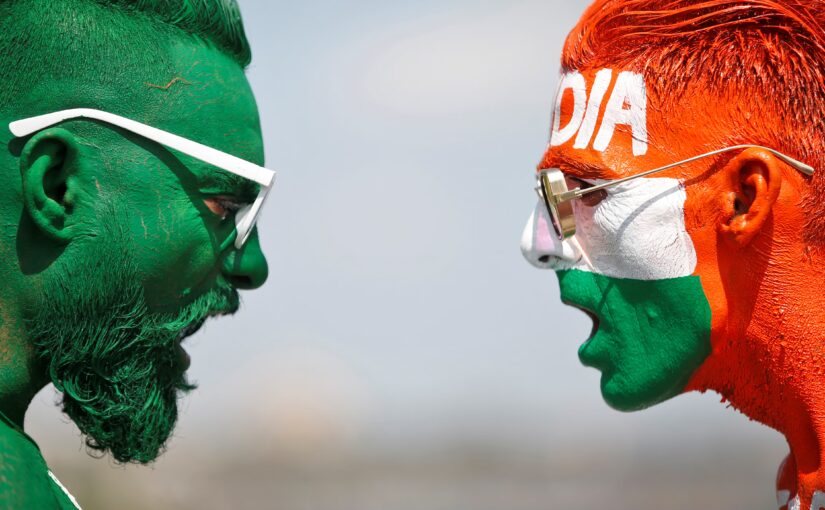
Take this month. On one hand, India is set to join the Central Asian Football Association’s (CAFA) Nations Cup; a sporting signal of its growing diplomatic footprint across post-Soviet Asia. On the other hand, India pulled out of the WCL 2025 cricket semi-final against Pakistan, citing the tragic Pahalgam terror attack. The result? Pakistan walked into the final uncontested.

Two headlines. Two very different moods. One shows India gaining legitimacy in a new regional club. The other reflects how fragile the bilateral dance with Pakistan remains. Continue reading India, Pakistan & the Central Asian Dancefloor

Sticky Thinking; A Quick Note on Originality & Visibility

This is just a quick note inspired by Indosaurus’s excellent suggestion; which I’d like to add to. I’m pinning this post to give it visibility.

First, it’s great to see the voluminosity of posting lately. Some days the blog pulses with original thought; other days, the comments surge while posts remain sparse. Both are signs of life and I’m glad for that.

But as Indosaurus rightly observed:

ā€œA lot of the posts over the past 2 weeks are reposts from old publications elsewhere / mass media publications… I see no real point in posting to BP if it is going to get submerged off the top page within a few hours… Would it be possible to pin 100% original unpublished content to the top of the page?ā€

I think that’s a very reasonable proposal. There’s value in resharing good content, but I agree we should prioritize original, unpublished writing, especially content that reflects the spirit of Brown Pundits. So here’s what we’ll trial:

* Original, unpublished pieces will be pinned where appropriate. I request Editors / Authors to use their judgement / ā€œnousā€ to sense what is original and / or value-add.

Please continue to post, read, comment, and share. But also reflect on what sticks, and why. Let’s keep the signal high.

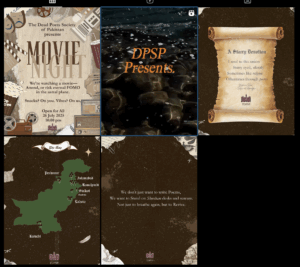
I cannot moderate as effectively as before so I’ll relying on the Editors, Nivedita & Furqan, for support. I hadn’t realised I had made Furqan an editor a few days back as I wanted him to add Dead Poetstanis to BP.

As again we aren’t going to get this perfectly right as we grow so apologies if I/we misstep.


What kind of nationalism is it to live in India and have an Arabic name?

I’d said to myself: Why don’t I do my own Bhartiya-karan, that is, Indianise myself, before someone else thinks of doing it? The first problem was my name. Perhaps you don’t know: my name is Iqbal Chand. It occurred to me that ā€œIqbalā€ is an Arabic word. What kind of nationalism is it to live in India and have an Arabic name? And so, I changed my name to Kangaal Chand. As it happens, this name is far better suited to my financial condition considering that ā€œkangaalā€ means ā€œpoorā€. And why just me, it suits the rest of my country too.

The second problem that arose was of the dress. There was no trace of Indianness in the pants, coat and tie that I wore. In fact, all three were a reflection of my slave mentality. I was amazed that I had worn them all this while. I decided to wear pajamas instead of pants. But then, a certain Persian person told me that the pajama had come to India from Iran. And so, I began to wear dhoti and kurta. But not a kameez, as the word ā€œkameezā€, too, is of Arabic origin and it reeks of the stench and stink of an Arab!

The third problem was of hair! After all, was it not treachery against the country, a blatant form of antinationalism, to keep one’s hair fashioned in the English style? I instructed the barber to keep only one lock of long hair at the back of my head and shave off the rest. He did exactly that. I had seen images from ancient India showing men with long and lush moustaches. Following their example, I began to grow my moustache. When my friends saw the large moustache on my somewhat small face, they assumed that I had put on a fake one, possibly because I was acting in some play. Forget my friends, when I saw myself in this new look, I began to feel that I had been created not by God, but Shankar, the cartoonist. But I did not lose heart. One has to do all manner of things to be Indian.

An excerpt from a story by Kanhaiyalal Kapoor in ā€˜Whose Urdu Is It Anyway?: Stories by Non-Muslim Urdu Writers’, edited and translated by Rakhshanda Jalil.


As the posting on BP (and the comments) are pretty fast and furious; my capacity to edit and moderate is getting pretty stretched..

Community Guidelines – Please Read

Everyone, please take note of the following rules:

  1. Authors may not void or edit the work\comments of other authors.

  2. Maintain courtesy and respect in all interactions.

  3. Nivedita has been made Editor. I believe it’s important to have a strong female editorial voice on the weblog. She has full discretion to void posts or comments she finds inappropriate; she has no need to appeal to me first. If you feel a decision was unfair, you’re welcome to raise it with me privately.

If anyone violates these rules, please contact me immediately. I’ll address the issue on a three-strike basis.

Lastly, a gentle reminder: please don’t post or comment in anger. It rarely leads anywhere constructive. I am present, I am paying attention, and I do my best to be fair. It’s late and I have an early start, but I’m a little concerned about the tone of the threads tonight; let’s keep this space thoughtful, not reactive.

Thank you.

Offline Life

Temple posing for the camera

I thought I’d start sharing more stuff from offline life just to vary up the tone.

I like my privacy as a general rule of thumb but it would be nice if we fleshed out as individuals rather than just as online voices..

Cheers. And hope everyone had a great weekend.

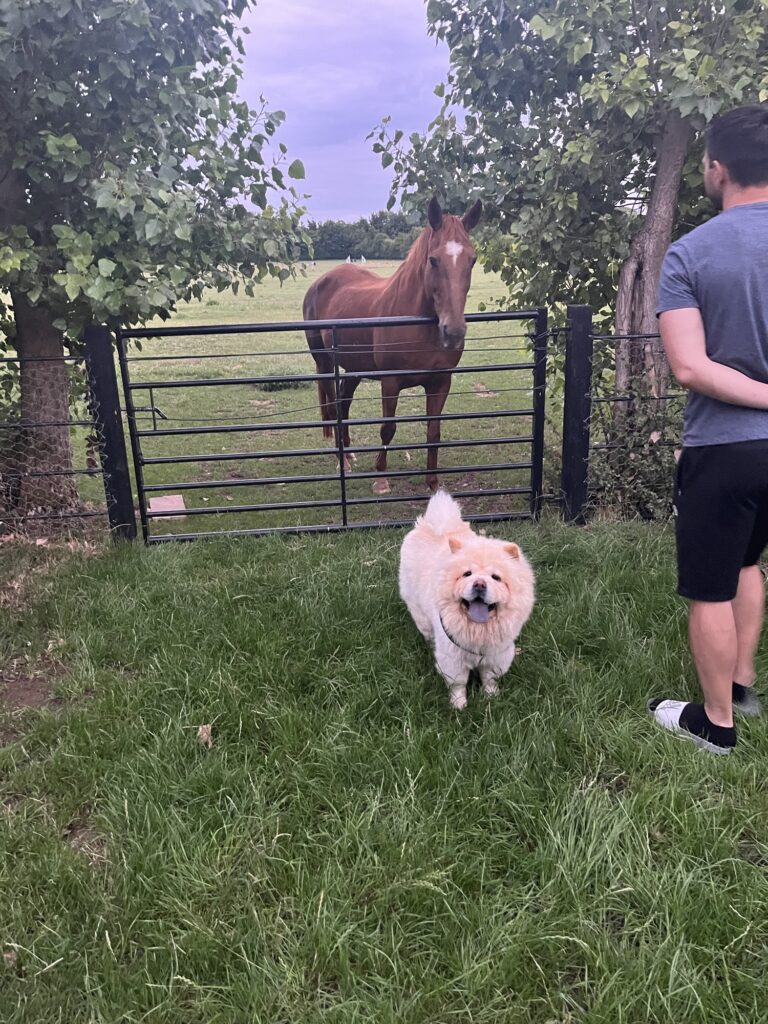
Ps: I took Timmy (her nickname) with me for Club Training. I do a fair bit of Indo-Persian wrestling; did the ā€œGama moveā€, a few days back.

So everyone my Fitness is ā€œBrownā€ loll

War in the Sanskritopolis

The long-running dispute between Thailand and Cambodia dates back more than a century, when the borders of the two nations were drawn after the French occupation of Cambodia.

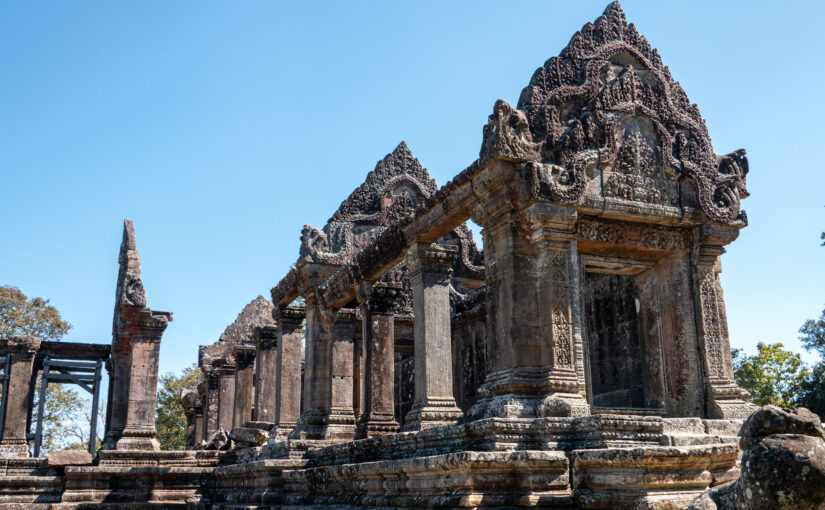
Things officially became hostile in 2008, when Cambodia tried to register an 11th Century temple located in the disputed area as a Unesco World Heritage Site – a move that was met with heated protest from Thailand.

Why A Cluster Of Hindu Temples Is At Heart Of Thailand-Cambodia Conflict

It’s striking to see just how deeply Dharmic culture shaped Southeast Asia — not just as historical residue, but as a living civilizational layer. Buddhism, in many respects, prepared the civilizational terrain that Islam would later traverse.

The Buddhist Studies: Theravada and Mahayana - buddhanet.net

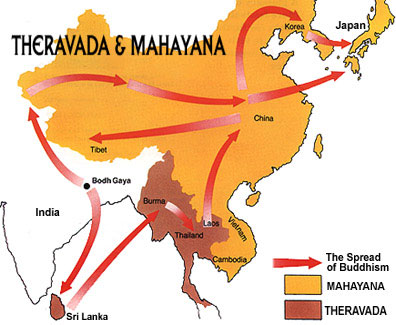
Buddhism, too, was not monolithic. The Sri Lankan Theravāda tradition influenced the western flank of Indo-China, while Mahayana currents, traveling through Sumatra, appear to have looped back toward Guangzhou, feeding into the Sinosphere.

HISTORY OF MAHAYANA BUDDHISM | Facts and Details

The sectarian divergence between Thailand and Cambodia — Theravāda vs. Mahayana— adds nuance to territorial and cultural disputes like the Preah Vihear Temple, whose iconography and inheritance clearly align more with Cambodian history.

These are not just archaeological debates. They’re about cultural legitimacy, historical continuity, and civilizational memory.

In such moments, India, that is Bharat, must not remain a bystander. As the civilizational fountainhead, it should be playing a constructive role in cultural mediation and soft power diplomacy.

Dead Poets of Pakistan

After Kabir exited the WhatsApp group, the conversation between the Manavs and Furqan (who I have made Editor to encourage more DPPs) drifted, inevitably, to poetry and Punjabi. Furqan has already made two excellent contributions, A flying peacock and Lord Ganesh in a confectionary mill. Kabir did a great job in diversifying the Authorial voices on BP.

As we shape the future of Brown Pundits, I keep returning to one submerged voice in the Persianate world, particularly in Pakistan. A voice that is Westernised, undercapitalised, and culturally adrift. These are not the clerics, generals, or capitalists. These are the middle-gentry, the in-betweeners; fluent in English, wired to the internet, but uncoupled from patronage and power.

Like much of the Muslim world, Pakistan remains profoundly hierarchical. And I suspect its creative pulse, its latent genius, lies in that Westernised fringe of the lower elite: the zone between the bourgeoisie and the establishment. The boundary class. Half-in, half-out.

In a strange way, Pakistan’s obscurity may be its shield. Unlike India, an excavated society with every civilizational layer being rapidly monetised (Saiyaara is breaking records), Pakistan is a half-formed splinter. It doesn’t face the same pressures of internal reckoning. That may be a blessing.

Across the Persianate world, from Anatolia to Delhi, we are witnessing a civilizational scatter. The old cosmopolis of the Gunpowder Empires (Ottoman, Safavid, Mughal) has collapsed, leaving behind cultural debris. The Persianate polity, once a unified Empire of the Mind, is now a broken archipelago.

India, by contrast, benefits from its post-colonial majority. Like Israel, it is 80% one faith; with all the confidence and coherence that brings. It has the numbers, the market, and a dominant civilizational script. The Sanskrit world, if not unified, is at least centrally anchored.

In this context, Kabir represents one pole of the Pakistani elite: articulate, English-speaking, confidently liberal but also capable of drowning out the marginal voices he’s adjacent to. And yet sadly, I don’t think Pakistan is headed for any Hindufication. The trajectory is different.

Pakistan is not returning to India. It is, perhaps, becoming the lowlands of the Iranian plateau;Ā a bridge nation once again, neither fully Arab nor Indic. Suspended between worlds, it may rediscover itself in that liminality.

Because sometimes, the dead poets are not gone. They’re just waiting for the right silence.
Open Thread; Trans in the Muslim World

Other Stories (thank you Nivedita):

šŸ”— India Today – Harshvardhan Jain Scam

A man posed as a diplomat, set up fake embassies, and ran a multi-crore loan fraud racket via fake companies. He even issued ā€œofficialā€ visas.

šŸ”— Business Standard – Karnataka Vendor GST Nightmare

A vegetable vendor in Karnataka received a GST notice due to high UPI volume — triggering a cascade of tax bureaucracy.

šŸ”— Economic Times – Indian Man Stabbed in Ireland

An Indian man in Ireland issues a public warning after surviving a random stabbing in Dublin.

šŸ”— NDTV – Hyderabad Man Kills Wife

In Hyderabad, a man stabbed his estranged wife to death at a birthday party for a child.

Brown Pundits: Broad Church or Narrow Canon?

Brown Pundits Must Stay a Broad Church

Reading Kabir’s thoughtful post on the ā€œsoft Hindutvaā€ bias at Brown Pundits, I found myself both agreeing with parts of his argument and diverging from its framing. My own journey with BP goes back to its inception. The blog was born in Twixmas December 2010; 10 days after I had met Dr. Lalchand, whose presence has profoundly shaped my civilizational views.

I say this not as a biographical aside but because BP, at its best, is where the personal and civilizational collide. We bring who we are; our marriages, our migrations, our contradictions, into this messy, brilliant conversation.

At the time, like many Pakistanis, I held a deep-seated assumption: that Hindus were fundamentally ā€œother.ā€ It wasn’t overt hatred; just a civilizational distance, internalized from birth. But Dr. V & Brown Pundits challenged that.

A Forum With Bias? Yes. But Which One?

The heart of BP is not neutrality; it’s the willingness to host contradiction. That is its genius, and it must be protected.

Continue reading Brown Pundits: Broad Church or Narrow Canon?

What Kind of Space Is Brown Pundits

A few of us authors have been actively discussing the future of Brown Pundits;Ā the space, the tone, and the deeper ideas we’re engaging. It started informally on our WhatsApp group, but the questions are foundational: What kind of platform is BP becoming? What should it strive to be? And what kinds of ideas does it host best?

At its best, Brown Pundits is a bridge; across nations, faiths, ideologies, and lived experiences. It’s a space where one can be deeply Indian, wholly Pakistani, broadly Bangladeshi, or diasporic and disillusioned but still belong. But like any bridge, it needs conscious upkeep. If a conversation leans too far in one direction, it doesn’t stretch, it collapses inward.

Some contributors feel the platform has become overly shaped by one ideological current. Others argue that the real problem isn’t dominance, but disengagement ; those who want plurality must also show up. And both perspectives can be true.

Brown Pundits