Notes on the closing talks of “Divergent Voices of South Asia: Rethinking Partition, Reimagining Peace”; Mela Nordic, Filmcentrum Riks, Stockholm, 4 July 2026. Second of two parts.
Part I of this essay took Anuradha Bhasin’s blueprint, cross-border journalism, a shared archive, the arts as empathy machines, and held it against the graveyard of prior attempts: Aman ki Asha, decapitated after 2014; Himal Southasian, strangled in 2016 by withheld paperwork.
As an aside Himal Southasian was re-registered in Colombo and continues to bring out a bold digital publication under its dynamic editor Roman Gautam.
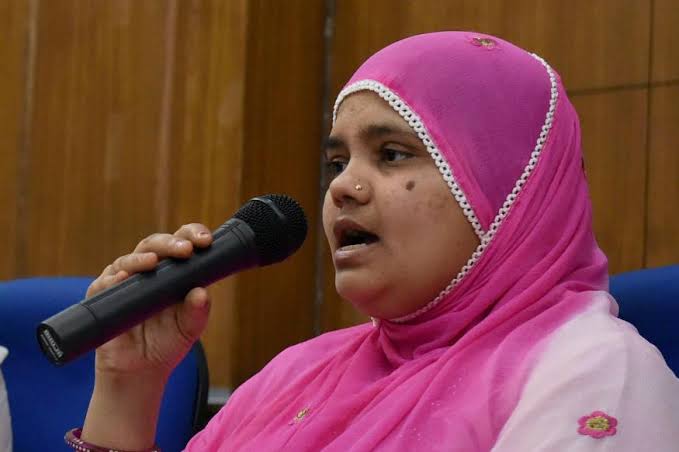
The woman who followed Bhasin to the podium is, conveniently, the field test. Beena Sarwar, Boston-based journalist, documentary filmmaker, journalism teacher, helped run Aman ki Asha from the Jang side through its best years; the campaign’s achievements are credited in large part to her stewardship. She watched it stall. And in March 2021 she co-founded Sapan, the Southasia Peace Action Network, explicitly on the lessons learned, followed in August 2021 by Sapan News, a syndicated features service. The arc from mega-campaign backed by two media conglomerates to volunteer-driven network is not a decline; it is an adaptation to the kill mechanism. Her talk, “Think like a Journalist, Build Peace,” was the day’s answer to its own hardest question.
The minimum common agenda
Continue reading Reading Dawn in Delhi.