The Pakistani Inferiority Complex

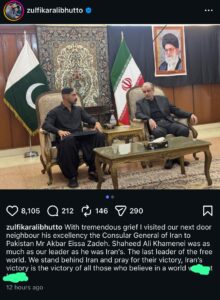
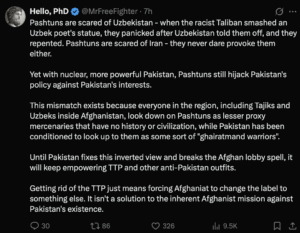
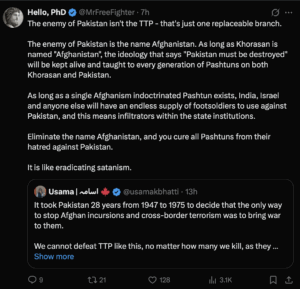
These excellent tweets exhibit a painful pattern that many of us see but few want to name.

Pakistanis, particularly its establishment and elite classes, exhibit a deep inferiority complex towards white (light) Muslims; Arabs, Turks, Persians, and Afghans. These groups are valorized, romanticized, and used as benchmarks for identity and belonging. Meanwhile, other Asian groups, especially within South Asia and Southeast Asia, are seen as lesser. This manifests not only in foreign policy but in pop culture, education, and internalized social hierarchies.

This is why, even if Partition had to happen (and it was undeniably disastrous), Pakistan still could have been something else. It could’ve been a GCC meets Pahlavi Iran construct—a sleek, semi-modernist, high-income Asian Muslim republic with cultural gravitas and economic depth.

Instead, as others have rightly pointed out, Pakistan today has one of the lowest HDIs in its region. Karachi didn’t become Dubai. Lahore didn’t become Paris. Islamabad remains a ghost town of beautiful boulevards and hollow institutions. The promise wasn’t just broken; it was never even understood.

In some ways, Pakistan inherited the worst of both its imagined lineages: neither the intellectual cosmopolitanism of Persianate high culture, nor the industrious civic ambition of Indian civilizational continuity.

This is why tweets like those from @MrFreeFighter land so hard. They expose the psychic dissonance at the heart of the Pakistani state’s anxieties; its hatred of Pashtuns, its paranoia about ā€œAfghanism,ā€ and its inability to deal with its own peripheral ethnic groups as anything but threats.

Meanwhile, Indian Muslims like bombaybadshah, though deeply patriotic to India, often voice critiques of Pakistan with a clarity born of disappointment. They represent what Pakistan could have cultivated: a civic Islam, grounded in identity but untethered to ethnic obsession.

The final irony? South East Asia, Thailand, Cambodia, even Bali, retains more civilizational Dharma than most of Pakistan. Religion is irrespective of that elusive civilisational quality of Dharma, thus the true borders of Bharat lie eastward, not northwest.

Pakistan is not the enemy of India. It is the shattered mirror. And what it reflects, feudalism, insecurity, bigotry, and colonial hangover, is what the entire subcontinent must transcend. Again anyone who reads this can see I’m not saying this from a place of hate but love.


War in the Sanskritopolis

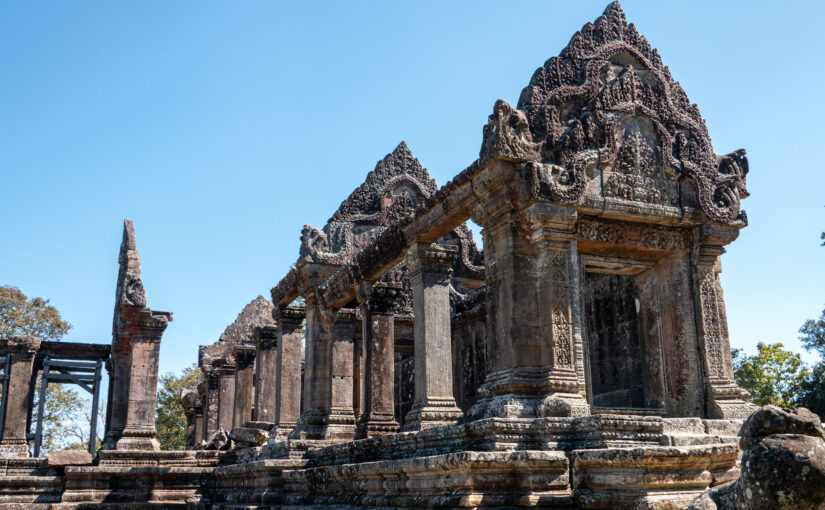
The long-running dispute between Thailand and Cambodia dates back more than a century, when the borders of the two nations were drawn after the French occupation of Cambodia.

Things officially became hostile in 2008, when Cambodia tried to register an 11th Century temple located in the disputed area as a Unesco World Heritage Site – a move that was met with heated protest from Thailand.

Why A Cluster Of Hindu Temples Is At Heart Of Thailand-Cambodia Conflict

It’s striking to see just how deeply Dharmic culture shaped Southeast Asia — not just as historical residue, but as a living civilizational layer. Buddhism, in many respects, prepared the civilizational terrain that Islam would later traverse.

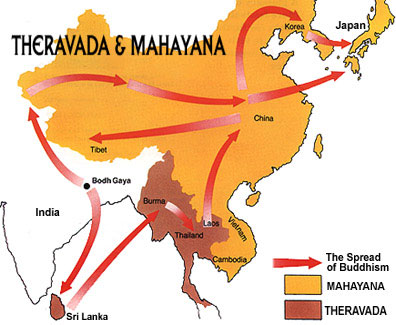
The Buddhist Studies: Theravada and Mahayana - buddhanet.net

Buddhism, too, was not monolithic. The Sri Lankan Theravāda tradition influenced the western flank of Indo-China, while Mahayana currents, traveling through Sumatra, appear to have looped back toward Guangzhou, feeding into the Sinosphere.

HISTORY OF MAHAYANA BUDDHISM | Facts and Details

The sectarian divergence between Thailand and Cambodia — Theravāda vs. Mahayana— adds nuance to territorial and cultural disputes like the Preah Vihear Temple, whose iconography and inheritance clearly align more with Cambodian history.

These are not just archaeological debates. They’re about cultural legitimacy, historical continuity, and civilizational memory.

In such moments, India, that is Bharat, must not remain a bystander. As the civilizational fountainhead, it should be playing a constructive role in cultural mediation and soft power diplomacy.

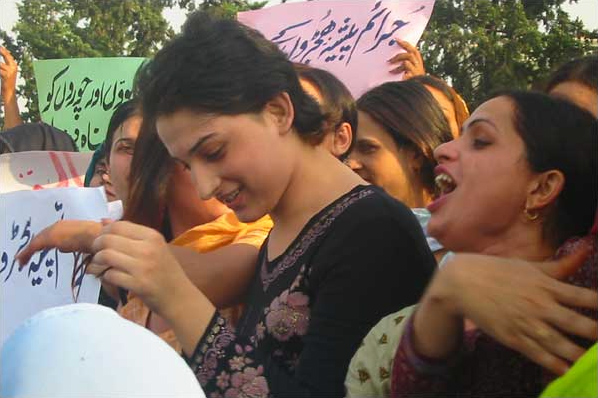
Open Thread; Trans in the Muslim World

Other Stories (thank you Nivedita):

šŸ”— India Today – Harshvardhan Jain Scam

A man posed as a diplomat, set up fake embassies, and ran a multi-crore loan fraud racket via fake companies. He even issued ā€œofficialā€ visas.

šŸ”— Business Standard – Karnataka Vendor GST Nightmare

A vegetable vendor in Karnataka received a GST notice due to high UPI volume — triggering a cascade of tax bureaucracy.

šŸ”— Economic Times – Indian Man Stabbed in Ireland

An Indian man in Ireland issues a public warning after surviving a random stabbing in Dublin.

šŸ”— NDTV – Hyderabad Man Kills Wife

In Hyderabad, a man stabbed his estranged wife to death at a birthday party for a child.

Bharat Needs No Validation

I’ve been following the usual commentary, the BP quadrant: Indosauras, Nivedita, Kabir. And I read Kabir’s offhand remark that the Ramayana ā€œdidn’t resonateā€ the way the Iliad or Odyssey did. That casual dismissal is telling.

The Ramayana is not just literature, Ā it is scripture, memory, and civilization encoded in verse. It has shaped the moral and cultural landscape of over a billion people for millennia. To compare it, then downplay it and to do so so glibly reveals less about the text and more about one’s own civilizational estrangement.

Let’s be honest: that kind of language would never be used for the Quran or Islamic texts. And the fact that it is used for Hindu epics by brown intellectuals raised in the shadows of colonial categories says everything about how deeply colonized the Pakistani mind remains. Pakistan is, in truth, an Urdufied Punjab insufficiently imagined, a fragment that lost its civilizational compass in the act of imagining itself apart. The fact that the Ramayan being Pakistani heritage is such a novelty speaks volumes.

Today I sat at Stratford Westfield, eating Dubai Hot Chocolate ice cream, and the man next to me clearly Pakistani asked me, in Urdu, ā€œif I was in the queue?ā€ His wife spoke Punjabi-inflected Urdu. It struck me how London has become the real unifying Punjab. Ten percent of Britain is now Desi. And outside of the subcontinent, the fractures of 1947 heal in ways that remain impossible back home.

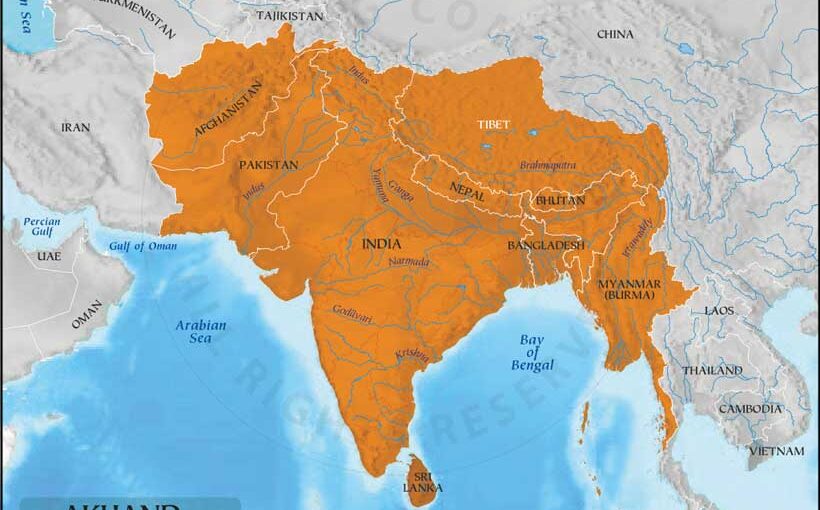
We speak of South Asia. But the term is bureaucratic; no one identifies with it. India is real. Bharat is civilizational. Aryavarta stretches from the Hindu Kush to the Indian Ocean — just as France is the Hexagon, Bharat is the Triangle. Partition clipped its wings, but its soul remains intact.

And look at the reality today: Indian Muslims are thriving in the mainstream. The title song of the upcoming film Sarai — written, composed, and directed by three Muslims: Ishaq, Fahim, and Arsalan. The leading lyricist is Javed Akhtar. This is a country that refused bitterness. A country whose largest minority chose Partition, and yet was never cast out, a unique precedent and testament the pluralism of Dharma.

Bharat needs no validation. It doesn’t need the approval of its neighbours or the heirs of partitioned imagination. It only needs to walk — and it is flying. Toward its own authenticity, on its own terms. And the world is watching.

Brown Pundits