Five billionaires have as much wealth as half of humanity ~ Vandana Shiva
Prime Minister of Uzbekistan, Singing Raj Kapoor’s Song.
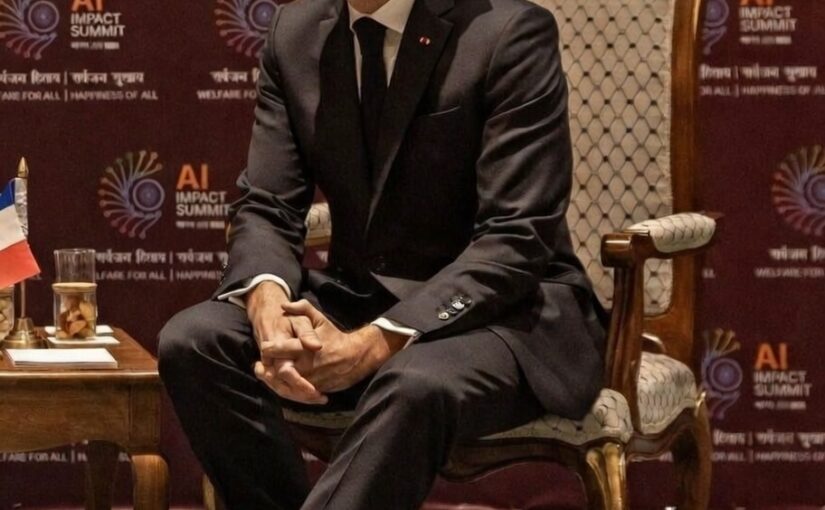
Seems LV also stole its TM design from India. Continue reading Open Thread: Bharat overawes France
Five billionaires have as much wealth as half of humanity ~ Vandana Shiva
Prime Minister of Uzbekistan, Singing Raj Kapoor’s Song.
Seems LV also stole its TM design from India. Continue reading Open Thread: Bharat overawes France
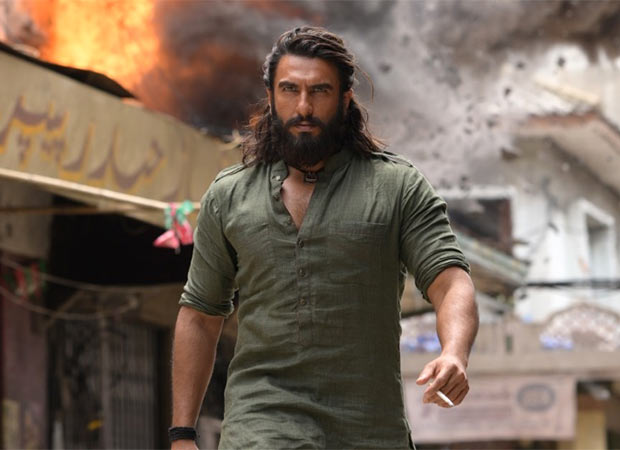
Came across this review of Dhurandhar and thought it was worth sharing. Especially given the repeated comments on “bias and anti-Pakistan” from folks who haven’t even watched it.
I watched it this past weekend, and will try and find time to compile my thoughts on it as a comment on this post.
We watched Dhurandhar last night at Apple Cinemas (the last time we went to see Ishaan Khatter’s Homebound). It is the best mass-market Bollywood film I’ve seen since Animal, and far more immersive. What struck me most was not the action, nor the plot, but Bollywood’s new formula: a full-scale fetishisation of Pakistan.
Kabir keeps claiming that Bollywood casts Pakistanis as villains. This misses the point. The villain is always the sexiest figure in any film. Bollywood has finally realised this. Raazi hinted at it. Animal stumbled on it with Bobby Deol’s star stealing turn. Dhurandhar perfects it.
For the first time, Hindu actors are not performing cartoon versions of Pakistan. They are cosplaying Pakistanis with forensic precision; the clothes, the diction, the swagger, the social codes. In earlier decades the attempt was clumsy. Now the calibration is exact. Pakistan, in these films, becomes the Wild West of the subcontinent: familiar enough to feel intimate, distant enough to feel dangerous. Continue reading Dhurandhar showcases Bollywood’s New Obsession: The Sexy Pakistani Villain
So a new trailer for a hindi acshun phillum dropped recently, and its another one of those that throws around the ‘based on true events’ tag for additional street cred. This time around though, there’s a bit of a twist. The plot apparently centers around the Lyari Gang wars in Karachi, with some additional fictional tempering of course.
Unsurprisingly, this will elicit a whole gamut of reactions from either side of the Radcliffe line, especially due west. The preview is unusually long, and somewhat unsurprisingly filled with shocking violence – the recent success of movies like Kill and Animal were bound to result in a race to ever-increasingly levels of ‘ketchup’ and fireworks. But apart from that, at least to me, didn’t seem very novel or interesting. I am mildly curious about the world building that the movie manages to pull off.
Sanjay Leela Bhansali’s Netflix series Heeramandi is another example of this phenomenon. Where the Indian movie industry is accused of ‘cultural appropriation’ and telling a story that is “Pakistani, and not Indian”. With that one, as much as I am… unimpressed with Bhansali’s output – I view him more as a choreographer, less of a filmmaker, one who is far more successful at spectacle, not so much with cinema – I still think that the stories of the subcontinent should be accessible to all. Lahore after all, especially pre-partition Lahore is as much a legacy of Ganga Ram as it is of the Mughal Empire, or the Sikh, for that matter.
This time around however, the setting isn’t historical or pre-partition. Is there an argument to be made that this is “cultural appropriation”?
For me, more than anything, its yet another missed opportunity. In an alternate timeline, a movie like this would have been a golden opportunity for Pakistani actors to get visibility on a much larger Indian stage, and the quality of the output could have been immeasurably raised with behind-the-scenes contributions – production design, location and language expertise, to name a few.
Somewhere down the line, if things finally start reverting to ‘normal’, perhaps future projects like these will incorporate Pakistani participation and be better for it.
#Dhurandhar's real life characters & their onscreen depictions! pic.twitter.com/wdM81tJmyd
— Filmynews (@filmynewsnetwrk) November 19, 2025
10 years ago a few collaborators and I set out to make a film about the Lyari gangsters and drug mafia, couldn’t raise a Rs locally because a film 80% in Balochi won’t sell, approached Netflix who said Pakistani content not needed, the Twitter page is from 10 years ago too pic.twitter.com/p6LeyyFUEO
— Faisal Rafi (@faisalrafi) November 20, 2025
Last night Dr. Lalchand & I watched Homebound, India’s submission to the Oscars, at Apple Cinemas in Cambridge, Mass. This sad film follows a Dalit (Chandan Kumar) and a Muslim (Mohammed Shoaib Ali) struggling against the odds during the pandemic, their solidarity fictionalized as a fragile bridge across India’s deepest divides.
On the surface, it is a familiar story: the disenfranchised facing systemic barriers. But what struck me was how privilege itself performed disenfranchisement. Ishaan Khatter, brother to Shahid Kapoor, plays the marginalized Muslim. Janhvi Kapoor, descended from Bollywood royalty, embodies a Dalit woman. Vishal Jethwa, a bright-eyed Gujarati, portrays the Bhojpuri Dalit lead. This is not unique to India; Hollywood, too, casts elites as workers. Yet it raises the question: when poverty is performed rather than lived, is it “Dalit-washing”?
Poverty, Emotion, and Representation
Watching the film, I reflected on poverty’s emotional landscape. For elites, emotions can be expansive, indulgent, aestheticized into art. For the working poor, emotions are often constrained by survival — narrowed into necessity. Homebound tried to humanize its characters, but I wondered whether it romanticized what in practice is a relentless narrowing of possibility.
The West rewards this narrative. Parasite in Korea, Iranian cinema, Slumdog Millionaire — poverty & Global South tribulations as spectacle becomes “poverty porn.” The Guardian gave Homebound four stars. Great art often tilts melancholic, yes, but here the melancholia is curated for Western consumption.
Identity, Vectors, and Islamicate Selfhood
More unexpectedly, the film stirred something personal. I realized how much I have vacated my own Islamic identity. It was not traumatic. As a Bahá’í with Persian cultural roots, I found overlap — even comfort — in Hindu traditions. Dalits, in their rapid Hinduization, represent one vector of assimilation; Muslims and scheduled-caste Muslims, often in tension, another. Homebound imagines solidarity, but in life these vectors pull unequally. Continue reading Homebound with Ishaan Khatter
In the name of Pakistan, which is a beautiful poetic name, “Land of the Pure”, lies the tragedy of pathological purity. It is an addendum to the desire to stay pure. To remain untainted. But purity, when pursued absolutely, becomes brittle.
Madhuri Mahadevi
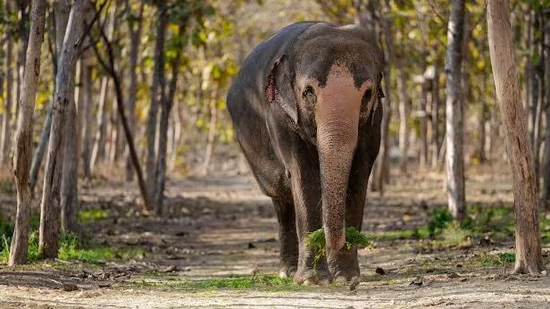
The Ambanis recently relocated Elephant Madhuri from Kolhapur’s Jain Math to the Vantara rehab centre, citing health concerns. But the move, though framed as rescue, triggered emotional protests, political pushback, and a national debate over animal welfare vs. sacred tradition.
Why did it explode? Because Madhuri wasn’t just a creature in need of savin; she was a living deity to those who loved her. Her departure wasn’t a routine animal welfare decision. It was a rupture in India’s civilizational relationship to the divine in nature. One of the most remarkable aspects of Hinduism is its seamless veneration of the natural world. The river is a mother. The cow, a guardian. The elephant, divine.
Few religions integrate reverence for nature into daily life with such tenderness and theological consistency. This story, of an elephant, a corporate empire, and a temple, speaks to a larger tension in India today: Who gets to define care? And when does “rescue” become removal? Continue reading Madhuri is stronger than the Ambanis
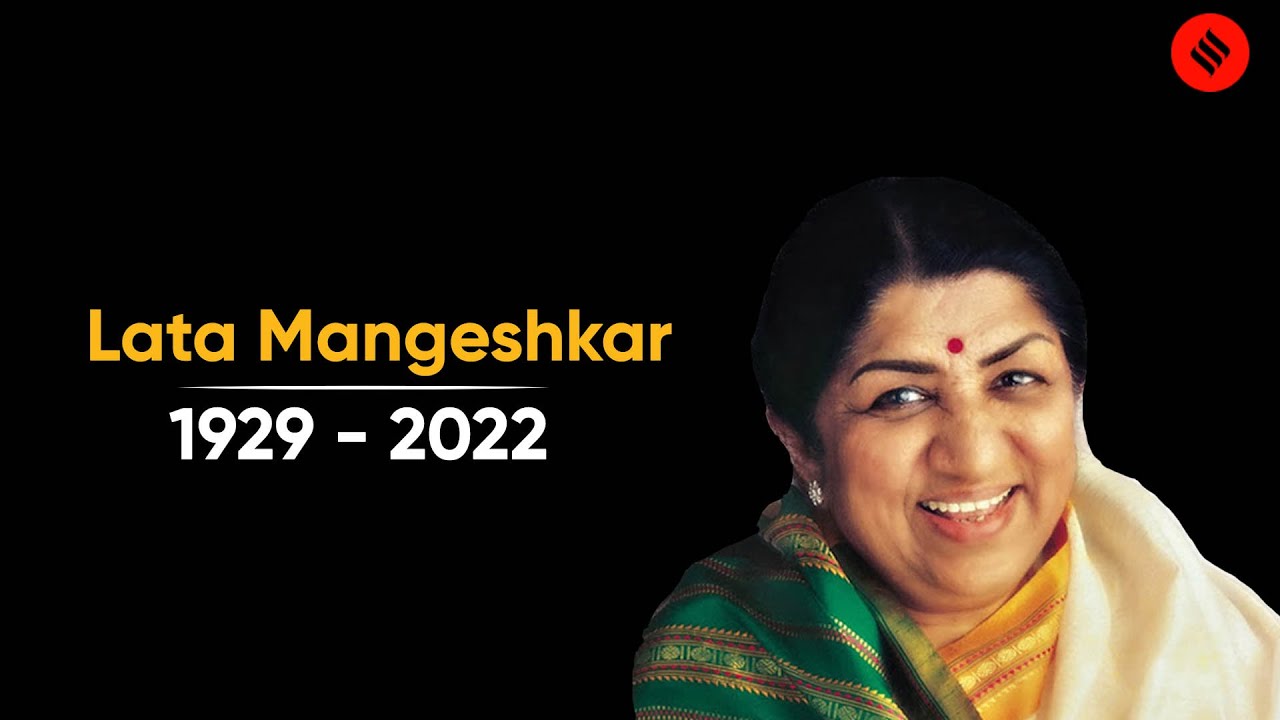
Lata ji, probably the most recognized and most admired (and certainly the most prolific) female singer of the 20th century has passed away. She reigned as the queen of Indian playback singing for over 50 years. There are videos on the internet of people from Azerbaijan to Zambia singing singing her songs, but it was in the Indian subcontinent that she was Queen and goddess rolled into one; there won’t be another like her.
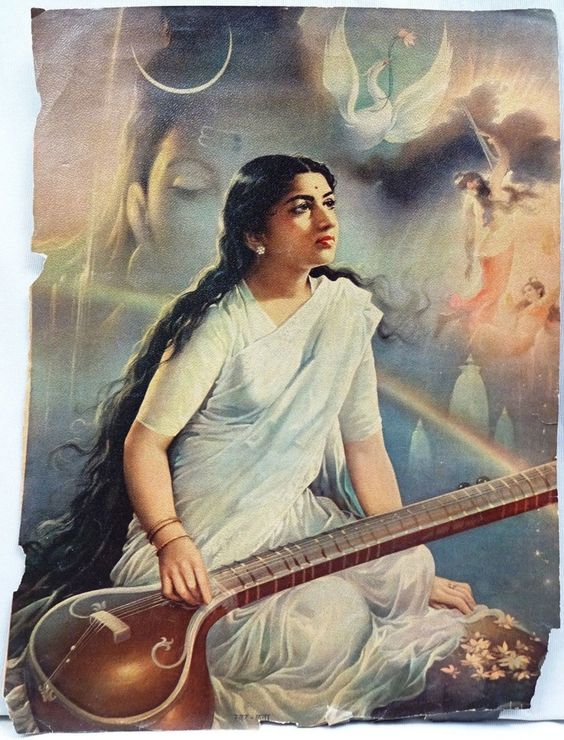
Tributes are pouring in from all over the world. This one from Pakistani political scientist Dr Ishtiaq Ahmed captures some of what an older generation of Pakistanis felt about her:
With her, an age and an era may also be passing. In spite of partition and all the TNT nonsense it promoted, it takes generations and decades to erase all aspects of common culture. Old Bollywood songs are a repository of Indic wisdom and culture (all layers, upto and including cabarets and nightclubs imported from Europe) that may be superior to any holy book (and are treated as such by their fans, who can sing them or listen to them in every conceivable situation and find solace, romance, passion, pathos and, sometimes, good advice). In our family the elders would break out into Lata songs at the slightest opportunity; for my father (and many others of his generation) the ability to play endless bollywood songs on youtube was the saving grace of their golden years. Many a lonely old person was young again listening to those songs and humming along.
In the last few years I noticed some people (mostly younger people) calling her “sanghi” for her Hindutva sympathies. And on the opposite side, Shah Rukh Khan blowing blessings on her was enough for some Hindutvvadis to get upset and claim that he had spit on her at her funeral. Such attitudes may indeed become standard some day. I hope not, but who knows. Partitions and separations have consequences. Maybe it cannot be helped. But to us, she will always be the nightingale of India and a major link to a culture that may or may not survive too long. Then again, perhaps one should not be pessimistic. There are hidden depths in our cultures, we may surprise yet..