Caste in America

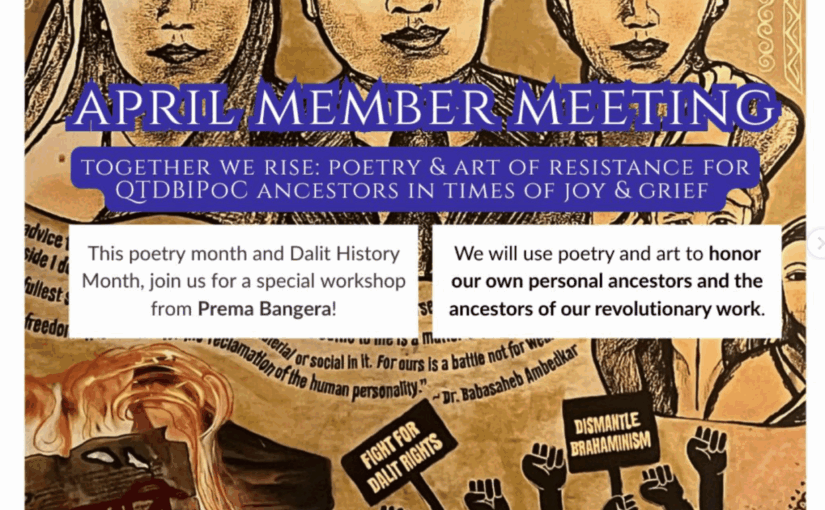
I’ve found myself drifting further left than I expected this year. Much of that is circumstantial, being involved in local activism in the United States naturally places one within progressive coalitions. Yet even in this frame, my ideological compass is firmly rooted in some admiration for Brahminical continuity and Bharat Mata as civilizational anchor.

At times I speculate on where Bharat truly ends. Is it the Hindu Kush? The Iranian plateau? The Persian world has always seemed to me about 20–30% Indianise; its mythology, musicality, and memory bear the imprint of the Indo-Aryan stream more than the Indo-European one, no matter how insistently modern Iranians lean toward a Westward identification.

This brings me to a provocative thesis I’ve often floated: that Brahmins are the civilisational custodians of the Indian subcontinent, and that their displacement often signals a broader cultural erasure. The tragedy of the Kashmiri Panditsis not merely a community’s trauma, but a warning. Without Brahminical continuity, Vedic frameworks falter. Hinduism in Pakistan and Bangladesh remains vulnerable precisely because it lacks the embedded authority and supervisory function of Brahmin elites to anchor Vedic traditions and calibrate resistance to incessant Islamisation. Continue reading Caste in America

📊 Brown Pundits Hits 63,094 Visits in August (+156% Surge)

That’s more than 2,000 visitors a day. What’s driving it?

✅ Open Threads

✅ Honest takes

✅ And yes — argumentation.

But arguments only work if they spark thought, not just heat. Take Kabir; he’s a regular, and I’ve given him free rein. But his tendency to argue without reflection rubs people the wrong way. He blames his relative unpopularity on identity, but it’s more about tone than religion; highhandedness vs humility.

In my own recent disagreement: I paused, thought, reflected deeply. That’s the spirit of BP; a messy, open-minded search for truth.

🎭 Meanwhile, the real tamasha isn’t cricket 🏏 (India did trounce Pakistan) — it’s on X, and on the BP comment section.

X 🧵:

Image

The stupas raises a deeper question:

How central was Buddhism to the Indian subcontinent — and how total was its erasure? In the heartlands, Brahmanism absorbed and displaced it; in the frontier zones, Islam swept away what remained. What we see today are ruins — but once, this was the dominant civilizational framework of the region.

Was its disappearance a slow assimilation, or a deliberate effacement?

Open Thread: From Flattery to Fatigue — What the Iranian Diaspora Can’t Admit

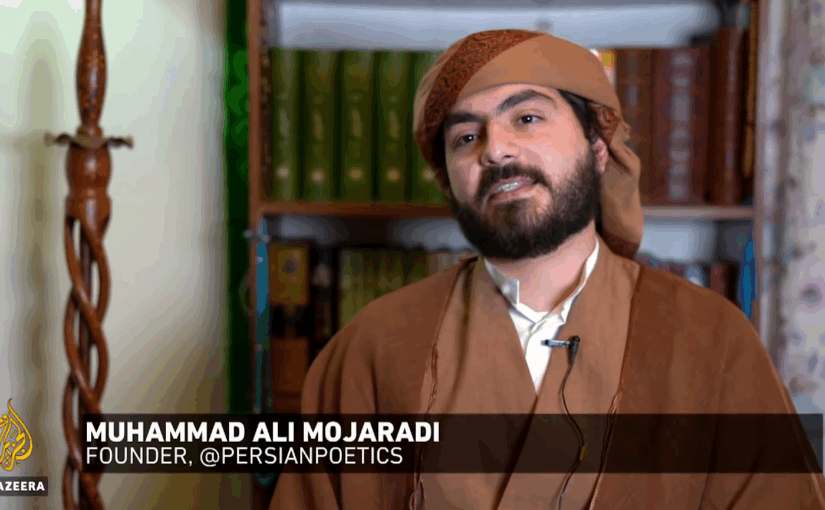
On July 14, I wrote about Ta’arof ; the millennia-old Persian art of flattery, refusal, and ritualised courtesy. It’s often misunderstood in the West as “saying no three times,” but it’s really about emotional high-context negotiation, reading the room before the room speaks.

The next day, on July 15, Sharghzadeh posted a powerful video, calling it Iranian Diaspora Fatigue. A searing takedown of the Iranian Diaspora’s toxic racial insecurities, internalised Islamophobia, misogyny masked as modernity, and cultural denialism. He’s mostly right.

What he calls fatigue, I’d call poisoned flattery turned inward. Because Tehranglos are no longer performing Ta’arof to honour guests or elders. They’re doing it to whiteness itself. Hoping if they refuse our own identity long enough, maybe the West will say: “Yes, come in.”

That’s not assimilation. That’s exhaustion. And the worst part? Even the racism feels borrowed; against Arabs, against Afghans, against Iranians back home. It’s not even Iranian. This isn’t just about cringe TikToks or awkward panel guests. It’s about who gets to narrate Persian culture. And what gets flattened when tradition becomes product. I was stunned when Zachary Newman — one of the most prominent Persian-Jewish American chefs — endorsed Netanyahu’s strikes on Iran. That moment crystallised something.

Sharghzadeh and I are saying the same thing: Persian culture is being gentrified by its own children. What survives isn’t tradition. It’s content. It’s vibes. If Iran is an unreadable poem, diaspora is turning it into a slogan. If Iran is lived, diaspora is increasingly just captioned. And they wonder why they’re tired. Is the Persian diaspora preserving a culture, or just performing it for the algorithm?

The Myth of the “Average Pakistani”

Dave’s comment:

“I have in fact met some. In person. Ran into a lovely couple while on vacay in Guatemala. Excellent conversation along a 2 hour shared shuttle ride. Shia muslims from Baltistan – he took great pains to indicate that his community is not like the average Pakistani, and that in his biradari they are proud to educate their daughters and wives, have them take the lead in public lives. Both his daughters were young med students.

The tragedy for Pakistan is that such actual liberals with modern outlooks wisely avoid taking public positions. They don’t want to get lynched. Hence the domination by the nutters and fringe on the right continues. Leading to mis-categorization of the right-wing as “the center”.”

The above praises a “liberal” Shia couple from Baltistan for educating their daughters and living modern lives, contrasting them with “the average Pakistani,” portrayed as a backward, anti-education fanatic. This framing is not just lazy; it’s offensive.

It reflects a deeply colonial hangover: the idea that modernity is rare in Pakistan, that deviation from presumed fanaticism is a revelation. But let’s be clear, Pakistanis, like people anywhere else, are ambitious, aspirational, and complex. Medical colleges are oversubscribed. Education is highly prized. And many people, devout or not, are navigating life with dignity, values, and a deep desire to move forward; not just materially, but spiritually and ethically.

Politics of Projection

Just because a population is not obsessed with hyper-capitalism doesn’t mean it is “backward.” It may simply mean it has not surrendered entirely to the logic that everything must be monetized. That’s not regression; it might be restraint. In a world where the only metric that seems to matter is money, resisting that tide is itself a kind of wisdom.

This kind of patronizing liberalism, one that exoticizes progressive Muslims as rare exceptions, isn’t harmless. It feeds into a narrative that justifies erasure: of language, culture, self-rule, and civilizational continuity. South Asians speaking in English, debating one another with colonial grammars, is not a mark of modernity, it is a symptom of displacement. The Global South doesn’t need to be saved. We need to be seen, on our own terms.

Brown Pundits