Poorer Pakistan OutFoxes Richer India?

“No one wants a strong India. But PM Modi opened doors. He strengthened the military, advanced the economy, maintained balanced relations with the West, Russia, and China. That is serious statecraft” –Aleksandar Vučić, President of Serbia

India is richer

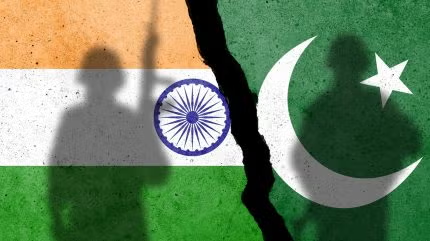
Strip away the noise and a simple asymmetry remains. India will almost certainly remain richer than Pakistan for the foreseeable future. The gap in GDP, fiscal depth, technology, and demographic scale is widening, not narrowing. On material indicators, India has the advantage. Yet material advantage does not always translate into strategic dominance.

India is louder

India is a mass democracy. It is electorally accountable, media-saturated, and sensitive to public opinion. Governments must justify escalation. Markets react to instability. Voters punish miscalculation. This imposes restraint.

Pakistan is tighter

Pakistan is structured differently. Power is narrower. Decision-making is concentrated within a smaller elite, with the military as the central institution. That creates rigidity in some domains but flexibility in others. Strategic continuity does not reset every five years. Public opinion matters, but it does not directly determine policy in the same way it does across the border.

Structural Differences

This structural difference shapes behaviour. India must think about global markets, coalition politics, and reputational cost. Pakistan can absorb economic stress more easily because its political system is already insulated from full electoral volatility. That insulation produces durability, even under strain.

The list gets smaller. There are six countries who sent the head of state/government to all three: 1) Beijing military parade 2) Davos Board of Peace launch 3) Washington BOP 1st meeting They are: Armenia | Azerbaijan | Indonesia | Kazakhstan | Pakistan | Uzbekistan

Like Israel Continue reading Poorer Pakistan OutFoxes Richer India?
Iran and Pakistan Are Not the Same Kind of State

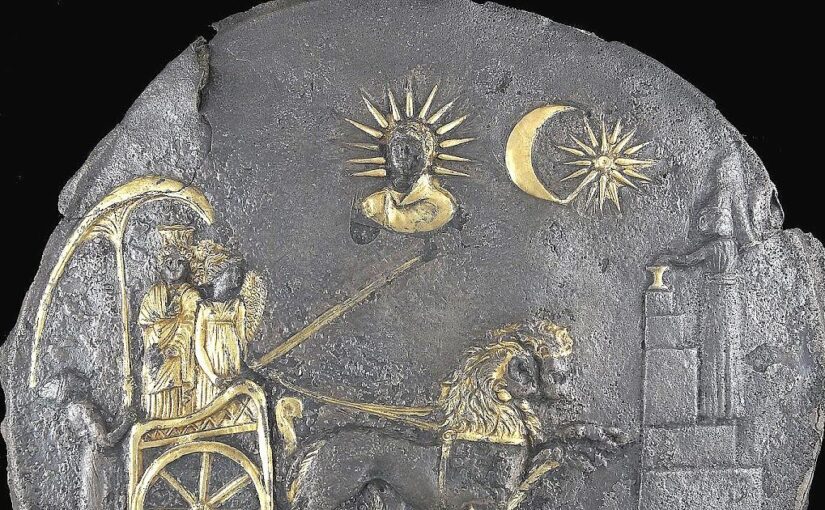
Iran cannot be analysed using the same political categories as Pakistan or most modern states. The difference is not whether a regime is monarchical, clerical, or military. It is the age of the civilisation being governed. Pakistan is a young state. Its borders, institutions, and political language were assembled in the twentieth century. In such states, power fills a vacuum directly.

Power in Young States, Authority in Old Ones

A military dictatorship governs by force, hierarchy, and command. Its legitimacy is procedural and immediate: order, security, survival. This form works where political memory is thin and inherited meaning is limited. Pakistan’s army did not overthrow an old order. It stepped into an empty one. Iran is structured differently. It is a civilisational state that has existed in recognisable form for roughly three thousand years. Power there has never been exercised through force alone. Authority has always been tied to ideas that predate any single regime.

Monarchy as Civilisation, Not Administration Continue reading Iran and Pakistan Are Not the Same Kind of State

Quite Hectic Days

Recently, I’ve been traveling a lot for my formal project: assessing the governance framework of 46 HEIs (universities) in Pakistan. We’re looking at the de jure autonomy of universities (in governance, finance, staffing, academics, and research) versus the de facto reality. Where, like many other sectors, higher education is overregulated.

We’re struggling a lot. Universities are mushrooming (95 in 2002 to 269 in 2024) without any meaningful output, just producing PhDs like rabbits (177 in 2002 to 3489 in 2024). Result: not a single Pakistani university ranks in the global top 350.

I’ve visited different universities. (inter-alia):

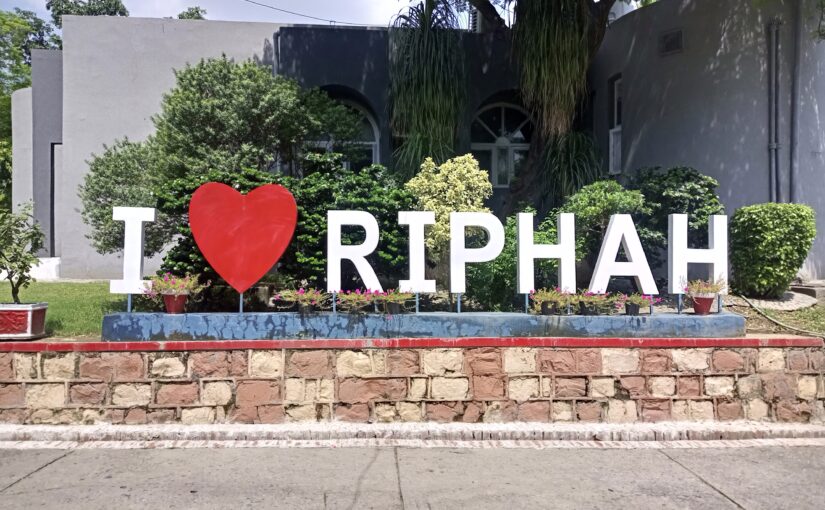
Riphah International University, Islamabad – a private HEI. The I-8 campus is small, but with multiple campuses they cater to around 30,000 students. What’s interesting is how deeply Islamic morality is embedded in their institutional values. It’s the only university (out of the 8–9 I’ve visited so far) whose vision and mission are explicitly integrated with Islamic principles. They even have around 10 credit hours dedicated to teaching morality. Quite remarkable in this era of modernity and expediency. Continue reading Quite Hectic Days

Brown Pundits