Not All Our Ancestors Were “Just Hindu”

Pakistanis never Hindu | Islam destroyed everything? |Pakistanis were Hindu

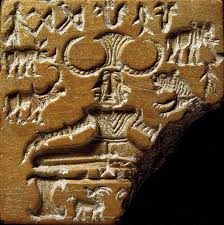
Aslan Pahari’s videos are linked to the top where he essentially argues that the Indus region, before Islam, was a seamless Hindu civilisational block. It makes for neat storytelling. It is also historically careless.

Sun Temple of Multan

The subcontinent before the 8th century was not a flat religious plain. It was layered, regional, and politically fragmented. Yes, there was a broad Brahmanical tradition stretching across north India. Yes, temples like the great Sun temple at Multan testify to the strength of that religious order in what is now South Punjab. But to move from that to “all ancestors were Hindu” is to mistake dominance for uniformity.

Sindh

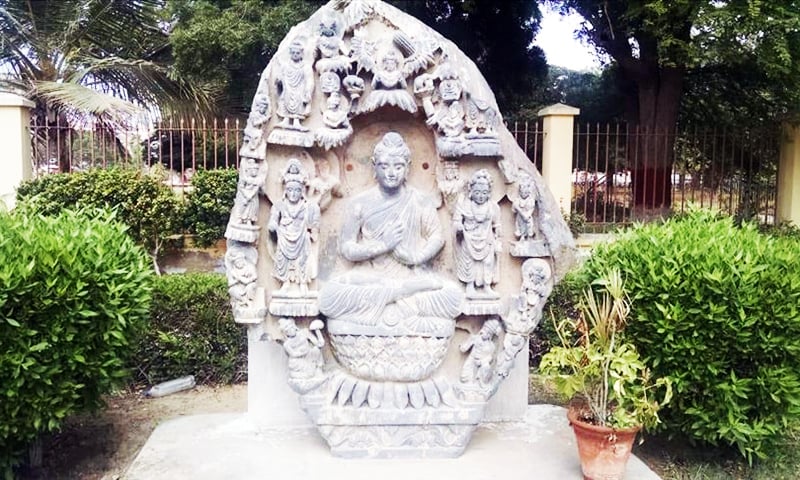
Take Sindh. When Muhammad bin Qasim entered the region in the early 8th century, he did not conquer a purely Brahmanical kingdom. The ruling Brahmin elite he defeated, had previously overthrown a Buddhist polity, and the religious landscape of Sindh included Buddhists, various Hindu sects, and local traditions. The frontier between Indic religions was not rigid. It was porous, competitive, and regionally specific.

It goes without saying that Buddhists emerged from a broader Brahmanical milieu, but I am referring specifically to the religious landscape immediately preceding the arrival of Islam.

Punjab Continue reading Not All Our Ancestors Were “Just Hindu”

Why It Is Still Acceptable to Insult India

This happened on an ordinary Cambridge street. Dr. V and I ran into acquaintances, who in turn had friends (from medical school; a grandmother & granddaughter) visiting from Australia. Polite introductions. Small talk. The weather. Then, inevitably, India.

One of the women mentioned that her husband was “half Indian.” She smiled and added that he had told her she would definitely not like India. This was offered casually, as if it were neutral information, not an insult delivered in front of two Indians.

Trying to keep the exchange courteous, I mentioned Sri Lanka; not as a deflection, but as a bellwether. Our mutual acquaintances had already mentioned enjoying seeing my birthday pictures from there so I thought it a natural segue.

It is often how people test their appetite for the subcontinent: more contained, more legible, still culturally rich. If one enjoys that, India follows naturally; if not, India can feel overwhelming. This was not a provocation. Yet the suggestion was met with laughter, as though I had committed a social error. It was after this, not before, that the tone hardened and the remark about her granddaughter emerged, delivered with surprising persistence, as if the earlier politeness had licensed open disdain.

Continue reading Why It Is Still Acceptable to Insult India

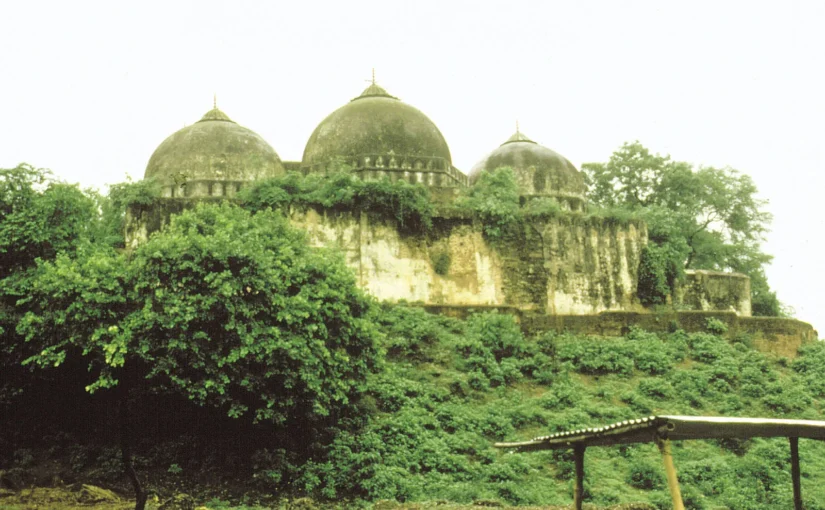
Should Babri Masjid have been moved to Pakistan?

This deliberately provocative piece draws on Kabir’s recent comments, Arkacanda’s excellent essay, Musings on & Answers, and Nikhil’s profound piece in “Urdu: An Indian Language.”

If India wants to avoid future Babri Masjids, it needs a clearer, more orderly doctrine for handling irreconcilable sacred disputes. Excavation, relocation, and compensation should be formalised as the default tools, rather than allowing conflicts to metastasise into civilisational crises. Geography matters. Some sites carry layered sanctity for multiple traditions; others do not. Al-Aqsa, for instance, is both the site of the Jewish Temple and central to Islamic sacred history through the Isra and MiÊżraj. Babri Masjid was not comparable. It had no unique pan-Islamic significance, while the site was widely regarded within Hindu tradition as the birthplace of Lord Ram. The same logic applies to Mathura, associated with Lord Krishna. Recognising asymmetry of sacred weight is not prejudice; it is common sense. A rules-based system—full archaeological excavation, dignified relocation of structures where necessary, and generous compensation—would allow India to preserve heritage without endlessly reopening civilisational wounds.

Urdu is not an Indian language but Hindu nationalists made it one

It is a Muslim-inspired language that emerged in India. That distinction matters. Blurring it creates confusion, not harmony. There was an early misstep in North Indian language politics. Modern Hindi was deliberately standardised on Khari Boli rather than on Braj Bhasha or Awadhi, both of which possessed far richer literary lineages. This decision, shaped by colonial administrative needs and North Indian elite nationalism, flattened a complex linguistic ecology and hardened later divides. One unintended consequence was the permanent preservation of Urdu within the Indian subcontinent. Because Khari Boli Hindi remained structurally interchangeable with Urdu, Urdu survived as a parallel high language. Had Braj or Awadhi become the standard instead, that mutual intelligibility would have collapsed, and Urdu would likely have been pushed entirely outside the Indian linguistic sphere.

Persian Linguistic Pride

Today, a similar impulse is at work. There is a growing tendency, often well intentioned, to Indianise the Mughals and Urdu, to fold them into a seamless civilisational story. This misunderstands both history and the settlement that Partition produced. Partition did not merely redraw borders. It separated elites, languages, and political destinies. Urdu crossed that line with Muslim nationalism. It cannot now be reclaimed without ignoring that choice. I say this as someone with both an Urdu-speaking and Persian-speaking inheritance. When I chose which tradition to consciously relearn and deepen, I chose Persian. Not out of sentiment, but judgment. Persian language nationalism remains rigorous, self-confident, and civilisationally anchored. Persian survived empire, exile, and modernity without losing coherence. It carries philosophy, poetry, statecraft, and metaphysics as a single, continuous tradition. Shi‘ism, Persianate culture, and Persian literature remain intertwined. They preserve depth rather than dilute it. As a Bahá’í, that continuity has personal resonance. But the argument does not depend on belief. It stands on history.

Urdu as the “Muslim tongue” Continue reading Should Babri Masjid have been moved to Pakistan?

The Aryan Cleft: Pakistan as the Cradle and Cusp of Indo-Iranian Civilisation

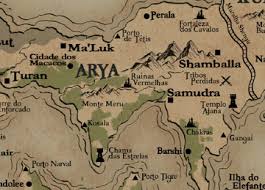
The traditional Mercator worldview slices our imagination. It distorts the unity of the Indo-Iranian zone; a civilizational belt that has resisted rupture, even across millennia of empire, religion, and state.

May be a graphic of map and text

And yet, if you look again, linguistically, genetically, geographically, the facts are harder to ignore. Pakistan sits at the inflection point. Continue reading The Aryan Cleft: Pakistan as the Cradle and Cusp of Indo-Iranian Civilisation

The Long Defeat: How Hinduphobia Hollowed Out Pakistan

I lost an entire post earlier, but perhaps it’s for the best. I’ve had the time now to clarify my thoughts and this is better to make clear the new policy of just junking comments that don’t “smell right.”

What prompted me to write again was a small but telling excerpt from a recent Dawn article. It wasn’t just that they misspelled “Brahman”; they wrote “Barhaman,” a word that doesn’t exist in any linguistic tradition. It was also the order in which they listed religions. They wrote:

“
revered for not only the followers of the world’s three major religions — Buddhism, Sikhism and Hinduism
”

Hinduism, the oldest and most foundational of the three, was placed last. This is not trivial. Both Buddhism and Sikhism evolved from Hinduism. Yet in Pakistani discourse, so marked by dislocation and disavowal, Hinduism is routinely treated as a junior or fringe faith. This is what endemic Hinduphobia looks like: not explicit violence, but civilizational misordering, semantic erasure, and the subtle, continuous downgrading of Hindu memory.

It’s barely recognized. And that’s the point. Continue reading The Long Defeat: How Hinduphobia Hollowed Out Pakistan

Brown Pundits