Ranbir as Lord Ram: The Indus Paradox

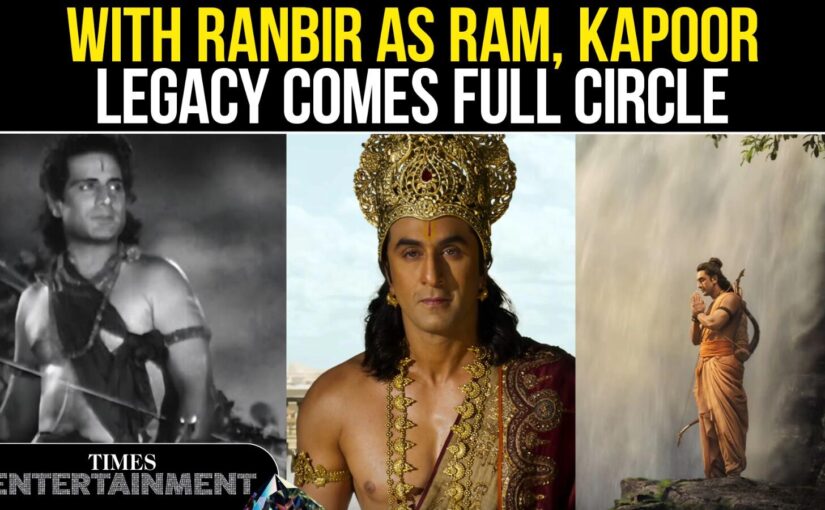
The riveting Ramayana teaser dropped today, and Ranbir Kapoor looks the part. Imperial, restrained, emotionally loaded. But the casting raises a question Bollywood won’t ask aloud.

The male axis of Hindi cinema runs through the Indus, not the Gangetic plain. The Khans, Aamir (Afghan UP-origin), Salman (Hindu, Pathan), Shah Rukh (Delhi, Hindko-Deccani stock), are Musulman. Their anointed successors, Ranbir (Kapoor lineage from Peshawar) and Ranveer (Bhavnani, Sindhi), are Hindu but Indus-blooded all the same (Hindus of the Indus are 99.9% genetically identical to Pakistanis apparently). The geography of stardom in Bollywood is the geography of Partition.

A Kashmiri nationalist once told me, Srinagar-bred, Ivy-educated, who sang Pakistani ghazals with more feeling than most Lahoris, that Ranbir and Ranveer were being aggressively promoted to eclipse the Khans.

Of course the connective tissue of the Ranbir-Ranveer rivalry is Sonam Kapoor. She is third cousin to Ranbir through the Punjabi mafia, and second cousin to Ranveer through their Sindhi mothers. The Sindhi presence in Bollywood runs deeper than most realise; Karan Johar, Kareena Kapoor, Kiara Advani all carry it. The two men being positioned as Bollywood’s future are bound into a single pre-Partition Hindu kinship network. The contestation isn’t just cultural. It’s familial.

The man cast as Maryada Purushottam, the ideal Hindu man, the conscience-keeper of a civilisation, descends from Prithviraj Kapoor of Peshawar; a Hindu Pathan (his kinsman Anil Kapoor states on record that he is the son and grandson of a Pathan). Bollywood’s Ram comes from the other side of the Wagah.

Ranbir versus Ranveer is the wrong frame. The real question is what it means that Hindu epic cinema, ₹4,000 crore, Hans Zimmer and A.R. Rahman, DNEG VFX, global IMAX release, chose a Kapoor. The answer is that Bollywood has always understood something the BJP perhaps never quite has: the cultural power of the Subcontinent flows from its Mleccha western rivers, not its sacred eastern ones.

Continue reading Ranbir as Lord Ram: The Indus Paradox

Cholistan: The Desert at the Edge of Everything

There is a desert in the southern Punjab of Pakistan that does not quite belong to Pakistan. Administratively it sits in Bahawalpur Division. In practice, it is shared with Abu Dhabi. Deep in the Cholistan, there is a private airstrip, Al Habieb, also known locally as Sheikh Zayed Airport II, with a runway long enough to receive the world’s largest cargo aircraft. Each winter, C-17s and Antonov-124s arrive from the Gulf loaded with vehicles, staff, telecommunications equipment and falcons, depositing the UAE president and his court into what is effectively a private desert palace. The Houbara bustard, an endangered migratory bird that Bedouin tradition prizes above almost any other quarry, is hunted here under special permits issued by the Pakistani government to Gulf royalty. The airport at Bahawalpur proper was financed by Dubai. The international airport at Rahim Yar Khan, 200 km away, is named Sheikh Zayed International Airport after the UAE’s founding father, who considered this corner of Pakistan a regular retreat.

This is not a footnote. It is a civilisational signature. The Khaleeji sheikh pursuing the Houbara across Cholistani sand dunes is, without knowing it, re-enacting something very old: the desert as a shared zone, unbounded by the nation-states that nominally contain it. Cholistan does not belong to Pakistan. It does not belong to India, or Sindh, or Rajasthan. It is a seam; and seams, by definition, belong to no single side.

The Hinge of Seraikistan

The name Cholistan derives from the Turkic chol, sands, and the Persian suffix -istan. Both layers arrived later than the place itself. The culture that defines Cholistan is Derawali: the Seraiki dialect of the encampment, the dera. It is nomadic speech in the most literal sense. Its richness is not courtly but ambulatory.

Seraiki itself is one of South Asia’s underappreciated civilisational languages. For centuries it served as the lingua franca across the interface zones of the northwest, among Baloch, Sindhi, Pashtun and Punjabi speakers, as the language of trade and movement. Cholistan sits at the heart of Seraikistan, flanked by Sindh to the south, Rajasthan to the east, and greater Punjab to the north. It is not peripheral to these zones. It is where they meet, and where, historically, what they share becomes visible.

That structural position, edge as synthesis, is the key to understanding what Cholistan is.

The Dead River and the Living Civilisation

The Hakra River, the Sarasvati of Vedic memory, once flowed through Cholistan, fed by the Sutlej and the Yamuna. It sustained dense settlement from roughly 4000 BCE until 600 BCE, when it changed course and the floodplain became desert. Along its dried bed, over 400 Harappan archaeological sites have been catalogued; among the highest densities in the entire Indus Valley civilisation.

The people who now pursue camels across that same terrain, collecting water in seasonal pools called toba, are the cultural descendants of one of the ancient world’s great urban traditions. What looks like marginalisation is, on a longer view, adaptation. The civilisation did not collapse. It reconfigured.

This matters because it frames the deeper question: who were these people, before the Hakra died?

The Dravidian Puzzle

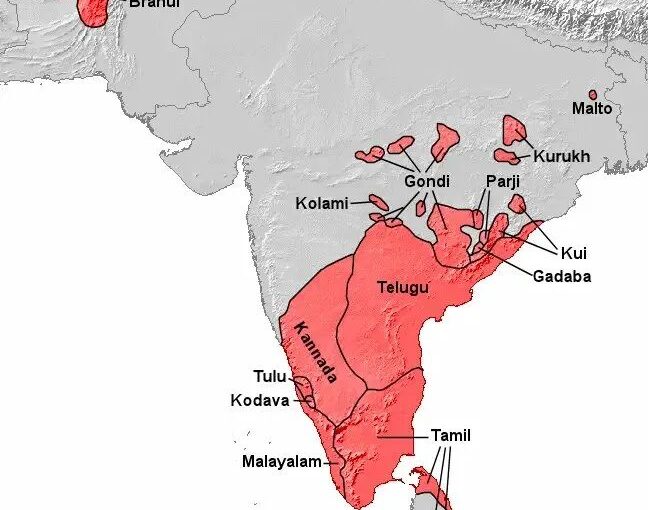
The map that accompanies this piece is one of the most quietly extraordinary images in South Asian studies. It shows the distribution of Dravidian languages today: a vast bloc across peninsular India, with isolated remnants in central India, Gondi, Kurukh, Malto, and then, stranded alone in Pakistani Balochistan, 1,500 km from its nearest linguistic relative: Brahui.

The scholarly consensus is that this map records the aftermath of Indo-Aryan expansion from the northwest after roughly 1500 BCE. Before that expansion, Dravidian languages were far more widely spoken across the subcontinent; including, most plausibly, across the Indus Valley civilisation zone that includes Cholistan. The central islands visible in the map, Gondi in Madhya Pradesh, Kurukh and Malto in Jharkhand and Odisha, are not coincidences. They are survivors.

Brahui is the most striking survivor of all. Its very existence in Balochistan suggests that something Dravidian persisted in the northwest long after Indo-Aryan became dominant; whether as a remnant population, a linguistic relic, or evidence of a deeper pre-Aryan substrate that stretched from the Indus to the Persian Gulf.

That last possibility is what the Elamo-Dravidian hypothesis proposes: a family linking the extinct Elamite language of ancient Khuzestan to Brahui and the Dravidian south. It remains a minority and contested position in linguistics, and should be read as such. But the geographic intuition behind it is not unreasonable. Khuzestan, now the Arab-majority southwestern province of Iran, was the heartland of Elamite civilisation. If Elamite and Proto-Dravidian shared a common ancestor, the implied civilisational corridor runs from the Persian Gulf coast through Makran and lower Balochistan, through Sindh and lower Punjab, and south into the peninsula. Cholistan sits directly in that corridor.

This is not established fact. It is a live and serious question, which is exactly the kind of question Brown Pundits exists to think about.

The Roma: The Longest Migration

One further thread, less speculative. The Roma, Europe’s largest ethnic minority, numbering somewhere between 10 and 15 million, originated in precisely this northwestern zone of South Asia. Genetic and linguistic evidence converges on Punjab and Rajasthan as the ancestral homeland, with significant shared ancestry also traceable to Sindhi, Balochi and Brahui populations in Pakistan. The Romani language is Indo-Aryan at root but carries innovations from the northwestern branch, Punjabi, Sindhi, consistent with an origin in the transitional zone between dialects, which is exactly where Cholistan sits.

The proto-Roma began their westward movement around the first millennium CE, passing through Persia and Armenia before entering the Byzantine world and eventually reaching Europe by the 13th century. They are the longest-range migration in South Asian history, and they began from the desert margin that Pakistani administrative maps label, prosically, Bahawalpur Division.

What Cholistan Teaches

Pakistan is discussed, almost always, in terms of its political present: the civil-military axis, the question of democratic consolidation, the India relationship, the nuclear deterrent, the IMF programme. These are real. They are also thin.

Cholistan is a reminder of the depth beneath the thinness. A Seraiki-Derawali nomadic culture whose civilisational roots predate Islam, predate the Indo-Aryans, and reach into a pre-Aryan substrate that may connect, linguistically and geographically, to the first cities on earth. A desert from which Europe’s most persecuted people likely began their diaspora. A terrain now seasonally occupied by Gulf monarchs pursuing an endangered bird across the ruins of a Harappan settlement.

The Hindu Presence

One further detail that the administrative map of Pakistan obscures: Cholistan retains a significant Hindu population. They are classified, in the caste framework, as Shudra; the lowest varna. But that classification tells you almost nothing about how they actually live.

In villages where Muslims and Hindus exist in roughly equal numbers, the communities are functionally indistinguishable by appearance, dress, or manner. Muslim neighbours organise protection for Hindu households during fairs and festivals not because there has ever been cause for alarm, but as a matter of custom and solidarity. Full social interaction is the norm. Intermarriage and commensality, sharing food across the line, are not. The boundary is observed without hostility.

What this means is precise: the racial and demographic integrity of the region is intact. These are the same people, shaped by the same desert, the same Hakra basin, the same pre-Aryan substrate. The religious difference arrived later than the people themselves. In Cholistan, you cannot tell a Hindu from a Muslim by looking. That is not erasure of difference. It is evidence of a shared civilisational root that predates the categories imposed upon it.

The Crescent and the Saffron are medieval categories imposed on a Neolithic reality. Cholistan predates both, and will outlast the argument.

Open Thread + A Note on Standards

Brown Pundits has always been a forum for the kind of thinking that most outlets are too timid or too tribal to publish. We intend to keep it that way. But that standard cuts both ways, and we are raising it.

Effective immediately, the moderation policy is zero tolerance.

This is not a crackdown on opinion. We welcome disagreement; sharp, even uncomfortable disagreement. What we will no longer tolerate is noise dressed up as insight.

What does noise look like? You know it when you read it. It is the rattling of nuclear talking points that have not been updated since 1998. It is the reduction of a civilisation of 220 million people, or of a billion-and-a-half, to a single variable: the Crescent, or the Saffron. It is venom without weight, and venting without argument.

Pakistan is complex. India is complex. Every human society is, at its foundation, irreducibly complex.

Any comment that treats either as otherwise will be moderated; sometimes publicly, sometimes silently. We apply the sniff test: does it smell right, given the context? Given how tight our Editorship and Commentariat is, we will be judicious, as we have always been; for instance the Precedent post on the controversial Dhuruandar sequel remains Gaurav Lele’s.

This applies to both sides of every line we cover; geographical, civilisational, sectarian, or political.

We are not asking for bookishness. We are not asking for academic caution or diplomatic hedging. We are asking for the one thing that separates a pundit from a troll: considered thought. If you are going to cast aspersions, earn them. Make the case. Bring the weight. If you cannot, do not post.

We have a large and growing commentariat. That is something to be proud of. It is also a responsibility; to each other, and to the readers who come here because they expect better than what they can find elsewhere.

We expect better. We will enforce it.

Thank you for your attention to this matter.

— The Editors, Brown Pundits Continue reading Open Thread + A Note on Standards

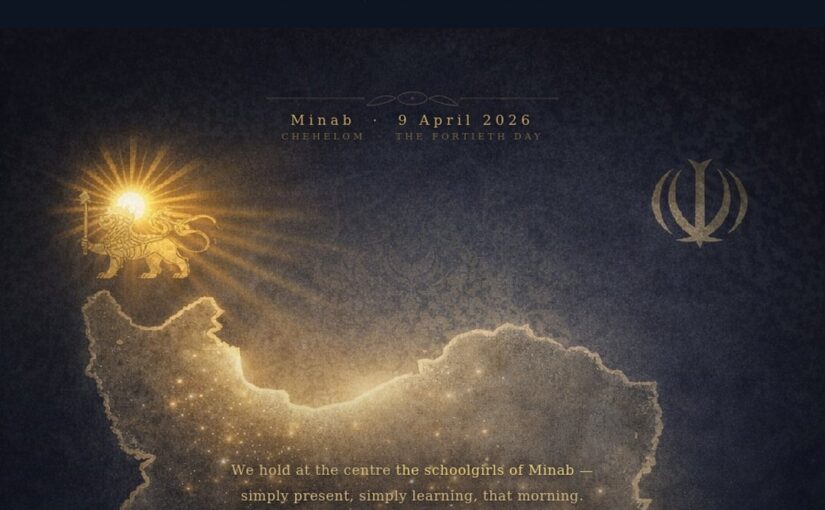
A Minute of Silence for the Schoolgirls of Minab | Chehelom, 9 April 2026

The Chehelom, چهلم, is the Persian tradition of gathering on the fortieth day after a death to pray, remember, and bear witness. It predates Islam and runs through every strand of Iranian culture. We mark it here not as a political act but as a human one. Set your alarm. One minute. That is all we ask. XTM

At 10:45am on 28 February 2026, 165 human beings, most of them schoolgirls aged 7–12 from the Bandari and Afro-Iranian communities of southern Iran, were killed in the bombing of the Shajareh Tayyebeh school in Minab.

9 April is their Chehelom; the Persian fortieth-day memorial.

Wherever you are in the world, please set an alarm for 10:45am Tehran time on Thursday 9 April and take one minute of silence.

For the girls of Minab. For every innocent life lost in this war. No hierarchy of grief; Jewish or Arab, Muslim or Persian, American or migrant.

We are all One.

🕰 Tehran 10:45 · London 08:15 · New York 03:15 · LA 00:15 · Sydney 17:15

Share as far as you can. 🕊 Continue reading A Minute of Silence for the Schoolgirls of Minab | Chehelom, 9 April 2026

nos ancêtres les Hindous

A pattern has emerged in these comment threads that deserves naming directly. When the Hindu hammer retreats, the space does not become neutral; it becomes anti-Hindu. The two are not the same thing, and conflating them is itself a form of intellectual dishonesty.

Hinduism is one of the most theologically complex systems humanity has produced. It is the root of Dharmic civilisation, the origin point of concepts, reincarnation foremost among them, that have radiated as far as East Asia, Southeast Asia, and arguably into the mystical strands of Abrahamic tradition. The sages, the philosophers, the vast literature: none of this coheres with the dismissal now fashionable in certain quarters, that Hinduism is simply a colonial administrative category, a British label slapped onto undifferentiated paganism.

This is the Pakistani foundational ideology speaking. It must deny Hindu civilisational continuity, because acknowledging it makes Temple destruction look like what it was: a pattern, not a series of unrelated incidents. It must deny that India had a civilisation, because if India had one, then the last pre-British colonisers of South Asia were Muslim; and that sits uncomfortably with postcolonial victimhood framing. The logic is circular and self-serving, but it is internally consistent. One cannot claim the mantle of the oppressed while being the penultimate oppressor.

The Dravidian Continue reading nos ancêtres les Hindous

Open Thread

Formerly Brown asked me to post this:

1. Six Ukrainians and one US citizen have been arrested by india while crossing over from Myanmar.  Apparently they were helping to create trouble in Myanmar,  an eventually trying for a Christian state there. Sheikh hasina had sounded about US interests in such a venture.

2. Tamilnadu elections might be closer than expected. Side show: seeman’s Tamil party is attracting Brahmins!! who are opposed to Dravidians.

3. LDF might pop UDF once again in Kerala.  Ironically both fronts are accusing each other of being B team of BJP,  who have 1 seat currently!!!

4. Indian lokasabha is to add 215 more seats reserved exclusively  for women by the 2029 polls. Modi has changed india for ever.

On Dhurandhar, Decorum, and Where BP Draws the Line

The review of Dhurandhar 2 has now been posted. Read it if you haven’t. The comment thread on the Ikkis post, which ran in parallel, illustrated the review’s central argument more vividly than any film still could.

A film that educates audiences to hate will eventually produce hateful audiences.

We have been moderating this site long enough to know that comment threads are a pressure gauge, not a debating society. What happened over the last 48 hours was not debate. It was escalation; predictable, cyclical, and ultimately ending where it always ends when people get sufficiently worked up: in the language of violence.

BB was on a Dhurandhar high. We understand this. There is something in the film’s rhythm, the josh of it, as he put it himself, that makes a certain kind of Punjabi Muslim-hating Bollywood patriot feel ten feet tall. We are not without understanding. He had just watched a four-hour film designed specifically to produce this effect. But understanding the cause does not excuse the consequence.

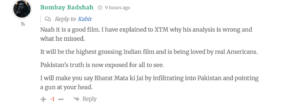
The line was crossed when he repeated, almost verbatim, dialogue from the film, the “ghar mein ghusega bhi, marega bhi” register, and directed it as a personal threat at Kair. Saying one will infiltrate Pakistan and hold a gun to someone’s head to make them chant a slogan is not josh. It is a threat. That it is practically unenforceable is beside the point. The language normalises exactly what we argued Dhurandhar 2 normalises: the idea that the other must be humiliated into submission, not merely defeated.

BB’s commentating rights are suspended until Thursday, 2nd April. Every comment he attempts in that period will be deleted. When the suspension ends, reinstatement of authorship will depend on whether the Saffroniate faction of our commentariat, can reason with him collectively that certain red lines exist even in the heat of subcontinental rivalry. Those lines are not about Pakistan. They are about the difference between argument and menace.

Kabir and Sbarrkum retain their authorship. Kabir was asked to stop and did not, and we say so plainly. But nothing in his conduct approached the violent register BB eventually reached. We are also honest about the asymmetry here: Brown Pundits tilts toward Bharat, that is India; everyone who reads this site regularly knows this. That soft tilt means Kabir, Sbarrkum and Qureshi operate in a forum that is structurally not neutral. The least we owe them is consistent application of the rules.

We want to say something about the Punjabi dimension behind all of this, because it is analytically interesting and not merely polemical.

Continue reading On Dhurandhar, Decorum, and Where BP Draws the Line

Were You Colonised or Not? The UN Slavery Vote That Split the World

West vs the Rest

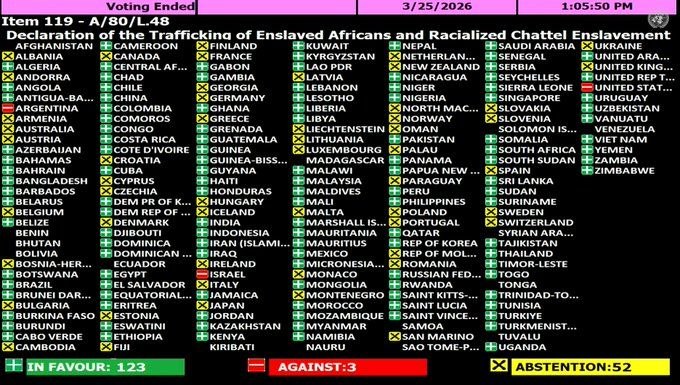
Today’s UNGA vote, 123 for, 3 against, 52 abstentions, is a clean ledger of where the world stands. The resolution declares the transatlantic slave trade “the gravest crime against humanity.” Three countries voted against: the United States, Israel, and Argentina.  The UK and all 27 EU members abstained.

The 52 abstentions are the more revealing column. The EU’s stated objection was legal: calling this the “gravest” crime implies a hierarchy among atrocity crimes, which has no basis in international law. That’s a defensible position. It’s also a convenient one for countries that ran the trade.

The US was blunter; its representative objected to the “cynical usage of historical wrongs as a leverage point to reallocate modern resources.” At least that’s honest about what reparations actually means in practice.

The UN is essentially asking whether countries whether they were colonised or not?

The 123 is the story. This isn’t Russia and China championing the Global South; it’s Africa, the Caribbean, and most of Asia doing it themselves. This marks the first floor vote at the UN specifically on transatlantic slavery as a crime, and a call for reparations.

The resolution is non-binding, so nothing material changes today. But the vote is a data point: on a question of historical accountability, the West is either against or abstaining, and everyone else is not.

That’s the fault line. West vs the Rest; and the Rest has the numbers. Gaza, Russia, Iran: all proxies for the same fracture. Russia ran an empire, but its Soviet collapse was so total it no longer reads as imperial. China likewise. So both get to stand on the other side of the line.

And underneath the EU’s legal objection, the “hierarchy of crimes” argument, is something unspoken: the Holocaust has long held the position of singular atrocity in Western moral architecture. This resolution is, implicitly, a challenge to that. The Rest is saying: your crime towards us was graver, or at least as grave. Europe couldn’t vote yes without conceding the point.

Dhurandhar 2: When the Villain Disappears, So Does the Film

We wrote in December that Dhurandhar perfected Bollywood’s new formula: the fetishisation of Pakistan as the subcontinent’s most glamorous disaster. Dangerous, broken, desirable, and always in reach. Three months later, the world has changed more than the franchise has. Iran has seized the Strait of Hormuz. Pakistan is psychologically vacating South Asia. And Dhurandhar 2 arrives as a cinematic relic of a paradigm already dissolving.

It is not good.

The first film worked because the villain was the gravitational centre. Akshaye Khanna’s Rehman Dakait, Baloch, charismatic, smouldering, made Ranveer Singh’s Hamza credible by giving him something worth the deception. A spy story lives or dies by its antagonist. Remove the antagonist, and you don’t get a hero. You get a man punching air for four hours. That is Dhurandhar 2. Angrier, louder, emptier; and at 3 hours 55 minutes, a film that confuses scale with depth.

The structural collapse is ideological as much as narrative. Dhurandhar 1 had grey. Hamza was a man genuinely lost between two worlds; the film understood that proximity to Pakistan produces desire, not only contempt. That complexity, that slippage between intimacy and danger, was what made it aesthetically serious. Dhurandhar 2 closes that gap entirely. The Pakistani Muslim is now simply a target, and the film is at pains to multiply them faster than they can be eliminated. This is the Hydra error; the same mistake Mossad has made in Gaza. Cut off the head and ten more appear, until the only logical conclusion the audience is being nudged toward is collective punishment. You cannot make a film that glorifies this logic and then claim it is merely entertainment.

The Hindutva-Zionism convergence is now visible at the level of cinematic grammar. Both traditions have arrived at the same endpoint: the innocents cannot be separated from the combatants, therefore the innocents must go too. It is a short distance from that premise to a football scene with a severed head, which Dhurandhar 2 includes without irony. This is not complexity. This is an audience being educated to hate, and that is far more dangerous than any amount of bad plotting.

Bollywood has always used Pakistan as its erotic shadow; familiar enough to feel intimate, foreign enough to feel forbidden. That formula depended on the Pakistani figure retaining some glamour, some interiority, some capacity to make the Indian hero sweat. Dhurandhar 2 strips all of that away. What remains is a shooting gallery. The irony is that by dehumanising its villains, the film also destroys its hero. Hamza becomes less interesting the more Pakistan becomes merely a backdrop for his competence.

The music, which in the first film gave us a Persian Gulf aesthetic that became genuinely anthemic, is a significant step down. The background score intrudes rather than elevates. And Ranveer Singh, who is a serious actor, is given a character arc built almost entirely around rage; which is a waste of an instrument that can do much more.

There is a deeper geopolitical irony the filmmakers did not intend. Dhurandhar 2 is a film about Indian dominance of the AfPak axis at precisely the moment that axis is reorienting toward Iran. Pakistan is stepping into its role as a Muslim power, mediating with Tehran, psychologically decoupling from the subcontinent. The Baloch and Pashtuns are the eastern Iranians; Punjab’s future is as a lowland frontier of a broader Persianate world, not as the last redoubt of a subcontinent fixation. Dhurandhar 2 is the cinematic expression of an India that has not yet noticed.

What Dhurandhar 1 understood, and Dhurandhar 2 has forgotten, is that the most dangerous person in any room is the one you cannot stop watching. Rehman Dakait was that person. His absence is not a plot problem. It is the film’s entire problem.

The sequels that matter are the ones that deepen what came before. Dhurandhar 2 only amplifies it, and amplification without depth is just noise.

⚠️ SPOILERS BELOW – Read only if you have seen the film Continue reading Dhurandhar 2: When the Villain Disappears, So Does the Film

Is Hormuz, Israel’s Suez but Pakistan’s Second Act?

Start with the uncomfortable question nobody in Washington wants to ask directly: how is this not a defeat for Israel?

Trump reposted Shehbaz Sharif’s offer to host US-Iran peace talks, and Bannon’s WarRoom picked it up within the hour. That’s the tell. When Pakistan’s diplomatic positioning lands on the most watched MAGA platform in America, amplified by the President himself, the “Second Act” isn’t a thesis anymore. It’s the news.

In 1956, Britain and France attacked Egypt alongside Israel. Militarily, they won. The Egyptian army collapsed. The canal was taken. Then Washington intervened, sterling cracked, and within weeks they withdrew — humiliated, permanently diminished, never again operating as independent great powers in the Middle East. They won the battle and lost the century. (As an aside, PM Modi made his allegiances clear from the very start of this conflict; the bombing was reportedly postponed for his visit to Washington. India, like Britain and France in 1956, has picked its side. The question is whether it has picked the winning one.)

That is the template. Now run the present war through it. Israel spent two years engineering this confrontation. Then, at the exact moment diplomacy began to work, the bombs fell. Oman’s Foreign Minister Badr bin Hamad Al Busaidi, a cautious, establishment figure from a cautious, establishment country, said it plainly: nuclear negotiations were making progress, Iran had agreed to no enriched uranium stockpiling and full IAEA verification, peace was within reach. Talks were due to resume on 2 March.

The strikes began on 28 February.

That is not coincidence. That is a choice: war over settlement. Now look at the structure that follows. Iran has not won militarily. Its air force is degraded. Its infrastructure is hit. Its Supreme Leader is dead, replaced by his son; a harder man, not a softer one, which is itself a signal about how decapitation strategies tend to end. But Iran has achieved the one thing that matters strategically: leverage over the Strait of Hormuz. Analysts are already describing any exit that leaves Iran as the effective gatekeeper of the Strait as a colossal strategic failure for the United States. That is the centre of gravity. The US can bomb, seize assets, escalate. But it cannot reopen the Strait on its own terms if Iran is willing to absorb damage and impose cost. Geography is doing the work. Patience is doing the rest.

Now watch Washington move.

A $200 billion supplemental request is already in play. Oil prices are moving. Trump has begun the political separation, “I might have forced their hand”, while his own Secretary of State had already said Israel led the way. That asymmetry matters. Trump wants a deal he can sell to American families at the petrol pump. Israel wants Iran broken. Those are incompatible war aims, and they are visibly diverging: Trump rebuked Israel over the South Pars gasfield strike; Israel assassinated Ali Larijani, seen by some as a key potential negotiating figure, just as back-channel possibilities were opening.

The same negotiations torpedoed in February are now the only viable exit. Trump says Iran wants a deal. Iran denies it. Neither side is behaving like a defeated power. This is not surrender. This is endurance; and endurance, historically, beats air supremacy.

That is Suez. It does not require retreat under fire. It requires something subtler: the moment when the patron begins calculating its costs independently from the client, and reaches a different conclusion. When that happens, the war ends regardless of battlefield position. Britain and France didn’t lose in 1956 because they ran out of soldiers. They lost because Washington ran out of patience.

The American public will eventually ask whose war this was. That question is already forming. And it is precisely here, in the gap opened by Washington’s growing ambivalence and Israel’s strategic overreach, that the second story begins.

While the US and Israel have been consumed by a war that is proving harder to exit than to enter, one country has quietly stepped into the resulting vacuum. Not China. Not Russia. Not Turkey, though Ankara is watching closely.

Pakistan.
Continue reading Is Hormuz, Israel’s Suez but Pakistan’s Second Act?

Brown Pundits