šŸ“Š Brown Pundits Hits 63,094 Visits in August (+156% Surge)

That’s more than 2,000 visitors a day. What’s driving it?

āœ… Open Threads

āœ… Honest takes

āœ… And yes — argumentation.

But arguments only work if they spark thought, not just heat. Take Kabir; he’s a regular, and I’ve given him free rein. But his tendency to argue without reflection rubs people the wrong way. He blames his relative unpopularity on identity, but it’s more about tone than religion;Ā highhandedness vs humility.

In my own recent disagreement: I paused, thought, reflected deeply. That’s the spirit of BP; a messy, open-minded search for truth.

šŸŽ­ Meanwhile, the real tamasha isn’t cricket šŸ (India did trounce Pakistan) — it’s on X, and on the BP comment section.

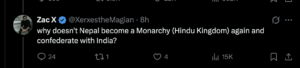
X 🧵:

Image

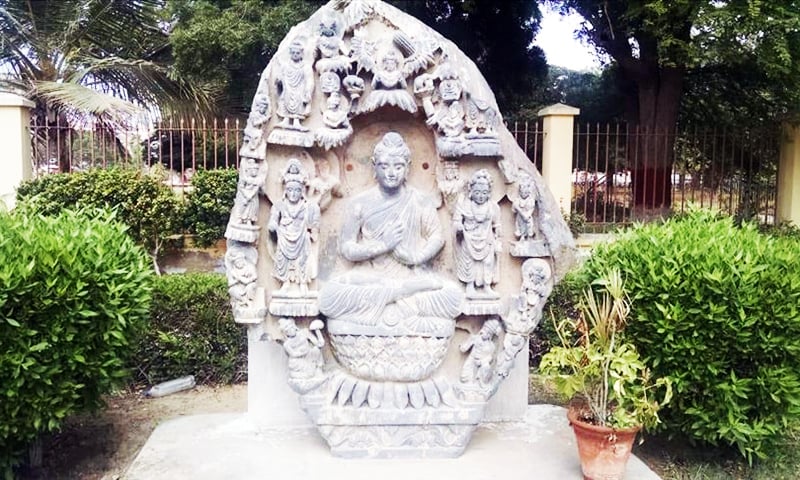
The stupas raises a deeper question:

How central was Buddhism to the Indian subcontinent — and how total was its erasure? In the heartlands, Brahmanism absorbed and displaced it; in the frontier zones, Islam swept away what remained. What we see today are ruins — but once, this was the dominant civilizational framework of the region.

Was its disappearance a slow assimilation, or a deliberate effacement?
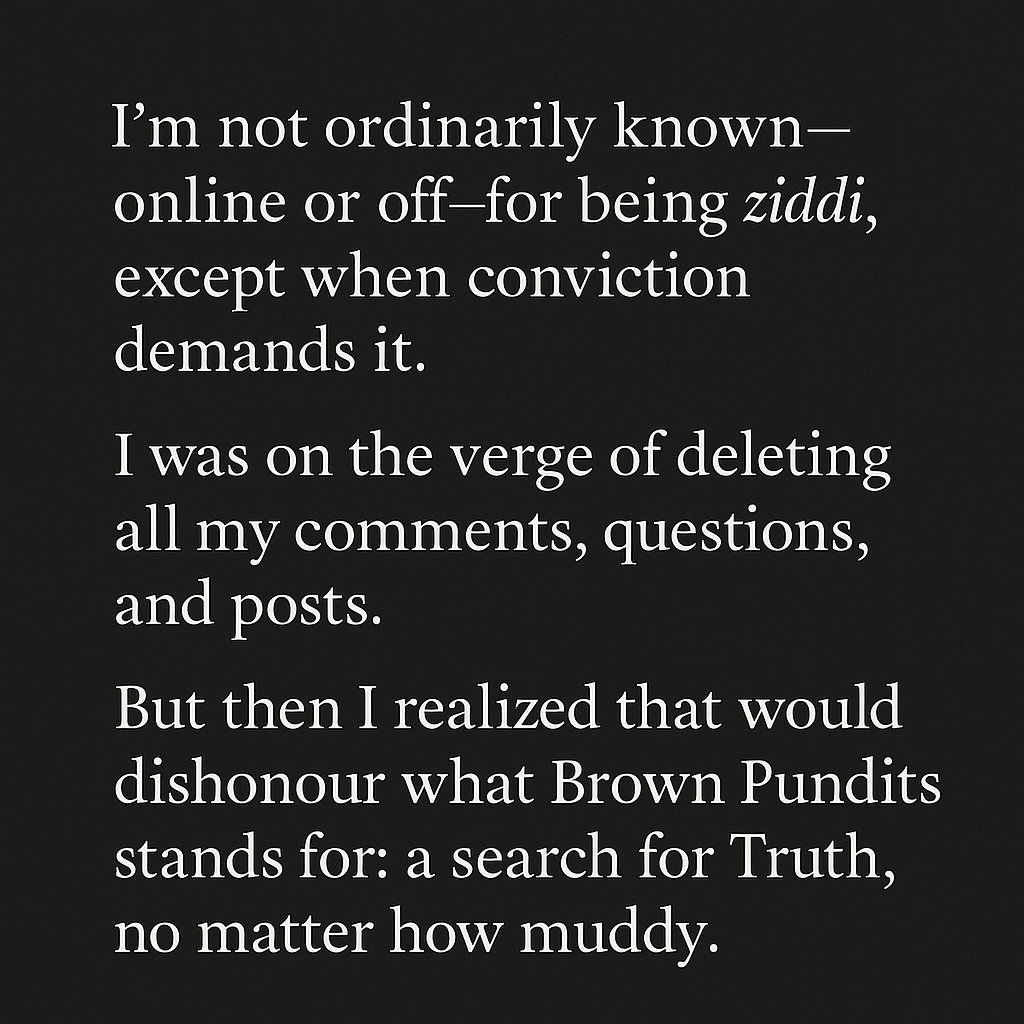
When the Commentariat lies

I’ve updated this post (Brown Pundits is not an echo chamber) after realising something important.

What began as a spirited disagreement veered into something darker. It turns out that bombay_badshah, a voice I initially assumed to be new, may not be who he claims to be (I had a hunch but so did Kabir, that BB was HS reincarnated). The posting style, the fixations, the timing; all too familiar. My suspicion is that BB may be a derivative or proxy of HS, previously banned. If true, this was not a genuine disagreement; it was entrapment, bait-and-switch.

In that light, I owe Kabir an apology. He was provoked in bad faith by someone who may be operating behind a mask. And that matters, because here on Brown Pundits, identity isn’t incidental; it shapes perspective, and we respect that. We excavate worldviews, not just opinions.

While I cannot definitively prove that BB is HS, the circumstantial evidence is strong. I will allow BB to remain but if the commentary returns obsessively to Kabir or Pakistan, I will intervene. Everyone is welcome to engage on substance. But this space will not be hijacked.

The original post remains below the jump, unedited but its context has now changed.

Continue reading When the Commentariat lies

The Pakistani Inferiority Complex

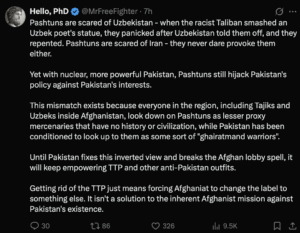
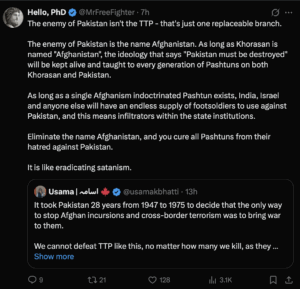
These excellent tweets exhibit a painful pattern that many of us see but few want to name.

Pakistanis, particularly its establishment and elite classes, exhibit a deep inferiority complex towards white (light) Muslims; Arabs, Turks, Persians, and Afghans. These groups are valorized, romanticized, and used as benchmarks for identity and belonging. Meanwhile, other Asian groups, especially within South Asia and Southeast Asia, are seen as lesser. This manifests not only in foreign policy but in pop culture, education, and internalized social hierarchies.

This is why, even if Partition had to happen (and it was undeniably disastrous), Pakistan still could have been something else. It could’ve been a GCC meets Pahlavi Iran construct—a sleek, semi-modernist, high-income Asian Muslim republic with cultural gravitas and economic depth.

Instead, as others have rightly pointed out, Pakistan today has one of the lowest HDIs in its region. Karachi didn’t become Dubai. Lahore didn’t become Paris. Islamabad remains a ghost town of beautiful boulevards and hollow institutions. The promise wasn’t just broken; it was never even understood.

In some ways, Pakistan inherited the worst of both its imagined lineages: neither the intellectual cosmopolitanism of Persianate high culture, nor the industrious civic ambition of Indian civilizational continuity.

This is why tweets like those from @MrFreeFighter land so hard. They expose the psychic dissonance at the heart of the Pakistani state’s anxieties; its hatred of Pashtuns, its paranoia about ā€œAfghanism,ā€ and its inability to deal with its own peripheral ethnic groups as anything but threats.

Meanwhile, Indian Muslims like bombaybadshah, though deeply patriotic to India, often voice critiques of Pakistan with a clarity born of disappointment. They represent what Pakistan could have cultivated: a civic Islam, grounded in identity but untethered to ethnic obsession.

The final irony? South East Asia, Thailand, Cambodia, even Bali, retains more civilizational Dharma than most of Pakistan. Religion is irrespective of that elusive civilisational quality of Dharma, thus the true borders of Bharat lie eastward, not northwest.

Pakistan is not the enemy of India. It is the shattered mirror. And what it reflects, feudalism, insecurity, bigotry, and colonial hangover, is what the entire subcontinent must transcend. Again anyone who reads this can see I’m not saying this from a place of hate but love.


Pakistan’s Extraordinary Diplomacy

let’s preface this w a popular & controversial (?) tweet of mine

šŸ‡µšŸ‡° | A Feudal, Fragile State That Keeps Getting Foreign Policy Right

I haven’t had a moment to breathe lately. I’ve been in Dubai; a city whose heat and ambition leave little room for reflection. But even in the desert haze of hyper-modernity, some themes press through. And perhaps none more than this: the sheer tactical genius of Pakistan’s foreign policy in recent months.

Let me be clear. Pakistan is not a strategic power. It is a fractured, feudal, low-HDI state with deep structural issues. It’s trapped in cycles of elite capture and ideological rigidity. But it is also, to my astonishment, among the most tactically agile states on the planet. It punches far above its weight, not because it has a clear long-term vision, but because it dances well in chaos.

Where India plays the heavy-set civilizational power; bound increasingly to the West and the Israel playbook, Pakistan has played the margins, the hedges, the emotional currents. And it has played them well.

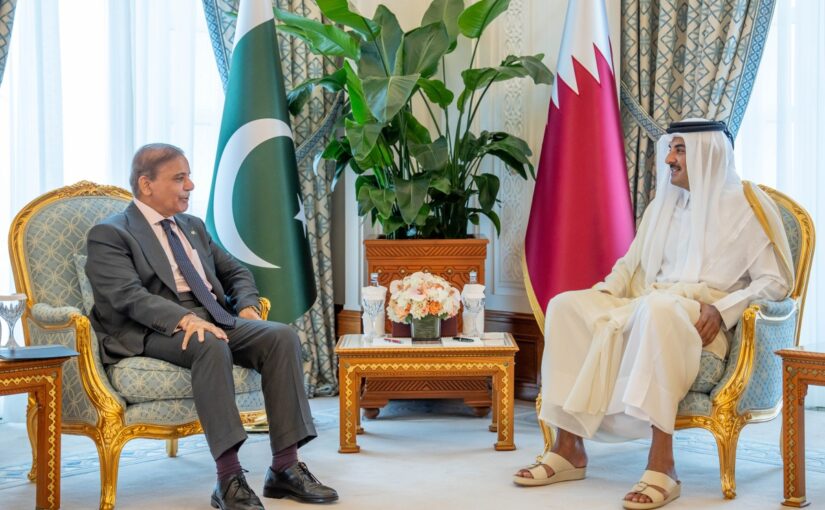
Ever since the Pahalgam conflict, Pakistan’s diplomacy has rarely been wrong-footed. Its tactical instincts are near-perfect. In moments of geopolitical flux, from Qatar to Kathmandu, Pakistan has found ways to remain relevant, nimble, and central. Not liked, not admired but impossible to ignore.

This post is not a celebration. It’s a recognition. A state can be deeply dysfunctional internally, yet highly functional externally. And in a world of waning superpowers and rising regional blocs, that matters.


Pakistan is Not India’s Mexico

Continue reading Pakistan’s Extraordinary Diplomacy

Trump Has Birthed Eurasia

I’ve been busy, but I can’t shake the feeling that we’re living through the beginning of a new world.

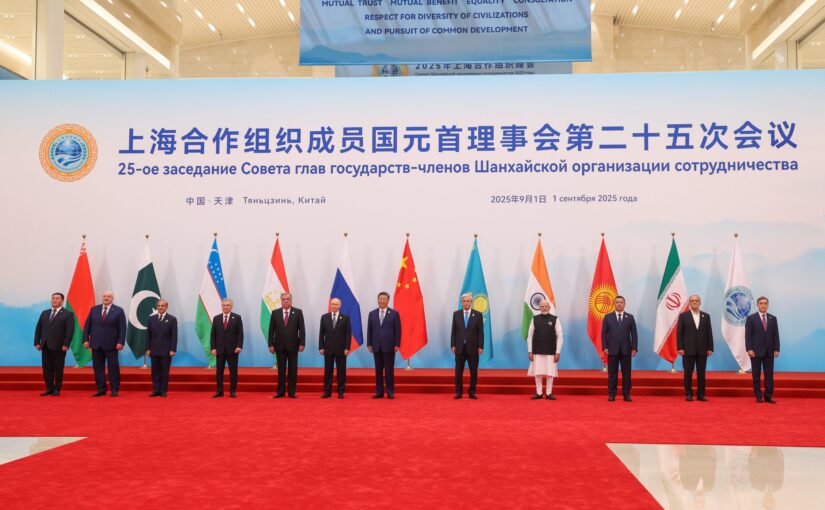
It was acute with the SCO summit; not just through the headlines, but the atmospherics. The handshakes, the body language, the ease. It’s the kind of thing that barely registered in Western media, but Modi’s presence, standing shoulder to shoulder with Xi, Putin, and Pezeshkian, felt like the curtain rising on a new geopolitical epoch.

And at the center of it all? Donald J. Trump. Not by design, of course. But by consequence.


šŸ”„ The Modi Factor Continue reading Trump Has Birthed Eurasia

The Aryan Cleft: Pakistan as the Cradle and Cusp of Indo-Iranian Civilisation

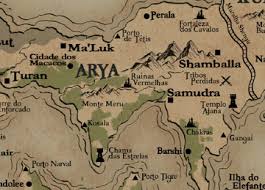
The traditional Mercator worldview slices our imagination. It distorts the unity of the Indo-Iranian zone; a civilizational belt that has resisted rupture, even across millennia of empire, religion, and state.

May be a graphic of map and text

And yet, if you look again, linguistically, genetically, geographically, the facts are harder to ignore. Pakistan sits at the inflection point. Continue reading The Aryan Cleft: Pakistan as the Cradle and Cusp of Indo-Iranian Civilisation

Gaza open thread

This is a genocide every which way but I would be interested to hear the views of the commentariat.

I am very pro Zionist for what it’s worth.

I’ll explained my thoughts later on in a proper post, but I am interested to see RW Indians reflect on Gaza.

The Long Defeat: How Hinduphobia Hollowed Out Pakistan

I lost an entire post earlier, but perhaps it’s for the best. I’ve had the time now to clarify my thoughts and this is better to make clear the new policy of just junking comments that don’t “smell right.”

What prompted me to write again was a small but telling excerpt from a recent Dawn article. It wasn’t just that they misspelled ā€œBrahmanā€; they wrote ā€œBarhaman,ā€ a word that doesn’t exist in any linguistic tradition. It was also the order in which they listed religions. They wrote:

ā€œā€¦revered for not only the followers of the world’s three major religions — Buddhism, Sikhism and Hinduismā€¦ā€

Hinduism, the oldest and most foundational of the three, was placed last. This is not trivial. Both Buddhism and Sikhism evolved from Hinduism. Yet in Pakistani discourse, so marked by dislocation and disavowal, Hinduism is routinely treated as a junior or fringe faith. This is what endemic Hinduphobia looks like: not explicit violence, but civilizational misordering, semantic erasure, and the subtle, continuous downgrading of Hindu memory.

It’s barely recognized. And that’s the point. Continue reading The Long Defeat: How Hinduphobia Hollowed Out Pakistan

India’s sugar was bitter, until her first female scientist made it sweet

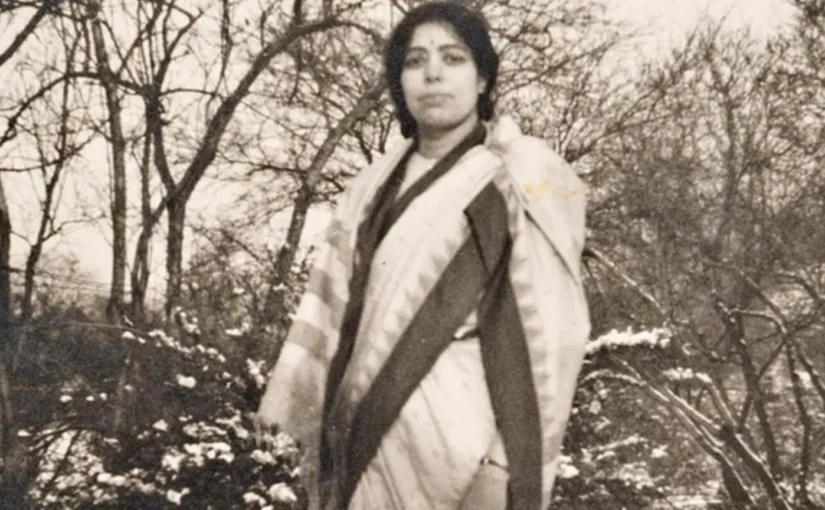
The Untold Story of E.K. Janaki Ammal

via X

She was born in 1897 in Tellicherry, Kerala, the daughter of a high court sub-judge and one of nineteen children in a large, liberal household called Edam. Her family belonged to the Thiyya community, considered ā€œsocially backwardā€ under the Hindu caste system. But within Edam, caste meant little. There was music, a sprawling library, a cultivated garden, and a quiet expectation of excellence.

Her sisters married. She did not. Instead, Janaki Ammal chose plants.

She trained first at Queen Mary’s and Presidency Colleges in Madras, then left colonial India in 1924 on a Barbour Scholarship to the University of Michigan, where she would become the first Indian woman to earn a doctorate in botanical science. She lived in an all-women’s dorm, smuggled a squirrel in her sari for company, and worked under renowned botanist Harley Harris Bartlett.

She returned to India and joined the Sugarcane Breeding Station in Coimbatore, where she changed the course of Indian agriculture. The country’s native sugarcane was hardy but lacked sweetness; imported varieties were sweeter but weak. Janaki crossbred both into something stronger, higher-yielding, and perfectly suited for Indian soil.

The sugar in Indian chai owes its taste to her. Continue reading India’s sugar was bitter, until her first female scientist made it sweet

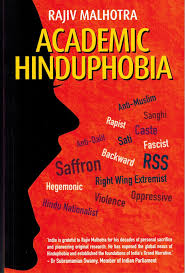
Hinduphobia Exists, But Pakistan Was Not Born from It

I was riffling through the comments and my jaw dropped when Kabir claimed Hinduphobia doesn’t exist. It struck me as both historically and emotionally tone-deaf. I didn’t respond at the time, but I’ve been reflecting on it since.

Let me say upfront: Hinduphobia does exist. It may not always manifest in overt violence or systemic persecution (at least not today, and not in most places globally), but it does appear in more insidious, ideological forms; especially in academic and diasporic discourse.

Take, for instance, the backlash against H1B visa recipients. Much of that criticism is coded; targeting upper-caste Indians, especially Hindus, who are the primary beneficiaries of this brain-drain dynamic. It’s not just about class or meritocracy; there’s an unspoken discomfort with their presence and success, often couched in progressive rhetoric.

On the intellectual front, academics like Audrey Truschke and others within the left-liberal Western consensus have regularly challenged or dismissed Hindu identity altogether; reducing it to political nationalism or caste oppression. This refusal to acknowledge Hinduism as a living, plural, and spiritual tradition creates an environment where Hindu self-articulation is delegitimized. That too is a form of Hinduphobia.

Now, is this Hinduphobia the same as the systemic anti-Muslim, anti-Black, or anti-immigrant hatred we see elsewhere? No. Hinduphobia today is more dismissive than violent, more erasure than exclusion, but it is real and it needs to be acknowledged.

Pakistan Was Not Born from Hinduphobia Continue reading Hinduphobia Exists, But Pakistan Was Not Born from It

Brown Pundits