Traffic
We published 76 posts and 1 podcast (Bangladesh) this month.
Traffic fell from ~55–65k (Sept–Oct) to ~33k in November.
However, comment activity remained strong at 819 comments (~27/day).
We published 76 posts and 1 podcast (Bangladesh) this month.
Traffic fell from ~55–65k (Sept–Oct) to ~33k in November.
However, comment activity remained strong at 819 comments (~27/day).
A cultural explanation, not an institutional one.
The comments on the last post revealed something important: there is a difference between learning about a culture and living inside it. The Indo-Muslim legacy sits precisely in that gap. It is not owned by a census or a successor state. It survives in people whose habits, tastes and instincts are shaped by it, even if they no longer identify with the religion that produced it.
Most arguments in the thread reduced the issue to arithmetic. “India owns the legacy because most Muslims stayed.” “Pakistan can’t own it because Delhi and Lucknow are in India.” These claims are tidy, but they miss the point. Culture does not follow borders. It follows continuity.
My own shift in identity made this clear. As I Hinducised through marriage, I also Persianised. The Islamicate part of me did not vanish; it was absorbed into a Bahá’í frame where contradictions resolved themselves in a Dharmic canvas. It taught me something simple: civilisations are not inherited by territory; they are inherited by people who keep caring.
1. Rushdie and the Islamicate Without Islam
Salman Rushdie was nearly killed when he was stabbed 15 times on stage in upstate New York in 2022. His injuries were so severe that he lost an eye. It was an attack that came decades after he was first subjected to death threats over his novel, The Satanic Verses. Once he had recovered, he found he was unable to write fiction. However, after publishing an account of what happened to him, the stories returned, with five brought together in his latest book, The Eleventh Hour. In this conversation with Mishal Husain, Rushdie talks about free speech, the family connection they both share and the places he’s called home, from India to Britain and the US.
Reading Sophia Khan’s superb piece on the lost Muslim cities of Hindustan, and then watching the BP comment-thread unfold, a few thoughts crystallised for me; less about “ownership,” and more about the intellectual pattern that keeps resurfacing whenever Indo-Muslim history is discussed.
First: I genuinely did not know that Khan was originally pronounced with a silent n, nor that paan had such a deep Islamicate turn in its social history. Much like music, I had long assumed paan to be a largely Hindu-coded practice. The article forces a re-examination of how intertwined everything actually was. The same goes for Hindustani music: I once thought of it as essentially a Hindu, temple-rooted tradition. Then you realise how much of the courtly synthesis, Persian, Hindavi, Turko-Central Asian, was shaped by Muslims, even if the Vedic lattice underneath remained foundational.
This is partly why I found Bombay Badshah’s objection (“Pakistan cannot claim any of this”) an odd line to draw. One can, of course, make the territorial argument; but it collapses immediately once you observe what India itself is doing: aggressively appropriating the Indo-Muslim aesthetic while deracinating its historical context. If Bollywood, tourism, cuisine, and the Indian cultural machine can freely claim Delhi, Lucknow, Agra, and Hyderabad as national inheritances, then Pakistanis whose families actually come from those cities are hardly crossing an intellectual red line by acknowledging lineage, memory, or loss. Continue reading On the Question of Who “Owns” the Indo-Muslim Legacy
From the ever wonderful Hasan Mujtaba sahib’s facebook.
When Bhutto founded the People’s Party in Lahore — Hassan Mujtaba

It was Hameed Nizami, the owner of Nawa-i-Waqt, who introduced Zulfikar Ali Bhutto in Lahore to the brother of Dr. Mubashir Hasan. However, Bhutto developed a friendship with Dr. Mubashir himself, and it was at Dr. Mubashir Hasan’s house that he laid the foundation of his then-new party, the Pakistan People’s Party (PPP).
The first Vice President of the Pakistan People’s Party was the former diplomat J.A. Rahim, who wrote the foundational documents (foundation papers) of the party based on socialist principles. It was the same J.A. Rahim who encouraged Bhutto to stay in the country and politically confront the Ayub regime after resigning from the government. Otherwise, Bhutto — intimidated by the terror and intimidation of Malik Amir Mohammad Khan, the then-Governor of West Pakistan (known as Kalabagh) — was spending his time vacationing in Europe.
The party’s famous slogan “Roti, Kapra aur Makaan” (Bread, Clothing, and Shelter) was actually borrowed from Habib Jalib’s famous poem: “Har insaan maang raha hai roti, kapra aur makaan” (Every person is demanding bread, clothing, and shelter).
In those days, among those who used to meet Zulfikar Ali Bhutto — who spent his evenings at Faletti’s Hotel — were Habib Jalib, and left-wing student leaders from Lahore like Zafaryab Ahmed and Hassan Wasti.
Those who attended the founding meeting of the party at Dr. Mubashir’s house are all present in the historic photograph taken that day. In the photo, Sheikh Rashid — unable to find a seat — can be seen sitting in Bhutto’s lap. Others visible in the picture include Meraj Muhammad Khan, J.A. Rahim, Dr. Mubashir Hasan, Mustafa Khar, Hayat Muhammad Sherpao, Syed Saeed Hasan, Abdul Sattar Gabol, Nafis Siddiqui, Qasim Abbas Patel, Kamal Azfar, and possibly Khursheed Hasan Meer as well.
It is also a tragic chapter that shortly after coming to power, Bhutto became displeased with the same J.A. Rahim. He had J.A. Rahim and his sons arrested, and had them subjected to brutal torture at police stations — including sexual violence against his sons. The man who carried out this violence was the notorious Karachi gangster Suleman Brohi. Suleman Brohi was later killed in the 1990s during the government of Jam Sadiq Ali or Muzaffar Hussain Shah.
Last week, I shared the first part of my translation of Aasiya, a story from Bilal Hasan Minto’s Urdu short story collection Model Town. Today, I am posting the second part of the story.
Abba and Naveed Bhai were very angry when they heard this story. Because Abba was an advocate of human rights and other similar causes, he said categorically he would report Apa Sughra to the police. Naveed Bhai agreed.
“This is criminal,” Abba had said in English and his use of this admirable language of global importance impressed me very much and drove home the real significance of this incident. Although I was still hesitant to speak English, I had no doubt of its position. Naveed Bhai also spoke it with great fluency. He would often converse even with me in this important language and it is true that I would sometimes respond spontaneously in it.
“She should go to jail,” Naveed Bhai said, putting English to use again. Continue reading Aasiya (Part 2)–Translation from the Urdu
Traffic has slowed a bit, and instead of trying to force momentum, I’ve gone into backend mode. When the front-end quiets, the only sensible response is to strengthen the foundations. That’s where all my energy has gone this week.
1. The theme is fighting me.
I’ve been stuck on a simple problem: author name, date, and comment count are not appearing under the post title.This is basic metadata. It should be visible. Instead, it’s buried at the bottom of every post. I mentioned this on WhatsApp; Furqan said the alternative theme I was looking at “looks archaic.” Fair. And yet the current setup is forcing my hand. To fix this I may need to build a child theme, which is technically more involved, but necessary if we want BP to look and function like a proper archive rather than a hobby blog. These are small details, but they shape usability.
2. Categories finally make sense. Continue reading Notes From the Backend
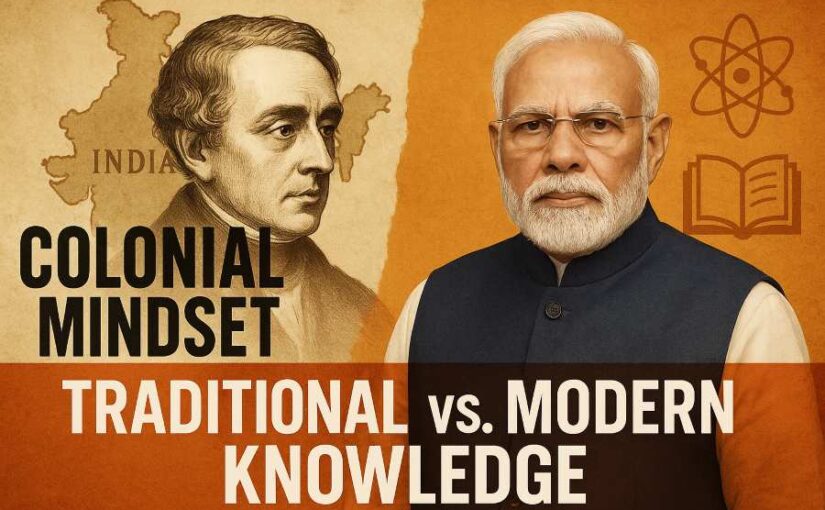
We had some discussion about Macaulay on X and I wanted to write a piece about it, but I also know I probably wont get the time soon, so I am going to just copy and paste the discussion here, I am sure people can follow what is going on and offer their comments.. (Modi’s speech link at end, macaulay minute text link as well)
It started with this tweet from Wall Street Journal columnist Sadanand Dhume:
In India, critics of the 19th century statesman Thomas Macaulay portray him as some kind of cartoon villain out to destroy India. In reality, he was a brilliant man who wished Indians well. Link to article.
I replied:
I have to disagree a bit with sadanand here bcz I think while cartoonish propaganda can indeed be cartoonish and juvenile, there is a real case to be made against the impact of Macaulay on India.. Education in local languages with hindustami or even English (or for that matter, sanskrit or Persian, as they had been in the past during pre islamicate-colonization India and islamicate India respectively) as lingua franca would have been far superior, and the man really did have extremely dismissive and prejudiced views, the fact that they were common views in his world explains it but does not excuse it. The very fact that many liberal, intelligent and erudite Indians of today think he was “overall a good thing” is itself an indication that his work has done harm.. BTW, there were englishmen in India then who argued against Macaulay on exactly these lines..
Akshay Saseendran (@Island_Thought) replied: Continue reading Macaulay, Macaulayputras, and their discontents
A few updates from this week:
Sri Lanka is facing severe flooding. Sbarkkum reports major damage to rail and road networks, with Dutch support expected for reconstruction.
Sana Aiyar’s “World at MIT” video touches on her life and work
Sam Dalrymple has a clip on Lahore and Delhi—another reminder of how closely the two cities mirror each other despite partition.
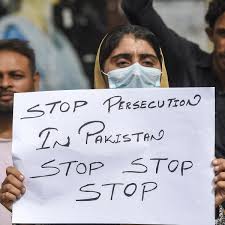
Pakistan’s minority rights bill is worth watching. Continue reading Open Thread: From Floods to LaBal
One of the remarkable aspects of South Asian nationalist ideologies is their emphasis on maternal figures. For instance, India’s national song, Vande Mataram, is an ode to a mother, while the national anthem, Jana Gana Mana, refers to Bharata Bhagya Bidhata as “the affectionate mother” in its full lyrics. Moreover, Bharat Mata serves as a prominent symbol in the ideology of RSS. This is not limited to India, similar maternal figures are also celebrated in the national anthems of Bangladesh and Sri Lanka. So, who are these mysterious mothers, and where do they originate from?
A lesser-known fact is that all these mothers have a connection to Bankim Chandra Chatterjee’s novel, Anandamath, published in 1882. At that time, Bengal encompassed a large region, including present-day West Bengal, Bihar, Jharkhand, Bangladesh, and Assam. The novel takes place in a fictional Bengal, where the inhabitants are acutely aware of their civilizational identity and are ready to take up arms to defend it. It revolves around three fundamental elements:
1. Civilizational ideology : It’s an ancient and highly inclusive form of Non-dualism that we first see in Brihadaranyaka Upanishad. The choice of Non-duality was not unusual, as Bankimchandra, like most of his contemporary Bengali scholars, had a Vedanta centric view of Dharma. In one of his essays, he even described western non-dualists like Spinoza and Herbert Spencer as European Hindus.
2. The Mother: She embodies the essence of this civilizational ideology and represents the land where it thrives. She is seen through three distinct forms, known as “what mother was,” “what mother has become,” and “what mother will be.”
3. Santan Dal (Children of the mother): It is a large paramilitary organization consisting of dedicated volunteers, led by celibate monks. Their singular purpose is to reclaim the past glory of the mother. They are not ritualistic and have just one anthem, Vande Mataram, dedicated to the mother.
The novel as well as the song Vande Mataram had a huge impact on the freedom struggle and soon the mother gained a pan-Indian fan following. Within a generation Bengali Mata became Bharat Mata and after independence the song Vande Mataram was declared to be the national song of India.
After Bankim Chandra’s death in 1894 this ideology was further popularized by Tagore. The mother featured in many of his songs, including Jana Gana Mana. SriLankan composer Ananda Samarakoon, who studied under Tagore at Vishwa Bharati University for a brief period, was deeply influenced by Tagore’s work. In 1940, he created the SriLankan Mata in a song titled “Namo Namo Matha,” which ultimately became the national anthem of Sri Lanka.
The story behind “Amar Sonar Bangla”, the national anthem of Bangladesh, is quite interesting. Tagore wrote this song before the partition of Bengal, so the word Bangla refers to the entire Eastern India and the “Ma” in this anthem is the same as the one from the original version of Vande Mataram. Because it doesn’t mention Bangladesh or Islam at all, a lot of Muslim organizations in Bangladesh weren’t too thrilled about it. But then in 1971, the leaders of Bangladesh wanted to step away from a religious identity, so they finally embraced it as the national anthem.
The link between RSS and Bharat Mata ideology was Anushilan Samiti, The first real organization motivated by Santan Dal. Although it was treated as a terrorist organization by the British rulers, it had supporters from all over India. One of them was K. B. Hedgewar, who went to Calcutta to study medicine and became a part of the inner circle of Anushilan Samiti. He returned to Maharashtra after his studies, but a few years later created a pan-Indian version of Santan Dal, known as Rashtriya Swayamsevak Sangh.