On the Question of Who “Owns” the Indo-Muslim Legacy

Reading Sophia Khan’s superb piece on the lost Muslim cities of Hindustan, and then watching the BP comment-thread unfold, a few thoughts crystallised for me; less about “ownership,” and more about the intellectual pattern that keeps resurfacing whenever Indo-Muslim history is discussed.

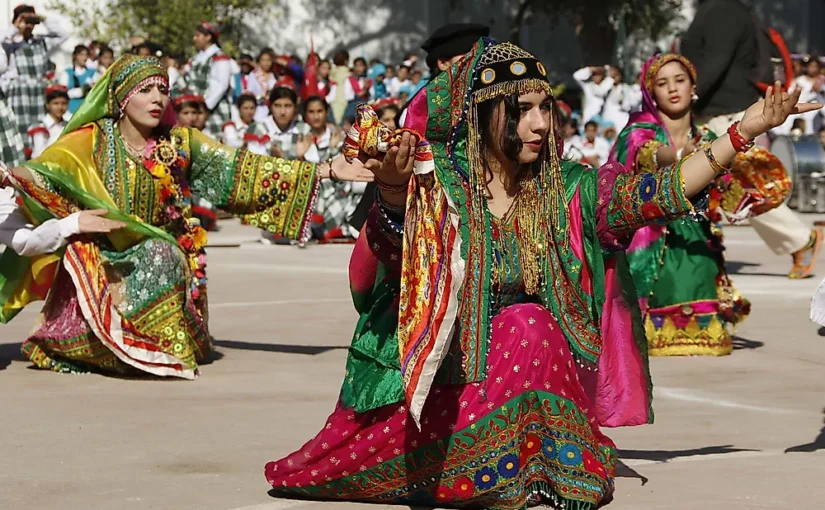
First: I genuinely did not know that Khan was originally pronounced with a silent n, nor that paan had such a deep Islamicate turn in its social history. Much like music, I had long assumed paan to be a largely Hindu-coded practice. The article forces a re-examination of how intertwined everything actually was. The same goes for Hindustani music: I once thought of it as essentially a Hindu, temple-rooted tradition. Then you realise how much of the courtly synthesis, Persian, Hindavi, Turko-Central Asian, was shaped by Muslims, even if the Vedic lattice underneath remained foundational.

This is partly why I found Bombay Badshah’s objection (“Pakistan cannot claim any of this”) an odd line to draw. One can, of course, make the territorial argument; but it collapses immediately once you observe what India itself is doing: aggressively appropriating the Indo-Muslim aesthetic while deracinating its historical context. If Bollywood, tourism, cuisine, and the Indian cultural machine can freely claim Delhi, Lucknow, Agra, and Hyderabad as national inheritances, then Pakistanis whose families actually come from those cities are hardly crossing an intellectual red line by acknowledging lineage, memory, or loss. Continue reading On the Question of Who “Owns” the Indo-Muslim Legacy
Caste, Civilisation, and the Courage to Own It

Kabir suggested that I apologise but for what, exactly? Why should Saffroniate be considered offensive? Own it. I don’t see anything inherently wrong with the idea of Akhand Bharat; the concept of a broader Dharmic civilisation makes eminent sense to me.

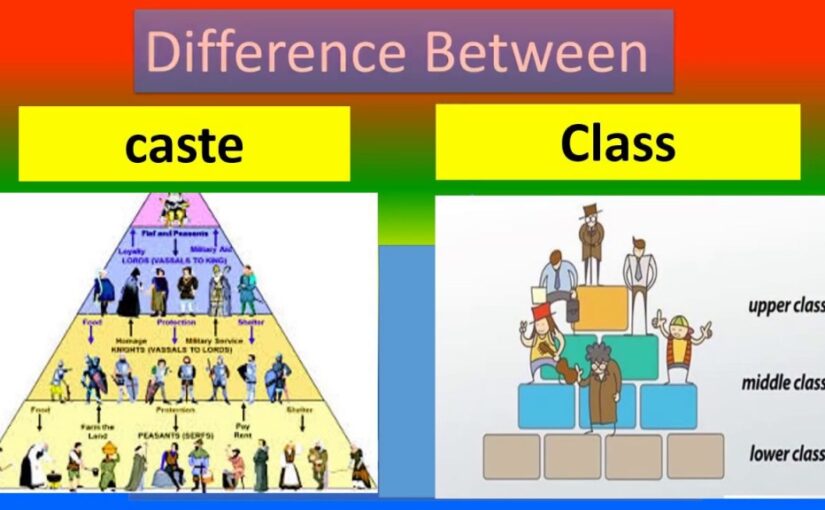
Likewise, I don’t understand why questioning caste identities provokes such sensitivity. Again, own it because the more caste is repressed, the more likely it is to resurface.

At heart, I’m a reformist, not a revolutionary. I believe in improving and refining what exists, not erasing it. Cultural features should only be abolished when they are truly harmful or deleterious, not simply because they make us uncomfortable.

Ghosts of 1947

I’m Sumayya from Pakistan, it’s very nice to meet you all. I need your help, it’s about my Dadi.
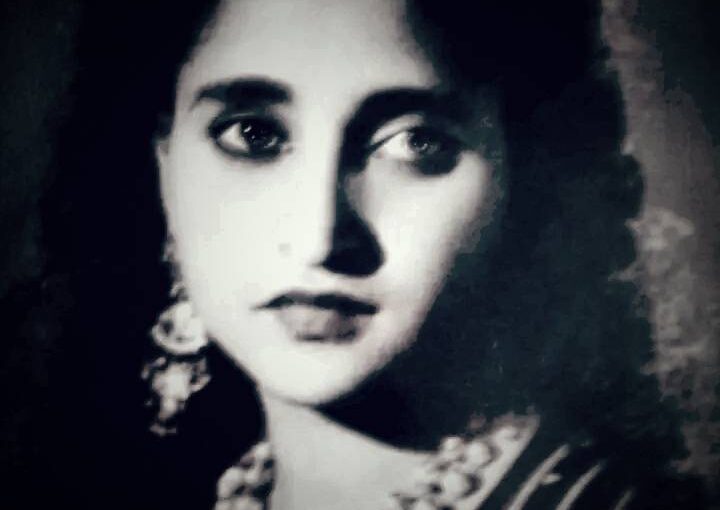
I’m attaching a picture of my Dadi a year after Partition. She opened up about Partition 1947. I believe it has been a severe kind of trauma where it took her nearly 70 years to open up completely, and even then she stopped talking after a while. It was a bloody massacre, Kashmir sadly bearing the brunt of it. Her last memories are being deceived to get in a bus which would take them to Pakistan, but then women yelling at the driver that he was taking them somewhere else.
Then men standing outside scaring them with swords, while women ran away from the bus and jumped into a nearby river. My Dadi (fourteen at the time) and her younger sister also ran to jump, but her father held them and said nothing would happen to them, and directed them to hide under a seat. She doesn’t remember much after that, just the fact that she heard her baby sister being taken away, and then herself being dragged out, upon which she tried to clutch onto her mother’s kurta but it tore. At that point, herself and her mother were the last in the bus, everyone else was either killed or taken away.
I am not sure, but she firmly, firmly believes that her sister was the most beautiful of them all and must not have been killed and maybe taken away to get married to someone. During her youth she tried posting about her in newspapers but it never helped. I know it’s probably too late, but maybe if she did get married and had children, she must’ve told her story to her kids, whom I could locate? I’ve registered to many Kashmiri directories and pages, let me know what else I could do to locate her family.
The only information I know is that they lived in Jammu, Kashmir and my Dadi’s name is Mehmooda. Her sister was Kulsoom (Ummul Kulsoom), they had eight more siblings. Their parents were Hakim Din and Amna.This is in no way a religious/political debate. Just want to use the internet to locate my long lost family.
Post Credit: Sumayya T Malick

Continue reading Ghosts of 1947

Brown Pundits: Broad Church or Narrow Canon?

Brown Pundits Must Stay a Broad Church

Reading Kabir’s thoughtful post on the “soft Hindutva” bias at Brown Pundits, I found myself both agreeing with parts of his argument and diverging from its framing. My own journey with BP goes back to its inception. The blog was born in Twixmas December 2010; 10 days after I had met Dr. Lalchand, whose presence has profoundly shaped my civilizational views.

I say this not as a biographical aside but because BP, at its best, is where the personal and civilizational collide. We bring who we are; our marriages, our migrations, our contradictions, into this messy, brilliant conversation.

At the time, like many Pakistanis, I held a deep-seated assumption: that Hindus were fundamentally “other.” It wasn’t overt hatred; just a civilizational distance, internalized from birth. But Dr. V & Brown Pundits challenged that.

A Forum With Bias? Yes. But Which One?

The heart of BP is not neutrality; it’s the willingness to host contradiction. That is its genius, and it must be protected.

Continue reading Brown Pundits: Broad Church or Narrow Canon?

Brown Pundits