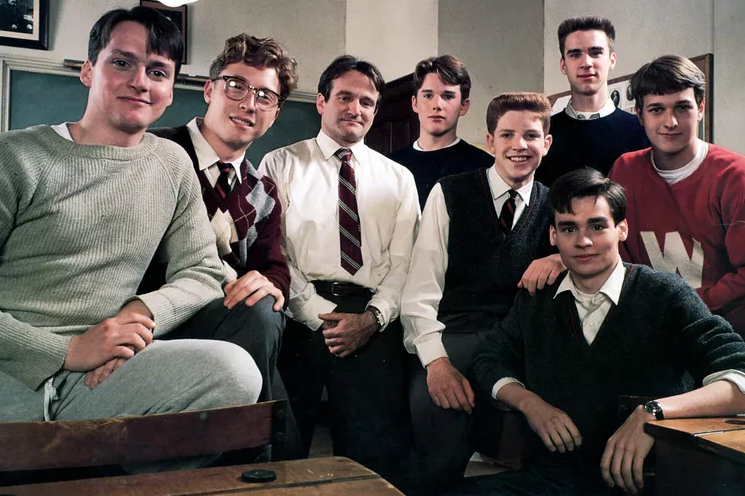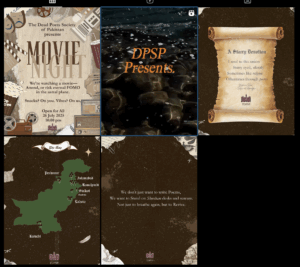
Dead Poets of Pakistan

After Kabir exited the WhatsApp group, the conversation between the Manavs and Furqan (who I have made Editor to encourage more DPPs) drifted, inevitably, to poetry and Punjabi. Furqan has already made two excellent contributions, A flying peacock and Lord Ganesh in a confectionary mill. Kabir did a great job in diversifying the Authorial voices on BP.

As we shape the future of Brown Pundits, I keep returning to one submerged voice in the Persianate world, particularly in Pakistan. A voice that is Westernised, undercapitalised, and culturally adrift. These are not the clerics, generals, or capitalists. These are the middle-gentry, the in-betweeners; fluent in English, wired to the internet, but uncoupled from patronage and power.

Like much of the Muslim world, Pakistan remains profoundly hierarchical. And I suspect its creative pulse, its latent genius, lies in that Westernised fringe of the lower elite: the zone between the bourgeoisie and the establishment. The boundary class. Half-in, half-out.

In a strange way, Pakistan’s obscurity may be its shield. Unlike India, an excavated society with every civilizational layer being rapidly monetised (Saiyaara is breaking records), Pakistan is a half-formed splinter. It doesn’t face the same pressures of internal reckoning. That may be a blessing.

Across the Persianate world, from Anatolia to Delhi, we are witnessing a civilizational scatter. The old cosmopolis of the Gunpowder Empires (Ottoman, Safavid, Mughal) has collapsed, leaving behind cultural debris. The Persianate polity, once a unified Empire of the Mind, is now a broken archipelago.

India, by contrast, benefits from its post-colonial majority. Like Israel, it is 80% one faith; with all the confidence and coherence that brings. It has the numbers, the market, and a dominant civilizational script. The Sanskrit world, if not unified, is at least centrally anchored.

In this context, Kabir represents one pole of the Pakistani elite: articulate, English-speaking, confidently liberal but also capable of drowning out the marginal voices he’s adjacent to. And yet sadly, I don’t think Pakistan is headed for any Hindufication. The trajectory is different.

Pakistan is not returning to India. It is, perhaps, becoming the lowlands of the Iranian plateau;Ā a bridge nation once again, neither fully Arab nor Indic. Suspended between worlds, it may rediscover itself in that liminality.

Because sometimes, the dead poets are not gone. They’re just waiting for the right silence.

Open Thread; Trans in the Muslim World

Other Stories (thank you Nivedita):

šŸ”— India Today – Harshvardhan Jain Scam

A man posed as a diplomat, set up fake embassies, and ran a multi-crore loan fraud racket via fake companies. He even issued ā€œofficialā€ visas.

šŸ”— Business Standard – Karnataka Vendor GST Nightmare

A vegetable vendor in Karnataka received a GST notice due to high UPI volume — triggering a cascade of tax bureaucracy.

šŸ”— Economic Times – Indian Man Stabbed in Ireland

An Indian man in Ireland issues a public warning after surviving a random stabbing in Dublin.

šŸ”— NDTV – Hyderabad Man Kills Wife

In Hyderabad, a man stabbed his estranged wife to death at a birthday party for a child.

The Myth of the ā€œAverage Pakistaniā€

Dave’s comment:

“I have in fact met some. In person. Ran into a lovely couple while on vacay in Guatemala. Excellent conversation along a 2 hour shared shuttle ride. Shia muslims from Baltistan – he took great pains to indicate that his community is not like the average Pakistani, and that in his biradari they are proud to educate their daughters and wives, have them take the lead in public lives. Both his daughters were young med students.

The tragedy for Pakistan is that such actual liberals with modern outlooks wisely avoid taking public positions. They don’t want to get lynched. Hence the domination by the nutters and fringe on the right continues. Leading to mis-categorization of the right-wing as ā€œthe centerā€.”

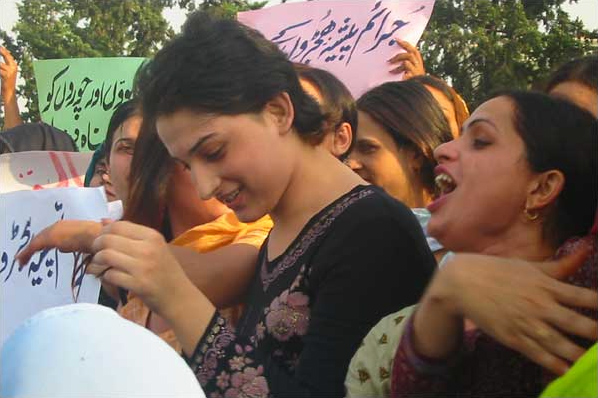
The above praises a “liberal” Shia couple from Baltistan for educating their daughters and living modern lives, contrasting them with ā€œthe average Pakistani,ā€ portrayed as a backward, anti-education fanatic. This framing is not just lazy; it’s offensive.

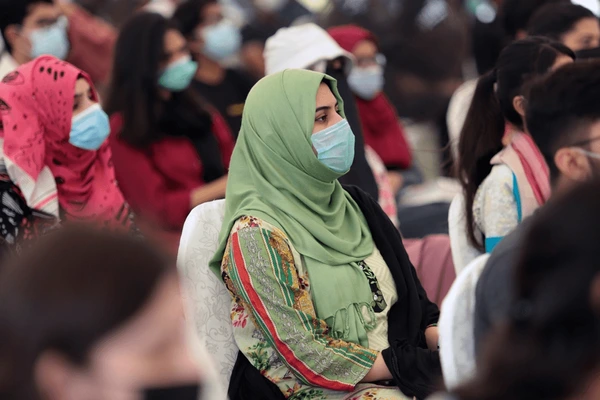
It reflects a deeply colonial hangover: the idea that modernity is rare in Pakistan, that deviation from presumed fanaticism is a revelation. But let’s be clear, Pakistanis, like people anywhere else, are ambitious, aspirational, and complex. Medical colleges are oversubscribed. Education is highly prized. And many people, devout or not, are navigating life with dignity, values, and a deep desire to move forward; not just materially, but spiritually and ethically.

Politics of Projection

Just because a population is not obsessed with hyper-capitalism doesn’t mean it is ā€œbackward.ā€ It may simply mean it has not surrendered entirely to the logic that everything must be monetized. That’s not regression; it might be restraint. In a world where the only metric that seems to matter is money, resisting that tide is itself a kind of wisdom.

This kind of patronizing liberalism, one that exoticizes progressive Muslims as rare exceptions, isn’t harmless. It feeds into a narrative that justifies erasure: of language, culture, self-rule, and civilizational continuity. South Asians speaking in English, debating one another with colonial grammars, is not a mark of modernity, it is a symptom of displacement. The Global South doesn’t need to be saved. We need to be seen, on our own terms.

Resistance, Realignment, and the Roads Not Taken

First, a brief acknowledgment: Kabir remains one of the pillars of this blog. His consistency, depth, and willingness to engage with the hardest questions are invaluable. I don’t always agree with him—but the conversation would be much poorer without his voice. The post is a series of reflections—stitched together from the comment threads.

I. Gaza: Beyond the Pale of Language

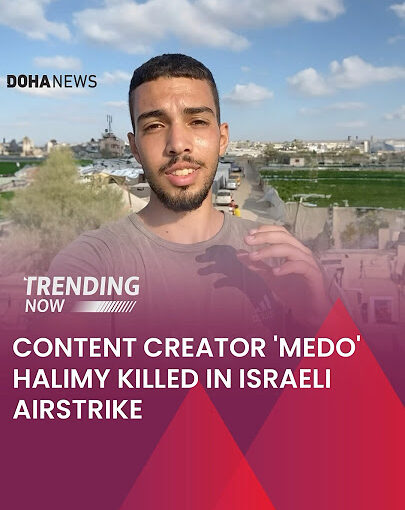
The death of a 19-year-old TikToker, Medo Halimy, in South Gaza this week caught my eye—not because it was the most horrific (foetuses are sliced in two in Gaza as Dr. Feroze Sidwa*Ā attests). But because having seen his video, it just made the death so immediate (yes that is a cognitive bias).

At this point, to debate whether what is happening is a genocide feels grotesque. It clearly is. The scale, the intent, the targeting of civilians and children—it’s all there. The legal frame collapses under the moral weight. We are witnessing something darker than war: ethnocultural suffocation & demographic extinction, broadcast live and met with diplomatic shrugs. But the world is watching inspired by the very brave Bob Vylan duo (UK punk-rap duo opposing imperialism, recently denied US visas):

Something stirs and pricks beneath the rubble.

II. The Huma Moment: A Civilizational Reversal? Continue reading Resistance, Realignment, and the Roads Not Taken

Brown Pundits