Open Thread: Rasam, Stray Dogs, and the Battle Over India’s Story

Life in Chennai has been calm. For breakfast I have rasam. It is a superfood: light, hot, and full of spice. Indian food is the only cuisine where I could be vegetarian. I know Persians who try. I feel sorry for them. No meat, no masala, no spice. There is only so much hummus one can eat.

But calm at the table contrasts with what I read in the news. The Delhi order to remove stray dogs is disturbing. I cannot look at the pictures of the removals.

Across the Trans-Wagah line, another current runs. The Pakistan Cricket Board may change its revenue-sharing with players. A small story, yet it speaks of a larger one: Pakistan may gain small tactical wins by tying its path as the flexible adversary to India. But for the top ten percent of its economy, the block is clear. They cannot flow into India’s success. They remain tied to Western patrons.

Meanwhile, old arguments are stirred again. Audrey Truschke has been active with fresh claims on Aurangzeb. The same week, Kabir wrote that Western philosophy outweighs Dharmic wisdom, and that Greek thought shaped Buddhism (I can’t remember if it was him). I wonder who first wrote this propaganda. It is damaging, and it lingers.

India’s stories stretch from the taste of rasam to the fate of stray dogs, from cricket boards to Aurangzeb’s ghost, from Kabir to the Greeks. Each is part of the same struggle: who owns the narrative of Bharat, and how it is told.

Links:

To the Dutch, a German Shepherd holds more worth: https://www.instagram.com/reel/DNYEoQForz2/?igsh=MTVrZW1kZW94NHdieQ==

Serial Killing at a Famous Karnataka Temple: https://youtube.com/shorts/YexL_ASaGqE?si=mQ-Kdj6jSMzNPrAx

Could be Social Media Frenzy: https://www.thehindu.com/news/national/karnataka/dharmasthala-burial-case-political-temperature-soars-as-no-major-recovery-after-digging-17-spots/article69937387.ece

Not one Football: https://youtube.com/shorts/DR8SFCTCaoQ?si=tut2ymQB3EcDHTY6
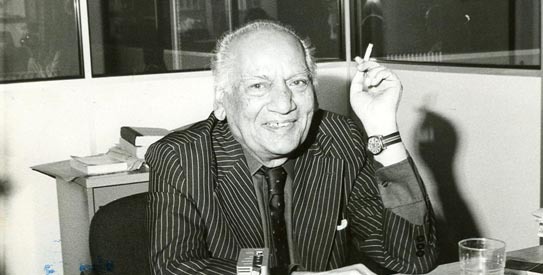
Faiz, Subh-e-Azadi, and Pakistan’s 78th Birthday:

Today (well, technically yesterday, since it’s past 12) is Pakistan’s Independence Day. I personally felt no extraordinary zeal or zest for the land of the pure. Is it my lack of patriotism (sun), my anxiety about belonging (moon), or rising sedition? (Please pardon my astrological metaphors; recently learned from a friend.)

I never—of course, I am exaggerating; that’s what poets do anyway—felt much for my own birthday. Perhaps I am still unable to grasp the importance (or the dread and brevity) of the flow of time.

If time is creativity unfolded, I don’t feel progress. If it is a movie playing with no rewind, I still lack the desire to go back.

Continue reading Faiz, Subh-e-Azadi, and Pakistan’s 78th Birthday:

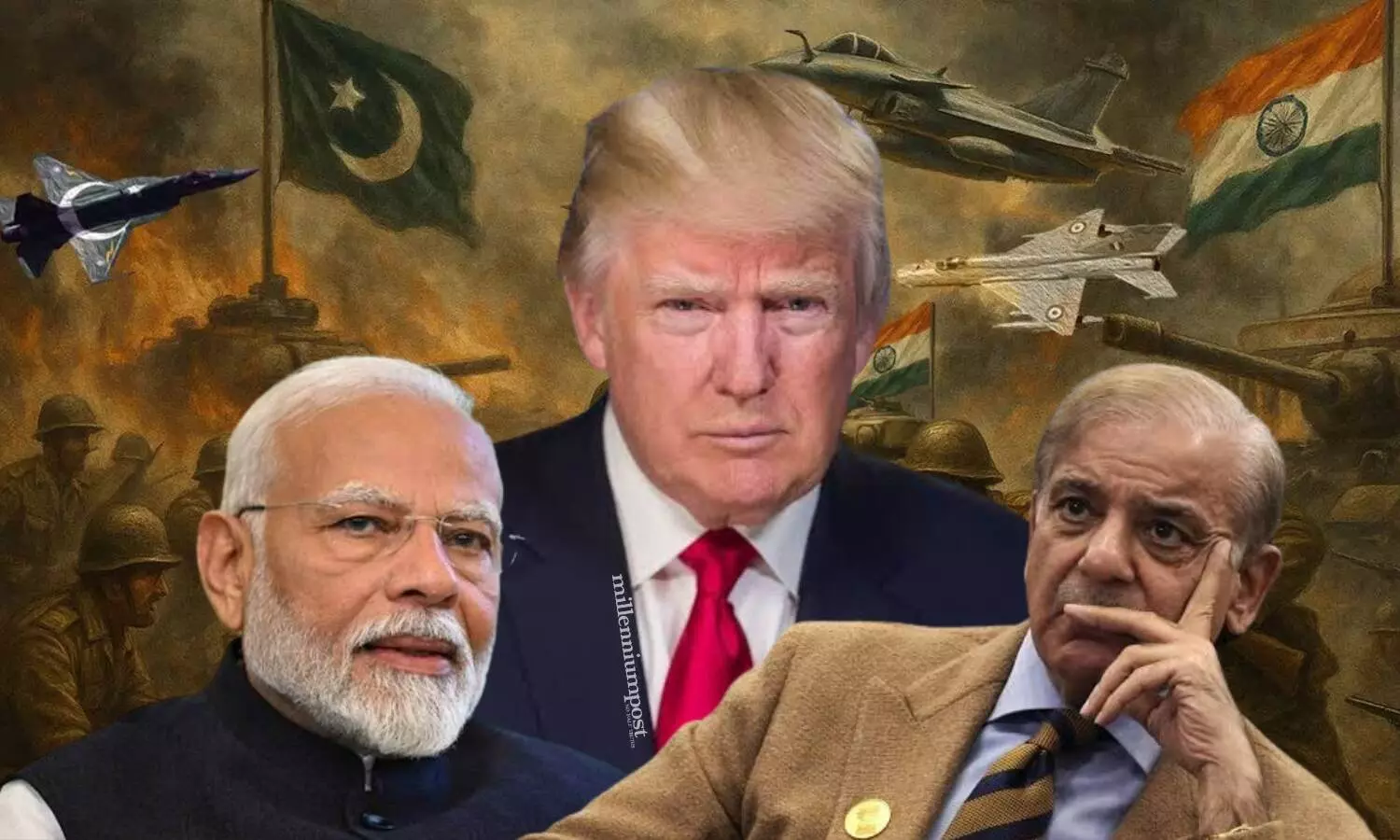
USA, India, Pakistan.. an eternal prickly braid

Trump makes U-turn, says 2 leaders of India-Pak 'decided' to stop conflict

Since the 1990s, Western powers (aka the USA and it’s vassals) have been building up a relationship with India that paints India as a fellow liberal Democracy (and a possible future partner against the new enemy bloc led by China). Beyond these propagandistic talking points, there is supposed to be real convergence on some big things: Demographics, slowly laid economic foundations and baseline cultural strengths combine to make India a rising economy; At a time when birth rates are below replacement in the first world, there is going to be no bigger source of labor or talent. If businesses have to “derisk” from china, they have southeast Asia and India as the natural targets. If other Asian countries are to resist total Chinese hegemony, there is no way to do that without Indian help. And so on.

Throughout this period there have been many prickly issues between the partners (eg a recurring complaint from India that the West supports Pakistan, which sends terrorists into India; on the other hand there is a recurring Pakistani complaint that the USA does not pay enough and (especially in the last decade) is too willing to accept India as the regional hegemon; and well justified complaints from everyone that India is too protectionist) but the public diplomacy has remained positive and feelgood for the most part. All that started to change somewhere in May 2025 and it has been rapidly downhill in the last one month as Trump has publicly attacked India for being protectionist, accused it of being a dead economy, and completely ignored Indian “sensitivities” about Pakistan.

Until now, Indian officialdom has tried to stay sober and avoid inflammatory responses, but they have also resisted the choice (already taken as the path of least resistance by UK, EU and Japan) of massaging Donald’s massive ego and nominating him for some Nobel prizes to get past any personal hurdles. But of course India’s social media army has no such hesitation and on that front the bonhomie of the last few years has completely evaporated, with Indian nationalists and White Nationalists (let us not be coy and recognize that MAGA is a White nationalist movement at heart) going at it hammer and tongs.

So what is going on? and why? and what happens next? I have no inside information, so I am perfectly placed to make some general comments and then ask better informed people to tell me why I am wrong. Here goes: Continue reading USA, India, Pakistan.. an eternal prickly braid

Meltdown BhāáčŁya: Verse 1.1.1 (Part 1.1)

This post is a continuation of my Introduction to Accelerationism. The goal of this project is to explore Accelerationist Philosophy (with an emphasis on the work of Nick Land) and explain it from a Hindu perspective with an exegetical and comparative focus on the Vedas, Itihāsas, and Tantras, among other traditional Hindu texts.

Technocapital Singularity & A Brief History of Capitalism, Commoditization & Production, and Primordial Desire

Originally Published: January 26, 2025

[1].[1].[1] The story goes like this: Earth is captured by a technocapital singularity as renaissance rationalitization and oceanic navigation lock into commoditization take-off.

“Machinic desire can seem a little inhuman, as it rips up political cultures, deletes traditions, dissolves subjectivities, and hacks through security apparatuses, tracking a soulless tropism to zero control. This is because what appears to humanity as the history of capitalism is an invasion from the future by an artificial intelligent space that must assemble itself entirely from its enemy’s resources. Digitocommodification is the index of a cyberpositively escalating technovirus, of the planetary technocapital singularity: a self-organizing insidious traumatism, virtually guiding the entire biological desiring-complex towards post-carbon replicator usurpation.”— Machinic Desire (Land, 1993)

Continue reading Meltdown BhāáčŁya: Verse 1.1.1 (Part 1.1)

Review: Desertion by Abdulrazak Gurnah

From my Substack: 

When Abdulrazak Gurnah won the Nobel Prize for Literature in 2021, he was comparatively little-known. I must confess that I had never heard of him. This is despite the fact that I am an ardent fan of English literature and am also deeply interested in issues of colonialism. I have read most of the fiction concerned with British colonialism in South Asia including Rushdie’s Midnight’s Children, Scott’s The Raj Quartet and Forster’s A Passage to India. Perhaps part of the reason that I was not familiar with Gurnah’s work was that I have not focused much on Africa as a region (except for North Africa, which can be said to be more of an extension of the Arab world than the African continent proper). However, even within the domain of African fiction, Gurnah is an author that is unfamiliar to most readers. For example, school curricula in the US often include Chinua Achebe’s Things Fall Apart and Alan Paton’s Cry, the Beloved Country. I very much doubt that any curricula so far has included Gurnah’s works. Hopefully, that will change now that he has received the Nobel Prize.

Gurnah is a British citizen of Zanzibari origin. He grew up at a time when Zanzibar was a British protectorate separate from the colony of Tanganyika. After both colonies achieved independence, a revolution overthrew the Arab elite in Zanzibar and the region later merged with Tanganyika to form Tanzania. Gurnah had left to study in the UK before this revolution broke out and he describes himself as a refugee. He completed his Phd in Literature and served as a Professor at the University of Kent, from which he recently retired. His academic work deals with postcolonial literature, including that of Rushdie. Continue reading Review: Desertion by Abdulrazak Gurnah

Browncast: Trump, Tariffs, Hurt Feelings, and India..

Another Browncast is up. You can listen on Libsyn, Apple, Spotify, and Stitcher (and a variety of other platforms). Probably the easiest way to keep up the podcast since we don’t have a regular schedule is to subscribe to one of the links above!

In this episode I talk to Kushal Mehra (Host of the Carvaka podcast) and regular Brownpundit Amey Chaugle about the tariff kerfuffle… the public (and on Trump’s side, frequently intemperate) war of words between the USA and India that is partly about India’s protectionist tariff regime but maybe mostly about other things (such as Donald’s ego and his desire to get that Nobel Peace Prize)..
Dig in and add your comments. We too don’t know exactly why this is going on and where it will end..  🙂

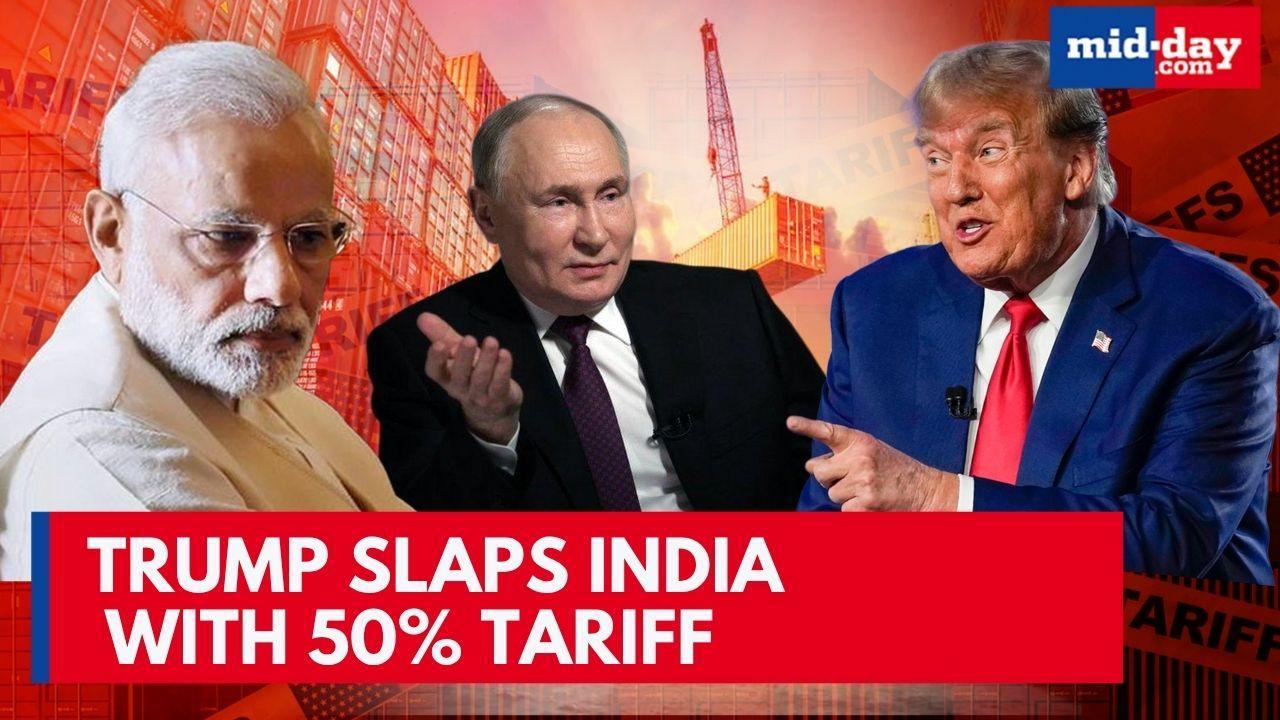
Trump Imposes Total 50% Tariff On Indian Goods, India Hits Back

Review: The Music Room by Namita Devidayal

From my Substack:

Namita Devidayal’s memoir The Music Room is a chronicle of her relationship with her guru Dhondutai Kulkarni (1927-2014). The book describes Devidayal’s initiation into Hindustani classical music as a reluctant ten-year-old from Bombay’s upper-middle class. Along with describing her growing appreciation for Dhondutai and the music that she imparts to her, the narrative also tells the story of two other important figures in Hindustani music: Ustad Alladiya Khan (1855-1946)–the founder of the Jaipur-Atrauli gharana–and Keserbai Kerkar (1892-1977)–one of the most famous khayal singers of the 20th century. Through telling the stories of these individuals, Devidayal elucidates several important themes such as communalism and “Hinduization” of music as well as the place of women in classical music.

Devidayal describes the process through which Hindustani music became communalized and “Hinduized”. Though Dhondutai is extremely proud of the musical legacy passed on to her by Alladiya Khan Sahib’s family, she still expresses some bigoted views about Muslims. When pressed on this by Devidayal, Dhondutai attempts to square the circle by telling her that Ustad Alladiya Khan was not a real Muslim since he was (allegedly) descended from a Brahmin singer who had been forced to convert to Islam by a Muslim king. She also notes that he always wore the caste thread usually worn by Brahmins. This story allows Dhondutai to hold the belief that Hindustani classical music is essentially Hindu despite the fact that many of the most prominent gharanas had Muslim founders. Dhondutai’s prejudices connect back to the broader process through which–during the colonial period– Hindustani music was “Hinduized” by reformers such as Pandit Bhatkhande and Pandit Paluskar. Bhatkhande wanted to create a “national music” and believed that Hindustani music had been degraded by Muslims and dancing girls and needed to be rescued from both. This process has been extensively discussed by Janaki Bakhle in her book Two Men and Music: Nationalism in the Making of an Indian Classical Tradition. Unfortunately, while most ethnomusicologists agree that Hindustani music is a syncretic tradition, many (on both sides of the India-Pakistan border) persist in claiming it for one or the other religion. Continue reading Review: The Music Room by Namita Devidayal

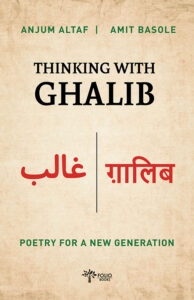
Ghalib for Gen Z

This review was originally published at The Friday Times.

Publisher: Folio Books

Publishing date: 2021

Authors:  Anjum Altaf & Amit Basole


“For Ghalib, life is an unending search. Neither the holy of holies in Mecca nor even the attainment of paradise is the end of it.” ~Ralph Russell

We’ve all heard of that crooked genius, Mirza Asadullah Beg Khan Ghalib — whether through our school Urdu courses (unfortunately encountered at an age when our consciousness is still unripe) or through pop culture. Sometimes it’s his well-known fantasy for mangoes; other times it’s when someone shares a couplet whose slightly convoluted vocabulary immediately earns it the label of “a Ghalib shayr”; and other times, his destitution and scrambling for a pension.

As a Gen Z myself, I can say that most of today’s youth are largely alienated from the Urdu language, let alone Persian. And of course, this doesn’t mean we’re reading Byron or Eliot instead; rather, it’s the excess of TikTok. Decoding Ghalib feels like a Herculean task for us. This dilemma not only distances us from a rich poetic tradition but also from the timeless lessons it has nurtured.

Continue reading Ghalib for Gen Z

Why Indian English Loves Long Sentences

If China endured a century of humiliation, India has lived through a thousand years of it. Invasions and exploitation left it poor in wealth but rich in culture; intricate, adaptive, and resilient. That depth shows in Desi English, which often favours long, ornate sentences over plain ones.

This habit echoes Persian’s former role in the subcontinent: a prestige language whose mastery signalled rank. Even Ghalib’s vast Persian verse drew less love than his Urdu. In India, Persian was the colonial language of power; today, English plays that part.

In Iran, Persian changes fast. Slang, borrowed terms, and foreign tones reshape it so quickly that many in their forties struggle with teenage speech. My own Persian, kept alive in Kuwait and India, is closer to Shirazi and Tehrani standards than to the language my ancestors spoke. I’m self-conscious with Iranians, but with diaspora Persians, I speak freely; we share a looser, accented form of speech. Continue reading Why Indian English Loves Long Sentences

Brown Pundits