At Negombo, the Indian subcontinent meets where it still can

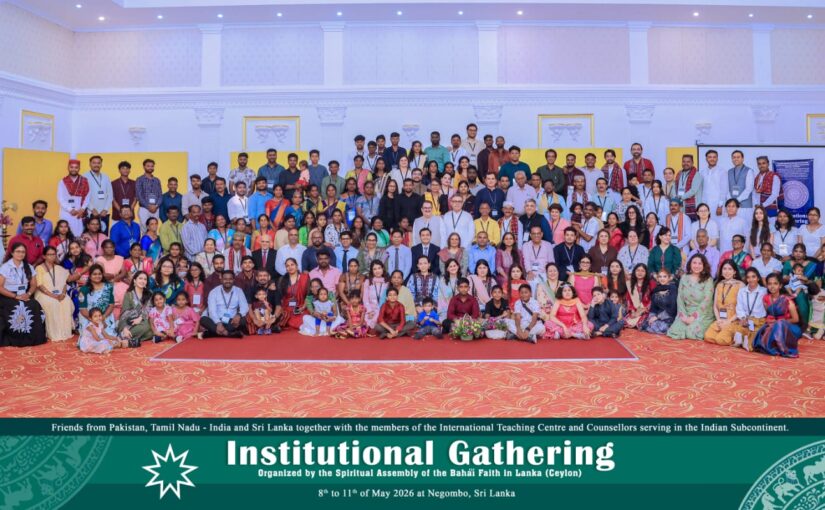
The photograph above was taken on the 11th of May in Negombo, on the western coast of Sri Lanka. The caption records the occasion plainly: friends from Pakistan, from Tamil Nadu, and from Sri Lanka, gathered with members of the International Teaching Centre and the Counsellors serving in the Indian subcontinent, at an Institutional Gathering convened by the Spiritual Assembly of the Bahá’ís of Lanka.

We want to say something about what this image makes possible, and where.

Indians & Pakistanis cannot meet any longer

The hard fact first. There is no longer any practical way for an ordinary Indian and an ordinary Pakistani to sit in the same room inside either of their own countries. Visa regimes have hardened to the point of farce. The land border is sealed in spirit if not in law. What remains are the smaller states of the subcontinent and the wider diaspora. Of the smaller states, Sri Lanka is the one that handles the meeting most gracefully: visa-on-arrival to both passports, no overland complication, no political theatre, and a civic culture that does not ask either side to perform a position.

Which brings us to the older question, whether Sri Lanka belongs to our civilisational space at all. Some friends north of the Palk Strait still treat the island as adjacent rather than constitutive. We think this is wrong, and the reasons are not sentimental.

Sri Lanka is Dharmic? Continue reading At Negombo, the Indian subcontinent meets where it still can
Conversion out of Hinduism and Caste


The idea that jAti-varNa – Caste system is the reason why ancient Indians converted to Islam and Christianity in olden times is often presented as a obvious wisdom. Why wouldn’t the oppressed seek new religion the instance it was offered ? But this simplistic notion is often goes against historic evidence.

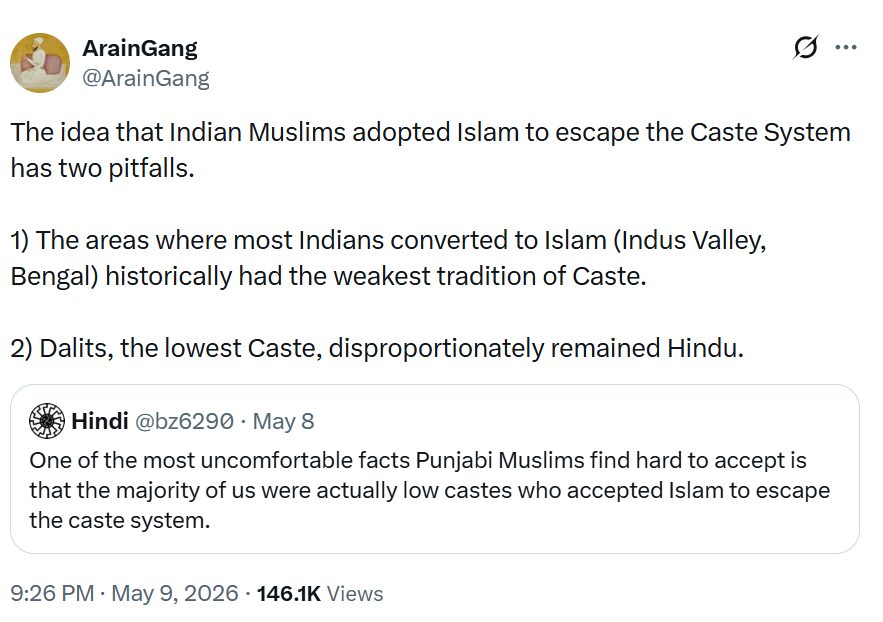
As BP commentator and genetics nerd ArainGang states here – Areas of subcontinent which today form Pakistan and Bangladesh – were the least conservative regions of the subcontinent – ie – least rigid caste system. These regions also had significantly higher Buddhists than the heartland.

Christian conversions in Goa and Kerala were often but not always elite lead. Even in Maharashtra which is the birth place of Ambekarite Navayana Buddhism, significant % of Dalits remain Hindu (30-40%). Outside Maharashtra even less % of Dalits have embraced Navayana – though most regard Ambedkar as a quasi divinity. Mayawati, the longest serving Dalit CM of India hadn’t officially converted to Navayana as she assumed she would lose the non Jatav Dalit votes if she did.

Simplistic theories about history – which seem obvious to our understand often don’t stand the test of evidence. It means the simplistic models which explained the reality of Caste and mechanisms of conversion can be rejected and even their premise need to be scrutinised.


She carried an entire civilization in her hands

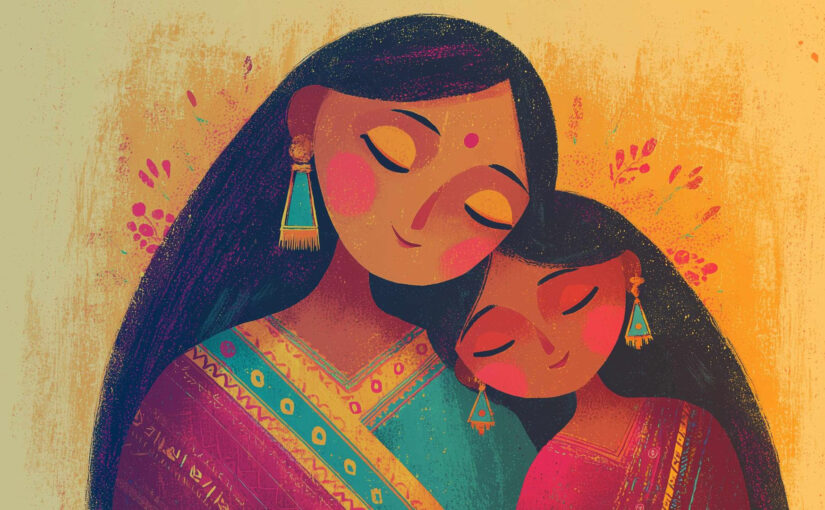
We have just landed back in the United States, and since we have been writing about gender all week, we wanted to share this sweet Mother’s Day note from the Hindu American Foundation here on BP.

She didn’t pack much. Maybe a small murti of Ganesha wrapped carefully in the folds of a sari. A handwritten copy of the Hanuman Chalisa. A few photos of her parents and siblings. And yet, she carried everything.

The full note is below but we wanted to share a few short thoughts as well. Q posted a tweet on the parallel thread arguing that Islam is the last holdout against total Westernisation. It is a serious claim and worth answering. Superficially he is right. The visible global resistance to Western moral universalism is largely Muslim, and the Manosphere is paying heed.

But the deeper claim is more complex, and the Hindu American Foundation’s letter illustrates why.

Continue reading She carried an entire civilization in her hands

Footnotes|Bollywood, Hindu Nationalism & the Erasure of Muslims in India (Kabir’s Open Thread)

When does cinema stop being entertainment and become propaganda? Hindi film has long romanticised the nation, but what’s happening now is something else entirely. In the latest Himal Footnotes, associate editor Nayantara Narayanan sits down with film critic Anna MM Vetticad and journalist Raza Rumi to talk about how Bollywood has become a vehicle for Hindutva ideology by manufacturing mythic pasts, normalising anti-Muslim violence and lending cinematic glamour to the BJP’s political project. Using the Dhurandhar franchise as a case study, they ask harder questions about the industry: How does propaganda disguise itself as entertainment? What happens when the line between fiction and political fact-making is deliberately blurred? And what has been lost from the Hindi cinema that once held space for a more plural, secular India?

Disclosure: I know Raza Rumi and have worked with him when he was at “The Friday Times”. I was mostly doing editorial work during what was essentially a summer internship.  He has written a book about his experiences traveling in Delhi (where I believe his family was from).  The book is called Delhi By Heart: Impressions of a Pakistani Traveller.

2) Returns on multipolarity

By Umair Javed

At this admittedly early stage of a changing world order, multipolarity is cementing domestic tendencies that already prevail. The status quo, along with the economic interests aligned with it, will continue to navigate geopolitics in ways that serve regime consolidation rather than broad-based development. For that calculus to change, the three issues/ contradictions identified above would need to become the organising basis of a political challenge capable of compelling a renegotiation of state-society relations. That is a high bar. But it is the only honest answer to the question of what multipolarity can offer a country like Pakistan. The world can change its architecture without changing who benefits inside Pakistan’s borders. That part remains entirely a domestic problem and a domestic responsibility.

3) Nothing can stop the breakup of Britain. Even Farage is powerless. 

By Aris Roussinos


On Safety and Hinduphobia

Bombay Badshah is on vanvas. He earned it. He posted, in passing, personal details of another commenter, which he should never have been examining. He was warned, apologised, and is now serving his time in the forest. Lord Ram took Sita and Lakshman with him for fourteen years. BB is taking the IPL and Dhurandhar reruns for ten days. The proportions are different. The principle is the same. You leave the city when you have offended its order.

This is not a defence of him. It is the opposite. BP must be a safe space for reader, commenter and author. Privacy is the precondition of opinion. If a person cannot post under a handle without a hostile interlocutor looking them up, the room collapses into a lower kind of theatre. We do not run that kind of room.

Engrained Hinduphobia

But his exile is also the moment to say the thing we have been postponing. Hindus on this site have a real grievance, and it has accumulated because the language of liberal discourse equips one side of the argument with a vocabulary the other side does not have. Islamophobia is an institutional word. Hinduphobia is still scratching at the door. The asymmetry shapes every thread:

Brown Pundits