Pan-Sindhi Cross-Border Virality


A Pakistani Sindhi song, Paiso Aa, has crossed the border and gone viral among Indian Sindhis. It is light, playful, and unselfconscious. And it exposes something we repeatedly forget.

Sindh has been Muslim for over thirteen centuries.

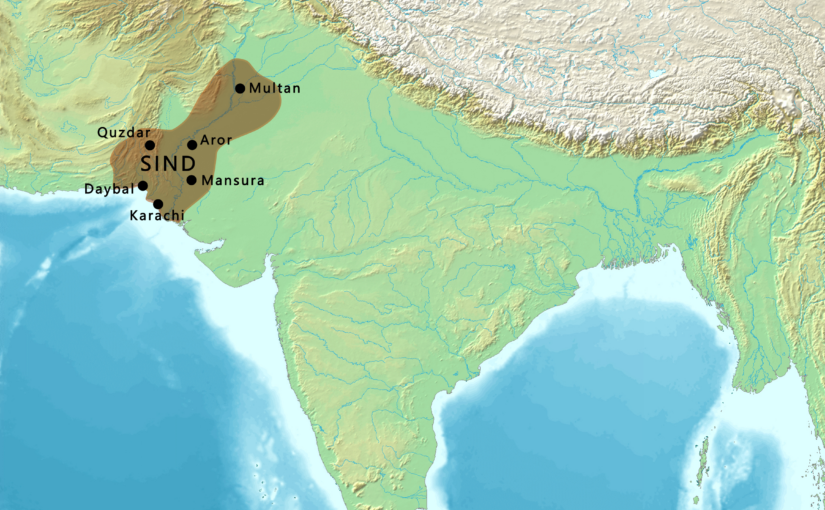
The region was conquered in 711 CE by Muhammad bin Qasim, the teenage governor of Fars—thirteen when he entered Sindh, dead by nineteen. Almost an Alexander figure in miniature. Since then, Sindh and Multan have known uninterrupted Muslim rule longer than many parts of the Islamic world itself.

That matters, because it complicates a habit of thought that treats Islam in the Indian Subcontinent as permanently “foreign.”

In Sindh, it is not. Continue reading Pan-Sindhi Cross-Border Virality
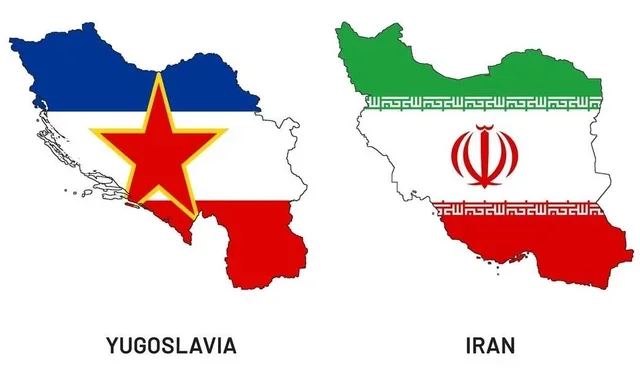
Pakistan Is Not Yugoslavia

There is a recurring Saffroniate habit, when it comes to Pakistan, that deserves to be named plainly. It assumes collapse. It treats Pakistan as a Yugoslavia-in-waiting, a state held together only by force and denial. This is not analysis. It is projection, reinforced by confirmation bias.

Pakistan is not Yugoslavia. It is, in many ways, the opposite.

Yugoslavia fractured once the external logic binding it disappeared. Pakistan was born under siege and continues to organise itself around that fact. Whatever one thinks of this psychology, it has consequences. States that internalise permanent vulnerability do not casually dissolve. They centralise, harden, and adapt. That is not a moral defence. It is an empirical observation.

Continue reading Pakistan Is Not Yugoslavia

Open Thread: the Epstein Files

the Epstein files are really very very disturbing.. i mean #nowords..

Browns tend to focus on internecine Indo-Pak conflicts instead of the real news alas.

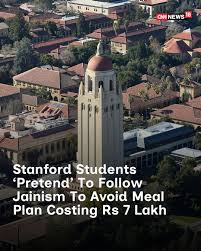
When Even Jainism Becomes a Hack

And so, some students I know claim to be devout members of the Jain faith, which rejects any food that may cause harm to all living creatures — including small insects and root vegetables. The students I know who claim to be Jain (but aren’t) spend their meal money at Whole Foods instead and enjoy freshly made salads and other yummy dishes, while the rest of us are stuck with college meals, like burgers made partly from “mushroom mix”.

I was reading about Stanford’s accommodation culture when one detail stopped me cold. Some students, the article noted, claim to be devout Jains in order to escape the mandatory meal plan. Jainism, one of India’s oldest religions, forbids harm to living beings. That includes insects. In many traditions it excludes root vegetables, because uprooting a plant kills it. It is an ethic of extreme restraint, discipline, and care. The students claiming it, by the author’s own admission, are not Jain. They are optimisers. This is not a small lie. It is a revealing one. Continue reading When Even Jainism Becomes a Hack

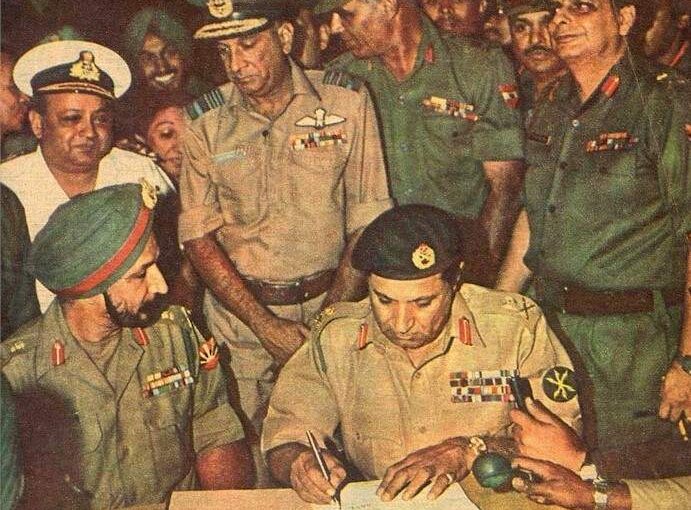
Pakistan, 1971, and the Misuse of the Holocaust Analogy

“Pakistan army remains the only one after WW2 to have carried out a large scale genocide. The comparison to the Nazis is a fact-based one. Mentioning this simple historical fact isn’t “anti-Pakistan”. RNJ

The events of 1971 in East Pakistan involved large-scale violence, mass civilian deaths, displacement, and grave violations of humanitarian norms. These facts are not contested. What remains contested is classification. Continue reading Pakistan, 1971, and the Misuse of the Holocaust Analogy

Pakistan’s Civilisational Orphanhood

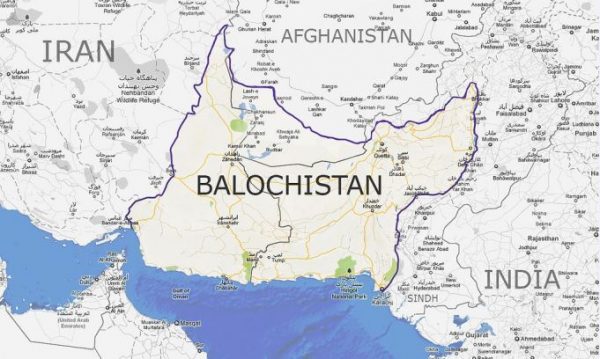
The argument over Balochistan exposed something deeper than maps or borders. It revealed a confusion about what Pakistan is supposed to belong to.

Formally, Pakistan is one of the most nationalistic states on earth. Its red lines are absolute. Its territorial language is uncompromising. Its founding trauma has hardened into doctrine. And yet, beneath this rigidity sits a quieter truth: Pakistan’s elite does not actually live inside a closed nation-state imagination. They live in English.

They think in Western legal categories, read Western literature, speak the language of international institutions, and send their children into global circuits of education and finance. At the same time, their social world remains unmistakably South Asian; family-centred, hierarchical, ritualised, and deeply embedded in subcontinental habit. They are neither fully Western nor comfortably Indic. This produces a tension that Pakistan has never resolved.

The Nation-State After 1945: A Container That No Longer Holds

Continue reading Pakistan’s Civilisational Orphanhood

Two Hours in Delhi, and the Myth of Sudden Alignment

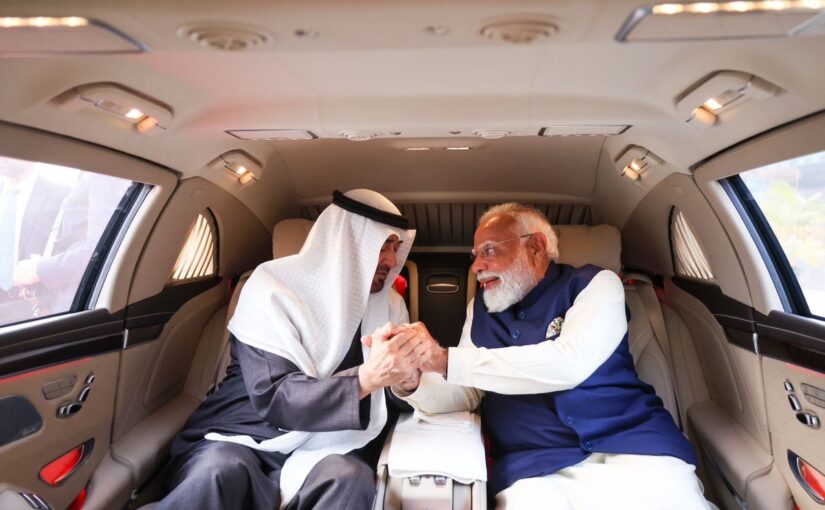
A popular thread this week argues that a two-hour stopover in Delhi, by MBZ, proves that India has replaced Pakistan as the Gulf’s preferred partner, and more than that, has become the gateway to the entire non-Western axis. The imagery is cinematic: land, sign, leave; a Pakistan deal collapses days later; Moscow follows. Read as theatre, it is persuasive. Read as geopolitics, it is misleading. Two hours did not change the map. They revealed it.

Serious agreements are never written on the tarmac. When a head of state spends two hours anywhere, it is precisely because alignment already exists. The documents are negotiated months in advance. The ceremony is optional. Speed signals confidence, not conversion. The absence of banquets is not contempt; it is efficiency.

India is valuable to the Gulf because it is large, stable, demographically young, and not ideologically intrusive. It offers scale without sermons. That makes it an excellent partner. It does not make it a hub through which all other alignments must pass.

Continue reading Two Hours in Delhi, and the Myth of Sudden Alignment

Brown Pundits