The Earth’s Lost Industrial Heart

After our discussion on industrialisation in India, I began to wonder: if the Earth were one country, one government, one infrastructure grid, one economy, where would its industrial heart lie?

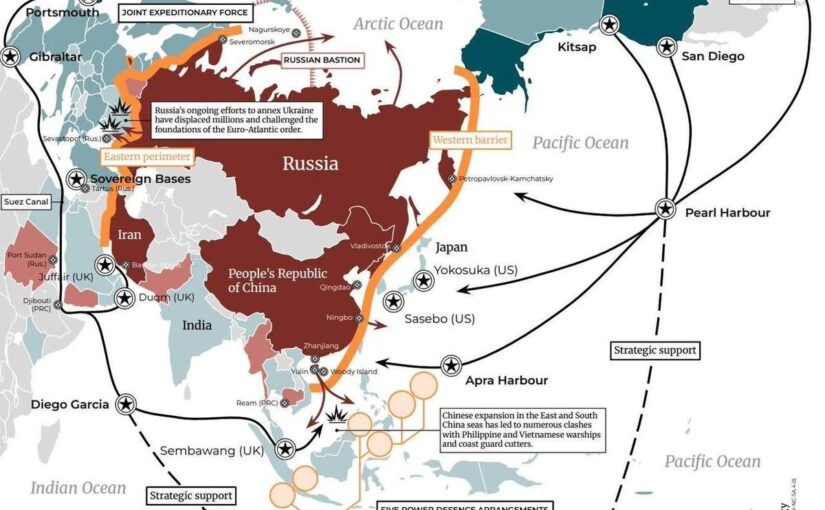
Geographically, the answer is obvious. The natural centre of the world, for energy, labour, and trade routes, isn’t London, New York, or Beijing. It’s the triangle between the Persian Gulf, the Indo-Gangetic plain, and the Red Sea.

Deserts rich in hydrocarbons. River basins dense with labour, water, and grain. Seas that touch every continent. If the world were united, this belt, Arabia to India to the Nile, would be the Ruhr, the Great Lakes, and the Pearl River Delta combined.

The Natural Order of Geography

Before empire, this region was the planet’s connective tissue. Spices, silk, horses, and steel moved from India to Arabia to Africa. Energy, grain, and knowledge flowed through the Red Sea and the Persian Gulf like the arteries of the Earth. It was not the “Middle East”; it was Middle Earth. Continue reading The Earth’s Lost Industrial Heart

Genetics open thread

On popular request — or curiosity. Two recent studies are making the rounds:

I’m generally skeptical of population genetics papers, what is their point exactly? But presumably this will awaken the Commentariat, who have been quieter lately.

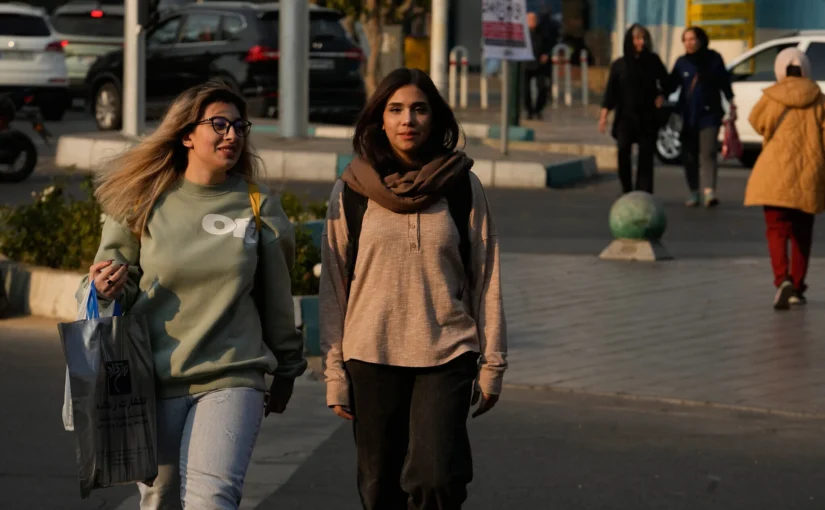
If nothing else, consider it intellectual cake; open to everyone, rich in speculation. As an aside the young girl featured is a Baloch.

Co-Founders Confer

I sent this email to the CoFounders of the Blog (Omar | Razib) and tomorrow I will send through the Monthly Author Report.

Continue reading Co-Founders Confer

Loki has come to Asgard once again

1. The Return of Loki

Loki is the harbinger of Ragnarök. Even I’m surprised — but perhaps it was inevitable. The Saffronite dialectic on caste had become too self-referential, too performative. The same arguments recycled endlessly, as if volume were a substitute for depth.

Girmit wasn’t speaking on national unity; only perceptions. So any analysis of the structure of society is now to be replaced by moral superiority onto their counterparts. It has become, in short, a perpetual three-minute hate, directed outward at “the Other.” That is not intellectual inquiry; it’s emotional exorcism.


2. The Editorial Shift

So, to reset the balance and an apology, I’ve made Kabir an editor. He now has the rights to create and onboard new authors — part of what I call the Crescentisation of the blog. Think of Brown Pundits as a Saffron-hued Moon, where all Desi identities can find their place. In terms of editorial hierarchy: Continue reading Loki has come to Asgard once again

Too Much Masala Ruins the Curry

I actually agree with Kabir on one key point — I don’t think people should be brought back to Brown Pundits merely as bait or for spectacle. The value of this space has never been provocation for provocation’s sake.

What makes Brown Pundits “gold” is that it forces us to face uncomfortable truths: about ourselves, our societies, our religions, our histories. The goal isn’t comfort; it’s clarity.

That’s why I push back when people say “don’t talk about caste” or “that’s offensive.” Caste, class, and every other structural reality are not optional topics — they’re fundamental to understanding how our societies actually work. Discussing them honestly is the only way to make sense of why things function, and malfunction, as they do.

If we avoid those hard conversations, the whole project collapses into noise. The point is not to inflame, but to illuminate— even when illumination burns a little.

Saffron Strike

The silence on BP these past few days feels deliberate; a kind of Saffron Strike. If so, let it be known: this space was never meant to cater to ideological comfort.

It seems uncommonly quiet; I think I have been misunderstood. I do not care about the traffic and commentary of BP as much as I care about the integrity of the space.

For instance when I felt that Kabir had done wrong; interdiction was the answer. When I realised the narrative was being twisted so that I became his moderator (Kabir generally knows my red lines) then I realised I was wrong. Kabir’s recent postings and commentary have been very high-signal. Continue reading Saffron Strike

Zia-Era Pakistan & Today’s India

There are actual leftists and other folks who don’t regurgitate PakMil propaganda – of this I’m aware. But even amongst those, illiteracy on India is rife. I laugh with bemusement at the number of times self-appointed Pakistani intellechawals sagely nod their heads and compare Zia-Era Pakistan to present-day Hindootva. I ‘get’ that such comparisons soothes Pakistani insecurities vis-a-vis its larger, democratic neighbor, but it really destroys their credibility.

Kabir removed three of Dave’s comments, and while I felt it was over-moderation, I’ve kept my promise not to interfere unnecessarily in his threads.

The excerpt above, though, is interesting — the comparison between Zia’s Pakistan and Modi’s India. What’s striking about both is the twin emphasis on capitalism and cultural conservatism: the promise of economic growth wrapped in moral revival. It raises a deeper question — whether right-wing politics are, paradoxically, the only antidote societies find to extreme inequality.

Class, even more than caste or creed, is the fundamental distinction in any society. The bottom half ultimately has more in common with each other than with the top half. Yet society endures only when that bottom half is so compromised that it cannot mount effective resistance. When the Establishment promise uplift but depend on the passivity of the lower half, then the “distribution of prosperity”, twinned with ideology, itself becomes the subtlest form of control.

New writing ideas

G’s future posts:

« I am thinking on a longish post on how the Hindu Epics actually made Geographical India into cultural India – more than wars of Ashoka or Gupta’s or Mughals. »

A very high Signal Comment by G again:

Guys discussing high HDI and Low HDI of North and South without discussing coastal connectivity?

All states which have a sea barring Odisa are doing well. Bengal used to do well but has gone to shit due to 70 years of Communist and bad economic strategies.

Among “Northern” states GJ has a long coastline.
HR PJ are doing fine due to connectivity to capital and extremely high irrigation and other stuff.

The only places which comprise the “backward” north are UP,Bihar – badly governed since independence and landlocked and JH and CH which have extremely difficult terrains and very very dense forests along with being landlocked.

Geography, historic and economic reasons often supersede cultural though people who want always focus on those.

the highest signal comment of the last 48 hours

The Pakistani establishment elites have zero understanding of modern India. They don’t make any serious effort to understand it.

India-Pakistan: A link sustained only through violence


girmit‘s response is probably the most nuanced I have seen in a long while. Quality comments like this keep Interdiction holding up. Girmit has been making such type of qualified and interrogated comments for more than a decade now at BP (after the jump): Continue reading the highest signal comment of the last 48 hours

Fire and the Saffroniate

We had a quiet Diwali dinner with some South Asian literati here in Cambridge, Mass. No fireworks, but some useful clarity especially about the need for a unified South Asian voice, and where Brown Pundits fits in.

Threads, Fire, and a New Warrior Class

Kabir remains catnip for the Commentariat or as I’ll now call them, the Saffroniate (Brahmins or Brahminised). They pretend otherwise, but the numbers don’t lie. The threads light up when he’s around and yes, I’m aware of the layered joke: threads mean something else too, especially to our youngest Pundits-in-training. Continue reading Fire and the Saffroniate

Brown Pundits