Open Thread: From Floods to LaBal

A few updates from this week:

Sri Lanka is facing severe flooding. Sbarkkum reports major damage to rail and road networks, with Dutch support expected for reconstruction.

Sana Aiyar’s “World at MIT” video touches on her life and work

Sam Dalrymple has a clip on Lahore and Delhi—another reminder of how closely the two cities mirror each other despite partition.

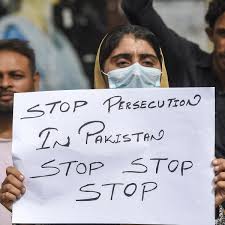
Pakistan’s minority rights bill is worth watching. Continue reading Open Thread: From Floods to LaBal

What’s in a name? That which we call a Swastika, isn’t exactly a symbol of hate

Disclaimer: As this post deals with an academic discussion on the Swastika symbol, I have included various images containing Swastika below. If you are repulsed by the symbol or do not like to look at it, please consider yourself warned. Also, for the same reason, this post is NSFW.

Growing up in India, I had developed this habit of drawing symbols of auspiciousness and good luck on my exam answer sheets. I have no recollection of who taught me to do that or when I started doing it but I can clearly remember even during my bachelor studies, I would collect the answer sheet from the invigilator and immediately proceed to draw an ‘ॐ’ (Om), a ‘श्री’ (Shree) and a ‘卐’ (Swastika, albeit with 4 dots in the middle as one would draw in India) at the top of the first sheet of the answer paper. This rather innocent practice wasn’t unique to me. Apparently many other students used to do this until the universities started cracking down on this ‘malpractice’ for ‘displaying symbols of faith on answer sheets’ and ’emotionally appealing to the evaluators’. In a religiously polarized India of the 2010’s, I don’t expect any less ham-handed response from our University VCs. But, personally, what prompted me to stop this practice was my move to Germany for my master’s.

In the first few weeks of the semester, all international students took part in an orientation program at the university. One of the most shocking things I learnt  that day was that any public display of Swastika was BANNED in Germany. I was not ignorant of Germany’s sordid past. Watching ‘Schindler’s list’ beamed onto the wall of a dark classroom with my fellow drama club members in high school is one of the most vivid memories I have. I was just 15 then and the movie shocked me to my core. It was one of those instances of loss of innocence in my life when cruelty, inhumanity, Germany, Hitler, Jews and hate took on a whole other meaning in my psyche. In spite of that, discovering Swastika, an omnipresent sign in India that I had grown up seeing everywhere and that which is considered good and auspicious by everyone around me, could be a banned symbol of hate in the country I had just moved to, was another instance of loss of innocence.

Just like me, many Indians who have moved to the west have discovered this in their own way. The subreddit r/AITA (no connection with raitas 😛 ) has quite a few posts from hindus who have been mistaken for a white-supremacist (Oh! The irony!) for displaying Swastikas as a pendant gifted by grandmother, in the form of a rangoli/kolam in their frontyard, a tattoo on the arm they got while in India, having portraits of hindu gods at home, etc. All these instances happened in the US. From my personal experience, I have found the germans to have better awareness about Swastika; it’s use as the Nazi party symbol, a hate symbol of neo-Nazis and also as the auspicious symbol for many asian religions and cultures. This is because of two reasons:

1. The curriculum at schools explore all aspects of Germany’s sordid past with a level of frankness that I can only describe as ‘very German’. The curriculum makes the differentiation between the two symbols very clear as you can see from this children’s website that takes them on a german historical journey of the last 100 years.

2. The germans use two different words for this symbol. The symbol of hate used by Hitler and the neo-Nazis is called ‘Hakenkreuz’ while the auspicious symbol of the orient is called ‘Swastika’. Just the existence of two different words makes it easy to differentiate the meaning of the two symbols.

Funnily enough, even though I lived in Germany for 5+ years, I was not aware of the existence of ‘Hakenkreuz’. I only came to know about it in the past year or so through twitter! It was probably through a thread by True Indology (lost when his account was suspended) that I became aware of the german word ‘Hakenkreuz’ that when translated to english means hooked cross and not Swastika. The problem lies with the current mistranslation of Hakenkreuz in English.

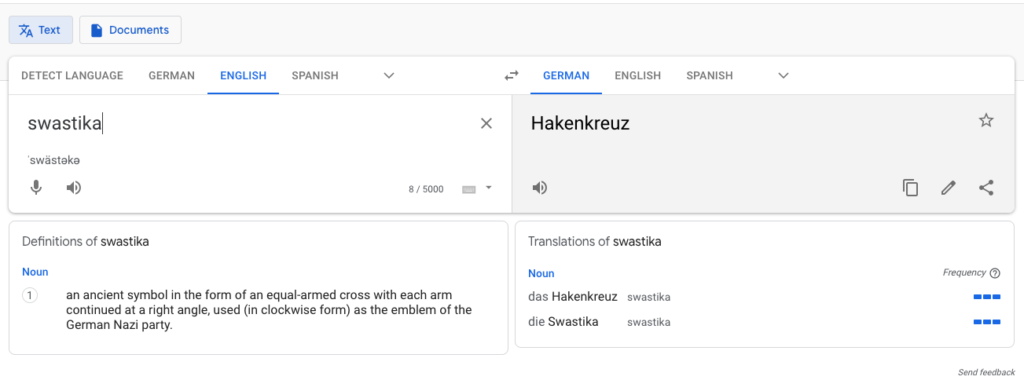
Google translate translates Swastika as Hekenkreuz in German. Notice the possible translations of the word – das Hakenkreuz and die Swastika. Also notice the definition of Swastika in english. It only defines the Hakenkreuz, the symbol used by Hitler.

Instead of translating into hooked cross, it is translated as Swastika, which is clearly wrong. So, why IS it mistranslated to Swastika? Who first translated Hakenkreuz to English as Swastika and how did that translation stick? More importantly, did Hitler adopt the eastern symbol Swastika as the anti-semitic symbol of his political party or did the inspiration come from elsewhere? These were some of the questions that recently led me to write a thread on twitter (you could also read it on the thread reader app here). I will summarize my findings below.

Colonialism and imperialism in the 18th and 19th century CE brought about a great deal of interest in the eastern cultures by the west which gave rise  to the field of oriental studies and orientalism. All things east were considered exotic and the ‘popular’ phenomenon of cultural appropriation led to the adoption of various eastern symbols in the west. One among those was the Swastika. It shot up in popularity among the western academicians in the 1880’s and pretty soon entered the pop culture scene as a symbol of good luck, akin to today’s good luck charms like Maneki-neko (Japanese beckoning cat), Chinese fortune cookies or the Irish shamrock.

A report by Thomas Wilson titled ‘THE SWASTIKA, The earliest known symbol, and its migrations; with observations on the migration of certain industries in prehistoric times” for the US National museums in 1894 wonderfully compiled the then existing knowledge of Swastika. It is meticulous and very clearly written with almost no bias from Mr. Wilson. This also happens to be the first recorded instance where an English speaker tried to compile all the crooked cross like symbols and used the umbrella term of Swastika in English. Until then, the word Swastika did not exist in any english dictionary or encyclopedia. He writes in the preface:

An English gentleman, versed in prehistoric archæology, visited me in the summer of 1894, and during our conversation asked if we had the Swastika in America. I answered, “Yes,” and showed him two or three specimens of it. He demanded if we had any literature on the subject. I cited him De Mortillet, De Morgan, and Zmigrodzki, and he said, “No, I mean English or American.” I began a search which proved almost futile, as even the word Swastika did not appear in such works as Worcester’s or Webster’s dictionaries, the Encyclopædic Dictionary, the Encyclopædia Britannica, Johnson’s Universal Cyclopædia, the People’s Cyclopædia, nor Smith’s Dictionary of Greek and Roman Antiquities, his Greek and Roman Biography and Mythology, or his Classical Dictionary. I also searched, with the same results, Mollett’s Dictionary of Art and Archæology, Fairholt’s Dictionary of Terms in Art, “L’Art Gothique,” by Gonza, Perrot and Chipiez’s extensive histories of Art in Egypt, in Chaldea and Assyria, and in Phenicia; also “The Cross, Ancient and Modern,” by W. W. Blake, “The History of the Cross,” by John Ashton; and a reprint of a Dutch work by Wildener. In the American Encyclopædia the description is erroneous, while all the Century Dictionary says is, “Same as fylfot,” and “Compare Crux Ansata and Gammadion.” I thereupon concluded that this would be a good subject for presentation to the Smithsonian Institution for “diffusion of knowledge among men.”

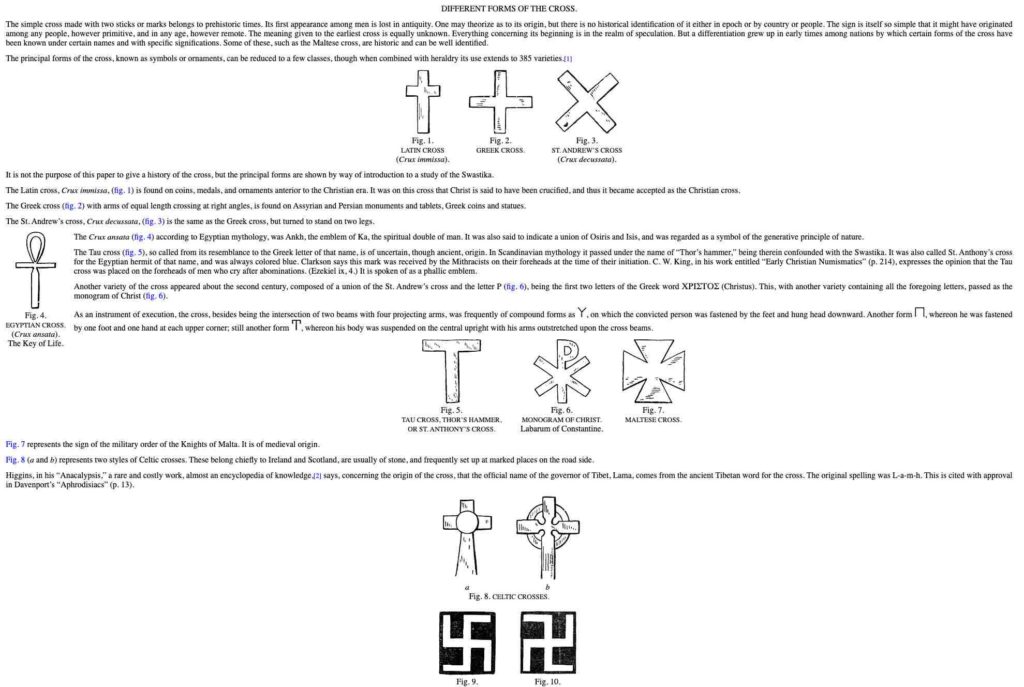
In this report, Wilson examined different forms of crosses that had been found all around the world and concluded that Swastika is the most ancient one of them all.

Different cross-like symbols examined by Thomas Wilson in THE SWASTIKA

He complied various definitions of Swastika as recorded by different researchers and it was commonly understood to mean ‘good being’ or ‘good fortune’ in Sanskrit. The symbology was interpreted by different academicians differently. Although mostly everyone agreed that it is an auspicious symbol for the hindus and buddhists, there was no consensus on how to interpret the symbology. He writes,

Many theories have been presented concerning the symbolism of the Swastika, its relation to ancient deities and its representation of certain qualities. In the estimation of certain writers it has been respectively the emblem of Zeus, of Baal, of the sun, of the sun-god, of the sun-chariot of Agni the fire-god, of Indra the rain-god, of the sky, the sky-god, and finally the deity of all deities, the great God, the Maker and Ruler of the Universe. It has also been held to symbolize light or the god of light, of the forked lightning, and of water. It is believed by some to have been the oldest Aryan symbol. In the estimation of others it represents Brahma, Vishnu, and Siva, Creator, Preserver, Destroyer. It appears in the footprints of Buddha, engraved upon the solid rock on the mountains of India. It stood for the Jupiter Tonans and Pluvius of the Latins, and the Thor of the Scandinavians. In the latter case it has been considered—erroneously, however—a variety of the Thor hammer. In the opinion of at least one author it had an intimate relation to the Lotus sign of Egypt and Persia. Some authors have attributed a phallic meaning to it. Others have recognized it as representing the generative principle of mankind, making it the symbol of the female. Its appearance on the person of certain goddesses, Artemis, Hera, Demeter, Astarte, and the Chaldean Nana, the leaden goddess from Hissarlik, has caused it to be claimed as a sign of fecundity.

Until then, Swastika, as a symbol was known by different names in different languages because the symbol existed almost everywhere in the world, in Asia, Europe, northern Africa and the Americas. Also in Great Britain. So, what did the English call the symbol? Fylfot. Wilson writes,

In Great Britain the common name given to the Swastika, from Anglo-Saxon times by those who apparently had no knowledge whence it came, or that it came from any other than their own country, was Fylfot, said to have been derived from the Anglo-Saxon fower fot, meaning four-footed, or many-footed.

So, there existed a word for the 卐(crooked cross) symbol in english but only for the 卐 found in and around great britain. Instead of using this word for all crooked crosses in English, Mr. Wilson instead chose to use the word Swastika since he found it to be the most ancient of them all. This was a ham-fisted move because the Indic name swastika corresponded to the 卐 that symbolized auspiciousness which the other crooked crosses did not. Even Wilson admits that by quoting a letter by the famous Indologist Prof. Max Müller,

I do not like the use of the word svastika outside of India. It is a word of Indian origin and has its history and definite meaning in India. * * * The occurrence of such crosses in different parts of the world may or may not point to a common origin, but if they are once called Svastika the vulgus profanum will at once jump to the conclusion that they all come from India, and it will take some time to weed out such prejudice.

So, in 1894, the word Swastika was proposed by Mr. Wilson to denote all crooked crosses in english language and we see that the practice stuck since the use of the word in english language increased since then. So, is this when the German word ‘Hakenkreuz’ started being called as Swastika? Interestingly, no! In fact, the report mentions finding variants of swastika in Germany but mentions no name in German. ‘Hakenkreuz’ was barely used until then and was relegated to 19th century vocabulary books like the Bailey-Fahrenkrüger’s Wörterbuch der englischen Sprache and the Deutsches Wörterbuch von Jacob Grimm und Wilhelm Grimm (yes, they are the Brothers Grimm of Grimm’s fairy tales). So, to answer one of the questions posed above, ‘Hakenkreuz’ wasn’t actually translated into English. By the time germans started using Hakenkreuz as the word for the infamous anti-semitic symbol, the English speaking world had already picked up on the word Swastika and called any crooked cross symbol as such.

So, when and why did the Nazis adopt the Hakenkreuz as their anti-semitic symbol? The reason goes all the way back to Troy, the location of the fabled trojan war (it’s an interesting story, you can read a detailed article here). When a german businessman and amateur archeologist Heinrich Schliemann found the remains of the mythical city of Troy in modern day Turkey in 1871, along with the ruins, he found the 卐 symbol on everything – pieces of pottery, ruins of buildings, marble carvings, etc. Being an amateur archaeologist he did not understand the significance of his find. So, he consulted his orientalist friends – Max Mueller(yes, the same guy who didn’t want to call ‘Swastika’ found outside India as Swastika) and Émile-Louis Burnouf, a leading expert of Sanskrit. Fun fact: Bernouf was also an anti-semite and a propounder of Aryan master race.

Burnouf made a bunch of dubious claims (debunked by Wilson in his monumental report on Swastika) which was covered in Schliemann’s book ‘Troy and its remains‘ and concluded that Suastika (that was the spelling he went with) is an essential symbol of the Aryan race. The popularization of this flawed idea led to its appropriation as the symbol by the German ‘Völkisch‘ national movement gaining steam at the juncture of 19th and 20th century. It was a nationalistic movement which propounded that Germans belong to the Aryan ‘master race’ and hence need to dominate the world. Poetically, the year Burnouf breathed his last, 1907, was also the year when the Swastika was first used as a symbol of Aryan dominance by a secret society called ‘Order of the New Templars’ (Ordo Novi Templi, or ONT) in Austria by Lanz von Liebenfels, an Austrian racialist. So, in early 20th century, as most of the west started embracing Swastika as a ‘cool’ motif, it was also being appropriated secretly by an anti-semitic and racist underground movement becoming a symbol of racial supremacy for various organizations until it was mainstreamed by Hitler in the Nazi flag in 1920.

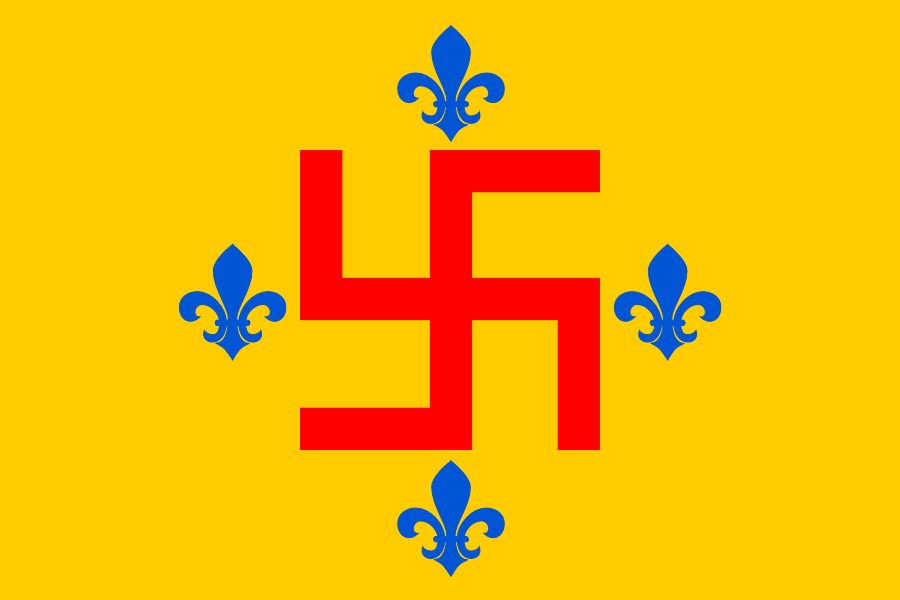
Flag of the ‘Order of the new Templars’. This was the first instance of Swastika used as a symbol of Aryan dominance in 1907.


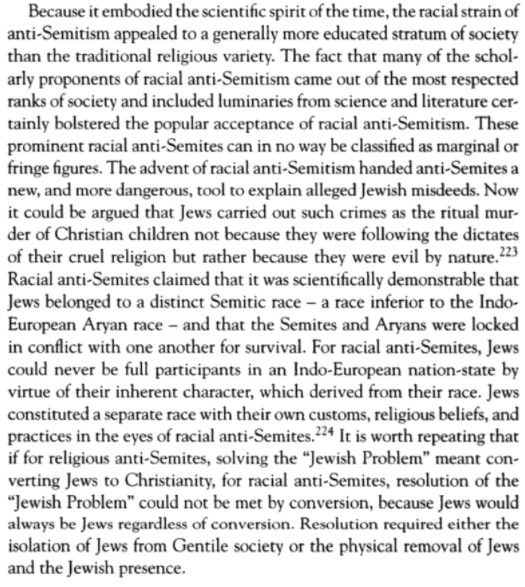
What inspired Hitler to choose this symbol for his political party? Was it just the connection to Aryan race or did the inspiration come from elsewhere? The anti-semitism displayed by the Nazis did not arise from a vacuum. Anti-semitism or anti-Judaism has existed in Europe since pre-Christian times but morphed into ‘religious anti-semitism’ due to the early christian belief that jews were collectively responsible for the death of Jesus Christ. This sentiment and the associated conflict intensified after Christianity spread as a state religion in Europe. However, the pseudo-scientific racial theories that became widespread in 19th century Europe threw up an additional strain of ‘racial anti-semitism’ where the basis of discrimination and persecution was the ‘scientific evidence’ that jews belongs to a separate lower ‘non-Aryan’ race. The combination of these two strains of anti-semitism, one historic and one modern, manifested politically in the form of Hitler’s Nazi party.

Professor William Brustein’s book, Roots of hate delves deep into pre-Holocaust anti-semitism in Europe

Adolf Hitler was a complicated man to understand. Forests have been felled to publish books speculating his inspirations and motives. Most scholars however agree that although Hitler distanced himself away from Christianity in his later years, he leaned heavily towards christianity in his early years. His catholic upbringing, his admiration for

Hinduttva (b)

The fourth article in this series will focus on why so many in global academia, global establishment, global media, global entertainment, global culture and the global public are so scared of and opposed to eastern philosophy, Swami Vivekananda and Ramakrishna while simultaneously appropriating much of eastern philosophy encoded in new language without attribution.

Part of the attack against eastern philosphy and Hinduttva derives from a hatred of the West and the fact that Western philosophy draws heavily from the east in four periods. Ancient Arya history or more than 3,000 years ago. During exchange from Alexander the Great through the Roman period. During European Enlightenment Classical liberalism [in many ways a derivative of Arya Hindu Chaarvaaka Darshana], and what is now called Post Modernism [which derives from Karl Marx’s study of India]. Much of it derives from many other causes which I am trying to understand.

Note that a stand alone post is planned to discuss the above presentations by Professor Jeffery D. Long, Professor Makarand Paranjape, Professor Anantanand Rambachan, andPprofessor Sharada Sugirtharaja. Brown Cast plans to interview Professor Jeffrey D Long with respect to Sanathana Dharma and Indology. If you have any questions for him, please leave it in the comments.

The below discussion between the San Francisco academic Vamsee Juluri and Hinduism’s great atheist Kushal Mehra discusses the Hinduphobia in global academia:

[Add summary of above video]

In the above video discussion Anjali George discusses why the Indian supreme court has forced the shut down of the ancient Sabarimala temple. Sabaramila is a brain therapy facility where woman and girls send their dysfunctional boys and men to–in order to fix them. To join the program and visit Sabaramila temple boys and men had to practice a very rigorous difficult 40 day regiment. Because most males are stupid fools, their woman and girls would:

  • gently persuade them to join [who are we kidding, in some cases girls aren’t that gentle and intimidate their men and boys into joining]
  • help them complete the regiment [in eastern philosophy and Toaism intelligence (medha) is female and males aren’t that bright, which is why they needed the help of their girls and woman]
  • keep a much more luxurious temple for themselves, a woman’s Sabrimala if you will.

Eastern philosophy is a matriarchal system of the divine feminine. Woman and girls run things. Woman and girls set up a brahmacharya Ayyapa tantra (technology) facility to help improve males. Pre pubescent girls and post menopause females can conduct the 40 day regiment and visit the brain therapy facility too.

However the supreme court of India appears to have mandated that females of child bearing age, pre-pubescent girls and post menopause woman and males need to be able to visit any part of the temple they wish at will, without completing a difficult 40 day sadhana. Naturally India’s females are furious at the Indian supreme court. Many of India’s woman see this as a me too attempt to harass Ayyapa, a celibate young male. Many of India’s females also see this as an attempt to let males be lazy and not complete their 40 day Sadhana. India’s woman are also furious that the global press, global entertainment and global academia are using this incident to demonize eastern philosophy. Which is rich, considering that the east has been feminist for thousands of years before Christ. Indian females who oppose the global “woke” narrative are being demonized as proto Nazis or proto fascists or proto male misogynist supporters of the patriarchy. One eastern female being so demonized is Anjali George. Anjali George defends eastern woman from the post modernist and caucasian intelligentsia (baizuo) critique.


Here is another perspective on Hindutva:

This appears to attribute Hindutva to a backlash against “secularism” where secularism appears to be defined as cultural marxist post modernist woke SJW.


Continue reading Hinduttva (b)

History of India Series: Episode 4 – The Vedic Age


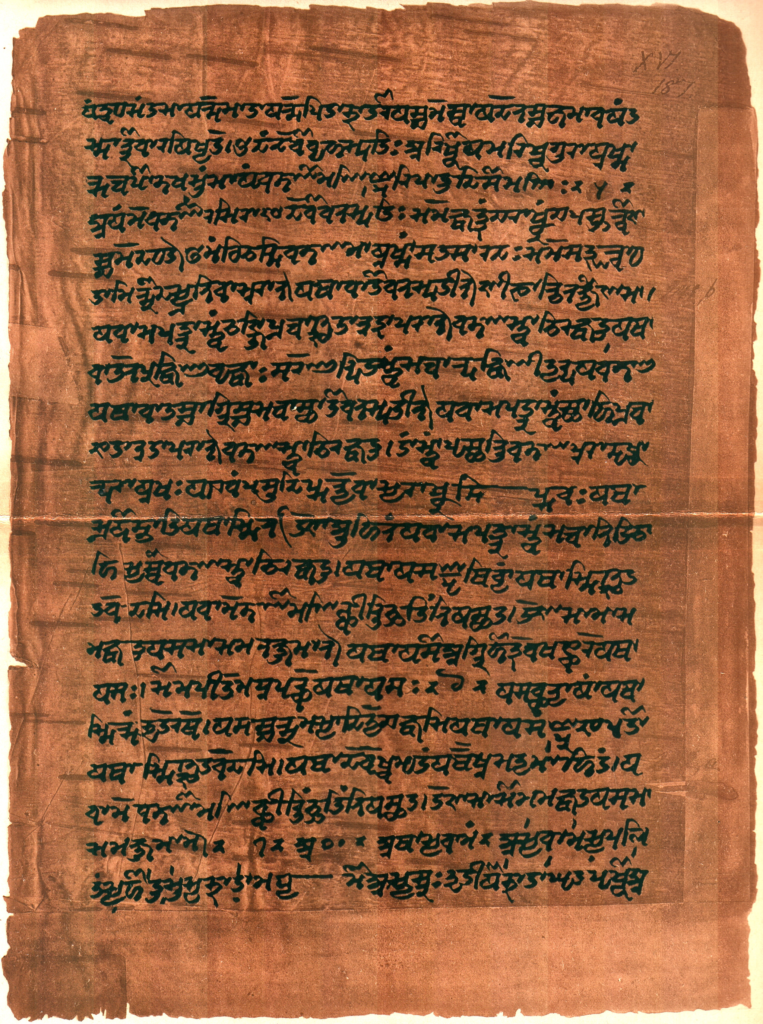
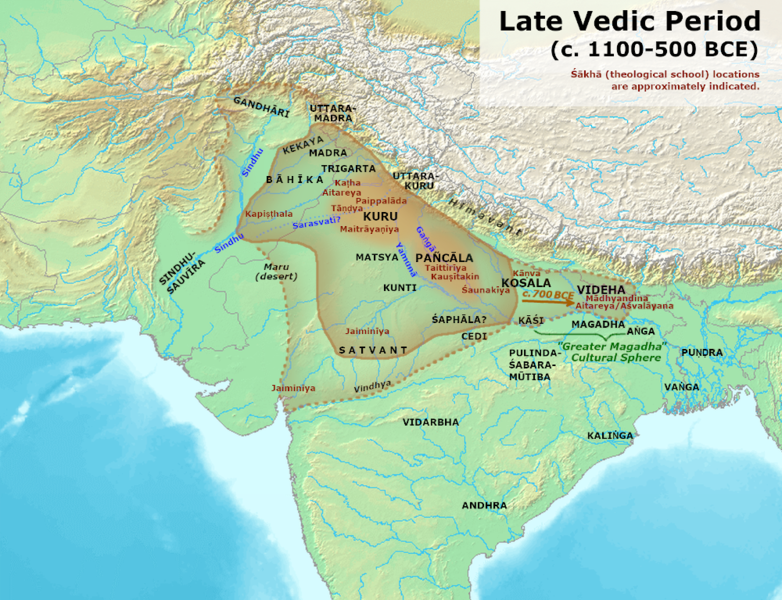
The History Podcast reaches the Vedic age. Our speakers talk about its origins, its literature, its culture, and the legacy of the Vedic Age. Varna system makes an appearance as does Pythagoras Theorem. Amongother things, our speakers talk of Vedic recitation techniques and different layers of Vedic literature. Maneesh Taneja in conversation with Shrikanth Krishnamachry and Gaurav Lele. @maneesht @shrikanth_krish @gaurav_lele

You can listen on LibsynAppleSpotify, and Stitcher (and a variety of other platforms). Probably the easiest way to keep up the podcast since we don’t have a regular schedule is to subscribe to one of the links above!

Links to the previous podcasts: Episode 1Episode 2; Episode 3

Episode 4: The Vedic Age

References:

History of Ancient India – Upinder Singh

R Sharma Ancient India

Romila Thapar – Early India

Live History India – LHI Circle (Paywalled)

Frits Staal -;

1. Discovering the Vedas :
2. On the meaninglessness of ritual
Michael Witzel –

On Kuru state and Early Sanskritization 
On Vedic religion
On the localization of Vedic texts :
Manasataramgini :
Numeric analysis of certain aspects of Rig Veda
On the Vedanta – Nastika interface (relevant to the discussion we had on vegetarianism)
On guide to Vaidika svaras
On the rise of sectarianism in a Vedic context
On Mandalas of RV and authorship
On Spitzer Manuscript

Vedic Source texts: https://vedicheritage.gov.in/

On Traditional vaidIka education :
Interview with Mani Dravida Sastrigal (in Sanskrit)
Lectures in Hindi by Mani Dravida Sastrigal
Lectures in Tamil by Mani Dravida Sastrigal

List of Veda Pathashalas: https://sanskritdocuments.org/doc_veda/vedapathashala.html

GhanapAtha recitation illustration
FE Pargiter on the Puranic historical tradition

The Joy of Discovering Synchronisms-Part 1

National Register of Citizens (NRC) and Citizenship Amendment Act(CAA)

Brown Pundits favorite Kushal Mehra explains the National Register of Citizens (NRC) and Citizenship Amendment Act (CAA).

I don’t understand why the NRC and CAA are controversial among some. Can anyone explain this to me?

Welcome back Mahathir Mohamad, Hero of Asia! (a)

https://www.youtube.com/watch?v=7_NMXgdCP-U

This is a follow up to:

Welcome back Mahathir Mohamad, Hero of Asia!

Rishabh Gulat–who I respect greatly has a different take on Datuk Mahathir Mohamad, Hero of Asia, than I do. Some argue that Datuk Mahathir has recently shifted his policy and allied with conservative Wahhabi (subset of Salafi, subset of Sunni) muslims, MBS, Saudi Arabia and Pakistan against India. Mr. Gulat implies that Datuk Mahathir is backing Brown Pundit favorite Dr. Zakir Naik against India:

https://www.youtube.com/watch?v=GfhVQoIvGIs

Please watch Mr. Gulat and come to your own conclusions.

The Indian Malays (7% of the population, 15% of the professional workforce, 40% of all Malaysian doctors, economic engine that moves Malaysia) are rallying the opposition to Datuk Mahatir. Mr. Gulat thinks the global Indian diaspora and global Eastern philosophy diaspora (presumably inclusive of Confucians, Toaists and Chinese) should back the Indian Malays in this.

I need to do a lot more research before proposing an alternative course of action. But here is a question. Can the Indian Malays, global Indian diaspora, global Eastern Philosophy, global Muraqabah tilted Sunnis and Shia and global liberal muslims unite and offer Datuk Mahathir Mohammed an offer he can’t refuse?:

There are many great and powerful Indian and Indonesian muslims–friends of PM Modi–who can make the offer.

As an aside, many Brown Pundits readers know Dr. Zakir Naik fanboy and heart throb Veedu Vidz. Please ask him to come on the Brown Pundits Podcast!

Mr. Rishabh Gulat is a great thought leader and expert on Indonesia, Malaysia and South East Asia more generally. He says that India and Indonesia should make a civilizational, cultural, economic and geopolitical alliance. Is there an interest in the Brown Pundits Podcast interviewing Mr. Rishabh Gulat?

Please let us know in the comments.

Afghanistan’s History (a)

Special thanks to Mayuresh Madhav Kelkar for sending this. I would start watching this excellent Dari Farsi documentary 1 minute 19 seconds in. There are many excellent ancient maps of central and south Asia.


I just want to watch this again and again, just to listen to the narrator’s voice. Majestic, wise, soft and sweet. For those so sure Afghanistan will fall; any nation with voices like this is perchance stronger than she appears. This may be where the homo sapien sapien modern civilization was born.

+++++++++++++++++++++++++++++++++++++++++

Afghanistan’s History


Avtar Singh Khalsa: Lion of Afghanistan

Is it time for Asian Americans and Latino Americans to ask to be considered “white”? (d)

This is the next article in the series “Is it time for Asian Americans and Latino Americans to ask to be considered “white”, “Is it time for Asian Americans and Latino Americans to ask to be considered “white” (a)”,  Razib’s  “Hasan Minhaj’s Patriot Act on Affirmative Action“, “Is it time for Asian Americans and Latino Americans to ask to be considered “white” (b)” and “Is it time for Asian Americans and Latino Americans to ask to be considered “white” (c)”.


A middle eastern student shares how deeply offensive a condescending pretentious patronizing xenophobic post modernist baizuo caucasian is towards them. The baizuo caucasian tells the middle eastern student that he is a genie for solving a math problem and then apologizes for it afterwards, since after all the word “genie” comes from the middle east. Two phenomenons might be at play. One is baizuo. The other is anti muslim islamaphobia.


If this is coming from baizuo, this is a very old problem. It comes out of European imperialism in the 1700s and 1800s. The European intelligentsia tried to colonize the minds of their imperial colonial subjects with inferiority complex to damage their self confidence. Europeans also tried to deconstruct colonized peoples, causing them to be embarrassed by, hate and reject their ancient history, technology, science, product development, process innovation, civilization, culture, religion, spirituality, art, literature, institutions, ancestors and elders. Post modernism divided colonized peoples into many categories of oppressed and oppressors (mostly manufactured irrational concepts) to turn different groups of people against each other; implying that power oppression rather than meritocratic competence defined local hierarchies. This European colonization of the mind sharply lowered total factor productivity and material living standards in the developing world ceteris paribus. The Latinos, Africans and Asians got sick of it, and kicked the Europeans and their baizuo European intelligentsia out. You can read more about this in a Nuanced understanding of British Colonialism.


Sadly the baizuo caucasian intellegentsia did not seem to learn from this. In the 1960s they tried to undermine America’s heroes Muhammed Ali and Malcolm X. Please watch Muhammed Ali’s and Malcolm X’s videos speaking about the baizuo in American Caste (a). And the baizuo seem to continue to get worse year after year. I don’t understand how this is happening. Perhaps could this be a xenophobic jealous backlash against the accelerating socio-economic rise of the rest–especially darkies?


What can we darkies do about this? Should we ask to be considered white?


To the middle eastern student who wrote Prof Saad, maybe the caucasian overlords should learn that the vast majority of Aryans are Asians. Asians (Iran, Afghanistan, Uzbekistan, Xinjiang, Tibet, Turkmenistan, Tajikistan, SAARC, South East Asia) are very proud to be Aryan or Arya, thank you very much. Arya or Aryan is a cultural rather than genetic marker. Arya means nobility. Maybe ignore the baizuo and become extremely successful in everything you do despite their efforts to sabotage you. Fewer and fewer foreigners are fooled by the hard bigotry of low expectations, by the lie that we cannot manifest our own miracles. Their time is almost up.


I would like to thank Prof Saad for being a glowing light of wisdom and inspiration for our world. Love you Saad!


In the comments, please mention if anyone would like to invite Prof Saad to be a guest for the Brown Caste podcast.

Post Modernism (d)

Five thousand years ago the greater Egyptian, Sumerian, Eastern (defined as pan Arya plus China) civilizations were very mathematically oriented.  Many caucasians appear to believe that these ancient civilizations were racist. Possibly because of this many caucasians believe that math is racist.


Another possible reason many caucasians appear to believe that math is racist is because they fear it might unfairly advantages “brown” people (Asians, Arabs, Latinos) and “brown” cultures (eastern philosophy including Toaism and Confucianism, native american religion) at the expense of caucasians in the new global artificial intelligence, neuroscience, genetics economy.


Could part of the anger against math come from fear that mathematics, science, technology, seeking the truth through thought, seeking the truth without thought might be haram or blasphemous? (Obviously most Abrahamics do not believe this and this is not a critique of Abrahamism.)


I believe that mathematics is part of art; and that it derives from beyond normal gross thought. From what in Sanskrit is called Buddhi, Vijnayamaya Kosha, Ananda Maya Kosha, Sukshma Sharira, Kaarana Sharira, the subtle heavens.


Perhaps the anger against mathematics is part of a deeper anger against the subtle heavens? If so, one possible way to look at this is that to transcend the subtle heavens (including mathematics) it might be helpful to love them and love our way through them. Or to love and respect the racist (subtle heavens–including mathematics) until we transcend the various subtleties of thought and feeling.

What are everyone’s thoughts?

+++++++++++++++++++++++++++++++++++++++++++++++++++

Post Modernism (c)

Post Modernism (b)

Post Modernism (a)

Intellectual Dark Web (a)

Intellectual Dark Web

Brown Pundits